Scaling autonomous shuttles from campus to city involves harnessing advanced sensors, cameras, GPS, and smart algorithms to navigate unpredictable urban traffic and diverse weather conditions. You’ll need robust safety systems and real-time environmental assessments to handle complex environments while ensuring passenger comfort and accessibility. As these shuttles adapt to city life, their safety and efficiency improve over time. If you’re curious about how this progression really unfolds, there’s more to explore below.
Key Takeaways
- Adapting sensor and navigation systems to handle complex urban traffic and unpredictable environments.
- Enhancing safety protocols to ensure reliable obstacle detection and rapid response in diverse city scenarios.
- Upgrading infrastructure and communication networks for real-time data sharing and smoother integration.
- Addressing weather and pedestrian behavior variability to maintain consistent performance outside campus settings.
- Implementing scalable design features that prioritize passenger comfort and safety during city-wide deployment.

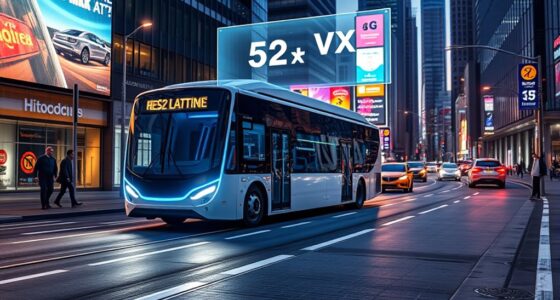
Have you ever wondered how autonomous shuttles traverse busy city streets without human drivers? It’s a fascinating blend of advanced technology and careful planning that makes this possible. At the core, these shuttles rely on a combination of sensors, cameras, GPS, and sophisticated algorithms to safely interpret their surroundings. Vehicle safety is a top priority in this process. Developers design these systems to constantly monitor the environment, detect obstacles, and respond swiftly to unexpected situations. This vigilance ensures that passengers, pedestrians, and other vehicles stay safe as the shuttle moves through complex urban environments. You can think of it as giving the vehicle a heightened awareness, similar to having a vigilant, highly-trained driver who never gets distracted or tired.
As these shuttles are tested and refined, the passenger experience remains central to their development. You want your ride to be smooth, comfortable, and reliable, especially as these vehicles shift from controlled campus settings to bustling city streets. The onboard systems are optimized to deliver a seamless journey, with features like gentle acceleration and braking, clear signage, and user-friendly interfaces. This attention to detail helps passengers feel secure and confident during their trip. The design also considers accessibility, so everyone, regardless of mobility, can enjoy the ride. As these shuttles operate more frequently in city environments, their ability to adapt to different traffic patterns, weather conditions, and pedestrian behaviors becomes vital. Ensuring vehicle safety while maintaining a positive passenger experience is a balancing act that engineers continuously improve.
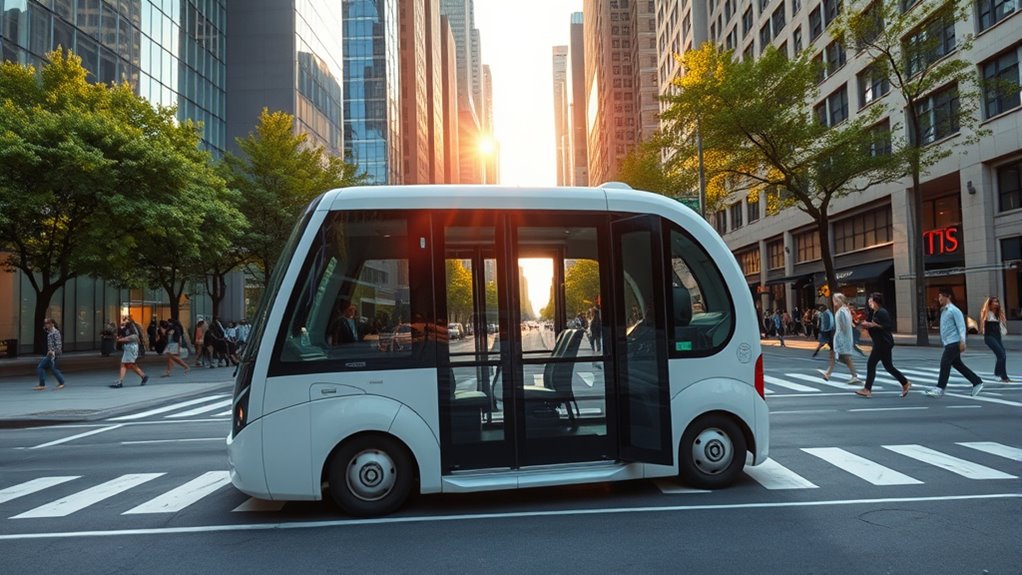
Scaling up from campus to city involves addressing new challenges, such as traversing unpredictable traffic, dealing with construction zones, or handling sudden stops. Advanced mapping and real-time data updates enable the shuttles to make smart decisions quickly. This adaptability not only boosts vehicle safety but also enhances passenger comfort by minimizing abrupt maneuvers and delays. As a rider, you’ll notice that autonomous shuttles become more intuitive and reliable, offering a safe, enjoyable alternative to traditional transportation. Plus, with fewer human errors and enhanced safety protocols, these vehicles can operate more efficiently and with greater consistency. In the end, their success hinges on how well they protect passengers and provide a smooth, trustworthy journey through the complexities of urban life.
Frequently Asked Questions
How Do Autonomous Shuttles Handle Unexpected Obstacles?
When faced with unexpected obstacles, autonomous shuttles rely on sensor fusion and obstacle detection systems to respond swiftly. You’ll see the shuttles continuously analyze data from cameras, lidar, and radar to identify potential hazards. Once detected, they automatically slow down, stop, or reroute to guarantee safety. This real-time processing allows the shuttle to handle surprises efficiently, maintaining smooth and secure operation even in complex city environments.
What Are the Safety Protocols for Autonomous Shuttle Pilots?
Your safety is a fortress, and strict protocols protect it. You undergo thorough passenger training and learn emergency procedures to stay prepared. Autonomous shuttle pilots follow rigorous safety protocols, including real-time monitoring, obstacle detection systems, and emergency response plans. These measures ensure passenger safety at every turn, making your journey as secure as a vault. Trust in these protocols to keep you safe, no matter how complex the cityscape becomes.
How Is Passenger Privacy Maintained During Autonomous Shuttle Rides?
During autonomous shuttle rides, you can trust your privacy is safeguarded through passenger anonymity measures and data encryption. Your personal information stays confidential because the system anonymizes your identity and encrypts all data transmitted. This way, your location and ride details remain secure from unauthorized access. By prioritizing passenger privacy, the system ensures a safe and private experience, making you feel comfortable and confident during your autonomous transit.
What Is the Cost Difference Between Manual and Autonomous Shuttle Operations?
You’ll find that autonomous shuttles cut operational expenses dramatically—sometimes by over half—compared to manual ones. Conducting a thorough cost analysis reveals that, although autonomous systems require significant upfront investment, their lower maintenance and staffing needs save you big in the long run. Manual shuttles incur higher labor costs and slower scalability, making autonomous options a smarter, more economical choice for expanding city transit.
How Do Autonomous Shuttles Adapt to Different City Environments?
You’ll find autonomous shuttles adapt to city environments by analyzing urban infrastructure like roads, traffic signals, and pedestrian zones. They use sensors and real-time data to navigate complex streets securely. This enhances the passenger experience by providing smooth, reliable rides even in busy or changing conditions. As you move through different city areas, the shuttles adjust their routes and driving behavior to guarantee safety and efficiency.
Conclusion
As you watch these shuttles glide from campus streets to city avenues, they symbolize a future where innovation guides us forward. Each autonomous pilot becomes a beacon of progress, lighting the way through uncharted urban landscapes. Embrace this journey, knowing you’re part of a transforming world—where technology is the compass, and mobility is boundless. The road ahead is open, and with every mile, you’re shaping a smarter, more connected tomorrow.