
Multimodal hubs connect electric buses with trams, trains, and bikes to create smooth and sustainable urban travel. You can switch seamlessly between different transport modes at these centers, making your commute easier and greener. They’re designed for accessibility, encouraging active transportation and reducing pollution. By integrating electric buses with other transit options, these hubs make city travel more efficient and eco-friendly. If you want to explore how these hubs shape smarter urban mobility, keep exploring further.
Key Takeaways
- Electric buses at multimodal hubs facilitate eco-friendly, seamless transfers with trams, trains, and bike-sharing stations.
- These hubs enhance urban connectivity by linking different transportation modes for efficient, reliable travel.
- Integration of electric buses reduces emissions and supports sustainability goals within the transportation network.
- Multimodal hubs include accessible features like ramps and signage, ensuring inclusive access for all users.
- They promote active transportation and reduce congestion through bike-sharing and pedestrian-friendly pathways.

Multimodal hubs are essential infrastructure that streamline transportation by integrating multiple transit modes—such as buses, trains, bicycles, and pedestrian pathways—into a single, connected system. These hubs serve as focal points where different transportation options seamlessly converge, making your journey more efficient and less stressful. When designed effectively, they foster urban integration by connecting neighborhoods, commercial centers, and residential areas, encouraging more sustainable travel habits. Transit accessibility is greatly enhanced because you can switch between modes quickly and conveniently, reducing wait times and travel distances. This integration encourages you to rely less on personal vehicles, alleviating congestion and lowering pollution levels in your city.
Multimodal hubs streamline transit, connecting diverse modes for efficient, sustainable urban travel.
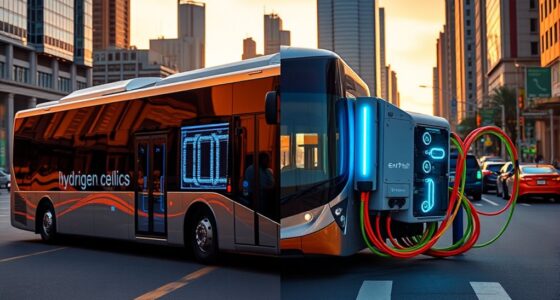
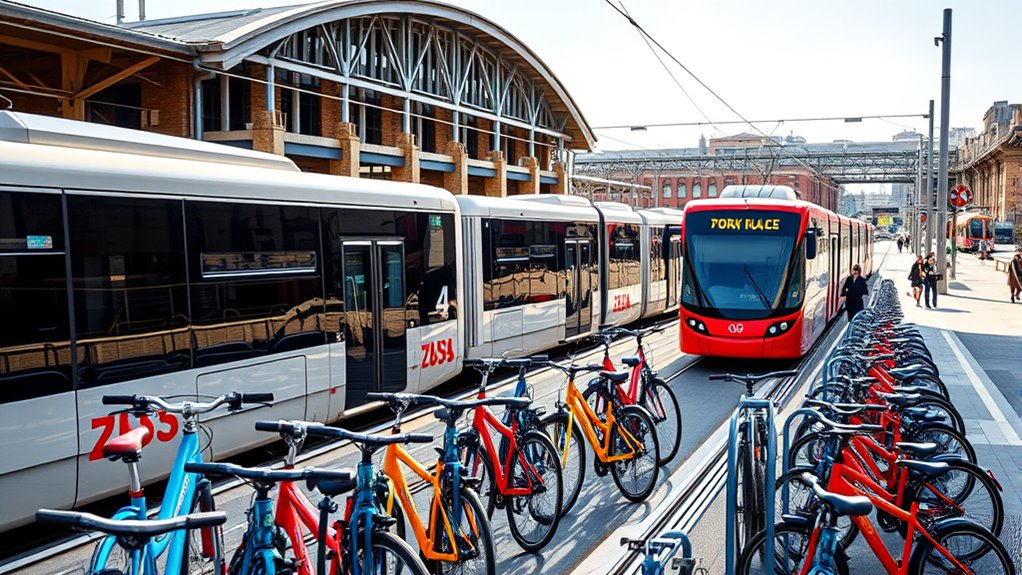
Imagine stepping off a bus at a well-designed multimodal hub, where electric buses are waiting to take you further into the city. From there, you can hop onto a tram or train for longer distances, knowing that the transfer points are close and easy to navigate. Electric buses, in particular, add an eco-friendly dimension, reducing emissions and supporting your city’s sustainability goals. As you move through the hub, bike-sharing stations and pedestrian pathways are right there, encouraging active transportation options that keep you healthy and reduce your carbon footprint. The presence of these interconnected modes makes your overall commute more flexible, reliable, and enjoyable.
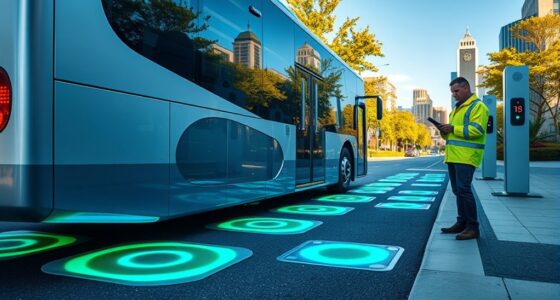
Urban integration becomes more effective when multimodal hubs are thoughtfully planned with your needs in mind. They serve as vibrant centers that promote a sense of community and accessibility, allowing you to reach key destinations without hassle. When transit systems are integrated, you don’t have to worry about multiple tickets or confusing schedules. Instead, you experience a smooth, coherent flow of movement that makes your daily travel predictable and straightforward. This accessibility is especially important for those with limited mobility, as well-designed hubs incorporate features like ramps, elevators, and clear signage, ensuring everyone can navigate easily.
Furthermore, these hubs foster a sense of connectivity across the city. By linking diverse transit options, they help bridge gaps between neighborhoods, making it easier for you to access employment, education, and leisure activities. Electric buses, combined with trams, trains, and bikes, create a resilient and adaptable network that responds to your evolving transportation needs. They also support cleaner air and healthier communities, aligning with your city’s environmental goals. Additionally, well‑planned transit systems can improve overall network resilience by providing multiple routes and modes during disruptions. Ultimately, multimodal hubs are indispensable for crafting a more integrated, accessible urban landscape, making your transportation experience more sustainable, efficient, and enjoyable.
Top picks for "multimodal hubs electric"
Open Amazon search results for this keyword.
As an affiliate, we earn on qualifying purchases.
Frequently Asked Questions
How Are Multimodal Hubs Funded and Maintained Long-Term?
You fund multimodal hubs through diverse funding models like government grants, public-private partnerships, and user fees. To guarantee long-term maintenance, you implement strategic maintenance plans that include regular inspections, upgrades, and efficient resource allocation. You also seek sustainable funding sources, like transit authority budgets or community investments, to keep the hubs operational, safe, and up-to-date. This approach balances financial stability with ongoing upkeep for seamless multimodal connections.
What Are the Environmental Impacts of Electric Bus Integration?
By integrating electric buses, you substantially reduce electric emissions, which helps lower greenhouse gases and combat climate change. This shift also improves air quality around transportation hubs, making your environment healthier. Electric buses produce zero tailpipe emissions, meaning fewer pollutants like nitrogen oxides and particulate matter. As a result, your community benefits from cleaner air and a smaller carbon footprint, contributing to a more sustainable and healthier future.
How Do Multimodal Hubs Improve Urban Traffic Congestion?
You’ll see that multimodal hubs improve urban traffic congestion by streamlining transportation and reducing vehicle use. They enhance urban planning by encouraging seamless transfers between different transit modes, which boosts transportation efficiency. When you use these hubs, you spend less time stuck in traffic, lower emissions, and enjoy quicker commutes. These hubs make city travel more sustainable, convenient, and less congested, creating a more livable urban environment for everyone.
What Security Measures Are in Place at Multimodal Hubs?
At multimodal hubs, security measures include surveillance systems that monitor activity 24/7, keeping an eye on all areas. Access controls ensure only authorized personnel and passengers enter restricted zones, enhancing safety. You’ll notice security personnel patrolling and digital systems managing entry points. These measures work together to protect your belongings, guarantee safety, and provide peace of mind, making your transit experience secure and smooth.
How Accessible Are These Hubs for People With Disabilities?
You’ll find that these hubs prioritize accessibility, aiming to minimize barriers for people with disabilities through inclusive design. Features like ramps, tactile paving, and audible signals help you navigate easily. However, some accessibility barriers still exist, especially in older infrastructure. Overall, transit authorities are working to improve inclusivity, but staying aware of specific hub facilities can guarantee you have the best experience and access.
Conclusion
By embracing multimodal hubs, you’re paving the way for a more connected, efficient transportation system. Electric buses linking with trams, trains, and bikes make travel smoother and greener, breaking down barriers between different modes. Remember, a chain is only as strong as its weakest link, so integrating these options creates a seamless network. When you prioritize connectivity, you truly open the door to a future where getting around is easier, cleaner, and more sustainable for everyone.