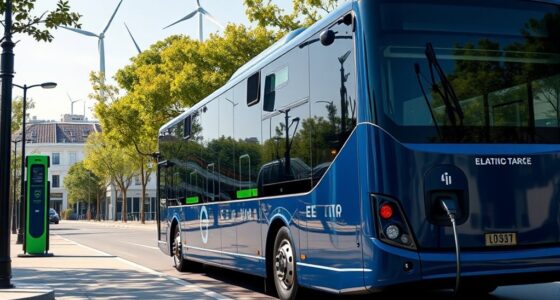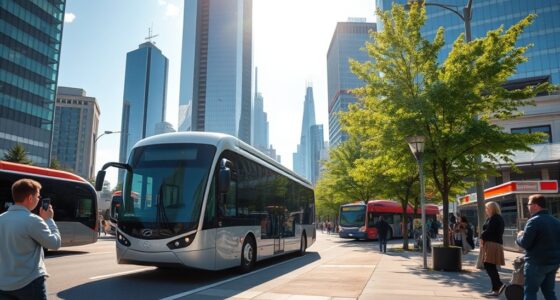
Surveys show that public acceptance of driverless buses hinges on trust in their safety. People tend to feel more comfortable when they see strict safety standards, clear safety protocols, and successful trial runs. Transparency and open communication from transit agencies help reduce fears about system failures and cybersecurity. As familiarity grows through demonstrations and shared success stories, acceptance tends to increase. To learn more about how perceptions are evolving worldwide, keep exploring the latest trends and insights.
Key Takeaways
- Surveys show safety concerns are the main barrier to public acceptance of driverless buses.
- Demonstrations and trial runs increase familiarity, leading to higher trust and acceptance.
- Transparency about safety standards and testing procedures positively influence public perception.
- Sharing safety records and success stories helps build confidence in autonomous bus technology.
- Public engagement and clear communication from transit authorities are crucial for gaining trust.
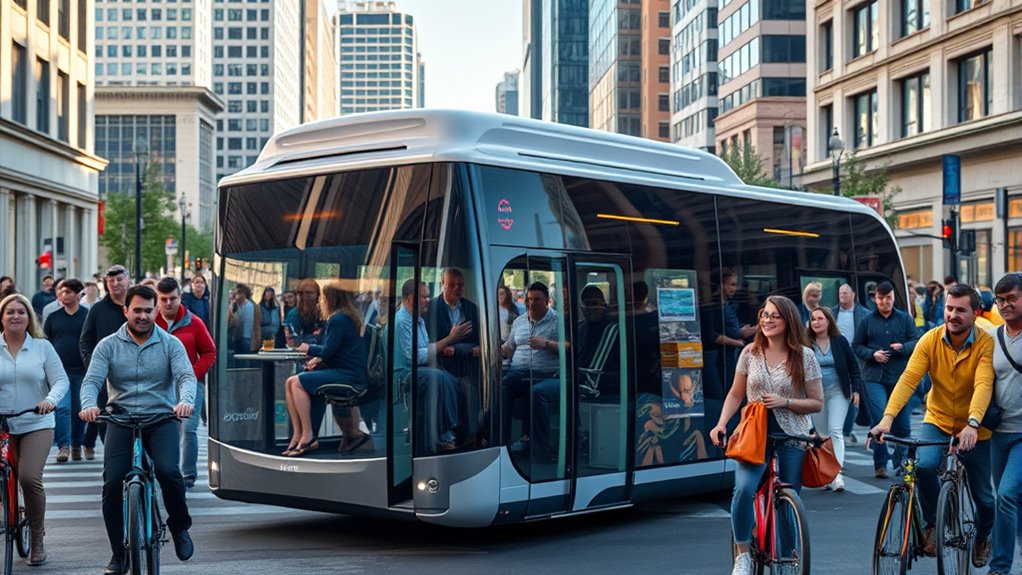
As driverless buses become more common in cities worldwide, understanding public acceptance is essential for their successful integration. Many people still harbor safety concerns about riding in autonomous vehicles, especially buses that operate without human drivers. These worries often revolve around the technology’s reliability, potential malfunctions, and how well the system can handle unexpected road situations. To address these fears, many surveys reveal that building technological trust is fundamental. When people trust the technology behind driverless buses, they’re more likely to feel comfortable using them regularly. Trust isn’t built overnight; it depends on the visible safety measures, consistent performance, and transparent communication from transit authorities about how the technology works and how safety is prioritized. Additionally, providing clear guidelines for operating and maintaining the technology can help reassure the public of its safety and reliability.
Public surveys consistently show that safety concerns are the primary barrier to widespread acceptance of driverless buses. Many respondents express doubts about the technology’s ability to respond to complex traffic scenarios, such as sudden obstacles or unpredictable human behavior. They worry about what happens if the system fails or if there’s a cybersecurity breach. These fears are valid, and transit agencies must actively work to alleviate them by providing clear information about safety protocols, rigorous testing, and ongoing system monitoring. Demonstrating that driverless buses have passed extensive safety standards and are equipped with multiple redundancies can help ease public worries. When people see that safety is a top priority and that the technology has been thoroughly vetted, their confidence tends to grow.
Technological trust plays a pivotal role in shaping public opinion. If potential riders believe the technology is mature, reliable, and safe, they’re more likely to accept driverless buses as a viable transport option. Building this trust involves more than just technical improvements; it requires transparent communication, pilot programs, and opportunities for public engagement. Showing real-world safety records, sharing success stories, and addressing concerns openly can foster a sense of security. Furthermore, familiarizing the public with the technology through demonstrations or trial runs can reduce apprehension. As familiarity increases, so does trust, which ultimately leads to greater acceptance. Moreover, highlighting safety standards and rigorous testing procedures can significantly influence public perception and confidence.
Frequently Asked Questions
How Do Driverless Buses Impact Employment in Public Transportation?
Driverless buses will likely reduce transit employment by replacing some automation jobs traditionally held by drivers. You might find fewer driving roles as automation takes over routine tasks, leading to shifts in transit employment. However, new roles could emerge in technology maintenance and oversight. Overall, while driverless buses can streamline transit operations, they may also challenge existing jobs, requiring workforce adaptation and retraining.
What Safety Features Are Included in Driverless Bus Technology?
You’ll find that driverless buses include advanced sensor systems like lidar, radar, and cameras to detect obstacles, pedestrians, and traffic signals, ensuring safe navigation. They also feature robust emergency protocols, enabling quick responses if system malfunctions or hazards arise. These safety features work together to protect passengers, pedestrians, and other vehicles, making driverless buses a reliable and secure transportation option.
How Do Different Age Groups Perceive Driverless Buses?
You’ll find that generational attitudes and technological familiarity shape how different age groups view driverless buses. Younger people tend to embrace the technology more readily, often trusting their familiarity with digital innovations. Older adults might be more cautious or skeptical, questioning safety and reliability. As familiarity with autonomous tech increases across all age groups, acceptance is likely to grow, but perceptions still vary depending on comfort with new technology and trust levels.
What Legal Regulations Govern Driverless Bus Deployment?
Imagine steering a river with hidden rocks—you need clear maps and rules. Similarly, autonomous vehicle legislation guides driverless bus deployment. You’ll find regulations vary by region, addressing safety, cybersecurity, and liability. Regulatory challenges include creating standardized standards and updating existing laws to accommodate autonomous technology. These laws ensure safe operation, but staying ahead of technological advances remains a constant challenge, requiring ongoing collaboration between authorities, manufacturers, and the public.
How Do Weather Conditions Affect Driverless Bus Operation?
Weather conditions pose significant weather challenges for driverless buses, affecting their operation and safety. Rain, snow, fog, and heavy winds can impair sensors and visibility, making climate adaptation crucial. You’ll need to rely on advanced technology and real-time data to navigate these conditions effectively. Proper infrastructure and weather-resistant systems help guarantee smooth, safe operation despite weather challenges, allowing driverless buses to function reliably in diverse climates.
Conclusion
As you consider the future of transportation, remember that public acceptance of driverless buses is steadily growing, much like the dawn of the steam engine. Surveys show increasing trust and curiosity, but some hesitations remain. Embracing this tech revolution requires patience and transparency. Just as pioneers once challenged the status quo, you can help shape a smarter, safer transit era—one where autonomous buses become as commonplace as the horseless carriage.