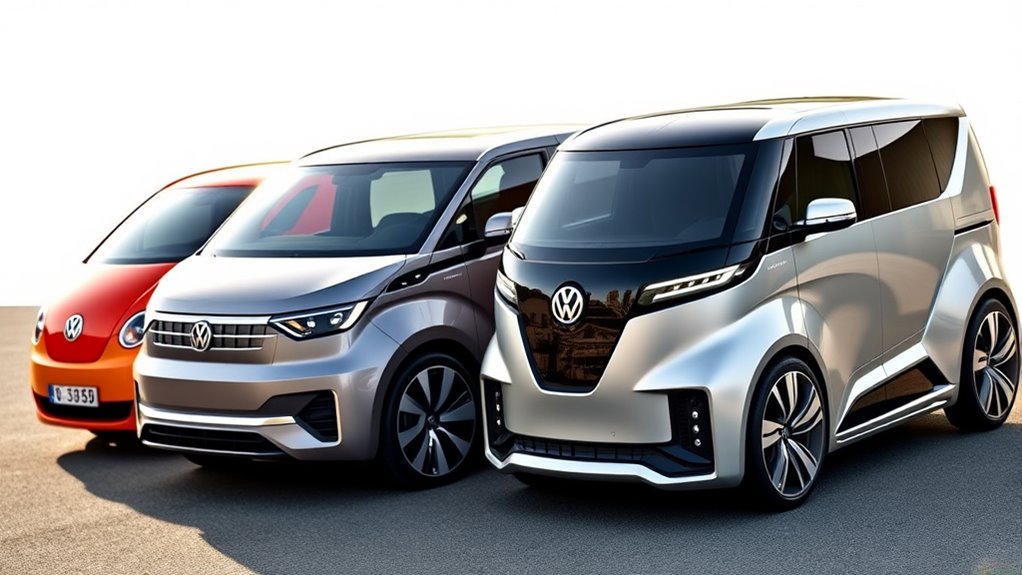

Volkswagen’s Microbus concept cars show a exciting journey from the 2001 Microbus, inspired by the classic T1 with retro styling and electric tech, to the sleeker, more modern 2017 version that features aerodynamic design and advanced lighting. The evolution highlights a blend of nostalgia with innovation, emphasizing sustainability and versatility. If you explore further, you’ll discover how these concepts embody Volkswagen’s vision of merging past heritage with future mobility.
Key Takeaways
- The 2001 Microbus concept pays homage to the classic T1 with retro design elements like round headlights and a split windshield.
- The 2017 Microbus refines this nostalgic look with modern aerodynamics, LED lighting, and sleek surfaces for a contemporary appeal.
- Both concepts feature electric drivetrains emphasizing sustainability, with improvements in range and power over the years.
- They highlight Volkswagen’s vision of blending retro aesthetics with advanced technology for versatile, multi-purpose vehicles.
- These concepts symbolize cultural icons of freedom and community, bridging past heritage with future mobility innovations.
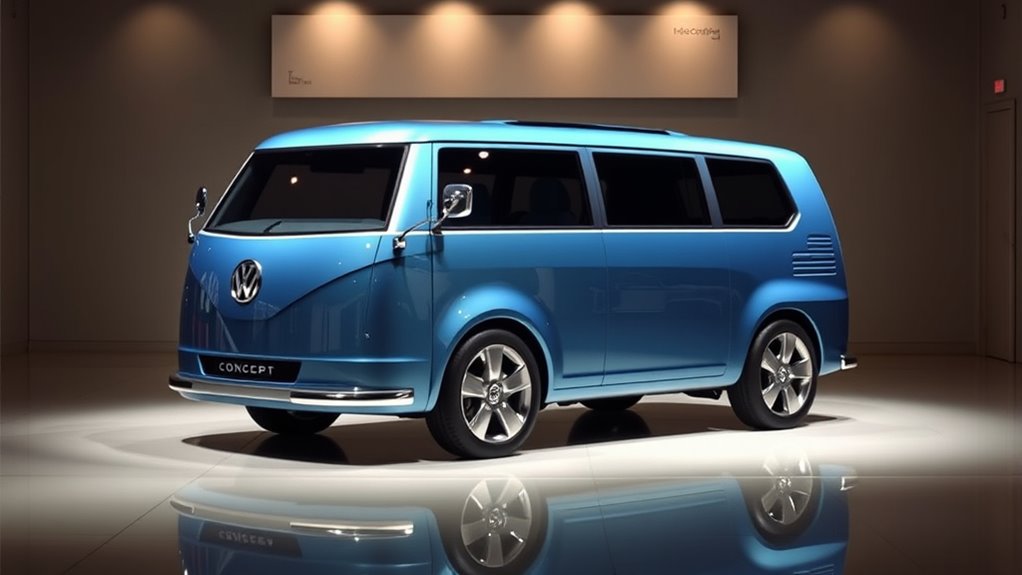
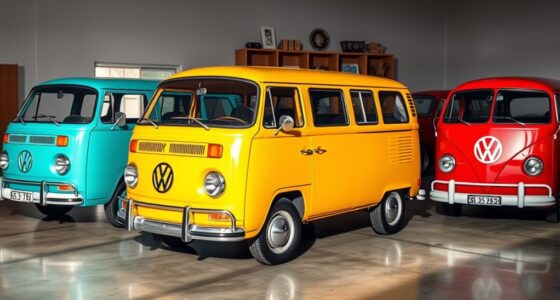
Volkswagen’s Microbus concept cars embody the brand’s vision for a modern reinterpretation of the iconic van that defined a generation. When you look at these vehicles, you immediately notice how they blend nostalgia with innovation. The 2001 Microbus concept, for example, embraced a retro design that paid homage to the classic T1 model, with round headlights, a split windshield, and a boxy shape that instantly sparks recognition. However, beneath that vintage exterior lies cutting-edge technology, including an electric drivetrain that signals Volkswagen’s shift toward sustainable mobility. This combination of retro design and electric powertrain shows that the company isn’t just looking backward but forward, reimagining a beloved icon with modern sensibilities.
Volkswagen’s Microbus blends nostalgic design with cutting-edge electric technology for a modern, eco-friendly icon.
As you explore the 2001 concept, you realize that Volkswagen aimed to evoke feelings of nostalgia while offering a glimpse into the future. The retro design isn’t just a stylistic choice; it’s a statement that the Microbus’s spirit can live on in a new, eco-friendly form. The electric drivetrain not only reduces emissions but also offers a quiet, smooth driving experience. Volkswagen intended to create a vehicle that appealed to both the heart and the environment—something that stands out in a crowded market of electric vehicles. The Microbus’s design emphasizes practicality and versatility, with sliding doors and a spacious interior that can be configured for various uses, from family outings to commercial purposes.
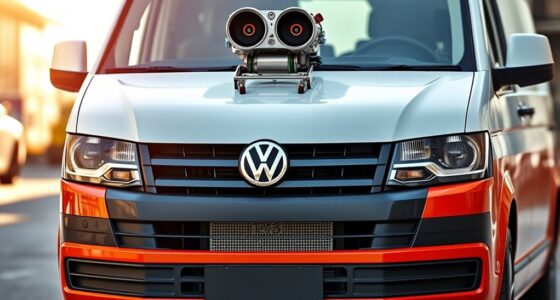
Fast forward to the 2017 Microbus concept, and you see how Volkswagen’s vision evolved. The retro design elements remained, but they were refined to look more contemporary and aerodynamic. The electric drivetrain was further developed to provide greater range and power, emphasizing Volkswagen’s commitment to electric mobility. In this version, the Microbus exudes a charismatic charm that still appeals to those who cherish its heritage, yet it’s clearly a vehicle of the future. The design details, such as LED lighting and sleek surfaces, demonstrate modern engineering, while the overall shape keeps the spirit of the original alive.
Throughout both concepts, Volkswagen proves that the Microbus remains a symbol of freedom, community, and innovation. Whether it’s the nostalgic design or the forward-looking electric drivetrain, these concept cars encapsulate a vision where past and future collide seamlessly. You’re left with a sense that Volkswagen isn’t just creating a van but reviving a cultural icon for a new generation, blending retro aesthetics with contemporary technology. Recognizing the importance of sound design in creating immersive automotive experiences, Volkswagen likely integrates sophisticated audio elements to enhance the driving environment and emotional connection with the vehicle.
Top picks for "microbu concept volkswagen"
Open Amazon search results for this keyword.
As an affiliate, we earn on qualifying purchases.
Frequently Asked Questions
Will Volkswagen Produce a New Microbus Model Soon?
Volkswagen is actively exploring a new microbus model, focusing on electric powertrains and autonomous driving features. You can expect a modern redesign that emphasizes sustainability and tech integration, aiming to appeal to eco-conscious drivers and city commuters alike. While an official release date hasn’t been announced, VW’s commitment suggests you’ll see a new microbus soon, blending classic charm with future-ready innovation.
How Do the Concept Cars Differ From the Original Microbus?
Imagine a bridge between nostalgia and innovation—this is how concept cars differ from the original Microbus. You’ll notice retro styling that evokes the classic charm while integrating cutting-edge design. The electric drivetrain replaces the traditional engine, making it more eco-friendly and futuristic. You get a glimpse of what’s possible when vintage elegance meets modern technology, transforming a beloved icon into a sustainable, sleek vehicle for tomorrow’s roads.
What Technologies Are Integrated Into the Latest Microbus Concept?
You’ll find that the latest Microbus concept integrates cutting-edge technologies like electric propulsion for eco-friendly driving and autonomous driving for added convenience. These features aim to enhance safety, reduce emissions, and provide a seamless travel experience. The vehicle’s advanced sensors and AI-driven systems enable smooth self-driving capabilities, making it an innovative step forward from traditional models and aligning with future mobility trends.
Are There Customizations Available for the Microbus Concepts?
Imagine turning your microbus into a reflection of yourself—yes, customization options are available. You can choose from a variety of aftermarket accessories, allowing you to personalize everything from interior decor to tech upgrades. Whether you want a sleek modern look or retro charm, these options help you craft a unique ride that suits your style, making your microbus as individual as you are.
How Has Consumer Feedback Influenced Microbus Design Changes?
Consumer feedback has substantially shaped the Microbus’s evolution by emphasizing a desire for a retro design that evokes nostalgia while integrating modern features like electric propulsion. You influence these changes through your input, prompting designers to refine the aesthetic and functionality. As a result, Volkswagen creates concepts that balance classic appeal with eco-friendly technology, ensuring the Microbus remains both stylish and sustainable, aligning with your preferences for innovation and vintage charm.
Conclusion
You’ve seen how Volkswagen’s Microbus concept cars evolved from the nostalgic 2001 Microbus to the innovative 2017 concept. You’ve explored the blend of classic charm with modern technology, the fusion of retro style with futuristic design, and the shift from tradition to innovation. You’ve witnessed the journey of a vehicle that captures the spirit of freedom, adventure, and versatility. Now, you’re inspired by a legacy that continues to reinvent itself, inviting you to imagine the future of mobility.