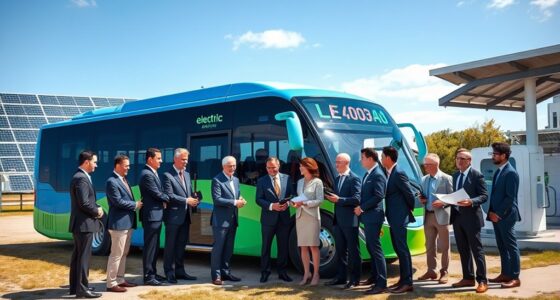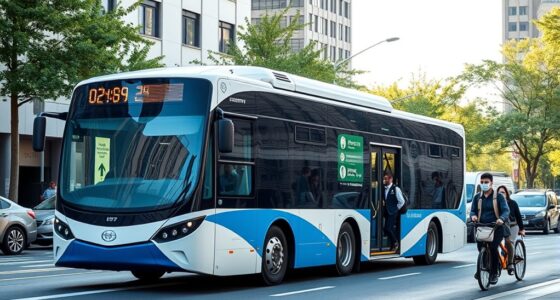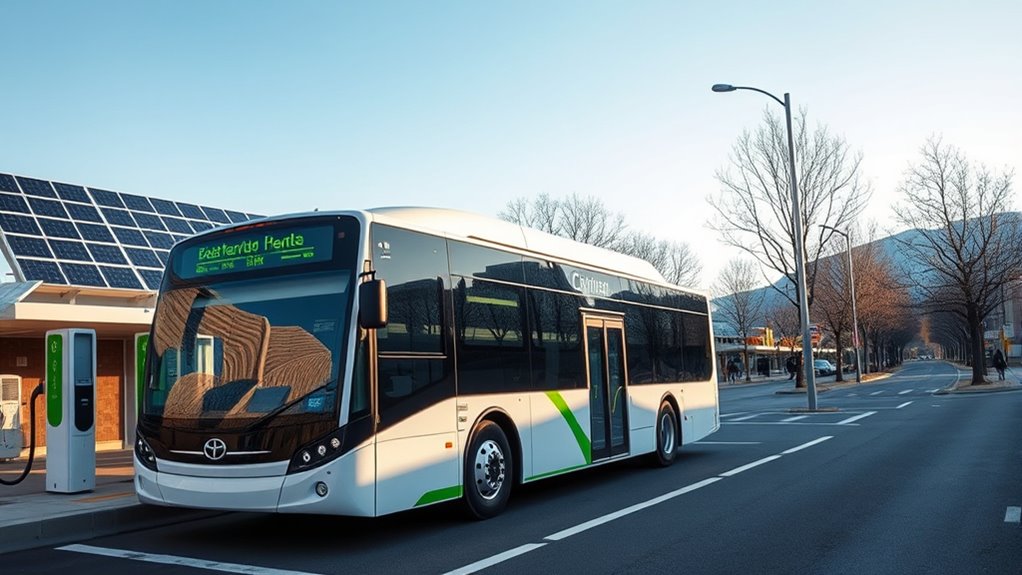

Canada is investing heavily in clean energy programs to build electric bus infrastructure that reduces fossil fuel reliance and lowers emissions. These initiatives include incentives for transit agencies to switch from diesel to electric buses, support for renewable energy integration, and funding for charging stations. By promoting sustainable transportation and innovative infrastructure, these efforts aim to cut air pollution and meet climate goals. Continue exploring to discover how these investments shape Canada’s greener future.
Key Takeaways
- Canada is expanding clean energy initiatives to support electric bus infrastructure and reduce reliance on fossil fuels.
- Investments include funding for charging stations and renewable energy integration to power electric transit fleets.
- Policy measures encourage transit agencies to transition from diesel to electric buses through incentives and mandates.
- Government grants and subsidies aim to lower costs and accelerate electric bus adoption nationwide.
- These programs promote innovation in infrastructure, ensuring sustainable, reliable, and efficient electric public transportation systems.
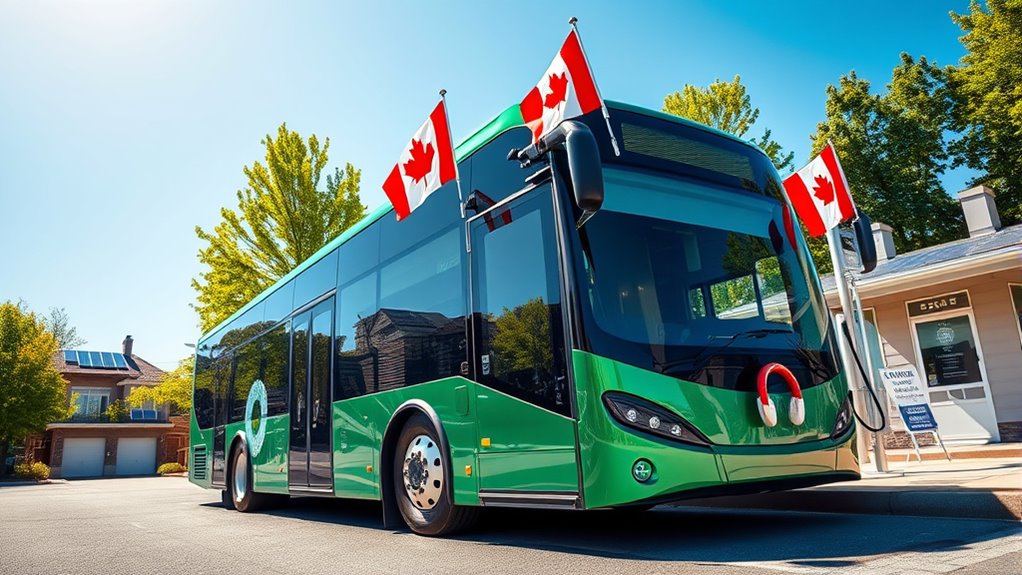
Have you ever wondered how we can reduce our reliance on fossil fuels and lower greenhouse gas emissions? One effective way is through the expansion of clean energy programs, especially by investing in electric transportation infrastructure. In Canada, significant efforts are underway to promote electric buses, a move that aligns with broader goals to cut emissions and improve air quality. The government is implementing electric vehicle policies that encourage transit agencies and private operators to switch from diesel-powered buses to electric alternatives. These policies often include mandates for fleet electrification, funding opportunities, and regulations that set ambitious emission reduction targets. With supportive policies in place, transit authorities find it easier to adopt electric buses, knowing they’ll receive financial assistance or incentives that offset higher upfront costs.
In addition to electric vehicle policies, renewable energy incentives play a vital role in powering the transition to cleaner transportation. These incentives help fund the installation of charging stations and renewable energy sources like solar or wind, which supply clean electricity to charge the buses. By integrating renewable energy incentives into broader clean energy strategies, Canada boosts the sustainability of its electric bus infrastructure, ensuring that the electricity used isn’t just clean but also increasingly renewable. This approach reduces the carbon footprint of transit systems even further, making electric buses a genuinely green alternative. Moreover, fostering attention in creative practice can enhance innovative solutions for optimizing the integration of renewable energy sources and charging infrastructure, ensuring efficient and reliable operations.
The investments in electric bus infrastructure are also supported by government grants and subsidies aimed at reducing the financial barriers for municipalities and transit agencies. These initiatives not only promote the adoption of electric buses but also stimulate local economies through job creation in manufacturing, installation, and maintenance. As more cities electrify their fleets, the cumulative impact becomes significant, helping Canada meet its climate targets while improving urban air quality.
Top picks for "clean energy program"
Open Amazon search results for this keyword.
As an affiliate, we earn on qualifying purchases.
Frequently Asked Questions
How Does Electric Bus Infrastructure Reduce Urban Air Pollution?
Electric bus infrastructure reduces urban air pollution by replacing diesel engines with cleaner electric motors, cutting harmful emissions. You benefit from improved air quality and health. Plus, with battery recycling, the environmental impact is minimized, ensuring sustainability. As renewable energy sources integrate into the grid, the electricity powering buses becomes greener, further lowering pollution. This shift helps create cleaner, healthier cities, making your urban environment safer and more sustainable.
What Are the Long-Term Cost Savings of Electric Buses?
Think of electric buses as the steady heartbeat of your city’s future. You’ll save long-term costs through enhanced battery longevity, reducing replacement expenses, and lower maintenance costs since electric motors have fewer moving parts. Over time, these savings grow, making electric buses a smart investment that pays off both financially and environmentally. Embracing this change means you’re driving toward a cleaner, more sustainable urban landscape—and saving money along the way.
How Does Government Funding Support Private Sector Involvement?
Government funding supports your private sector involvement through public-private partnerships and funding incentives. These initiatives reduce your upfront costs, making electric bus projects more attractive and financially feasible. By collaborating with government agencies, you gain access to grants and subsidies that help cover infrastructure and procurement expenses. This support encourages your company to innovate, expand, and adopt cleaner transportation solutions, ultimately fostering a more sustainable and competitive industry.
What Challenges Exist in Expanding Electric Bus Networks Nationwide?
You’ll face challenges in expanding electric bus networks nationwide, especially with battery charging and grid capacity. As more buses hit the roads, the demand for reliable charging stations increases, straining existing infrastructure. Upgrading grid capacity requires significant investment and planning, which can slow progress. Additionally, ensuring consistent power supply and managing peak loads are critical to avoiding disruptions. Overcoming these hurdles is essential to fully realize the benefits of electric bus networks.
How Do Electric Bus Programs Impact Rural and Remote Communities?
Ever wondered how electric bus programs transform rural transportation? You’ll see improved remote community access as electric buses provide cleaner, quieter, and more reliable transit options. They help reduce emissions and operational costs, making rural transit more sustainable. However, you must consider charging infrastructure challenges in remote areas. Overall, electric buses can notably enhance mobility in rural communities, fostering greater connection and economic growth while addressing environmental concerns.
Conclusion
By embracing these clean energy initiatives, you’re helping to gently steer Canada toward a more sustainable future. While the journey may involve subtle shifts and quiet advancements, each investment in electric bus infrastructure signifies a meaningful step forward. Your support contributes to a future where cleaner transportation options become seamlessly integrated into everyday life, fostering a healthier environment. Together, these efforts nurture a legacy of innovation and responsibility, quietly shaping a brighter, more sustainable tomorrow.