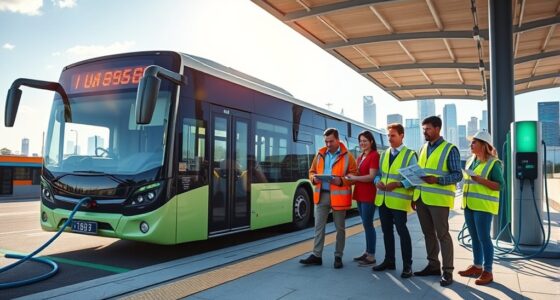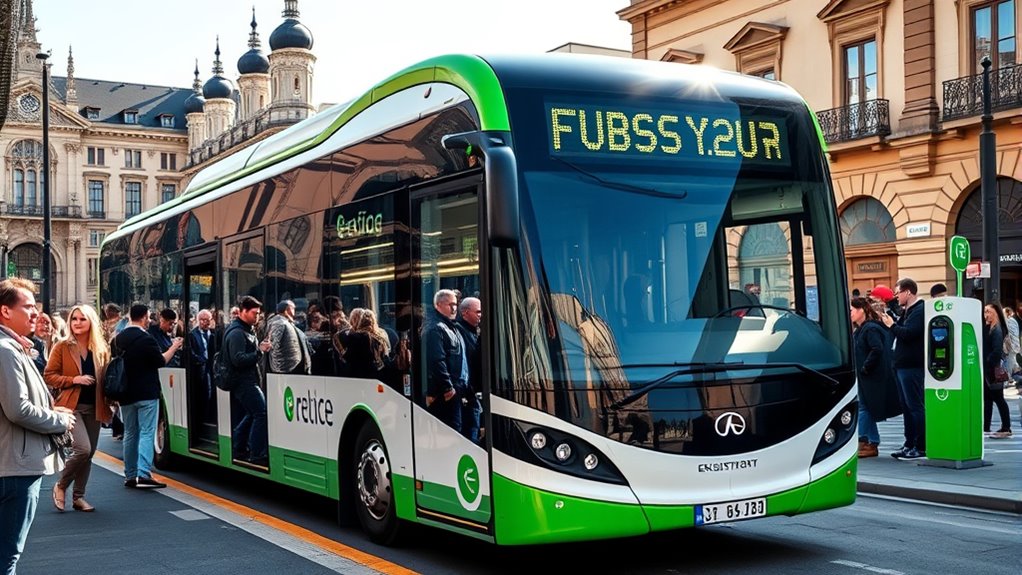

In the first half of 2025, electric bus registrations in Europe jumped by 41%, showing a rapid move toward greener public transport. Advancements in battery tech enable longer routes and quicker charging, making electric buses more practical. Growing infrastructure, along with government incentives and investments, support this trend. As confidence in EV technology increases and infrastructure expands, it’s clear the market is accelerating. Keep exploring to discover what’s driving these exciting changes.
Key Takeaways
- Electric bus registrations in Europe increased by 41% in the first half of 2025, indicating rapid market growth.
- Advances in battery technology and charging infrastructure are driving higher adoption rates.
- Government investments and incentives are supporting fleet upgrades and infrastructure expansion.
- The shift reflects increased confidence in electric buses’ reliability and environmental benefits.
- Growing demand aligns with Europe’s push for sustainable public transportation solutions.

Electric bus registrations across Europe surged by 41% in the first half of 2025, reflecting a rapid shift toward sustainable public transportation. This growth highlights how cities and transit agencies are increasingly prioritizing eco-friendly options, driven by advancements in battery technology and the expansion of charging infrastructure. As you look at this trend, it’s clear that improved battery technology is a key factor enabling longer routes and quicker turnaround times for electric buses. Modern batteries now offer higher energy density, allowing buses to travel greater distances on a single charge, which reduces the need for frequent charging breaks and increases operational efficiency. These technological improvements give transit authorities more confidence to replace traditional diesel buses, knowing that their electric counterparts can meet city demands reliably.
Equally important is the ongoing development of charging infrastructure. You’ll notice that the rapid deployment of charging stations, including fast chargers at depots and key transit points, plays an essential role in supporting this surge in electric bus adoption. These stations cut down charging time considerably, allowing buses to be back on the road faster and reducing the downtime associated with charging. With a more extensive and accessible charging network, transit operators find it easier to incorporate electric buses into their fleets without disrupting schedules or service levels. The installation of high-capacity chargers and the integration of smart grid solutions also ensure that energy is managed efficiently, reducing costs and minimizing environmental impact. Additionally, public awareness about environmental benefits is boosting support and investment in electric bus initiatives.
Furthermore, governments and municipalities are investing heavily in these infrastructures, often providing incentives and funding to accelerate deployment. This investment makes it easier for operators to justify the switch, especially when combined with the decreasing costs of batteries. As you observe, the overall ecosystem is becoming more robust, with innovations in battery recycling and second-life applications extending the lifespan of batteries and reducing waste. This sustainability-focused approach not only benefits the environment but also makes electric buses more financially attractive over their lifespan.
Top picks for "electric registration europe"
Open Amazon search results for this keyword.
As an affiliate, we earn on qualifying purchases.
Frequently Asked Questions
How Do Electric Bus Registrations Compare to Diesel Bus Registrations?
You’ll find electric bus registrations are rising faster than diesel ones, driven by advances in battery technology and increased market competition. As more cities adopt electric buses, diesel registrations decline due to stricter emissions regulations. This shift reflects a growing preference for cleaner transportation options, with electric buses now capturing a larger share of the market. Your focus on battery tech and competitive pricing is key to staying ahead in this evolving landscape.
What Are the Main Factors Driving the Registration Increase?
You might wonder what’s fueling this surge. It’s a combination of better battery technology, which extends range and reduces costs, and urban planning policies prioritizing clean transportation. Governments are offering incentives, and cities are redesigning infrastructures to support electric buses. These factors create a compelling environment, encouraging more operators to register electric buses, making the shift not just desirable but inevitable for sustainable urban mobility.
Which European Countries Saw the Highest Growth?
You’ll notice that countries like Germany, France, and the UK experienced the highest growth in electric bus registrations. These nations prioritize urban mobility and have implemented strong government incentives, making it easier and more attractive for operators to adopt electric buses. As a result, the combination of policy support and urban mobility goals drives significant growth, encouraging you to contemplate electric options for sustainable transportation solutions.
How Are Charging Infrastructure Developments Influencing Registrations?
Charging infrastructure developments are the backbone of electric bus growth, acting as a catalyst for higher registrations. You’ll notice that expanded charging networks and grid upgrades make charging more accessible and efficient, encouraging fleet operators to switch to electric buses. These improvements reduce range anxiety and downtime, boosting confidence in electric transportation. As charging stations multiply and grids strengthen, you’ll see even more electric buses on European roads, transforming urban mobility.
What Policies Are Most Effective in Promoting Electric Bus Adoption?
You can promote electric bus adoption most effectively through targeted policies like charging incentives and fleet management support. Offering financial incentives for charging infrastructure encourages operators to switch to electric buses, while fleet management programs help optimize operations, reducing costs and easing shift barriers. These policies make electric buses more appealing, accelerating adoption. By focusing on these areas, you’ll see increased registrations and a more sustainable transportation network.
Conclusion
This 41% surge shows Europe’s commitment to cleaner transportation, making electric buses more visible on the streets. While some might worry about costs, consider how the long-term savings on fuel and maintenance outweigh initial investments. Think of it like switching to solar power—upfront costs might seem high, but you’ll save over time. Embracing this shift helps reduce pollution and creates a healthier environment for everyone. Your support accelerates Europe’s green transportation future.