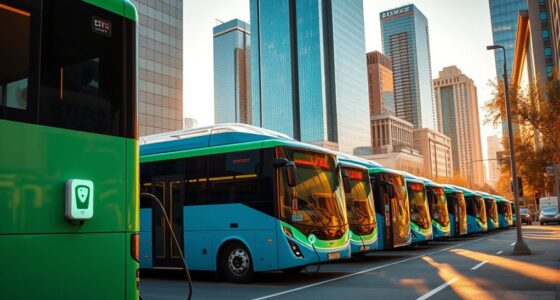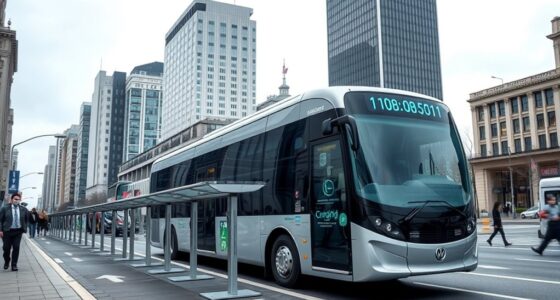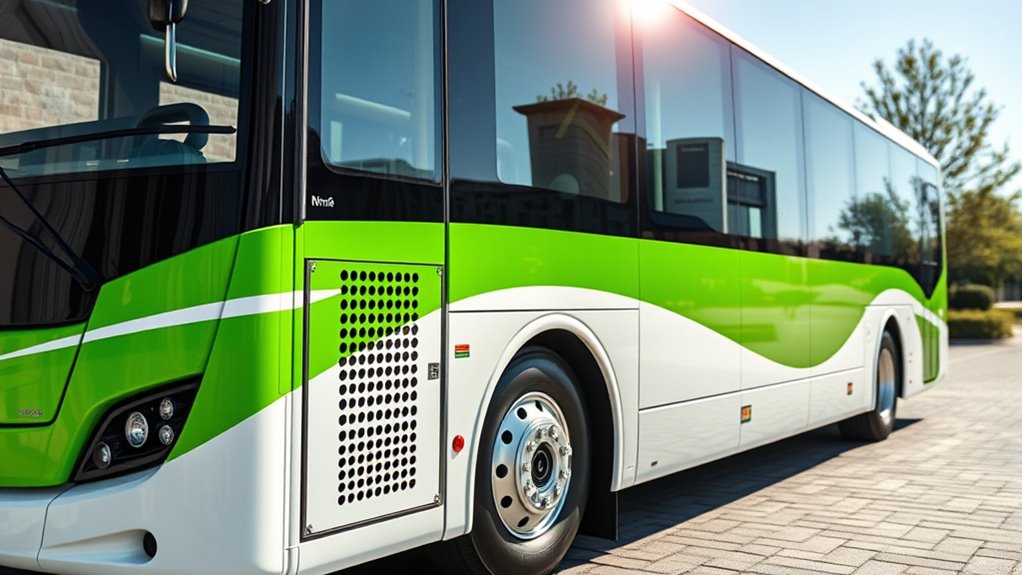

The new NMC4 battery generation for Ecitaro buses offers higher capacity, improved safety, and longer lifespan, boosting your bus’s efficiency and range. With faster charging abilities and better thermal management, you’ll experience less downtime and more reliable service. This advancement supports sustainable urban transportation and seamless integration with existing infrastructure. Staying ahead with this technology means your fleet becomes greener and more cost-effective—keep exploring to see how it transforms electric mobility for your fleet.
Key Takeaways
- The NMC4 battery generation offers higher capacity, safety, and longer lifespan for Ecitaro buses.
- It enables longer driving ranges and reduces recharging frequency for improved operational efficiency.
- Supports faster charging and compatibility with existing and future charging infrastructure.
- Promotes greener urban transit by accelerating electric mobility and reducing emissions.
- Represents a significant technological advancement, ensuring Ecitaro buses remain eco-friendly and future-proof.
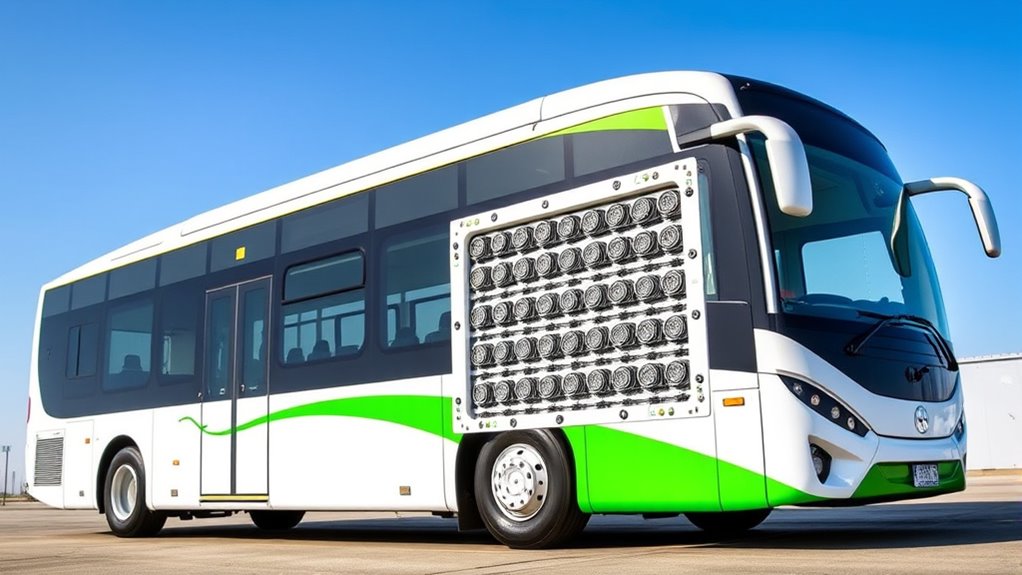
The new NMC4 battery generation represents a significant leap forward in energy storage technology, offering higher capacity, improved safety, and longer lifespan. As someone invested in sustainable transportation, you’ll appreciate how this advancement not only boosts the performance of Ecitaro buses but also reshapes the landscape of electric mobility. The improved battery technology means you can expect longer driving ranges, reducing the need for frequent recharging and increasing operational efficiency. This is vital for city transit systems that require reliable, all-day service without downtime. The enhanced safety features built into the NMC4 batteries provide peace of mind, with better thermal management and more robust protection against potential hazards. Plus, the longer lifespan of these batteries reduces replacement costs and waste, supporting your sustainability goals. Additionally, the development of compact and lightweight designs allows for easier integration into existing bus models, enhancing overall vehicle efficiency.
Implementing this new generation of batteries also influences the development of charging infrastructure. As you consider upgrades or new installations, you’ll find that the higher capacity of NMC4 batteries enables faster charging rates, meaning less time spent plugged in and more time on the road. This shift encourages the adoption of rapid chargers and high-capacity charging stations, which are essential for maintaining the efficiency of electric bus fleets. The compatibility of NMC4 batteries with existing and upcoming charging infrastructure means you won’t need to overhaul your entire setup; instead, you can upgrade incrementally, ensuring smoother transitions and lower capital expenses. As the batteries become more resilient and capable of handling higher charge currents, your charging strategies can become more flexible, accommodating peak demand periods without stressing the system.
Furthermore, the integration of the NMC4 batteries into your fleet can accelerate the shift toward greener urban transport. The increased energy density and safety improvements make electric buses more appealing to city planners and operators aiming to meet aggressive emissions targets. You’ll find that the combination of advanced battery technology and expanding charging infrastructure creates a more robust, scalable electric vehicle ecosystem. This synergy helps to future-proof your transportation investments, ensuring that your buses remain competitive and environmentally friendly over their operational lifespan. Overall, the adoption of NMC4 batteries signals a new era for electric buses like the Ecitaro, where higher capacity, safety, and smarter charging options come together to deliver a cleaner, more efficient transit solution for your city.
Top picks for "nmc4 battery generation"
Open Amazon search results for this keyword.
As an affiliate, we earn on qualifying purchases.
Frequently Asked Questions
How Does the NMC4 Battery Compare in Cost to Previous Models?
You’ll find that the NMC4 battery generally costs less than previous models due to advancements in battery manufacturing and a focus on cost reduction. These improvements streamline production, making the batteries more affordable without sacrificing performance. As a result, you benefit from lower upfront costs and better long-term value. This cost efficiency helps operators adopt newer, more reliable batteries while keeping expenses manageable.
What Is the Expected Lifespan of the New NMC4 Batteries?
You can expect the new NMC4 batteries to last around 8 to 10 years, which is a significant improvement over previous models. This enhanced battery longevity means fewer replacements and lower maintenance requirements over time. Keep in mind, proper care and regular checks help maximize their lifespan. With this durability, you’ll enjoy reliable performance and reduced operational costs, making your bus fleet more efficient in the long run.
Are There Any Environmental Benefits With the NMC4 Battery?
You’ll find that the NMC4 batteries offer environmental benefits by reducing the carbon footprint, thanks to renewable sourcing of materials. They also support better battery recycling processes, which minimize waste and promote sustainability. This means fewer harmful emissions and a smaller ecological impact over their lifespan. Choosing these batteries helps you contribute to a greener future, as they enable more efficient recycling and resource use, aligning with eco-friendly transportation goals.
Will the NMC4 Batteries Be Compatible With Existing Ecitaro Buses?
The NMC4 batteries may not be fully compatible with existing Ecitaro buses without a bus retrofit. You’ll need to check the specific battery compatibility for your model, as certain configurations might require modifications or upgrades. It’s best to consult with your bus manufacturer or service provider to determine if a retrofit is necessary, ensuring you get the best performance and safety benefits from the new battery technology.
How Long Does It Take to Fully Charge the NMC4 Batteries?
Imagine your bus as a hungry traveler needing a quick feast. With advanced battery technology and proper charging infrastructure, the NMC4 batteries can be fully charged in about 3 to 4 hours using fast chargers. Regular chargers may take around 6 to 8 hours. This efficient charging time guarantees your bus gets back on the road swiftly, keeping your fleet running smoothly and reliably.
Conclusion
With the new NMC4 battery generation, your Ecitaro buses gain longer range and faster charging. While technology advances, the challenge remains: balancing performance with sustainability. You now hold the power to reduce emissions, yet must also consider resource use and environmental impact. As innovation accelerates, remember that progress isn’t just about bigger batteries or quicker charges, but about creating a cleaner, more sustainable future—one where efficiency and responsibility go hand in hand.