
📊 Full opportunity report: The $60 Billion Bargain: Why Cursor Could Be a Steal for SpaceX on ThorstenMeyerAI.com — validation score, market gap, and execution plan.

Get business pricing on monitors, keyboards and dev gear
- Business-only prices and quantity discounts
- Tax-exempt purchasing
- Multiple users, one account, clear invoices
TL;DR
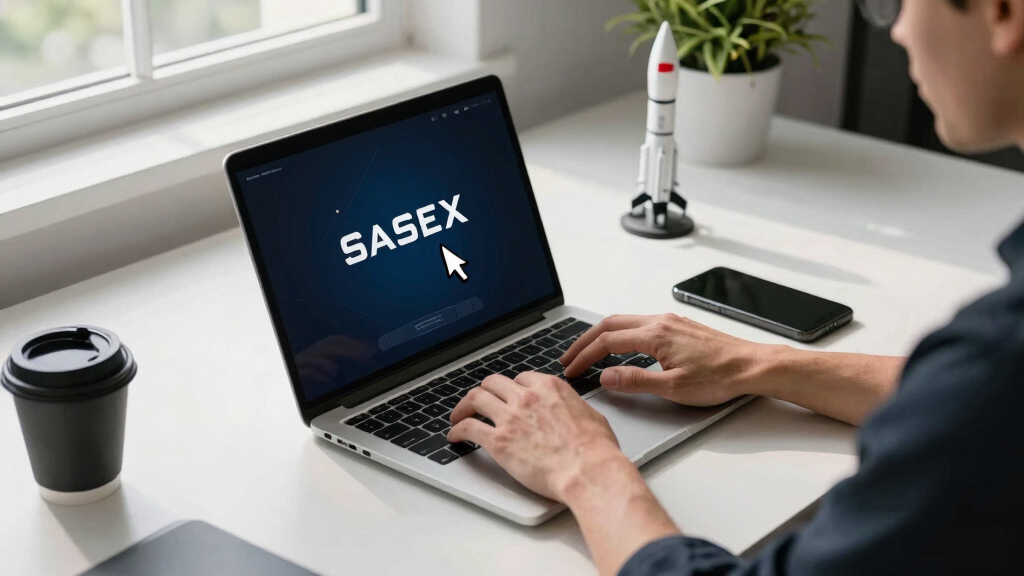
SpaceX announced it is acquiring Cursor, an AI coding toolmaker, for $60 billion in stock. The deal is seen as a strategic move to secure a foothold in profitable AI software and control key workflows, with the price considered a discount given Cursor’s rapid growth.
SpaceX has announced it will acquire Cursor, a prominent AI coding software company, for $60 billion in all-stock. This strategic move positions SpaceX to leverage Cursor’s profitable AI tools and developer platform, with the market reacting positively, boosting SpaceX’s valuation above $2.9 trillion.
The acquisition was executed at a valuation of approximately 15 times Cursor’s trailing revenue, which is high by traditional standards but rapidly shrinking in forward-looking terms. Cursor’s revenue has grown from $2 billion in February to over $4 billion in early June, with projections reaching $6 billion by 2026. When calculated on future revenue, the multiple drops to below 10x, making the deal more attractive.
Notably, the entire transaction was paid in SpaceX’s stock, representing only 3.4% dilution at the time of IPO, and caused SpaceX’s stock to jump approximately 16%, briefly elevating its market cap above $2.94 trillion. This move effectively allows SpaceX to acquire a fast-growing, profitable AI business with minimal immediate cash expenditure.
The $60B bargain: why Cursor could be a steal
$60 billion for a code editor sounds like a bubble. Look past the headline and the price isn’t the scandal — it’s the discount. Here’s the case that SpaceX got Cursor cheap.
A melting multiple, paid in appreciating paper that cost almost nothing, for the profitable leader of the only AI category reliably making money — plus the missing app layer and an escape from the margin trap. If the growth holds and integration doesn’t break the product, $60B will read like a down payment. The risk isn’t overpaying for what Cursor is — it’s breaking what made it worth buying.
Strategic Impact of the Cursor Acquisition for SpaceX
This deal grants SpaceX a profitable foothold in AI software, a sector that is increasingly critical for enterprise workflows. Cursor’s leadership in AI coding tools, with over 1 million paying users and 50,000 enterprise clients, provides a valuable distribution channel and a competitive edge. Additionally, owning Cursor’s applied AI team and proprietary models enhances SpaceX’s vertical integration, reducing reliance on third-party AI providers and cutting costs on API fees.
Furthermore, the acquisition denies rivals like OpenAI and Microsoft access to a key developer platform, positioning SpaceX and its AI subsidiary xAI as dominant players in enterprise AI development. The deal exemplifies Musk’s strategy of building in-house capabilities to maximize margins and control over critical technology layers.
Popular right now

Bose QuietComfort True Wireless Earbuds with Active Noise Cancellation, Black

Ninja Flip Toaster Oven and Air Fryer, 8-in-1, Stainless Steel, SP151

KitchenAid Artisan 5-Quart Tilt-Head Stand Mixer, Almond Cream
As an affiliate, we earn on qualifying purchases.
Background on Cursor and Recent Growth Trends
Cursor, developed by Anysphere, emerged as a leader in AI coding tools, with revenue growth accelerating rapidly—doubling from $2 billion to $4 billion within four months. Its success is driven by a robust developer community and enterprise adoption, including half of the Fortune 500. Notably, Cursor’s enterprise segment is already profitable, with positive gross margins, contrasting with SpaceX’s cash-intensive rocket and satellite operations.
Prior to the acquisition, Cursor had turned down offers from OpenAI and Microsoft, signaling its strategic value and independence. Its own in-house coding model, Composer, built on open weights, performs the majority of its work, further emphasizing its technological strength. Meanwhile, Cursor’s reliance on external API providers was seen as a strategic vulnerability, which SpaceX aims to eliminate through vertical integration.
“This acquisition accelerates our AI capabilities and enhances our vertical integration, positioning SpaceX at the forefront of enterprise AI development.”
— SpaceX spokesperson
Remaining Questions About the Acquisition’s Long-Term Impact
While the deal’s strategic rationale is clear, it is still uncertain how effectively SpaceX will integrate Cursor’s technology and team, and whether the anticipated cost savings and margins will materialize as planned. Additionally, the long-term valuation implications depend on Cursor’s continued growth and the competitive response from rivals like OpenAI and Microsoft, which remain active in the AI developer tools space.
Next Steps for SpaceX and Cursor Integration
Following the acquisition, SpaceX will likely focus on integrating Cursor’s AI models and developer platform into its broader AI and aerospace infrastructure. Key milestones include the rollout of joint products, the expansion of enterprise customer base, and potential new AI offerings leveraging SpaceX’s hardware and compute resources. Monitoring Cursor’s revenue growth and profitability will be critical to assessing the deal’s success.
Key Questions
Why did SpaceX pay so much for Cursor?
SpaceX paid a high valuation because Cursor is a rapidly growing, profitable AI coding platform with strategic assets like its own models and a large enterprise customer base. The deal also denies competitors access to a key developer distribution channel.
How will this acquisition benefit SpaceX?
It provides SpaceX with a profitable AI business, reduces reliance on third-party APIs, enhances vertical integration, and positions the company as a leader in enterprise AI workflows.
Is the $60 billion price justified?
While the headline number appears high, the deal’s forward revenue multiple is falling below 10x, and Cursor’s rapid growth and strategic value make the price more reasonable from a long-term perspective.
What are the risks associated with this acquisition?
Risks include integration challenges, whether Cursor’s growth can be sustained, and how competitors might respond to this move in the AI developer tools market.
What does this mean for AI competition?
This move consolidates SpaceX’s position in enterprise AI, potentially disrupting the competitive landscape by blocking rivals from gaining a foothold in developer workflows.
Source: ThorstenMeyerAI.com