
TL;DR

Get business pricing on monitors, keyboards and dev gear
- Business-only prices and quantity discounts
- Tax-exempt purchasing
- Multiple users, one account, clear invoices
Siemens is investing heavily in industrial AI focused on physical systems, not chatbots, through its Industrial Foundation Model and a partnership with NVIDIA. This approach aims to revolutionize factory automation and design, with a fully AI-driven factory planned for 2026.
Siemens has unveiled a comprehensive strategy to embed artificial intelligence into manufacturing processes, emphasizing physical AI over language-based models. The company’s focus is on developing specialized models and platforms that process industrial data, aiming to transform factory automation and design starting in 2026. This move underscores Siemens’ belief that AI’s most significant value lies in physical systems, not chatbots or text-based AI.
At CES 2026, Siemens announced its plan to build the Industrial Foundation Model (IFM), a specialized AI designed to analyze and contextualize 3D models, 2D drawings, and sensor data for manufacturing. Siemens also revealed an expanded partnership with NVIDIA to develop the Industrial AI Operating System, a platform intended to embed AI across the entire industrial lifecycle, from design to supply chain management.
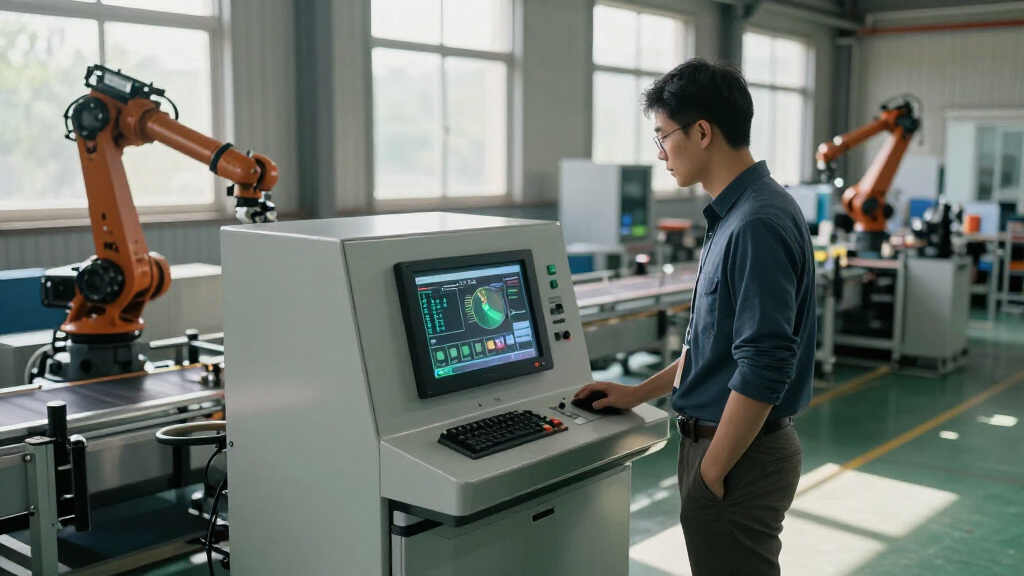
The first fully AI-driven, adaptive manufacturing site is scheduled to launch in 2026 at the Siemens Electronics Factory in Erlangen, Germany. Siemens is also developing tools like Digital Twin Composer and deploying nine industrial copilots to optimize operations and design processes. The company emphasizes that its proprietary data—covering engineering models, automation logic, and operational telemetry—is a key advantage, as it owns the domain-specific knowledge necessary for effective physical AI applications.
Partnerships with NVIDIA enable Siemens to leverage GPU-accelerated simulation, physics-based AI models, and generative simulation for digital twins that actively engineer and optimize physical systems in real time. However, critics note that much of this initiative depends on NVIDIA’s hardware and software infrastructure, raising questions about independence and performance validation.
Why Siemens’ Physical AI Focus Could Reshape Manufacturing
This strategy signifies a shift from general-purpose AI to specialized, domain-specific models tailored for industrial environments. If successful, Siemens’ approach could lead to more efficient, adaptable factories that reduce costs and improve product quality. The move also highlights a broader industry trend toward integrating AI deeply into physical systems, potentially setting new standards for manufacturing automation and digital twin technology.
For industrial firms and technology providers, Siemens’ emphasis on proprietary data and domain expertise underscores the importance of specialized AI models. It also raises strategic questions about reliance on major tech partners like NVIDIA and the pace at which these innovations can be adopted across long product cycles.
As an affiliate, we earn on qualifying purchases.
Industrial AI Development and Siemens’ Market Position
Siemens has a long history of automation and industrial software leadership, with decades of accumulated operational data and domain knowledge. Its recent focus on physical AI builds on this foundation, aiming to turn its data assets into actionable intelligence for manufacturing. The company’s announcement aligns with a broader industry push toward digital twins, simulation, and AI-driven automation, but it distinguishes itself through its emphasis on proprietary, physical-world data.
Prior to CES 2026, Siemens announced the Hannover Messe 2025 debut of its Industrial Foundation Model, signaling a strategic pivot toward specialized AI for manufacturing. The company’s partnerships with NVIDIA, announced in late 2025, further cement this trajectory, with plans to develop GPU-accelerated simulation tools and digital twin platforms. The industry is watching to see how quickly these initiatives translate into operational benefits, given the long procurement cycles typical of industrial customers.
“Industrial AI is no longer a feature; it’s a force that will reshape the next century.”
— Roland Busch, Siemens CEO
As an affiliate, we earn on qualifying purchases.
Uncertainties Around Performance and Adoption Speed
While Siemens has outlined ambitious plans, many specifics remain unconfirmed. There are no published performance metrics for the Digital Twin Composer or the fully AI-driven factory in Erlangen. The reliance on NVIDIA’s hardware and software infrastructure also raises questions about hardware independence and long-term viability. Additionally, the lengthy adoption cycle typical of industrial customers suggests that widespread deployment may take several years, tempering expectations of immediate impact.
As an affiliate, we earn on qualifying purchases.
Next Steps in Siemens’ Industrial AI Rollout
Siemens plans to launch the fully AI-driven factory in Erlangen in 2026, serving as a blueprint for future deployments. The company will also roll out Digital Twin Composer and expand its industrial copilot suite, with early pilot results expected to be shared later in 2026. Industry observers will be watching for validation of performance claims and how quickly other manufacturers adopt Siemens’ platform, given the long sales cycles in industrial markets.
AI-powered industrial control systems
As an affiliate, we earn on qualifying purchases.
As an affiliate, we earn on qualifying purchases.
Key Questions
What is the Industrial Foundation Model?
The Industrial Foundation Model (IFM) is Siemens’ specialized AI designed to analyze and contextualize industrial data such as 3D models, drawings, and sensor telemetry to optimize manufacturing and engineering processes.
How does Siemens’ partnership with NVIDIA enhance its AI capabilities?
The partnership provides GPU-accelerated simulation, physics-based AI models, and generative simulation tools, enabling Siemens to develop active digital twins and real-time optimization platforms.
When will Siemens’ fully AI-driven factory be operational?
The company plans to launch the factory in Erlangen in 2026, with other pilot tools and platforms expected to roll out gradually through that year.
What are the main risks or criticisms of Siemens’ approach?
Dependence on NVIDIA’s hardware and software, lack of validated performance data, and the slow adoption cycle in industrial markets are key concerns.
Why is Siemens betting on physical AI rather than chat-based AI?
Siemens believes that the most valuable AI applications are in physical systems, where models can process complex engineering data, physics, and sensor telemetry, rather than text-based interactions.
Source: ThorstenMeyerAI.com
Halloween Picks
halloween
As an affiliate, we earn on qualifying purchases.