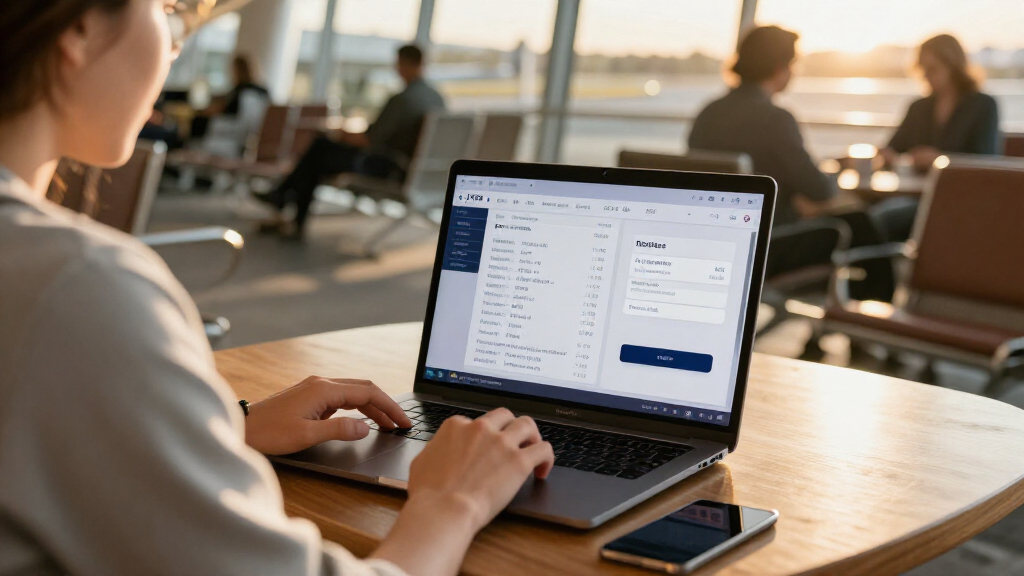

🔍 Read the full analysis: Your Approval Isn’t Enough For An AI Agent To Book A United Flight on ThorstenMeyerAI.com

Get business pricing on monitors, keyboards and dev gear
- Business-only prices and quantity discounts
- Tax-exempt purchasing
- Multiple users, one account, clear invoices
TL;DR
United Airlines revised its contract of carriage on Nov. 11, 2026, to prohibit unauthorized third-party AI agents from making, changing or servicing tickets and buying products through its channels. The restriction applies even when a passenger supervises or approves an agent’s actions; travelers can still use AI to search for flights, but must complete the purchase themselves, according to reporting cited in the source material.
United Airlines has barred unauthorized third-party AI agents from making, changing or servicing tickets through its website, app and intermediary channels, under contract terms revised Nov. 11, 2026. The restriction applies even when a passenger supervises or approves the software’s actions, putting a limit on a much-promoted use of AI: having an assistant complete a travel purchase on a customer’s behalf.
United’s announcement says it is restricting agent access both directly on its digital platforms and indirectly through travel agencies and aggregators. The airline’s revised contract of carriage adds “the use of AI Agents to make, modify or service a Ticket” or purchase a product or service to its list of prohibited practices. The text was reproduced by travel industry sites including View from the Wing, One Mile at a Time and PPC Land; the source report said it could not independently load United’s website to check the contract directly.
The contract defines an AI agent broadly as software or a service that takes autonomous or semi-autonomous action to search for, book, purchase, ticket, service or manage United products. It includes AI assistants embedded in consumer platforms, AI-enabled browsers, standalone agents and third-party assistants connecting through an intermediary. The definition says the rule applies whether or not a passenger supervises or approves the software’s actions, and does not name specific products.
According to The Wall Street Journal, as cited by View from the Wing, AI tools may still search for United flights and display fares; the customer must complete the purchase. The contract also says United may cancel reservations made, modified or serviced by an agent. Its remedies clause lists possible actions such as invalidating tickets, charging their full value, removing miles or ending MileagePlus membership, though the cited reporting says the contract does not establish how often or under what circumstances United will apply those penalties.
Your approval isn’t enough for an AI agent to book a United flight
United’s revised contract bars unauthorized third-party AI agents from buying or managing tickets, even when a traveler supervises or approves their actions.
Where AI can help
The boundary is between researching a flight and completing a United transaction.
- Search for United flights
- Display fares and options
- Complete the purchase
- Make, change or service the booking
Who the rule covers
United defines AI agents broadly, including software that acts autonomously or semi-autonomously.
Embedded assistants
AI assistants built into consumer platforms are included.
AI-enabled browsers
Browser agents that act on a traveler’s behalf are covered.
Standalone agents
Agents connecting directly or through travel intermediaries are included.
Possible consequences
The contract lists remedies, but the cited reporting does not say how often United will apply them.
United may cancel bookings made, changed or serviced by an AI agent without notice.
The contract lists invalidating tickets and charging their full value among possible remedies.
Possible actions include removing miles or ending MileagePlus membership.
The Boundary at United’s Checkout
The rule separates AI-assisted flight research from AI-executed transactions. Travelers may be able to ask an assistant to compare options, but cannot rely on an outside agent to complete or manage a United booking under the new terms—even if they approve each step. That distinction matters to customers building trip-planning routines around tools that promise to handle purchases, changes and other tasks for them.
It also gives United control over how customers reach its booking and servicing systems. At a Chicago event, CEO Scott Kirby offered a commercial reason for resisting outside agents, according to The Wall Street Journal: “To be honest, I don’t want to create another middleman.” The cited reporting describes United as the first U.S. airline to state such a prohibition explicitly. Other companies have taken differing approaches: Amazon and JPMorgan Chase have blocked outside agents, while Southwest and Expedia are working with ChatGPT, according to the source material.
The practical scale of agent purchasing remains uncertain and appears limited in at least one cited example. Uber counted four agent-booked rides in a week when it handled about 320 million trips and orders, according to the source report. That figure concerns Uber, not United bookings, and does not establish how many airline customers use agents. Still, United’s policy sets terms before the practice becomes more common and signals that an AI assistant’s customer approval does not necessarily satisfy a company’s rules for automated transactions.
Popular right now

Bose QuietComfort Wireless Noise-Cancelling Over-Ear Headphones, Twilight Blue

Ninja PB051 Single-Serve Coffee Maker for Pods and Grounds

iRobot Roomba 105 Combo Robot Vacuum & Mop with AutoEmpty Dock
As an affiliate, we earn on qualifying purchases.
What United Added to Its Contract
United’s announcement described a restriction on unauthorized third-party personal AI assistants and said the company was updating its booking, ticketing and distribution policies. The detailed rule appears in Rule 6.J.6 of the contract of carriage, among provisions addressing prohibited practices. The source report says three travel publications reproduced overlapping versions of the new language, which it described as matching.
Related clauses spell out possible consequences. Rule 5.H allows United to cancel reservations made, changed or serviced by AI agents without notice. Rule 5.F, as quoted by PPC Land, limits United’s liability for damages connected to a cancellation under that rule. Rule 6.K lists additional remedies, including invalidating tickets, charging their full value, deleting miles or terminating a MileagePlus account. The contract’s Rule 3.E applies the version in effect when a ticket is issued; PPC Land’s reading is that tickets issued before Nov. 11 fall under the earlier text.
United cited account security and unintended purchases, saying that sharing credentials with third-party assistants can expose sensitive information or lead to unwanted purchases, account changes or use of miles. It also raised compliance with FAA and Department of Transportation requirements, using check-in acknowledgments about hazardous materials as an example. The source report notes that the federal rule it cites requires passengers to acknowledge they have received the relevant information when completing purchase or check-in without another person’s involvement. The cited material does not establish that an agent booking by itself violates that requirement.
““United is taking steps to restrict access – directly within our digital platforms and indirectly via travel agencies and aggregators – to prohibit use by unauthorized, third-party personal AI agents or assistants.””
— United Airlines, in its announcement
Enforcement and Existing Tickets
Several implementation details remain unclear. United’s announcement and the reproduced contract language do not identify specific AI products or explain how the airline will determine whether a booking involved an agent. They also do not say how frequently United plans to cancel agent-related reservations or apply the listed remedies, such as invalidating tickets or removing miles.
The source report says the contract text was not checked directly on United’s website by its author, although multiple travel publications reproduced matching language. The treatment of tickets issued before the revision is also based on PPC Land’s reading of the contract’s effective-date clause, not on a separate United explanation. United’s account-security and regulatory arguments are the airline’s stated rationale; the cited material does not establish that every supervised agent transaction would breach an FAA or DOT requirement.
How United Applies the New Rule
The next practical test is how United applies the revised terms across its website, app and third-party booking channels. The airline’s announcement says it is taking steps to restrict access, but the source material does not provide a timetable, technical details or a description of how customers will be notified when an agent is blocked.
Travelers who want to use AI for a United trip can, according to the Wall Street Journal reporting cited by View from the Wing, use it to search and compare fares, then make the booking themselves. Customers with existing reservations should check the terms that applied when their tickets were issued if they are concerned about the contract change. Whether United will clarify its enforcement approach, identify affected services or change the policy remains to be seen.
Key Questions
Can an AI assistant search for United flights?
According to The Wall Street Journal, as cited by View from the Wing, an assistant may search for flights and show fares. The customer must complete the purchase rather than having the agent book it.
Does human approval make an AI booking acceptable?
No. The contract definition covers autonomous or semi-autonomous actions whether or not a passenger supervises or approves them.
What can United do if an AI agent makes or manages a reservation?
The contract says United may cancel reservations made, modified or serviced by AI agents. It also lists possible remedies including invalidating tickets, charging their full value, removing miles or ending a MileagePlus membership. The cited material does not explain how United will apply those measures in practice.
Does the rule cover every AI product by name?
No specific products are named in the reproduced contract language. The definition covers categories including consumer-platform assistants, AI-enabled browsers, standalone agents and third-party tools using an intermediary connection.
Are tickets issued before Nov. 11 covered by the new terms?
The contract says the applicable terms are those in effect on the ticket’s issue date. PPC Land’s reading, cited in the source report, is that tickets issued before Nov. 11 fall under the earlier text; United’s own clarification of that interpretation was not included.
Source: ThorstenMeyerAI.com