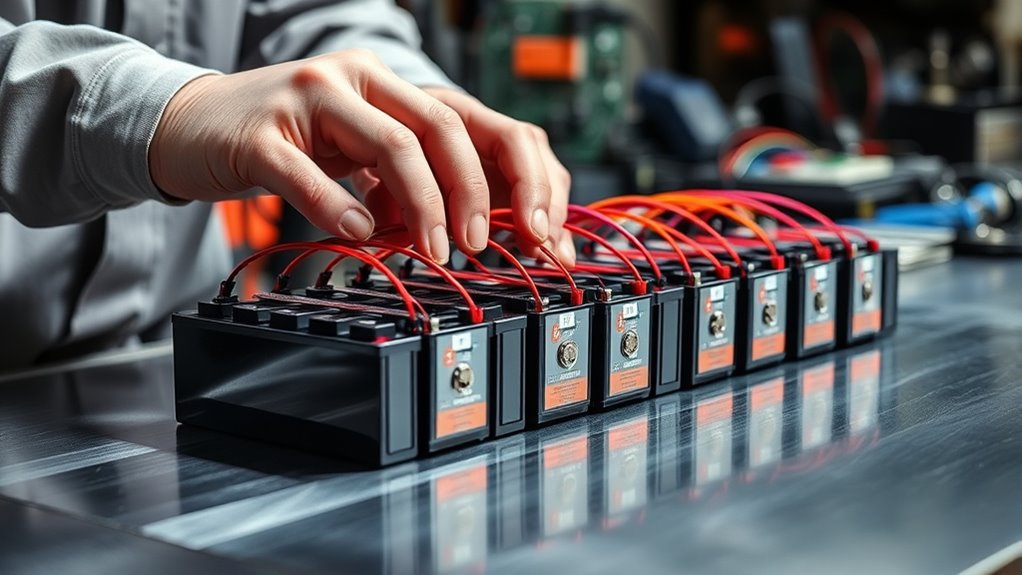

Choosing cost-effective battery re‑cell services can help you save money while supporting sustainability. Refurbishing batteries extends their lifespan, reduces waste, and lowers manufacturing energy use. It also minimizes environmental harm by preventing toxic chemicals from polluting ecosystems. When selecting a provider, guarantee they follow safety standards and handle hazardous materials responsibly. Balancing affordability and eco‑friendliness lets you make smarter, greener choices—continue exploring to discover how to get the most benefits from re‑cell services.
Key Takeaways
- Re‑cell services extend battery lifespan, reducing replacement costs and providing significant long-term savings.
- Refurbishing batteries is often more affordable than purchasing new ones, especially at scale.
- Choosing reputable providers ensures safety, quality, and compliance with environmental standards, avoiding costly issues.
- Proper re‑cell processes minimize waste, hazardous chemical handling, and environmental impact, aligning with sustainable practices.
- Evaluating provider transparency and certifications helps ensure cost-effective solutions without compromising environmental responsibility.

Are your batteries losing their charge faster than they used to? If so, it might be time to consider battery re‑cell services as a cost-effective solution. Instead of constantly replacing batteries, re‑cell services allow you to refurbish existing ones, extending their lifespan and saving you money in the long run. This approach isn’t just about saving your budget; it also plays a vital role in reducing waste and minimizing the environmental impact. When you opt for battery recycling as part of the re‑cell process, you’re actively participating in a sustainable cycle that keeps harmful materials out of landfills and ensures valuable resources are reused. This practice reduces the need for new raw materials, lowers energy consumption during manufacturing, and diminishes the ecological footprint of battery production.
The environmental impact of batteries is significant, especially considering the hazardous chemicals they contain. By choosing re‑cell services, you’re helping to mitigate these concerns. Recycling batteries properly prevents toxic substances from leaching into soil and water, protecting ecosystems and human health. Additionally, re‑cell services often involve refurbishing cells with minimal waste, which further decreases environmental harm. This sustainable approach is especially important now, as the demand for batteries—driven by electric vehicles, renewable energy storage, and portable electronics—continues to grow. Making sure these batteries are recycled and reconditioned responsibly helps reduce the strain on natural resources and supports a greener future. Proper cell assessment during re‑cell processes ensures safety and optimal performance.
Cost-wise, re‑cell services are typically more affordable than purchasing new batteries, particularly for large-scale or industrial applications. Reconditioning existing batteries can be a smart investment that offers reliable performance at a fraction of the cost of new units. When you choose a reputable provider, they thoroughly assess the condition of each cell, replace only what’s necessary, and ensure the re‑cell performs like new. This process not only saves money but also minimizes downtime and maintenance costs down the line. Plus, many service providers include warranties, giving you peace of mind and reassurance that your investment is protected.
However, it’s important to think about the quality and reputation of the re‑cell service provider. Not all services are created equal, and some might cut corners, leading to reduced battery performance or safety concerns. Always verify that the provider adheres to industry standards and uses proper safety protocols. Also, ask about the specific recycling processes involved and how they handle hazardous components. By choosing a trusted provider, you ensure that you’re getting a service that balances cost savings with environmental responsibility and safety. Overall, battery re‑cell services present a compelling option to save money, reduce environmental impact, and maintain reliable power—making them a smart choice for both individuals and organizations committed to sustainability.
Top picks for "cost effective battery"
Open Amazon search results for this keyword.
As an affiliate, we earn on qualifying purchases.
Frequently Asked Questions
How Long Does a Typical Battery Re-Cell Process Take?
A typical battery re-cell process takes about one to three days, depending on the battery chemistry and the re-celling techniques used. You’ll find that lithium-ion batteries often require more careful handling and longer processing times, while lead-acid batteries may be quicker to re-cell. Factors like the battery’s condition and the complexity of the re-celling process influence the timeline, so plan accordingly for efficient turnaround.
Are There Warranties on Re-Conditioned Batteries?
Like a shield protecting a knight, warranties on re-conditioned batteries offer you peace of mind. They usually include warranty coverage that guarantees reliability assurance for a specified period, often ranging from six months to a few years. This means if the battery fails prematurely, you can get repairs or replacements without extra costs. Always check the warranty terms, as coverage varies between providers, ensuring you’re protected and confident in your re-cell investment.
What Types of Batteries Can Be Re-Celled?
You can have various batteries re-celled, including lithium-ion, nickel-metal hydride, and lead-acid types. These processes follow strict recycling standards to guarantee safety and quality. When choosing a re-celling service, check if they specialize in your battery chemistry, as not all batteries are suitable for re-celling. Proper recycling standards help maximize lifespan and performance while minimizing environmental impact.
How Does Re-Celling Impact Overall Battery Lifespan?
Imagine opening a battery’s hidden potential—re-celling can substantially boost your battery’s lifespan. By replacing worn cells, you enhance battery longevity and witness a notable performance improvement. This process effectively extends your battery’s usefulness, saving money and reducing waste. Re-celling doesn’t just restore power; it revitalizes your device’s efficiency, making every charge count longer and stronger. It’s a smart choice for those seeking durability and sustainability in their energy solutions.
Is Re-Celling Environmentally Safer Than Disposal?
Re-celling is generally safer for the environment than disposal because it reduces waste and conserves resources. It minimizes environmental impact by extending battery life and preventing harmful materials from ending up in landfills. Safety considerations include proper handling and processing to avoid leaks or hazards. Overall, re-celling offers a more eco-friendly option, helping you reduce your carbon footprint while ensuring safety during the recycling process.
Conclusion
Choosing cost-effective battery re-cell services is like planting seeds for a sustainable future—you get more life out of your batteries and save money in the long run. By considering the benefits and key factors, you can make smarter choices that boost efficiency and reduce waste. Remember, investing in re-cell services isn’t just a smart move; it’s a step toward a greener, brighter tomorrow. Make the right call today, and watch your efforts blossom into lasting rewards.