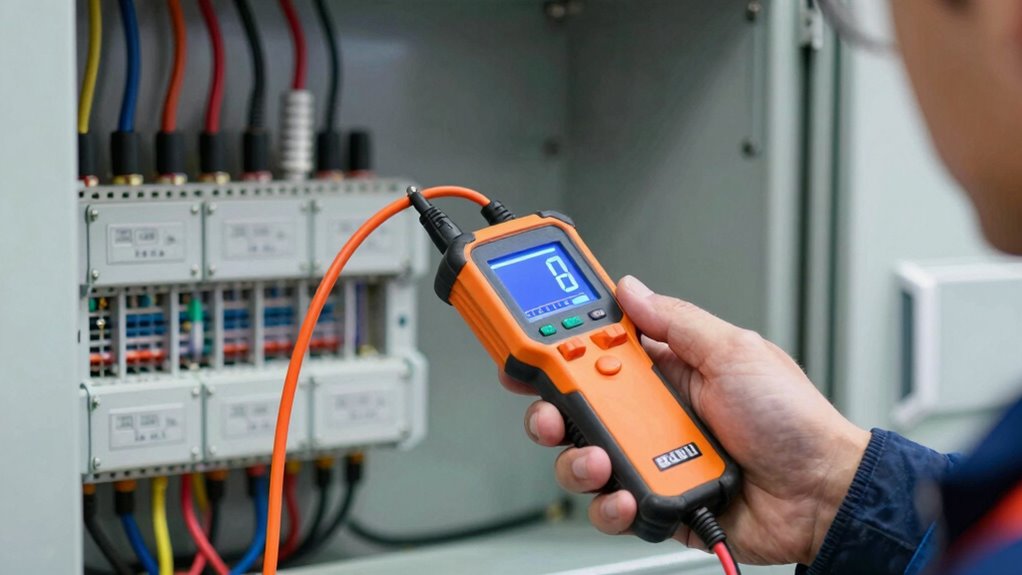

Insulation testers use high voltage to evaluate the quality of electrical insulation, helping you catch issues before they cause costly failures or safety hazards. By applying controlled stress to dielectric materials, you can identify weaknesses, leaks, or deterioration early. Regular checks ensure your equipment stays safe and runs efficiently. Want to learn how to perform these tests correctly and interpret your results? Keep exploring—there’s more to discover.

Get business pricing on monitors, keyboards and dev gear
- Business-only prices and quantity discounts
- Tax-exempt purchasing
- Multiple users, one account, clear invoices
Key Takeaways
- Insulation testers identify early deterioration in electrical insulation, preventing equipment failure and safety hazards.
- Regular high-voltage testing detects leaks or weaknesses before they cause costly breakdowns.
- Proper test procedures and calibration ensure accurate results, supporting reliable maintenance decisions.
- Choosing the right tester type (portable or bench) optimizes testing based on environment and accuracy needs.
- Preventive insulation testing promotes safety, extends equipment lifespan, and avoids unexpected downtime.
As an affiliate, we earn on qualifying purchases.
What Are Insulation Testers and How Do They Work?

Insulation testers are essential tools used to measure the quality of insulation in electrical systems and equipment. They work by applying a high voltage to the dielectric materials, which are the insulating barriers between conductive parts. This process assesses the material’s ability to withstand voltage without breaking down, known as voltage withstand. When you use an insulation tester, it sends a controlled, high-voltage current through the insulation to check for leaks or weaknesses. If the insulation fails to hold the voltage, the tester indicates a problem, signaling potential failure points. These tests ensure that the dielectric materials can resist electrical stress safely, preventing future failures. Understanding how insulation testers operate helps you evaluate equipment reliability and safety effectively, especially when considering factors like dielectric materials and their properties. Proper testing procedures also help identify potential failure points before they lead to costly repairs or safety hazards. Familiarity with testing procedures enhances the accuracy and reliability of the assessment process. Additionally, knowing the test voltage levels used can help interpret results more accurately.
electrical insulation resistance tester
As an affiliate, we earn on qualifying purchases.
As an affiliate, we earn on qualifying purchases.
Why Regular Insulation Testing Is Essential for Safety and Equipment Life
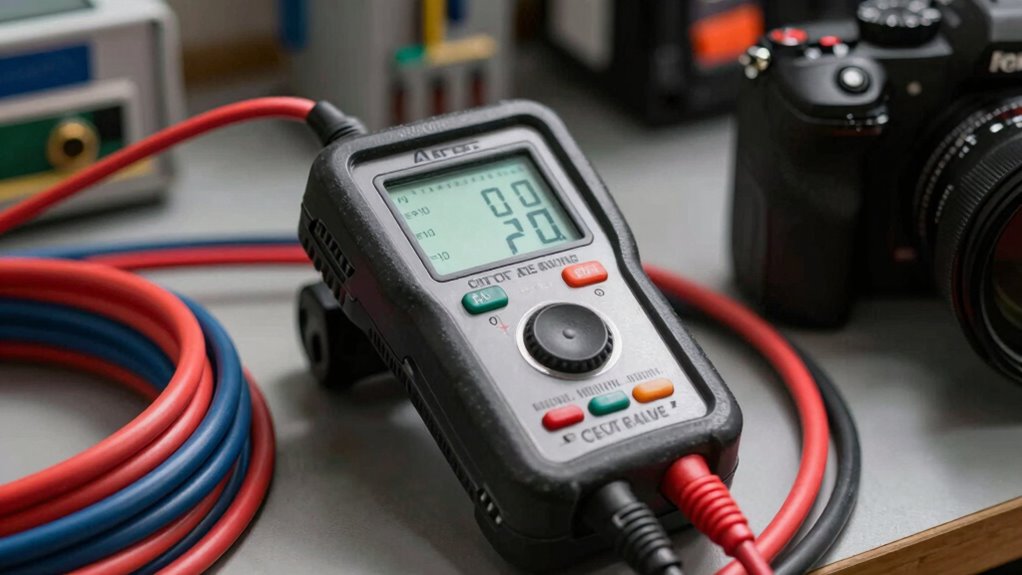
Regular insulation testing is essential because it helps identify potential issues before they lead to equipment failure or safety hazards. Over time, insulation can degrade due to factors like heat, moisture, and wear, increasing the risk of shorts or sparks. By conducting regular tests, you can detect early signs of insulation degradation, preventing costly repairs and dangerous failures. Insulation degradation not only compromises safety but also accelerates corrosion prevention issues, as moisture and contaminants can infiltrate compromised areas. Maintaining proper insulation integrity extends equipment life and ensures safe operation. Additionally, understanding electrical system maintenance best practices can further enhance safety and efficiency, especially when combined with insights into indoor air quality and how environmental factors impact equipment. Implementing preventive maintenance schedules that include insulation testing is a proactive approach to ensuring long-term reliability. Regular testing also helps in detecting hidden faults, which might otherwise go unnoticed until a failure occurs. Proper testing procedures are crucial to obtaining accurate results and avoiding unnecessary downtime.
As an affiliate, we earn on qualifying purchases.
Choosing the Right Type of Insulation Tester for Your Needs
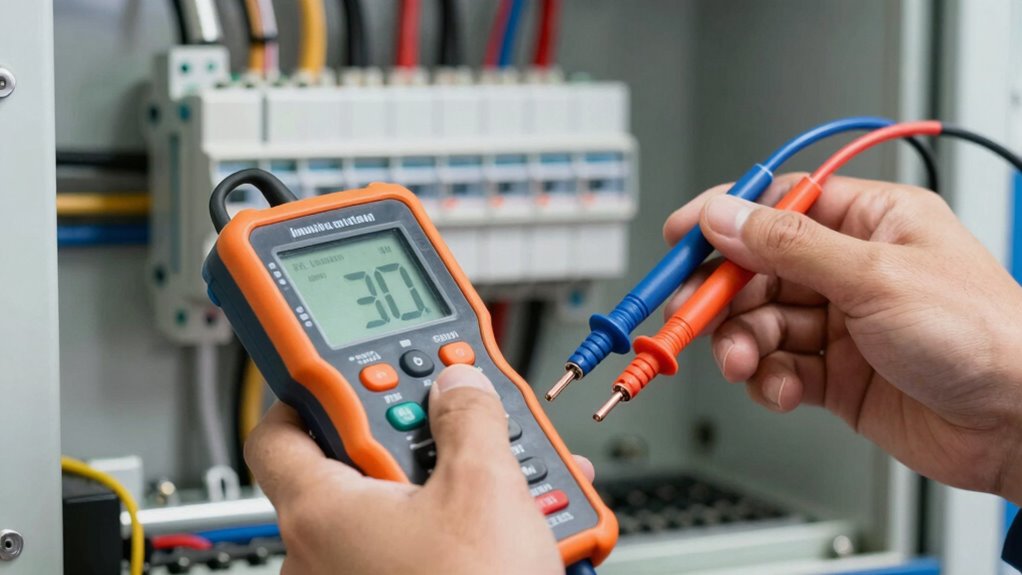
When selecting an insulation tester, you need to take into account whether a portable or bench model suits your workspace and mobility needs. Digital displays often provide clearer readings, but some prefer the simplicity of analog meters. Understanding these differences helps you choose the best tester for your specific testing environment. Additionally, consider how cycling gear maintenance techniques can help ensure your electrical testing equipment remains in top condition. Proper maintenance, including insulation testing procedures, can extend the lifespan of your equipment and improve measurement accuracy. Regularly inspecting and calibrating your testers aligns with general electrical safety practices, ensuring reliable results.
Portable vs. Bench Models
Choosing the right insulation tester depends on whether you need a portable device for fieldwork or a bench model for laboratory use. Portable testers are lightweight and battery-powered, making them ideal for on-site inspections where mobility is essential. They typically offer quick setup and ease of use, but may have limitations in measurement accuracy or advanced features. Bench models, on the other hand, are designed for controlled environments and often require AC power, providing more precise readings and thorough testing options. Consider your environment and needs: if you frequently move between sites, portability considerations and battery life are vital. For stationary, detailed testing, a bench model’s stability and advanced capabilities make it the better choice. Both types serve different purposes effectively. Free Floating testing methods are essential for assessing insulation integrity accurately in various settings. Additionally, understanding measurement accuracy and the environment where testing occurs can greatly influence your choice of equipment. Selecting an appropriate tester also involves considering test environment conditions to ensure reliable results. When selecting a tester, also evaluate the user interface to ensure ease of operation in different scenarios.
Digital vs. Analog Displays
Digital and analog displays each have distinct advantages, so selecting the right type depends on your specific testing needs. A digital display offers quick, clear readings with precise values, making it easy to interpret results at a glance. It’s especially useful if you need to record data or analyze trends over time. On the other hand, analog readability is often better in bright environments, allowing you to quickly assess whether measurements fall within acceptable ranges. Analog displays can also provide a more intuitive sense of fluctuations, which is helpful during troubleshooting. Consider how you’ll use the insulation tester—if you prefer instant, detailed data, go digital. If you value quick visual cues in challenging lighting, an analog display might be your best choice. Display type can also influence how effectively you interpret the results during your testing process. Additionally, understanding measurement accuracy is crucial for ensuring reliable results from your insulation tester. Moreover, the user interface of the device can significantly impact ease of use, especially for those new to insulation testing. When selecting your insulation tester, it’s also important to consider durability and build quality, as testing environments can sometimes be harsh or demanding. In addition, selecting a device with safety features can help prevent accidents during high-voltage testing.
digital insulation resistance meter
As an affiliate, we earn on qualifying purchases.
As an affiliate, we earn on qualifying purchases.
How to Perform an Insulation Test: A Step-by-Step Guide
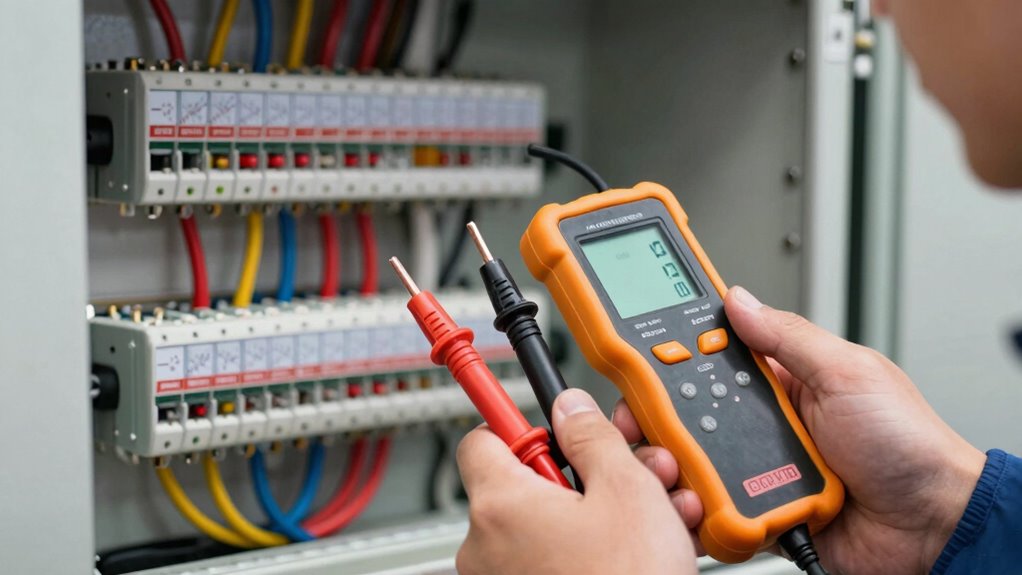
Performing an insulation test is a straightforward process that helps guarantee electrical safety and equipment reliability. First, ensure the tester is properly calibrated and the circuit is de-energized. Connect the test leads to the equipment’s terminals, following testing procedures carefully. Set the appropriate voltage level on your insulation tester, usually between 500V and 1000V. Press the test button and hold until the reading stabilizes. Record the result, then disconnect safely. Always observe safety precautions and avoid touching live parts. Use the table below for visual guidance:
| Step | Action |
|---|---|
| Prepare | Power off equipment and connect tester |
| Set voltage | Choose correct voltage for testing |
| Conduct test | Press and hold test button |
| Record results | Note the insulation resistance reading |
| Disconnect and finish | Turn off tester and ensure safety |
Additionally, understanding the insulation resistance measurement is vital for assessing the condition of electrical insulation over time. Proper testing procedures help prevent unexpected failures and ensure ongoing safety. Regularly performing these tests is essential for maintaining electrical safety standards and extending equipment lifespan.
Understanding Your Insulation Test Results: What Do the Numbers Mean?
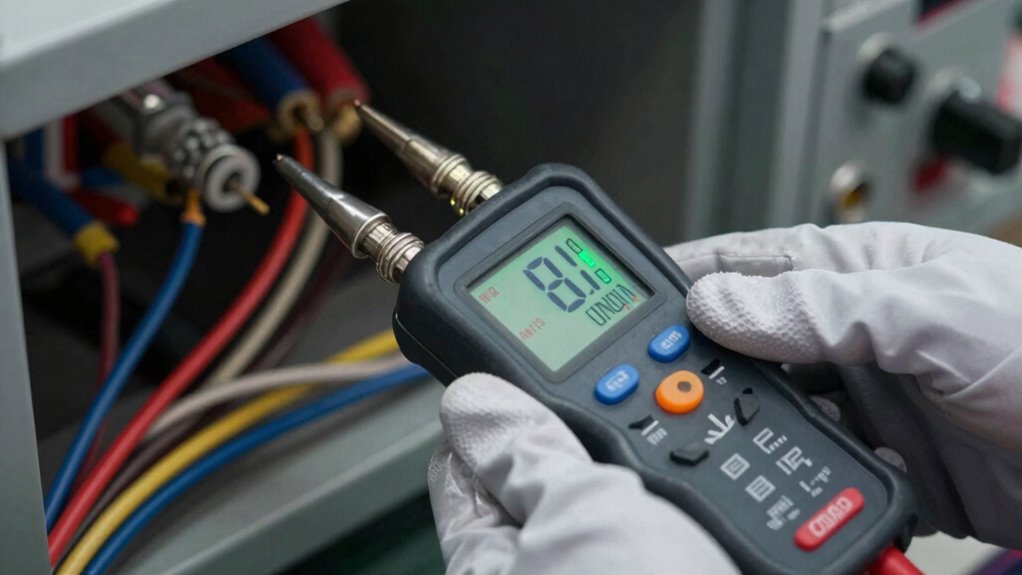
When you review your insulation test results, understanding what the numbers indicate is crucial for evaluating electrical safety. The insulation resistance value tells you how well the material resists electrical flow; higher resistance means better insulation. Low readings may signal deterioration or damage, risking short circuits or shocks. Dielectric strength reflects how much voltage the insulation can withstand before breaking down. A high dielectric strength indicates the insulation can handle voltage spikes safely. Keep in mind, these numbers vary depending on equipment type and standards, but generally, higher resistance and dielectric strength are desirable. Always compare your results to manufacturer specifications or industry standards to determine if your insulation is in good condition or needs attention. Proper interpretation helps prevent failures and ensures safe operation.
Common Mistakes to Avoid When Testing Insulation
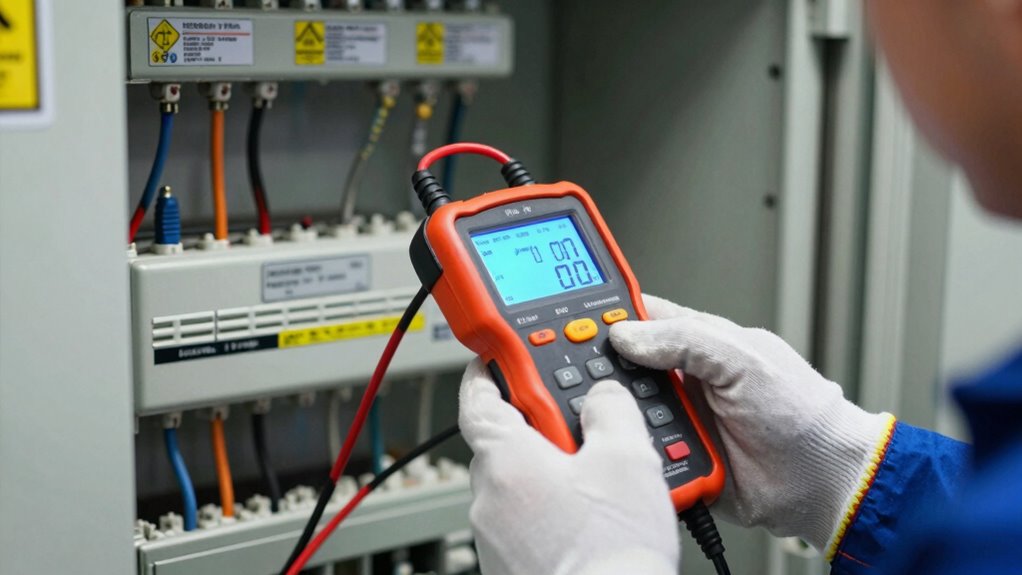
While reviewing your insulation test results is vital for ensuring safety, it’s equally important to avoid common mistakes that can lead to inaccurate assessments. One mistake is rushing through testing procedures without thoroughly following the correct steps, which can compromise safety and result in faulty data. Another is neglecting to inspect equipment for damage or proper calibration, increasing the risk of electrical hazards. Using the wrong test voltage or not grounding the equipment properly can also skew results or cause dangerous situations. Additionally, failing to record and analyze results carefully might lead to overlooking potential issues. Always make certain your testing procedures are precise, and double-check connections and settings before starting. Avoiding these mistakes helps you get reliable data and keeps everyone safe during the process.
Maintaining and Calibrating Your Insulation Tester for Accurate Results

To guarantee your insulation tester delivers accurate readings, regular maintenance and calibration are essential. Follow proper calibration procedures to ensure consistent performance, including checking test leads, battery levels, and display functions. Always observe safety precautions before calibrating; disconnect power sources and wear protective gear. Regular calibration verifies the device’s accuracy and prevents false readings that could lead to costly mistakes. Keep a maintenance log to track calibration dates and adjustments. Here’s a quick overview:
| Task | Frequency |
|---|---|
| Calibration Procedures | Annually or after repairs |
| Safety Precautions | Before each calibration |
Prioritize these steps to maintain reliability and safety, ensuring your insulation tester provides precise measurements every time.
How Often Should You Test Insulation in Different Electrical Systems?
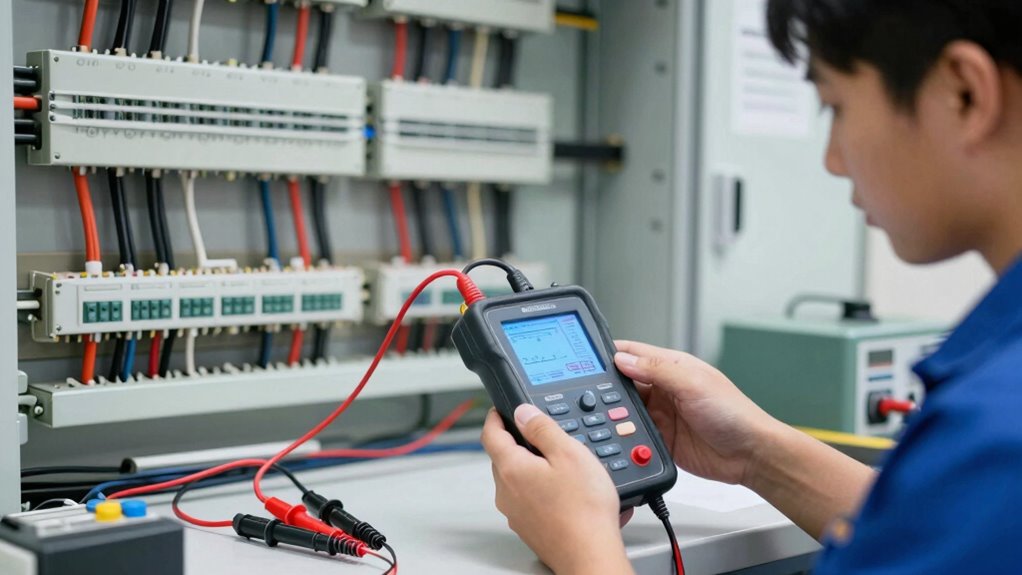
Regularly testing the insulation in your electrical systems is crucial to guarantee safety and prevent equipment failures. The frequency of testing depends on the type of system and its usage. For industrial or high-voltage equipment, testing should occur annually or semi-annually as part of your maintenance schedules. Commercial systems might require inspections every 1-3 years, while residential setups often need less frequent checks unless there’s a suspected issue. Consistent testing ensures electrical safety and helps identify deterioration before it causes failures or hazards. Remember, adhering to recommended maintenance schedules not only prolongs equipment life but also safeguards personnel and property. Adjust your testing frequency based on operational demands, environmental conditions, and manufacturer guidelines to keep your systems safe and reliable.
Troubleshooting Insulation Test Results: What to Do When Problems Arise

When your insulation test results don’t look right, it’s important to understand what the unexpected readings mean. You should identify common issues that can cause false or misleading results. By troubleshooting these problems, you can guarantee accurate readings and maintain safe electrical systems.
Interpreting Unexpected Readings
Unexpected readings during insulation testing can be confusing, but they often point to specific issues that need attention. When interpreting results, consider whether the reading is unusually low or high. A low reading might indicate moisture, contamination, or damage in the insulation, while a high reading usually suggests good insulation but could also be a sign of test equipment error. Always verify that your test setup is correct before drawing conclusions. Look for potential causes like loose connections or degraded insulation. Remember, unexpected readings aren’t necessarily failures—they’re clues guiding you to potential problems. Careful interpretation helps you determine whether to retest, inspect for physical issues, or seek expert advice. Accurate interpretation guarantees you address the right problems before they escalate.
Troubleshooting Common Issues
Interpreting insulation test results can sometimes reveal issues that aren’t immediately obvious. If you notice unexpectedly low readings, a ground fault could be the culprit, indicating a leakage path to ground. This might be caused by damaged insulation or insulation breakdown, which compromises safety and equipment performance. When results are inconsistent or unusually high, check your test connections and ensure proper contact. Persistent problems may signal deteriorated insulation material or hidden faults. Always verify that the test setup is correct before drawing conclusions. If you suspect an insulation breakdown, perform a visual inspection for cracks or damage, and consider retesting. Addressing these issues promptly helps prevent electrical failures, equipment damage, and safety hazards.
Frequently Asked Questions
Can Insulation Testers Detect Moisture or Contamination in Wiring?
Yes, insulation testers can help detect moisture or contamination in wiring. They measure insulation resistance, which drops when moisture or contaminants are present, alerting you to potential issues. Regular moisture detection and testing diminish contamination risks, preventing possibly costly failures. By performing these checks, you guarantee your wiring stays safe and reliable, avoiding unexpected outages or hazards caused by hidden moisture or contamination.
Are There Safety Precautions Specific to High-Voltage Insulation Testing?
Imagine holding a lightning bolt—high-voltage testing demands strict safety. Always follow voltage safety protocols, ensuring you’re clear of live currents. Before testing, verify tester calibration to get accurate readings and avoid potential hazards. Wear proper PPE, keep a safe distance, and use insulated tools. Remember, high-voltage insulation testing isn’t just about equipment; it’s about safeguarding yourself and others from unexpected shocks or damage.
How Do Environmental Conditions Affect Insulation Test Accuracy?
Environmental conditions like temperature fluctuations and humidity effects can greatly impact your insulation test accuracy. High temperatures may cause the insulation to appear less resistant, while cold conditions can lead to undervaluing insulation quality. Humidity increases the risk of moisture-related leakage, skewing results. To guarantee accurate readings, perform tests in stable environmental conditions, or compensate for these factors when analyzing your test data.
What Are the Signs of a Faulty Insulation Tester?
You’ll notice signs of a faulty insulation tester when readings are inconsistent or suddenly drift, indicating calibration issues. Common tester faults include faulty leads, damaged probes, or internal electronic errors. Always check for proper calibration before use, and if you experience erratic results or failure to register, replace or repair the tester. Regular maintenance and testing help make certain of accurate insulation testing and prevent costly errors during high-voltage checks.
Is It Necessary to Wear Personal Protective Equipment During Testing?
Think of PPE requirements during testing as your shield in a battlefield—you definitely need it. Wearing personal protective equipment is vital to safeguard against high-voltage sparks and accidental shocks. Always follow testing protocols, including gloves, safety glasses, and insulated clothing, to protect yourself. This not only keeps you safe but also guarantees accurate results. Never skip PPE; it’s your best defense when working with high-voltage insulation testers.
Conclusion
So, next time you’re about to skip insulation testing, remember: a simple high-voltage check could save your day—or turn it into a shocking disaster. Don’t be that person who learns the hard way. Regular testing isn’t just a chore; it’s your best defense against unexpected sparks and fiery surprises. Keep your equipment happy, your workplace safe, and your reputation intact—because nobody wants to be the electrician who ignored the insulation warning signs!
Halloween Picks
halloween
As an affiliate, we earn on qualifying purchases.