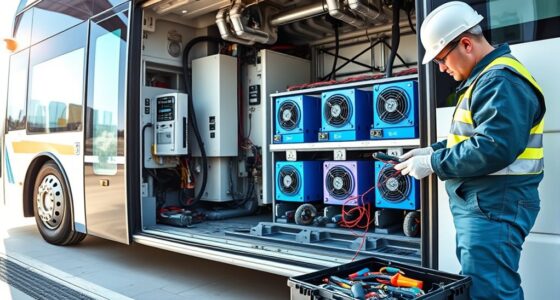
Using a thermal camera is the quickest way to spot bad electrical connections because it reveals heat patterns invisible to the naked eye. Hotspots indicate potential loose terminals, corrosion, or overloaded circuits, allowing you to identify issues early and prevent failures or fires. With a thermal image, you can pinpoint problems fast and safely without shutting down equipment. Keep exploring to discover how thermal imaging can make electrical maintenance more reliable and efficient.

Get business pricing on monitors, keyboards and dev gear
- Business-only prices and quantity discounts
- Tax-exempt purchasing
- Multiple users, one account, clear invoices
Key Takeaways
- Thermal cameras quickly identify hotspots caused by loose or corroded connections through visible temperature differences.
- They provide real-time, non-contact detection of abnormal heat patterns indicating bad electrical contacts.
- High-resolution thermal imaging reveals even subtle temperature spikes linked to connection issues.
- Regular inspections with thermal cameras help detect early connection problems before failure or fire hazards occur.
- Thermal imaging enables fast, safe diagnostics without system shutdowns or direct contact with energized components.
Popular right now

Shark AI Ultra Robot Vacuum with Self-Empty Base

Bose QuietComfort Headphones (2nd Gen), Wireless Noise-Cancelling Over-Ear Headphones, Eucalyptus Green

Dyson Cyclone V10 Origin Cordless Vacuum
As an affiliate, we earn on qualifying purchases.
What Is a Thermal Camera and How Does It Work for Electrical Inspections?

A thermal camera is a device that detects infrared radiation emitted by objects and converts it into a visible image, allowing you to see temperature differences. It uses infrared technology to measure thermal energy, making it ideal for electrical inspections. The camera’s thermal resolution determines how detailed the temperature distinctions are within the image. Higher thermal resolution provides sharper, more precise images, helping you identify even subtle hotspots or cold spots. When inspecting electrical systems, this technology enables you to visualize heat patterns without physical contact. By translating heat into a color-coded image, you can quickly pinpoint areas of concern, such as overloaded connections or failing components. This makes thermal cameras an essential tool for efficient, safe, and accurate electrical diagnostics. Additionally, understanding indoor environmental factors can improve your interpretation of thermal images and enhance diagnostic accuracy. Incorporating thermal imaging best practices can further optimize inspection results and ensure safety. Recognizing thermal contrast can also aid in distinguishing between normal and abnormal temperature variations, leading to more reliable assessments. Moreover, awareness of ambient conditions can help prevent misinterpretation of thermal images and improve overall inspection quality.
Signs of Overheating Electrical Connections You Can Detect With Thermal Imaging
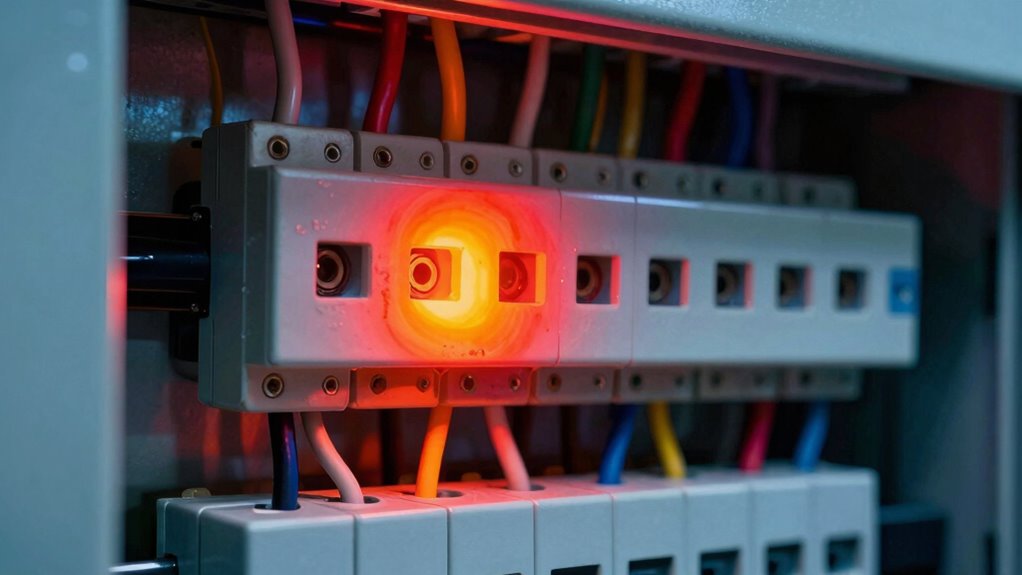
Overheating electrical connections often reveal themselves through distinct heat patterns that thermal imaging can easily detect. These thermal signatures highlight electrical anomalies like loose terminals, overloaded circuits, or corroded contacts. When a connection overheats, it produces localized hot spots that stand out against cooler surroundings. You might notice a sudden increase in temperature at a specific point, indicating a potential failure. Thermal cameras make it easy to identify these issues early before they cause serious damage or outages. By recognizing abnormal heat patterns, you can pinpoint problematic connections quickly and accurately. This proactive approach helps you prevent expensive repairs and improve electrical system safety. Regular thermal inspections can also help detect early signs of electrical system deterioration, preventing unexpected failures. Incorporating thermal imaging technology into your maintenance routine enhances safety by enabling rapid detection of potential hazards. Monitoring thermal signatures regularly guarantees your electrical connections stay healthy and reliable, especially in difficult-to-access locations. These inspections can also serve as an important part of preventive maintenance strategies to extend the lifespan of electrical components. Additionally, understanding thermal signatures can assist in diagnosing underlying issues that might not be immediately visible through other inspection methods.
How to Choose the Right Thermal Camera for Electrical Troubleshooting
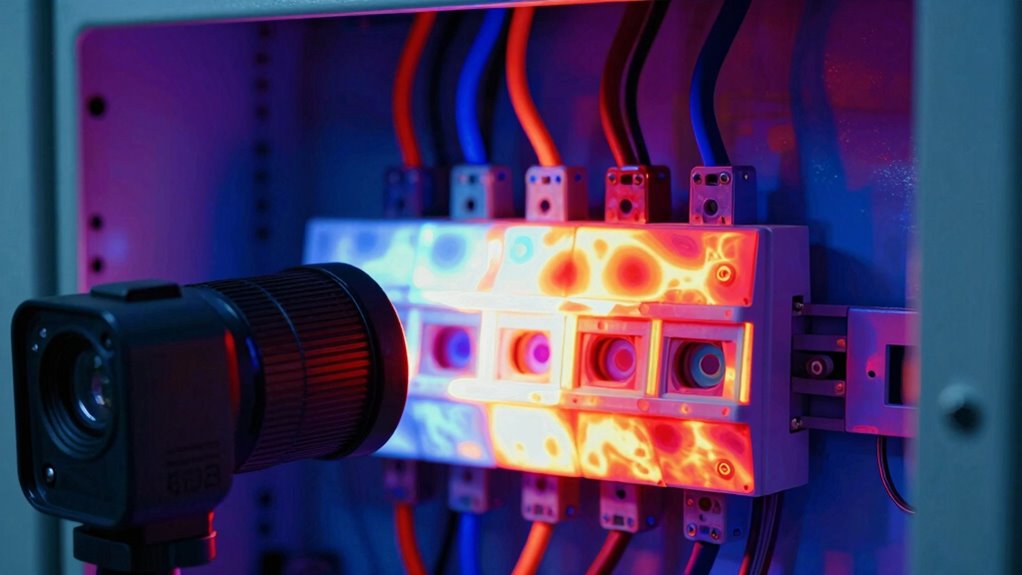
Choosing the right thermal camera for electrical troubleshooting requires understanding your specific needs and the features that best support accurate detection of heat anomalies. Focus on thermal camera technology that offers high resolution, sensitivity, and a suitable temperature range for electrical diagnostics. A camera with a higher resolution provides clearer images, making it easier to identify small heat variations. Sensitivity determines how well the camera detects subtle temperature differences, essential for early fault detection. Consider whether you need a handheld device for quick inspections or a more advanced model with features like digital zoom or Wi-Fi connectivity. Understanding thermal imaging principles can help you interpret the images more effectively and improve diagnosis accuracy. Additionally, understanding toilet maintenance and how to troubleshoot common issues can be beneficial in maintaining equipment reliability. Recognizing the importance of thermal camera calibration ensures your device delivers precise measurements over time. Proper sensor technology plays a crucial role in achieving accurate thermal readings, especially in complex electrical environments. Investing in a thermal camera with advanced image processing capabilities can further enhance your diagnostic precision and speed. By selecting a thermal camera tailored to your electrical diagnostics needs, you guarantee accurate, efficient troubleshooting and reduce downtime caused by unseen issues.
Step-by-Step: Using a Thermal Camera to Find Electrical Problems
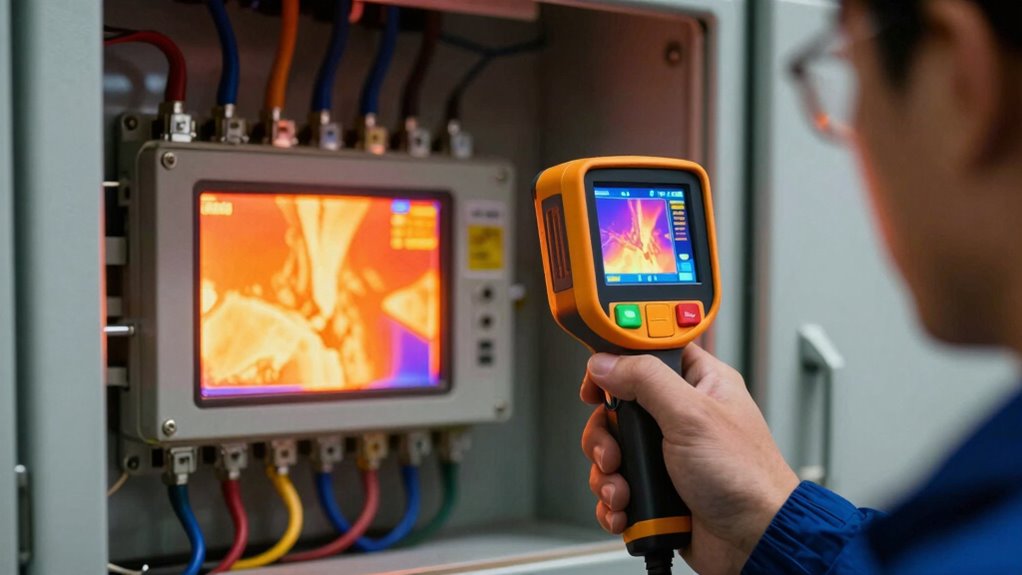
Before you start scanning, make sure your equipment is properly prepared and calibrated for accurate readings. As you capture thermal images, focus on identifying temperature differences that indicate electrical issues. Once you have your images, analyze them carefully to pinpoint hotspots and potential problems. Remember, understanding the thermal imaging process can greatly improve your troubleshooting efficiency. Additionally, familiarizing yourself with electrical system components can help you interpret thermal signatures more effectively. Being aware of common electrical hazards can also enhance your safety during inspection. Recognizing the significance of smart lock systems and other security gear can prevent misinterpretation of thermal anomalies caused by external factors. Moreover, having knowledge of electrical safety standards ensures your inspections comply with safety protocols and reduce risks.
Prepare Equipment Properly
To guarantee accurate thermal imaging when diagnosing electrical issues, you need to prepare your equipment thoroughly. Begin by calibrating your sensor to ensure precise temperature readings. Proper sensor calibration eliminates errors caused by environmental factors or prior use. Next, handle your thermal camera carefully, avoiding sudden impacts or exposure to moisture that could affect performance. Check that the lens is clean and free of dust or smudges, as these can distort thermal images. Ensure your camera’s settings are appropriate for the environment and electrical components you’re inspecting. Handling your equipment correctly and verifying calibration helps you capture reliable thermal images, making it easier to identify hot spots and potential faults accurately. Additionally, understanding Free Floating principles can help you interpret thermal images more effectively, ensuring you focus on the areas most likely to indicate issues. Proper preparation is essential for effective electrical diagnostics.
Analyze Thermal Images
How do you accurately interpret thermal images to pinpoint electrical problems? Infrared analysis requires sharp image interpretation skills. First, look for hotspots or areas with abnormal temperature rises, which often indicate loose connections or overloaded components. Second, compare thermal images to identify patterns or inconsistencies across similar connections or circuits. Third, consider environmental factors that could affect heat readings, ensuring you’re viewing true electrical issues. To enhance your analysis, focus on these critical points:
- Recognize subtle temperature differences that signal early problems
- Differentiate between normal heat dissipation and potential faults
- Use consistent reference points for comparison across images
- Understand thermal contrast to better distinguish genuine issues from background variations
Additionally, understanding how heat transfer influences thermal readings can help clarify ambiguous images and improve diagnostic accuracy. Recognizing the thermal signature of specific electrical components can further refine your troubleshooting skills, making fault detection more precise. Being aware of thermal imaging principles ensures you interpret images correctly and avoid misdiagnosis.
Mastering image interpretation allows you to detect issues swiftly, saving time and preventing equipment failure. Accurate infrared analysis is essential for reliable electrical troubleshooting.
How to Read Thermal Images and Spot Hidden Electrical Issues
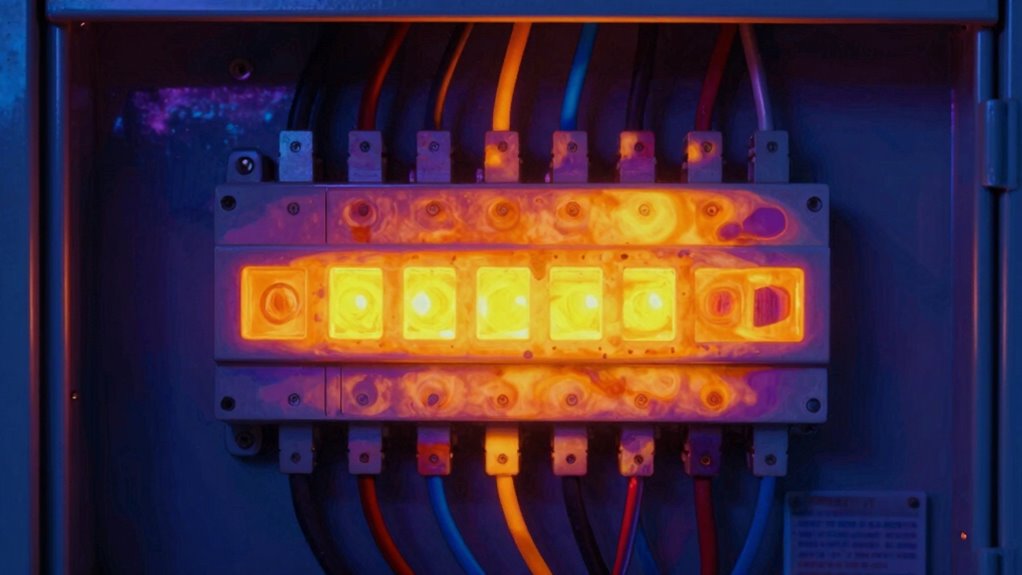
When you look at a thermal image, your first goal is to spot hot spots that stand out from the surrounding areas. Pay close attention to temperature variations across different parts of the image, as these can reveal hidden electrical issues. Understanding how to analyze these details helps you identify problems before they escalate.
Identifying Hot Spots
Have you ever wondered how thermal images reveal hidden electrical issues? Hot spots indicate problem areas like circuit overloads or loose connections. When scanning a thermal image, look for areas that appear notably warmer than surrounding components. These spots often signal increased resistance, potential failure points, or overheating components. Keep an eye out for:
- Sudden temperature spikes that stand out from the normal range
- Consistent hot spots in the same location during multiple scans
- Uneven heat distribution indicating uneven load or loose connections
Identifying these hot spots quickly helps you pinpoint issues before they cause failure or damage. By recognizing abnormal heat patterns, you can focus maintenance efforts effectively, preventing costly repairs and ensuring electrical safety.
Analyzing Temperature Variations
To effectively analyze temperature variations in thermal images, you need to interpret the color gradients that represent different heat levels. Look for temperature anomalies, which appear as unexpected hot or cold spots that deviate from normal patterns. These anomalies often indicate hidden electrical issues like loose connections or overloaded circuits. Pay attention to heat signatures that don’t match surrounding components, as they may signal a potential problem. Consistent color patterns typically show normal operation, while irregular or shifting heat signatures suggest underlying faults. By carefully examining these variations, you can identify areas that require further inspection or maintenance. Spotting subtle temperature changes early helps prevent costly failures and ensures electrical safety. Mastering the interpretation of thermal images makes troubleshooting faster and more accurate.
Why Thermal Imaging Boosts Electrical Maintenance and Fire Safety
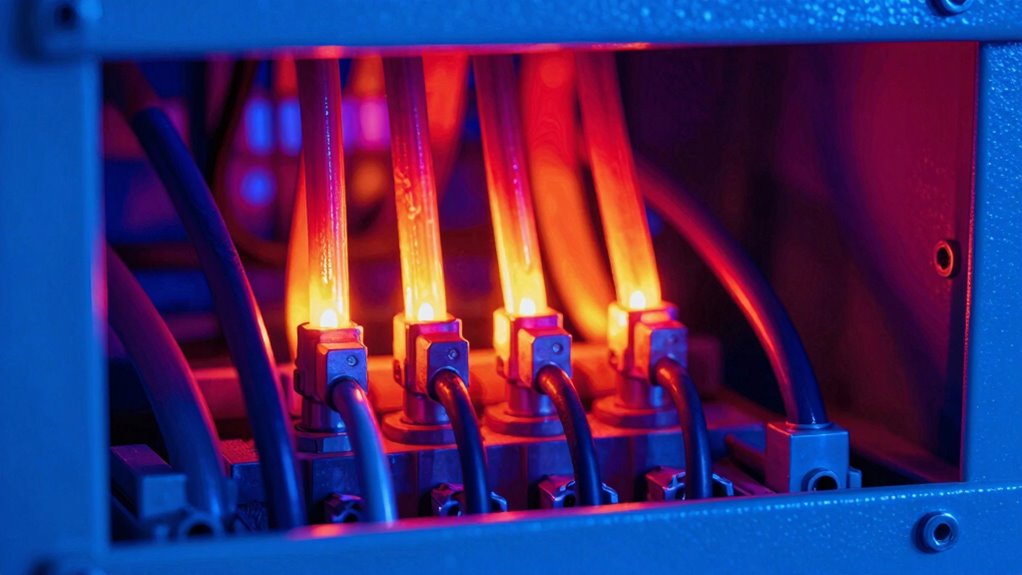
Thermal imaging considerably enhances electrical maintenance and fire safety by allowing you to detect hidden problems before they cause serious issues. With thermal sensor technology, you can identify overheating components, loose connections, and overloaded circuits quickly and safely. This proactive approach reduces the risk of electrical failures and fires, keeping your facility safer. Using thermal cameras, you gain real-time insights into equipment health without direct contact, improving electrical safety. Key benefits include:
- Early detection of potential fire hazards
- Minimizing downtime and costly repairs
- Ensuring compliance with safety standards
Limitations and Best Practices for Thermal Inspections
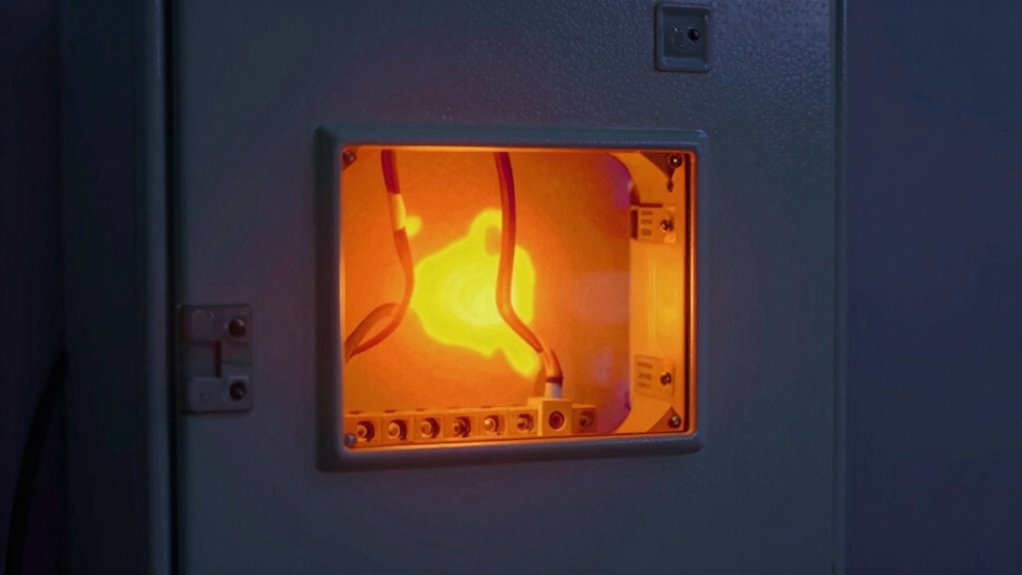
While thermal inspections offer valuable insights, they also come with certain limitations you should acknowledge to guarantee effective use. One key factor is sensor calibration; improperly calibrated cameras can produce inaccurate temperature readings, leading to missed or false faults. Environmental influences also markedly impact results—external factors like wind, rain, or ambient temperature can distort thermal images. To mitigate these issues, regularly calibrate your thermal camera according to manufacturer guidelines, especially before critical inspections. Conduct inspections under stable environmental conditions whenever possible, and avoid areas with strong drafts or direct sunlight. Keep your equipment clean and properly maintained to guarantee consistent performance. Understanding these limitations and following best practices helps you obtain reliable data, reducing the risk of overlooking faulty connections or misinterpreting thermal anomalies.
Real-Life Examples: Thermal Cameras Detecting Electrical Faults
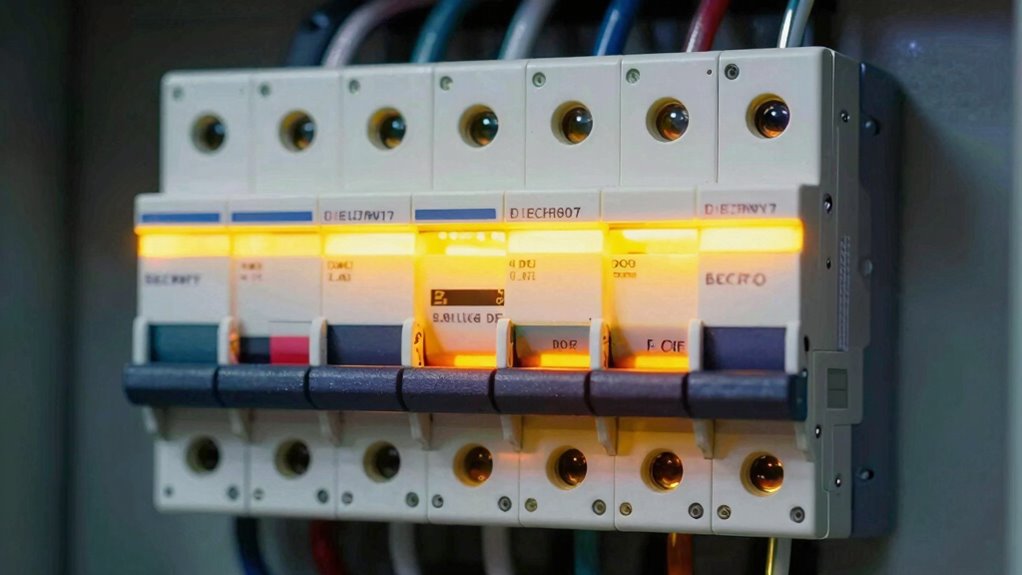
Real-life examples demonstrate how thermal cameras can effectively identify electrical faults before they cause serious problems. For instance, inspecting an electrical panel reveals hotspots indicating loose connections or worn components. Overloaded circuits often generate excess heat, making them easily visible with thermal imaging. These cameras can spot issues like:
Thermal cameras quickly reveal electrical hotspots and potential failures before they escalate.
- Hot spots in electrical panels signaling potential failures
- Overheated wiring in circuits before failure occurs
- Uneven heat distribution pointing to loose or corroded connections
Prevent Fires and Save Money With Regular Thermal Inspections
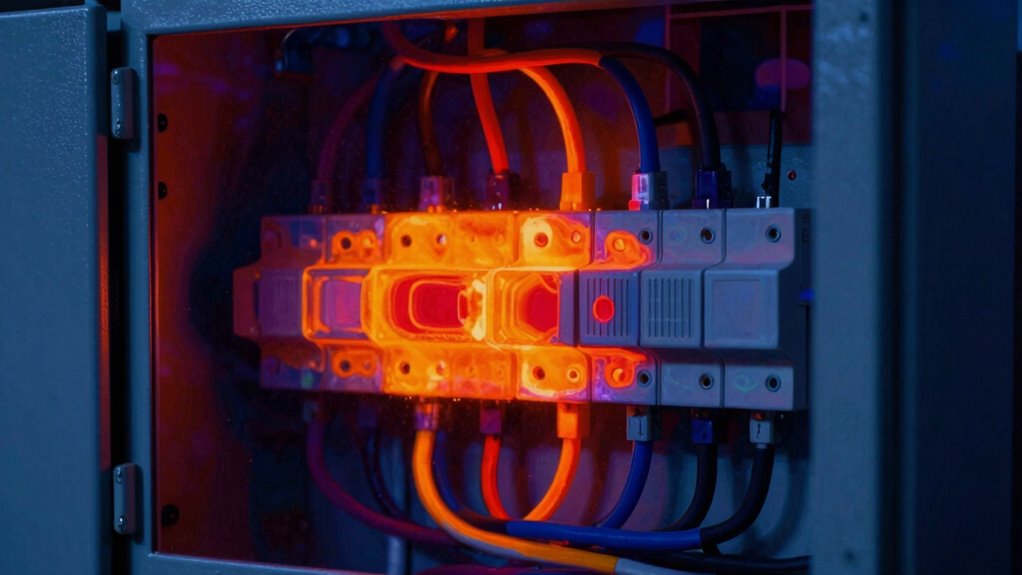
Regular thermal inspections allow you to catch electrical issues early, preventing fires and costly damage. By regularly checking your systems with thermal cameras, you ensure components stay within safe temperature ranges, reducing the risk of overheating. Adhering to electrical codes helps guide inspection standards, making sure your equipment remains compliant and safe. Proper thermal calibration of your cameras guarantees accurate readings, so you can confidently identify potential problems. Detecting hot spots before they cause failures saves you money on repairs and downtime. Routine inspections also extend equipment lifespan and improve overall safety. Investing in thermal imaging now can prevent disasters later, keeping your property secure and your expenses low. Consistent thermal monitoring is a smart, proactive approach to maintaining safe electrical systems.
Frequently Asked Questions
Can Thermal Cameras Detect Non-Electrical Issues Like Leaks or Insulation Problems?
Yes, thermal cameras can detect non-electrical issues like building insulation problems and plumbing leaks. They identify temperature differences caused by heat loss through poor insulation or moisture from leaks, making it easier for you to locate issues quickly. By spotting these thermal anomalies, you can address insulation gaps or plumbing leaks early, saving money and preventing further damage. Thermal imaging proves to be a versatile tool for maintaining your property’s integrity.
What Is the Typical Cost Range for Professional Thermal Camera Inspections?
You can expect cost estimates for professional thermal camera inspections to range from $200 to $1,000, depending on the scope and complexity. Equipment pricing varies, with rental options around $50 to $200 per day if you opt for DIY. For accurate results, hiring a professional guarantees the latest technology and expertise, which often justifies the higher price. Always compare quotes to find the best value for your specific needs.
Are There Safety Concerns When Operating Thermal Cameras Near High-Voltage Equipment?
You should exercise high voltage safety when operating thermal cameras near high-voltage equipment, as the risks are significant. While thermal cameras are non-contact tools, they still require precautions to prevent electrical shocks or damage. Always maintain proper distance, use insulated tools, and follow manufacturer guidelines. Remember, safety isn’t just about avoiding danger—it’s about ensuring accurate readings without risking personal injury or equipment damage.
How Often Should Thermal Inspections Be Performed for Electrical Systems?
You should perform thermal inspections of your electrical systems at least once a year, but more frequent checks are recommended if your system experiences heavy use or environmental stress. Regular inspection frequency helps you identify issues early and maintain effective maintenance scheduling. By staying consistent with thermal imaging, you minimize downtime, prevent costly failures, and guarantee safety, keeping your electrical infrastructure dependable and efficient over time.
Do Thermal Cameras Require Special Training to Interpret Images Accurately?
You do need special training to interpret thermal imaging accurately. While thermal cameras are user-friendly, understanding how to analyze images properly is essential to identify issues like hot spots or electrical faults. Proper training helps you distinguish between normal temperature variations and real problems, reducing false alarms. With the right knowledge, you’ll quickly and confidently interpret thermal images, ensuring safe and efficient electrical inspections.
Conclusion
While thermal cameras are great for catching electrical issues early, don’t forget they’re not magic. Relying solely on them might make you feel invincible, but some problems hide deep or mimic normal readings. So, don’t get complacent—regular inspections, proper training, and a cautious mindset are your real fire safety heroes. After all, the hottest connection isn’t always the most obvious—sometimes, it’s just a matter of knowing where to look.