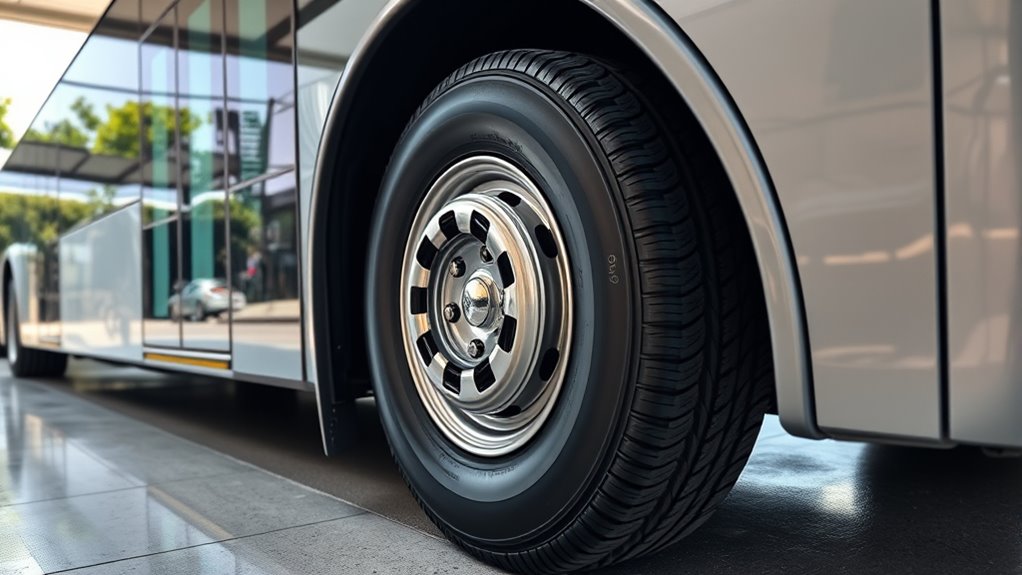

To keep your EV bus safe and running smoothly, inspect your tires regularly for tread wear, cracks, and uneven patterns. Rotate them as recommended by the manufacturer to promote even wear and extend their life. Replace tires when tread depth gets shallow, or if you notice damage or age-related signs, even if the tread looks okay. Following proper maintenance guarantees maximum grip and performance, and there’s more to learn about timing your tire shifts effectively.
Key Takeaways
- Regularly inspect tire tread depth and look for uneven wear or visible damage to determine replacement timing.
- Follow manufacturer guidelines for tire rotation intervals to promote even tread wear and extend tire lifespan.
- Monitor inflation pressure consistently to prevent premature wear patterns and ensure optimal tread performance.
- Replace tires when tread depth reaches the minimum legal or recommended limit, typically around 2/32 inch.
- Consider driving conditions, temperature fluctuations, and internal tire aging signs for proactive replacement decisions.
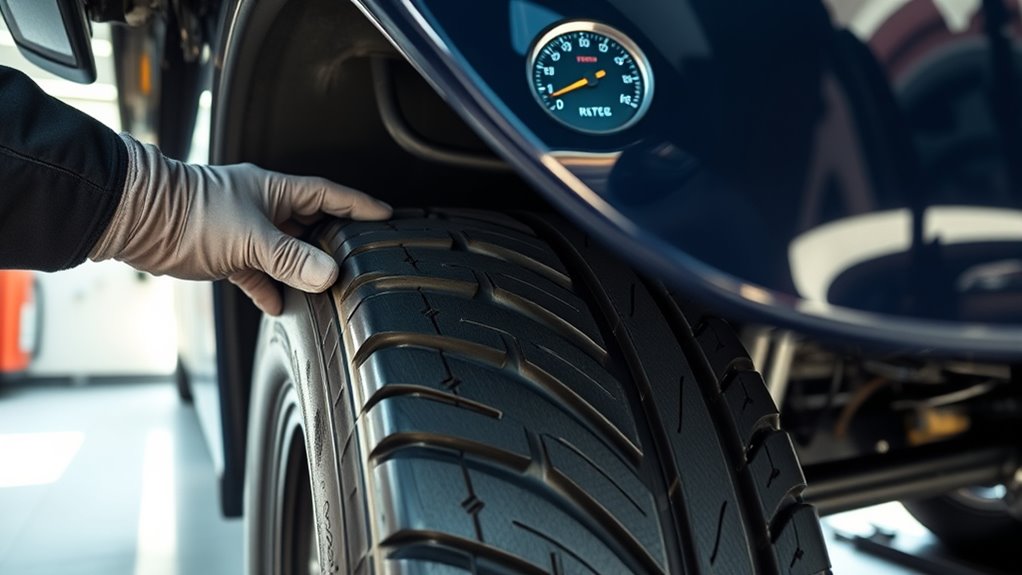
Replacing your tires at the right time is vital for safety and performance. As an EV bus operator, understanding when to rotate or replace your tires can make a significant difference in maintaining peak operation. One key factor to take into account is tire tread patterns, which influence traction, handling, and overall safety. When tire tread wears unevenly or becomes too shallow, your bus’s grip on the road diminishes, especially in adverse weather conditions. Regularly inspecting the tread depth helps you identify when the tires are nearing the end of their effective lifespan. If you notice bald spots or uneven wear, it’s time to plan for a replacement. Proper tire rotation also plays a role here; rotating tires according to manufacturer recommendations ensures even wear across all tires, extending their lifespan and maintaining consistent traction. Additionally, staying aware of tire innovation can help you adopt newer, more durable tire options that enhance safety and efficiency. Managing inflation pressure is equally vital. Correct inflation pressure not only improves ride quality but also maximizes tire tread patterns for better grip and longevity. Overinflated tires can lead to a harsh ride and accelerated wear in the center of the tread, while underinflated tires cause excessive wear on the edges and can compromise handling. For EV buses, which often carry heavy loads and require precise handling, maintaining proper inflation pressure is non-negotiable. Regularly checking and adjusting tire pressure according to the manufacturer’s specifications ensures that tread patterns stay in better condition longer, and your tires wear evenly. This proactive approach reduces the risk of blowouts or uneven wear, which can be costly and dangerous. The timing of replacing tires also depends on factors such as mileage, driving conditions, and signs of aging. Even if tread depth appears acceptable, tires can deteriorate internally, especially with exposure to extreme temperatures or frequent stops and starts common in urban bus routes. It’s a good practice to replace tires once they reach a certain mileage threshold or if they show visible signs of aging, such as cracking or sidewall damage. Routine inspections of tire tread patterns and inflation pressure management become your best tools to catch issues early. By staying attentive to these details, you guarantee your EV bus operates smoothly, safely, and efficiently. Ultimately, timely replacement and proper maintenance of your tires will preserve your investment, improve fuel efficiency, and, most importantly, keep passengers safe.
Top picks for "tire replacement strategy"
Open Amazon search results for this keyword.
As an affiliate, we earn on qualifying purchases.
Frequently Asked Questions
How Do Tire Replacement Costs Differ for Electric Buses Versus Diesel Buses?
You’ll find tire replacement costs for electric buses differ from diesel buses mainly because of tire manufacturing costs and maintenance frequency differences. EV tires typically cost more upfront due to specialized materials, but they often last longer because of less wear and tear. Additionally, EV buses require less frequent tire rotations and replacements, which can lower ongoing maintenance expenses over time.
What Impact Does Tire Rotation Have on EV Bus Battery Range?
When you rotate the tires on your EV bus, you help guarantee even tire tread wear, which minimizes uneven contact with the road surface. For example, a case study showed that regular rotation extended battery range by reducing rolling resistance caused by uneven tire wear. By maintaining consistent tread depth and addressing road surface impact, you optimize energy efficiency, ultimately improving your bus’s battery life and operational range.
Are There Specific Tire Brands Recommended for Electric Bus Longevity?
You should look for tire brands known for high tire durability and reliability, such as Michelin, Bridgestone, or Goodyear, which are often recommended for electric bus longevity. These brands offer tires designed to withstand the increased weight and torque of EVs, reducing wear and tear. Selecting reputable brands guarantees better performance, longer lifespan, and lower maintenance costs, ultimately supporting your electric bus fleet’s efficiency and safety.
How Does Tire Pressure Management Vary for EV Buses?
You might think managing tire pressure for EV buses is straightforward, but it’s crucial for safety and efficiency. You should rely on tire pressure sensors and automated inflation systems to maintain optimal pressure consistently. These tools prevent under- or over-inflation, which can cause uneven tire wear or energy loss. Proper pressure management ensures your bus operates smoothly, extends tire life, and keeps passengers safe—yet many overlook this vital aspect.
What Are the Environmental Benefits of Proper Tire Recycling for EV Buses?
By practicing proper tire recycling, you considerably reduce the environmental impact of EV bus tires. Recycling prevents tires from ending up in landfills, conserving resources and reducing pollution. It also minimizes the need for new raw materials, lowering energy consumption and greenhouse gas emissions. Your efforts in tire recycling help protect ecosystems, promote sustainability, and contribute to a cleaner, healthier environment for future generations.
Conclusion
Remember, a stitch in time saves nine. Regularly rotating and replacing your EV bus tires guarantees safety, efficiency, and longevity. Don’t wait until uneven wear or damage forces costly repairs—stay proactive with your tire maintenance. By following these strategies, you’ll keep your fleet running smoothly and safely for miles to come. After all, taking care of your tires now means fewer surprises down the road, proving that an ounce of prevention is worth a pound of cure.