
When responding to high-voltage bus accidents, first don proper PPE like insulated gloves and face shields, and assess the scene for hazards. Verify the power is shut off or confirm if the bus is de-energized, using barriers and warning signs to keep others safe. Control access to the danger zone and communicate clearly with emergency services. Always monitor for evolving hazards and use non-conductive tools when needed. To understand detailed safety measures and response steps, continue exploring essential procedures.
Key Takeaways
- Ensure scene safety by verifying power isolation and establishing a secure perimeter before approaching.
- Don PPE and use non-conductive tools to prevent electrical contact hazards during rescue or assessment.
- Alert emergency services promptly, providing clear incident details and maintaining a safe distance from energized equipment.
- Control access to the hazard zone with barriers and warning signs to prevent unauthorized entry and further risks.
- Continuously monitor for electrical faults, fires, or instability, adjusting the response to evolving hazards.

High-voltage bus accidents can pose immediate and severe hazards, requiring rapid and effective response to prevent injury or equipment damage. When such an incident occurs, your first priority is ensuring safety through proper hazard mitigation. This begins with donning the appropriate personal protective equipment (PPE), such as insulated gloves, arc-rated clothing, and face shields. PPE acts as a critical barrier against electric shocks, arc flashes, and burns, enabling you to approach the scene with greater confidence. Always verify that your protective gear is in good condition and correctly worn before engaging with the accident site.
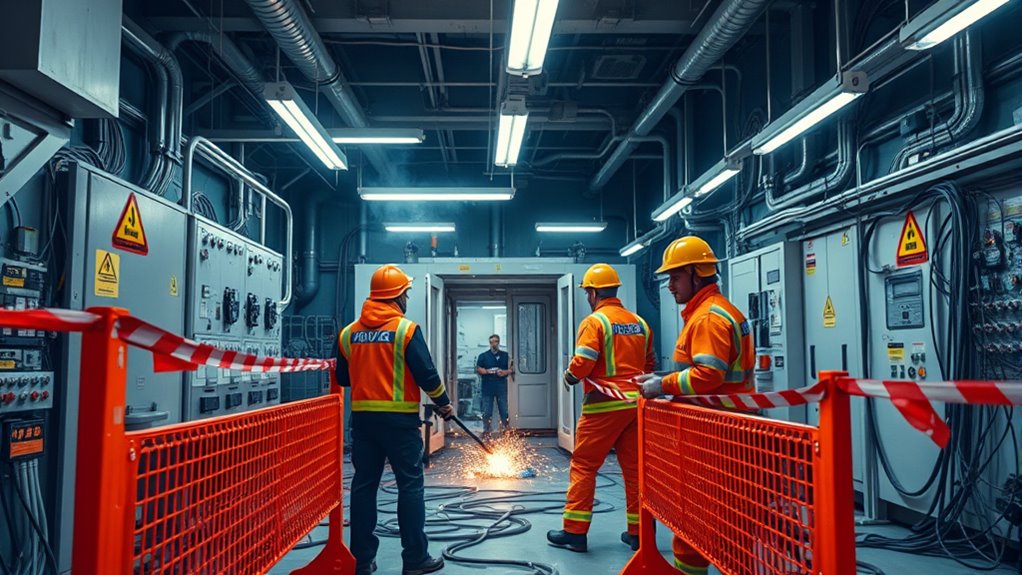
Once PPE is in place, assess the situation carefully. Determine if the high-voltage bus is still energized or if the power has been isolated. If power is still active, do not attempt to touch or move any equipment. Instead, focus on establishing a safe perimeter to keep unauthorized personnel away. Use barriers, warning signs, or emergency tape to clearly mark the danger zone. Effective hazard mitigation involves controlling access and preventing further exposure to electrical hazards. If you’re trained and authorized, shut down the power supply using emergency disconnects or circuit breakers, but only after ensuring that it’s safe to do so. Remember, attempting to de-energize equipment without proper training can escalate the hazard.
In managing the scene, communication is crucial. Alert emergency services immediately and provide clear information about the incident’s nature and location. Keep bystanders at a safe distance and avoid any actions that might create additional sparks or electrical discharges. If there are injured individuals, prioritize their safety by providing first aid only if you’re qualified, and avoid moving them unless there’s an imminent danger, such as fire or explosion. Instead, wait for trained medical personnel to handle rescue efforts.
Throughout the response, continuously monitor the scene for evolving hazards. Be alert to signs of electrical faults, fires, or unstable equipment. Use non-conductive tools and maintain a safe distance from energized components. Your role in hazard mitigation centers on preventing escalation, protecting yourself and others, and supporting professional responders. By following these procedures and prioritizing PPE, you considerably reduce the risk of injury or further damage. Remember, a swift, cautious, and well-informed response can make all the difference during high-voltage bus accidents. Regularly checking equipment and ensuring proper maintenance can help prevent such incidents before they occur.
Top picks for "emergency response procedur"
Open Amazon search results for this keyword.
As an affiliate, we earn on qualifying purchases.
Frequently Asked Questions
How Often Should Emergency Response Drills Be Conducted?
You should conduct emergency response drills at least twice a year to guarantee readiness. Incorporate simulation training to mimic real high-voltage bus accidents, which helps improve your response timing. Regular drills keep your team sharp, identify gaps, and reinforce safety protocols. Consistent practice ensures you’re prepared to act swiftly and effectively, minimizing risks and damage during actual emergencies. Stay proactive by scheduling these drills regularly.
What Are the Legal Liabilities During High-Voltage Bus Accidents?
Like a knight to his sword, you must understand legal liabilities during high-voltage bus accidents. You could face fines, lawsuits, or regulatory penalties if safety protocols aren’t followed. To mitigate liability, guarantee proper training, document safety measures, and adhere to industry standards. Failing to do so increases your risk of legal consequences, so proactive liability mitigation is essential to safeguard your organization and maintain compliance.
Are There Specific PPE Requirements for Responders?
You must wear appropriate personal protective equipment (PPE) to guarantee responder safety during high-voltage bus accidents. This includes insulating gloves, dielectric boots, flame-resistant clothing, and face shields. Using the correct PPE minimizes the risk of electrical shock and arc flash injuries. Always verify that your PPE is rated for high-voltage work and in good condition before approaching the scene, so you stay protected and respond effectively.
How to Handle Accidental Contact With Energized Components?
Suddenly, your hand touches an energized component—your heart races. Immediately, you must follow lockout procedures to de-energize the system, preventing electric shock. Use rescue techniques like insulated tools and wear proper PPE to handle the situation safely. Keep calm, avoid contact with live parts, and make sure others stay clear. Your quick, cautious response can prevent injury, emphasizing the importance of trained procedures in these dangerous moments.
What Are the Post-Incident Reporting Procedures?
After an incident, you need to complete incident documentation promptly, typically within your company’s specified reporting timelines, often 24 to 48 hours. You should detail what happened, the actions taken, and any injuries or damage. Report the incident to your supervisor or safety team immediately, ensuring all relevant information is included. Accurate, timely reporting helps with investigations, prevents future incidents, and maintains compliance with safety regulations.
Conclusion
Remember, in the chaos of a high-voltage bus accident, your response is the lighthouse guiding everyone safely to shore. Stay calm, follow established procedures, and act swiftly yet carefully—your actions can turn a potentially catastrophic storm into a manageable ripple. Approach each situation like a steady captain steering through turbulent waters, knowing that your preparedness and calmness can prevent disaster and keep everyone safe on the voyage.