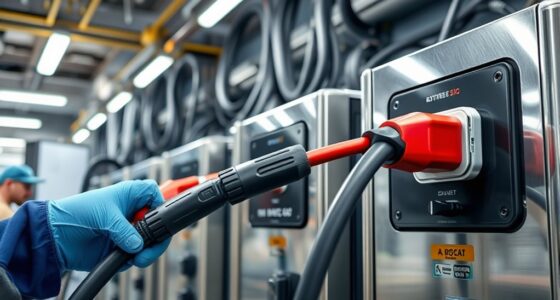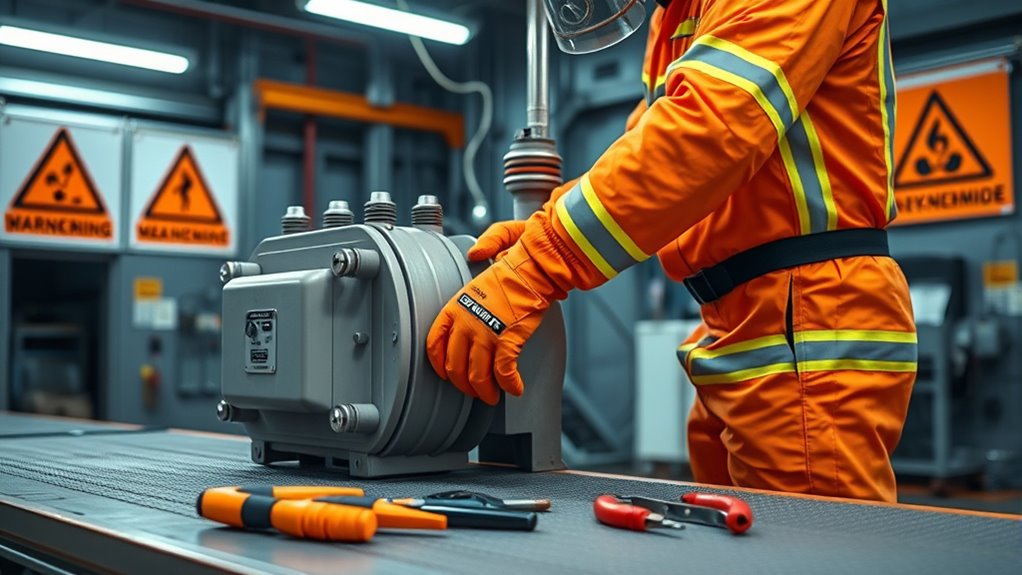

When handling high-voltage components, you must use insulated tools rated for the voltage level and wear PPE like insulated gloves, dielectric boots, and face shields to protect against shocks. Always verify the system is de-energized with proper testers before starting work. Regularly inspect your tools and PPE for damage, and follow safety protocols diligently. Staying prepared and cautious guarantees your safety; exploring these procedures further can help you work more confidently and securely.

Get business pricing on monitors, keyboards and dev gear
- Business-only prices and quantity discounts
- Tax-exempt purchasing
- Multiple users, one account, clear invoices
Key Takeaways
- Always use insulated gloves, dielectric boots, and face shields rated for the specific voltage level.
- Verify high-voltage de-energization with proper testing devices before handling components.
- Employ insulated tools and probes designed for high-voltage work to prevent accidental contact.
- Conduct routine insulation resistance tests to ensure insulation integrity prior to maintenance.
- Follow strict safety protocols, including proper PPE inspection, safe distances, and adherence to procedures.
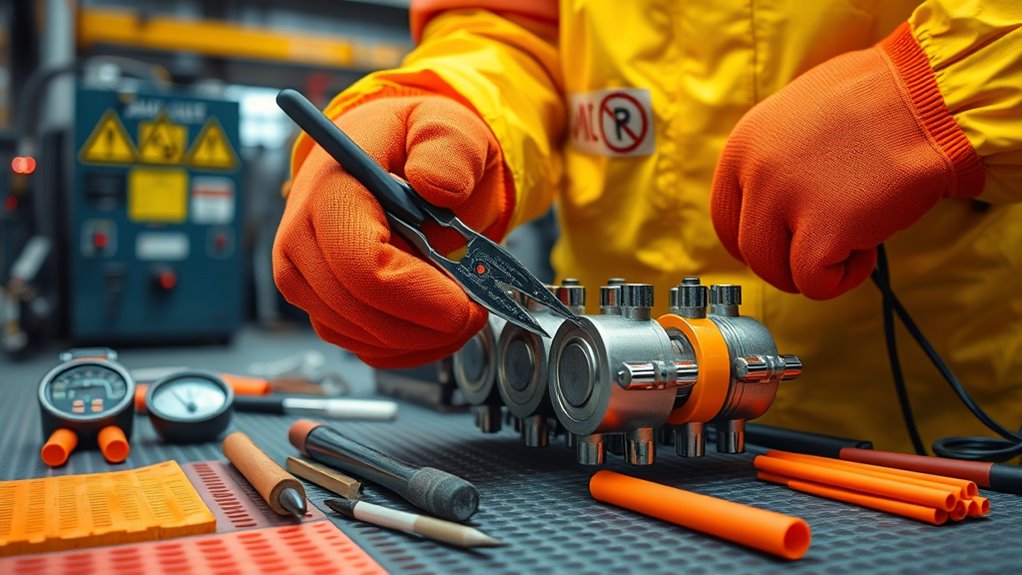
Handling high-voltage components requires careful attention to safety protocols because a single mistake can lead to severe injury or equipment damage. One of the most critical steps in guaranteeing safety is verifying the insulation resistance of the equipment before beginning any work. Insulation resistance testing helps you confirm that the insulation barriers are intact, preventing accidental contact with live parts. To perform this test, you’ll need a reliable insulation resistance tester, which applies a high-voltage DC signal between conductors and ground to measure resistance. If the resistance falls below the manufacturer’s specified threshold, it indicates compromised insulation, and you should refrain from proceeding until the issue is addressed. Conducting insulation resistance checks regularly guarantees your equipment remains safe to handle and minimizes the risk of shock or short circuits. Regular use of appropriate testing equipment ensures consistent safety standards are maintained.
Verify insulation resistance regularly to ensure high-voltage safety and prevent shocks or equipment damage.
Voltage testing is another essential safety measure. Before touching any high-voltage components, you must verify that the system is de-energized. Use a properly rated voltage tester or a multimeter designed for high-voltage applications to confirm the absence of voltage. Always test the tester on a known live source first to validate its functionality. Remember, even after disconnecting a power source, residual voltage may still exist, so a voltage test provides a final confirmation that the circuit is safe to work on. When doing this, maintain a safe distance and use insulated tools to prevent accidental contact with live parts. Never rely solely on visual cues; always verify with proper testing equipment.
Using the right tools and PPE (personal protective equipment) is paramount when handling high-voltage components. Insulated gloves, dielectric boots, and face shields form a barrier against accidental shocks. Ensure your gloves are rated for the voltage level you’re working with, and inspect them for tears or punctures before use. When performing voltage tests, use insulated probes and tools designed specifically for high-voltage work. Always follow manufacturer instructions for your testing equipment, and make sure your PPE is in good condition, regularly inspected, and properly worn throughout the task. The importance of proper PPE cannot be overstated, as it is your primary defense against electrical hazards.
Remember that safety isn’t just about equipment — it’s about your approach. Always de-energize the system, verify the absence of voltage, and check insulation resistance before starting any work. These steps, combined with proper tools and PPE, greatly reduce the risk of injury. Handling high-voltage components demands vigilance, discipline, and a thorough understanding of safety protocols, but following these practices keeps you safe and ensures the integrity of your equipment.
As an affiliate, we earn on qualifying purchases.
Frequently Asked Questions
What Are the Latest Advancements in High-Voltage PPE Technology?
Recent advancements in high-voltage PPE include the integration of innovative insulation materials that offer better protection and flexibility. Wearable sensors are now embedded in PPE to monitor real-time conditions like voltage exposure, temperature, and fatigue, enhancing safety. These improvements help you stay safer by providing early warnings and reducing risks during high-voltage handling, ensuring you’re better protected with smarter, more responsive gear.
How Can I Identify Potential High-Voltage Hazards Before Starting Work?
You can identify potential high-voltage hazards by carefully observing voltage warning signs around equipment. Conduct a thorough hazard assessment before starting work, checking for exposed wires, damaged insulation, and unusual odors. Use your senses and follow safety protocols to spot any risks early. Always verify that warning signs are visible and legible, and make certain that you understand the environment’s electrical setup to prevent accidents.
Are There Specific Training Certifications Required for Handling High-Voltage Components?
Like a shield guarding a fortress, specific training certifications guarantee you’re prepared for voltage safety. You should obtain recognized certifications such as OSHA or NFPA 70E to handle high-voltage components safely. These programs emphasize PPE standards, risk assessment, and safe work practices. By completing these certifications, you build a solid foundation, empowering you to work confidently and safely around high-voltage hazards, reducing risks and preventing accidents.
How Often Should High-Voltage Tools and PPE Be Inspected or Replaced?
You should inspect high-voltage tools and PPE regularly, ideally before each use, to guarantee safety and proper function. Follow the manufacturer’s guidelines for inspection frequency, typically every few months or after heavy use. PPE replacement is necessary when items show signs of wear, damage, or degradation. Consistent inspection and timely replacement help prevent accidents, safeguard your safety, and maintain compliance with safety standards.
What Are Emergency Procedures if High-Voltage Shock Occurs?
Imagine you’re a firefighter responding to a high-voltage shock incident. Your emergency response starts with ensuring your safety first—shut off power if possible. Then, perform shock management by calling for medical help immediately. Use insulating PPE to avoid further injury, and don’t touch the victim directly. Stay calm, keep the victim still, and monitor their breathing until emergency personnel arrive. Always follow your workplace’s specific emergency procedures.
dielectric boots for electrical work
As an affiliate, we earn on qualifying purchases.
As an affiliate, we earn on qualifying purchases.
Conclusion
Remember, handling high-voltage components is like tending a delicate flame—you must respect its power and always keep safety tools and PPE close at hand. Your equipment acts as a shield, symbolizing your commitment to protection and awareness. By respecting these tools and the energy they contain, you become the guardian of both yourself and the system. Stay vigilant, and let your preparedness be the steady hand that keeps the dangerous spark from turning into a destructive blaze.
high-voltage insulation resistance tester
As an affiliate, we earn on qualifying purchases.
As an affiliate, we earn on qualifying purchases.
high-voltage voltage tester multimeter
As an affiliate, we earn on qualifying purchases.
As an affiliate, we earn on qualifying purchases.
Halloween Picks
halloween
As an affiliate, we earn on qualifying purchases.