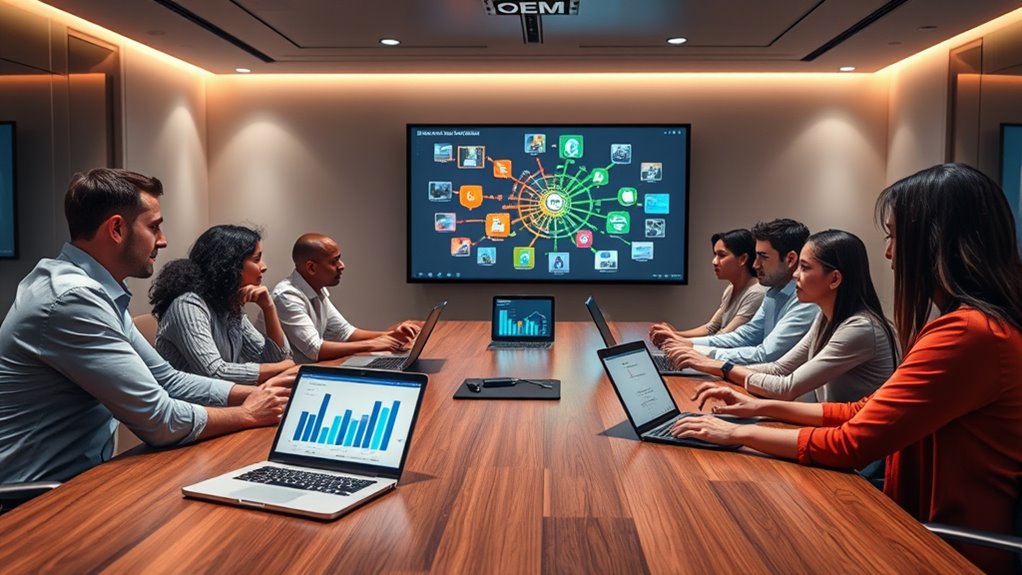

Networking with OEMs allows you to access valuable service support and training programs that boost your technical skills and service quality. By building strong relationships and engaging in OEM-sponsored workshops and webinars, you stay updated on industry standards and technology. Certifications from OEM training enhance your credibility and distinguish your business. Continuing to explore these partnerships helps you strengthen expertise and customer trust, setting your service apart in a competitive market. Keep going to discover more strategies to maximize OEM relationships.
Key Takeaways
- Build ongoing relationships with OEM reps through workshops, webinars, and direct communication to stay updated on support programs.
- Participate in OEM training and certification programs to enhance credibility and access proprietary diagnostic tools.
- Leverage OEM support resources for troubleshooting, technical updates, and maintenance best practices to improve service quality.
- Develop aftermarket partnerships with OEMs for genuine parts sourcing and technical support, strengthening your network.
- Demonstrate commitment to OEM standards by actively engaging in support programs, fostering customer trust and long-term loyalty.
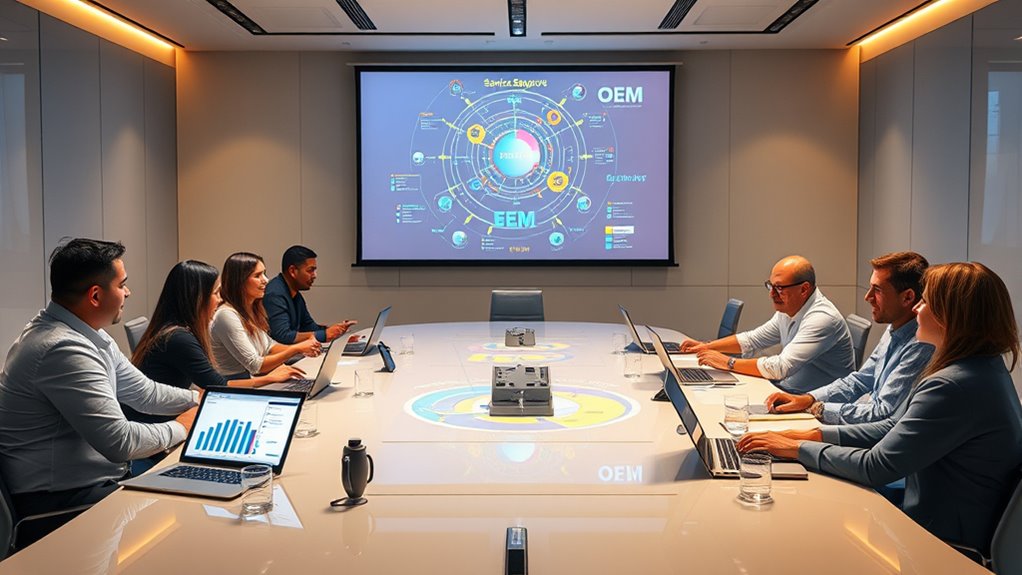
Are you making the most of your connections with OEMs? Building strong relationships with Original Equipment Manufacturers isn’t just about initial contact; it’s about nurturing those ties to access ongoing support, training, and collaboration. OEMs often offer valuable service support programs designed to help you stay at the forefront of industry standards and technology. By actively engaging with these programs, you gain access to resources that can enhance your service capabilities, improve customer satisfaction, and differentiate your business from competitors. One key aspect is establishing solid aftermarket partnerships. These partnerships allow you to source genuine parts, receive technical support, and stay aligned with OEM specifications. Developing a trusted network ensures you can quickly troubleshoot issues, reduce downtime, and maintain the integrity of the equipment you service. The more you invest in these relationships, the more you can leverage OEM expertise to grow your business and build credibility with your clients. Additionally, understanding the specifics of OEM training programs tailored for various vehicle models can significantly improve your workshop’s technical proficiency.
Another critical element is understanding the importance of technical certifications. OEMs often provide specialized training programs that lead to certifications, which validate your skills and boost your reputation. These certifications demonstrate your commitment to quality and technical excellence, making you a preferred choice for clients seeking reliable, OEM-approved service. Participating in OEM training sessions not only broadens your knowledge but also keeps you updated on the latest innovations and industry standards. This continuous learning is essential in a rapidly evolving market, where staying current can mean the difference between losing and winning contracts. Furthermore, OEM certifications often come with access to proprietary tools, diagnostic software, and technical bulletins, giving you an edge over competitors who lack such credentials.
Taking advantage of OEM service support and training programs also means you’re positioning yourself as a trusted partner rather than just a service provider. When you can confidently offer OEM-approved repairs and maintenance, your clients see you as an authority, which fosters loyalty and repeat business. It’s important to proactively seek out these opportunities—attend OEM-sponsored workshops, participate in webinars, and build relationships with OEM representatives. This proactive approach signals your dedication to excellence and your willingness to align with their standards. Ultimately, leveraging service support and training programs from OEMs isn’t just about gaining technical know-how; it’s about creating a sustainable, professional reputation that benefits your business long-term. The more you invest in these relationships, the stronger your position becomes in a competitive marketplace.

TOPDON RLink J2534 Pass-Thru Programmer, OEM Reprogramming and Diagnostic Tool, Enhanced J2534 VCI, Supports J2534/D-PDU/CAN-FD/DoIP, Compatible with 18+ Vehicle Brands, No OE Software Provided
J2534 Pass-Thru Programmer: TOPDON RLink J2534 is an advanced diagnostic and reprogramming tool that support all J2534 protocols,…
As an affiliate, we earn on qualifying purchases.
As an affiliate, we earn on qualifying purchases.
Frequently Asked Questions
How Do OEM Training Programs Differ From Third-Party Providers?
OEM training programs differ from third-party providers because they offer OEM certification, ensuring you meet manufacturer standards. They focus on product customization, teaching you specific features and updates directly from the source. With OEM training, you gain in-depth knowledge tailored to the equipment you use, whereas third-party programs might lack this level of detail and certification, potentially affecting your ability to optimize performance and troubleshoot effectively.
What Are the Costs Associated With OEM Service Support Programs?
The costs of OEM service support programs vary based on the scope and equipment involved. You should do a thorough cost analysis to understand expenses like parts, labor, and recurring fees. This helps you manage expenses effectively and guarantees you’re not overspending. While OEM programs might seem costly initially, they often reduce long-term maintenance costs through specialized support and training, ultimately improving your overall expense management.
How Can I Customize Training to Fit My Team’s Needs?
You can customize training by focusing on personalized learning experiences that target your team’s specific skill development needs. Assess their current knowledge and identify gaps, then work with OEMs to develop tailored modules or hands-on sessions. Encourage feedback and adjust the program accordingly, ensuring each team member gains relevant skills. This approach helps optimize training effectiveness and boosts overall team performance, making skill development more efficient and aligned with your goals.
What Metrics Are Used to Evaluate OEM Support Effectiveness?
You evaluate OEM support effectiveness by tracking customer satisfaction scores and response times. High satisfaction indicates your team values the support received, while quick response times show the OEM’s efficiency in addressing issues. Monitoring these metrics helps you identify gaps and improve collaboration. Regular feedback from your team and customers also guarantees ongoing improvement, ensuring the OEM’s support aligns with your operational needs.
How Do OEMS Update Training Materials With New Technology?
OEMs update training materials through continuous technology integration, guaranteeing content stays current with new advancements. They regularly review and revise content updates based on the latest industry standards, technological changes, and feedback from support teams. This proactive approach guarantees that training remains relevant, effective, and aligned with evolving technology. By doing so, you can confidently stay ahead in your skills and ensure ideal support for new tech implementations.

Auto Brakes, A5 (G-w Training Series for Ase Certification)
Used Book in Good Condition
As an affiliate, we earn on qualifying purchases.
As an affiliate, we earn on qualifying purchases.
Conclusion
By building strong relationships with OEMs, you’re planting seeds of trust and knowledge that grow into a thriving network. Just as a tree needs deep roots, your partnership with OEMs provides stability and nourishment for future success. Embrace these connections as the sun’s rays—guiding and illuminating your path forward. When you nurture your service support and training programs, you’re cultivating a future where growth is inevitable and resilience is rooted deep within your network.

Generac Genuine 0D9723S Air Filter For 760 990 cc XG XP Ultra Source OEM
Brand New Genuine Generac Air Filter… We are an Authorized Generac Dealer… Air Filter Genuine Generac Part #…
As an affiliate, we earn on qualifying purchases.
As an affiliate, we earn on qualifying purchases.

Tech-Shop-pro Compatible Key OEM Win10 profesional 64 Bit USB Installation media onilne activatiation Key C. Install To Factory Fresh, Recover, Intended for newer Systems
Genuine OEM Key Included: Your package comes with a printed OEM Online Activation key sealed in a plastic…
As an affiliate, we earn on qualifying purchases.
As an affiliate, we earn on qualifying purchases.