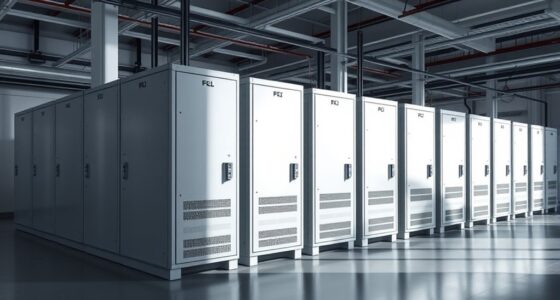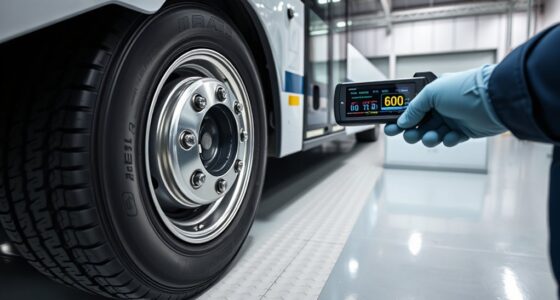

Creating a maintenance schedule for your electric bus fleet involves regularly monitoring battery health, inspecting charging stations, and conducting routine vehicle checks like tires and brakes. Track charge cycles, temperature, and capacity to prevent degradation, and schedule preventive maintenance based on manufacturer guidelines. Keep spare parts on hand and guarantee staff are trained on proper procedures. Developing a detailed plan helps maximize uptime and safety—continue to explore best practices to fine-tune your schedule.

Get business pricing on monitors, keyboards and dev gear
- Business-only prices and quantity discounts
- Tax-exempt purchasing
- Multiple users, one account, clear invoices
Key Takeaways
- Develop a comprehensive maintenance plan aligned with manufacturer guidelines and fleet usage patterns.
- Schedule regular battery health checks and monitor charge cycles to prevent degradation.
- Conduct routine inspections of charging infrastructure, connectors, and cables for wear and safety.
- Track vehicle performance data to identify trends and adjust maintenance intervals proactively.
- Train staff on proper charging procedures and safety protocols to ensure optimal fleet operation.

Creating a maintenance schedule for electric bus fleets is essential to guarantee maximum efficiency and longevity of your vehicles. Proper planning ensures that your buses remain reliable, safe, and cost-effective over their lifespan. One of the key aspects of this schedule involves diligent battery management. Batteries are the heart of electric buses, and their health directly impacts performance and range. To optimize battery life, you should regularly monitor charge cycles, voltage levels, and temperature. Establish routine checks to identify early signs of degradation, such as capacity loss or abnormal heating. Consistent battery management not only prolongs battery life but also helps prevent unexpected breakdowns, saving you time and repair costs. Incorporating preventive maintenance practices ensures that potential issues are addressed before they lead to costly repairs. Equally important is maintaining a robust charging infrastructure. An effective charging system ensures that buses are ready for service when needed and reduces downtime. Your maintenance plan should include regular inspection of charging stations, connectors, and cables to prevent wear and damage. Keep spare parts on hand for quick replacements if issues arise. Also, schedule periodic calibration of chargers to ensure they deliver the correct voltage and current, which protects batteries from overcharging or undercharging. Implementing software updates for charging stations can enhance efficiency and safety, so stay connected with your providers for the latest improvements. Training your staff on proper charging procedures is critical; improper charging can lead to reduced battery life and potential safety hazards. Encourage your team to follow best practices, such as avoiding complete discharges and not leaving buses plugged in unnecessarily after full charge. In addition to battery management and charging infrastructure, your maintenance schedule should include routine vehicle inspections—checking tires, brakes, suspension, and electrical systems. Keeping a detailed record of all maintenance activities helps you identify patterns or recurring issues before they become serious problems. This proactive approach minimizes unplanned repairs and maximizes vehicle uptime. Establish a clear timeline for preventive maintenance based on manufacturer recommendations and real-world usage data. Regularly review and adjust your schedule as your fleet ages or as new technologies emerge. This ongoing process will help you stay ahead of potential issues, ensuring your electric buses operate safely and efficiently.
electric bus battery monitoring tools
As an affiliate, we earn on qualifying purchases.
As an affiliate, we earn on qualifying purchases.
Frequently Asked Questions
How Often Should Battery Health Be Monitored?
You should monitor battery health at least every 3 to 6 months to track battery degradation effectively. Frequent monitoring helps identify early signs of capacity loss and guarantees peak performance. Depending on usage and environmental conditions, you may need more frequent checks, especially if you notice decreased range or increased charging times. Consistent monitoring allows you to maintain battery longevity and plan timely maintenance or replacements.
What Are the Costs of Electric Bus Maintenance?
You’ll find that electric bus maintenance costs are generally lower than traditional buses, thanks to fewer moving parts. Expenses mainly include maintaining charging infrastructure and managing a spare parts inventory, like batteries and electrical components. Regular checks and timely repairs help prevent costly breakdowns. By tracking these costs and optimizing your maintenance schedule, you can reduce downtime and ensure your fleet runs efficiently while controlling overall expenses.
How to Train Staff for Electric Bus Repairs?
Imagine enabling the full potential of your team; you’ll want to focus on mastering charging procedures and diagnostic tools. Train staff through hands-on workshops and online modules, emphasizing safety and efficiency. Encourage continuous learning to stay updated on electric bus technology. By doing so, you empower your team to perform repairs confidently, troubleshoot effectively, and keep your fleet running smoothly while minimizing downtime.
What Warranties Are Available for Electric Bus Components?
You should check the warranty coverage offered by manufacturers, which typically includes battery longevity and key components. Many electric bus warranties cover battery replacement or repairs if issues arise within a certain period, often around 8 years or a specific mileage. It is crucial to understand what’s included, such as drivetrain and electrical systems, so you’re aware of the protection you have and can plan maintenance accordingly.
How Do Weather Conditions Affect Maintenance Schedules?
Weather impact can turn your maintenance schedule into a shifting tide, demanding seasonal adjustments. Cold temperatures may cause batteries to drain faster and slow down charging, while extreme heat accelerates component wear. Moisture and storms threaten electrical systems, prompting more frequent inspections. You’ll need to stay vigilant, adapting your maintenance routine to seasonal changes, ensuring your electric buses stay reliable no matter the weather’s whims.
electric vehicle charging station inspection kit
As an affiliate, we earn on qualifying purchases.
As an affiliate, we earn on qualifying purchases.
Conclusion
By following this maintenance schedule, you’re not just keeping your electric bus fleet running smoothly—you’re preventing catastrophic breakdowns that could shut down entire cities! A well-planned routine can save you from endless headaches, sky-high repair costs, and the chaos of sudden vehicle failures. Get your schedule right, and you’ll be the hero who keeps the buses moving—faster than lightning, more reliable than sunrise, and unstoppable as the future of transportation!
bus tire pressure gauge and inspection tools
As an affiliate, we earn on qualifying purchases.
As an affiliate, we earn on qualifying purchases.
electric bus maintenance software
As an affiliate, we earn on qualifying purchases.
As an affiliate, we earn on qualifying purchases.
Fall Picks
fall essentials
As an affiliate, we earn on qualifying purchases.