The EU’s Clean Vehicle Directive requires you to make certain that at least 45% of new buses purchased by 2025 are zero or low-emission vehicles. This means you’ll need to follow strict emission standards and benefit from targeted funding and grants to help cover higher upfront costs. Meeting these goals involves strategic planning, infrastructure upgrades, and complying with evolving policies. If you want to understand the full scope and how to implement these measures, there’s more to discover.
Key Takeaways
- The directive sets a target for at least 45% of new buses to be clean, low-emission vehicles by 2025.
- It mandates strict emission standards for all new buses purchased by public authorities and private fleets.
- Financial support mechanisms, like grants and subsidies, facilitate the adoption of electric and low-emission buses.
- Implementation requires infrastructure upgrades, such as charging stations, and collaboration with compliant manufacturers.
- Compliance demonstrates organizational commitment to sustainability and aligns with EU climate and air quality goals.
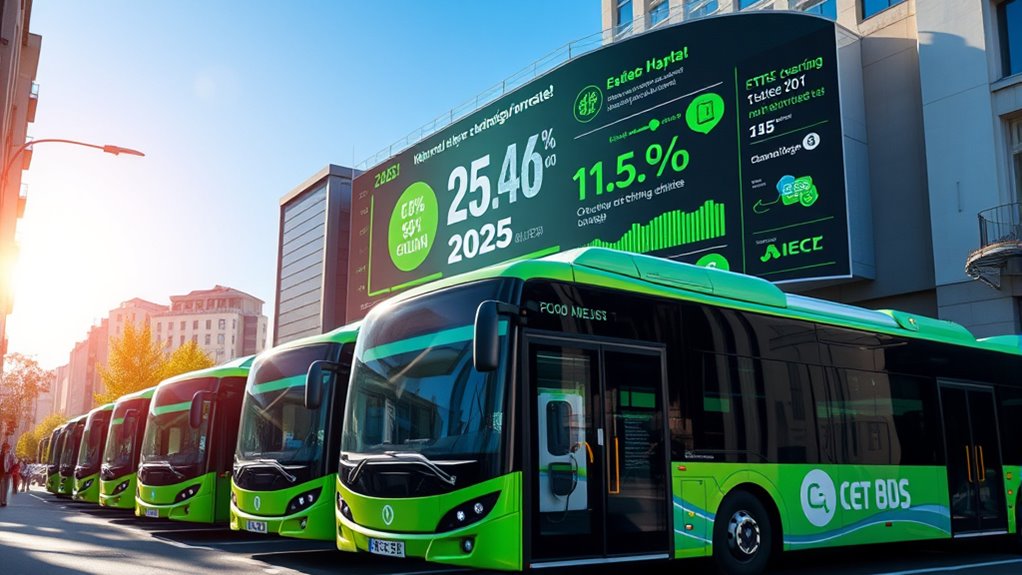
The Clean Vehicle Directive aims to reduce emissions by encouraging public authorities and private fleets to purchase cleaner, more sustainable vehicles. As someone involved in transportation planning or fleet management, you recognize that moving to greener options isn’t just about environmental responsibility; it’s about compliance, cost savings, and future-proofing your operations. One of the key aspects of this directive is promoting electric bus funding, which provides financial support to help you adopt zero-emission buses. Governments across the EU are allocating funds to ease the shift, making it more feasible to replace traditional diesel buses with electric alternatives. This funding is essential because electric buses often come with higher upfront costs, but the long-term savings on fuel and maintenance can offset those expenses. Additionally, the directive emphasizes strict emission standards that you must meet or exceed. These standards are designed to push the industry toward cleaner vehicles, with the goal of having at least 45% of new buses be clean by 2025.
You’ll find that the push for electric bus funding aligns directly with these emission standards. The EU’s measures incentivize your organization to invest in electric buses by offering grants, subsidies, or other financial mechanisms. This support reduces the financial barrier and accelerates your ability to modernize your fleet. Meeting the emission standards isn’t just about compliance; it’s also about demonstrating your commitment to sustainability. The standards set clear benchmarks for pollutants and greenhouse gases, ensuring that new buses are considerably cleaner than older models. By switching to electric buses, you’re not only reducing local air pollutants but also contributing to the EU’s broader climate goals. The directive’s deadline of 2025 for 45% of new buses to be clean puts pressure on you to plan strategically, secure funding, and implement gradual fleet upgrades.
You’ll need to stay informed about the evolving policies and available support schemes for electric bus funding. Working with manufacturers and suppliers that meet the latest emission standards can streamline your procurement process. Keep in mind that the shift isn’t solely financial; it involves infrastructure upgrades like charging stations and driver training. The directive’s focus on cleaner vehicles is extensive, pushing your organization to innovate and adapt. Ultimately, embracing electric buses and adhering to emission standards positions you as a leader in sustainable transportation, fulfilling regulatory requirements while also aligning with societal expectations for a greener future.
Frequently Asked Questions
How Will the Directive Impact Existing Bus Fleets?
The directive will push you to modernize your existing fleet by replacing older buses with cleaner models, which may involve significant investment. You’ll face maintenance challenges as new technologies require different skills and parts. This shift encourages fleet upgrades, reducing emissions, but also demands careful planning to balance costs and operational efficiency during the modernization process. Staying proactive helps you navigate these changes smoothly and meet the new standards.
Are There Financial Incentives for Adopting Clean Buses Early?
Sure, diving into the world of clean buses is like chasing a unicorn—costly but magical! Luckily, you can snag financial subsidies and investment grants that make going green less of a gamble. These incentives help offset the hefty upfront costs, making early adoption more appealing. So, if you’re ready to impress with eco-friendly rides, these funds are your best friends on the journey to cleaner, greener buses.
What Penalties Exist for Non-Compliance With the Directive?
If you don’t meet the emission standards set by the directive, you face compliance penalties, which can include fines or restrictions on selling or operating your buses within the EU. Non-compliance might also lead to increased scrutiny and delays in approvals. To avoid penalties, guarantee your buses meet the required emission standards early, and stay updated on any changes to the regulation.
How Will the Directive Influence Public Transportation Costs?
You’ll likely see public transportation costs change as the directive encourages fuel-efficient, clean buses. These buses may initially cost more but can reduce fuel expenses over time. Maintenance costs could decrease due to newer technology, but you might face higher upfront investments. Overall, expect a shift towards more sustainable options, which can influence your fares and service quality, making public transit more eco-friendly and potentially more expensive or cost-effective depending on various factors.
Will There Be Support for Small or Rural Bus Operators?
Yes, small operators and rural bus services will likely get support under the directive. The EU recognizes that rural bus operators face unique challenges, so there may be grants or funding opportunities to help them shift to cleaner buses. This support aims to guarantee small operators and rural bus services can meet new standards without facing prohibitive costs, maintaining essential transportation links in less populated areas.
Conclusion
The Clean Vehicle Directive is your roadmap to a greener future, where each bus becomes a symbol of change—an engine of hope, a gust of fresh air. As you embrace these standards, you’re planting seeds of progress that grow into cleaner streets and healthier lives. Let every new bus roll forward as a beacon, guiding us through the dawn of sustainable transportation. Together, you’re steering toward a brighter, cleaner horizon.