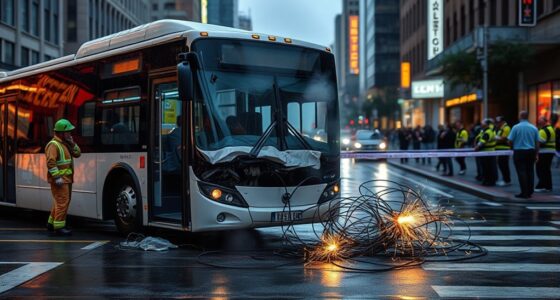
California’s Clean Transit Rule requires transit agencies to switch to zero-emission buses, with all new purchases mandated to be electric or zero-emission by 2030. By 2040, the entire fleet must consist of clean, environmentally friendly buses. This ambitious timeline aims to cut emissions and improve air quality. Funding support, technological advancements, and planning resources are available to help agencies meet these deadlines. Keep exploring to understand the full impact and opportunities of this transformative transit shift.

Get business pricing on monitors, keyboards and dev gear
- Business-only prices and quantity discounts
- Tax-exempt purchasing
- Multiple users, one account, clear invoices
Key Takeaways
- California requires all new transit buses to be zero-emission by 2030 to meet the Clean Transit Rule.
- The entire transit fleet must transition to electric or zero-emission buses by 2040.
- Funding options, including grants and rebates, support agencies in meeting these deadlines.
- Transition planning and technical assistance are provided by the California Air Resources Board.
- These deadlines aim to reduce greenhouse gases and improve air quality across the state.
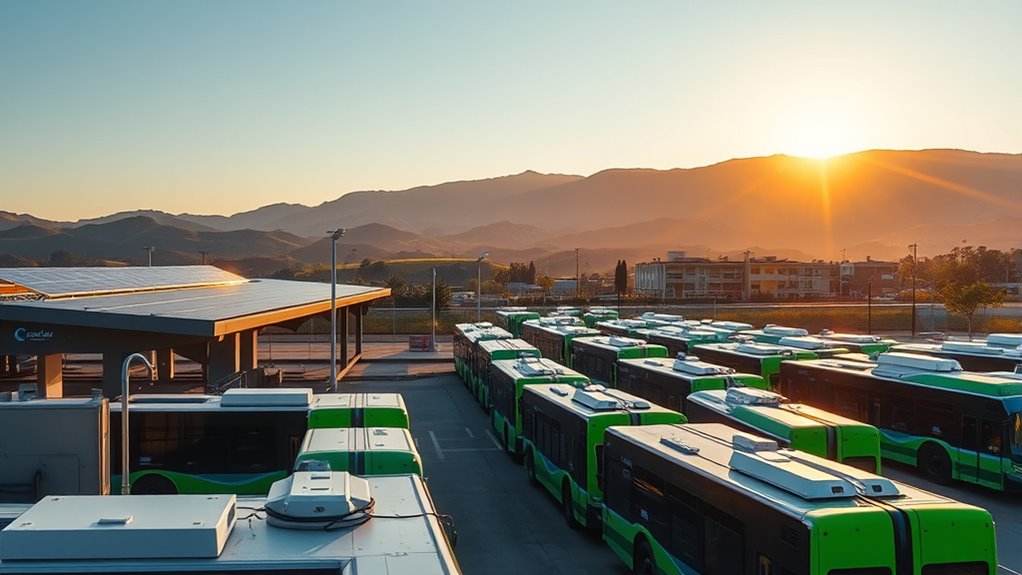
Have you ever wondered how California plans to make its public transportation more eco-friendly? The state’s commitment to reducing greenhouse gas emissions is front and center with its ambitious Clean Transit Rule. This regulation pushes transit agencies to replace traditional diesel buses with zero-emission alternatives, primarily electric buses, by specified deadlines. The goal is to create a cleaner, healthier environment while maintaining reliable transit services. To support this shift, California has introduced various funding opportunities designed to help agencies finance the changeover. These grants, rebates, and subsidies aim to lower the financial barriers that often slow down procurement of electric buses. As a transit agency or advocate, understanding these funding opportunities becomes vital for making the switch feasible and timely.
Electric buses are at the heart of California’s strategy to cut emissions and improve air quality. They produce no tailpipe pollutants, considerably reducing smog-forming emissions and particulate matter. This shift isn’t just about environmental benefits; it’s also about providing better, quieter, and more efficient transportation options for the public. But switching to electric buses requires substantial investment, which is where funding opportunities come into play. The state leverages federal grants, state-funded programs, and public-private partnerships to help cover the high upfront costs of electric buses and the necessary charging infrastructure. These funding sources are essential to guarantee that transit agencies, especially smaller ones with limited budgets, can participate in the changeover without compromising service quality or financial stability.
California’s timeline for transitioning to zero-emission buses is strict. By 2030, all new bus purchases must be zero-emission, and by 2040, the entire fleet should be electric or other zero-emission vehicles. This timetable pushes transit agencies to act quickly, and securing adequate funding is often the most challenging part. That’s why the state’s ongoing commitment to expanding funding opportunities is so important. Agencies are encouraged to apply for grants from programs like the Low or Zero-Emission Vehicle Program, which provides financial incentives specifically for electric bus procurement. Additionally, the California Air Resources Board (CARB) offers technical assistance and planning grants to help agencies develop thorough transition plans.
Furthermore, the use of glycolic acid products and other advanced skincare formulations reflects California’s broader emphasis on innovative solutions and sustainability, aligning with the state’s environmental goals.
As an affiliate, we earn on qualifying purchases.
Frequently Asked Questions
How Will the Rule Impact Bus Maintenance Costs Long-Term?
You’ll likely see maintenance costs decrease over time with zero-emission buses, thanks to fewer moving parts and less engine wear. Longevity considerations suggest these buses will last longer and require less frequent repairs compared to traditional diesel models. Although initial investments may be higher, the long-term savings on maintenance costs can offset these expenses, making your transit fleet more cost-effective and reliable in the future.
Are There Exemptions for Rural or Low-Demand Transit Agencies?
Wondering if there are exemptions for rural or low-demand transit agencies? Yes, rural exemptions and low demand considerations exist under the rule. These provisions recognize the unique challenges rural agencies face when shifting to zero-emission buses. If your agency operates in a less populated area, you might qualify for flexibility or extended deadlines. Does your service area meet the criteria for these exemptions? It’s worth exploring how these provisions could ease your shift.
What Funding Opportunities Support Transit Agencies Transitioning to Zero-Emission Buses?
You can access federal grants and form public-private partnerships to support your shift to zero-emission buses. Federal programs like the Low or Zero-Emission Vehicle Program provide funding opportunities, while partnerships with private companies can help cover costs and develop charging infrastructure. These resources enable you to adopt cleaner transit solutions more efficiently, helping you meet California’s clean transit goals and improve service sustainability.
How Will the Rule Affect Bus Service Schedules and Reliability?
You’ll notice some changes in bus service schedules and reliability as the rule prompts fleet upgrades to zero-emission buses. While shift periods might cause temporary disruptions, proactive driver training helps guarantee smooth operation and reduces delays. Over time, these upgrades and training enhance reliability, offering cleaner, more efficient transit. Planning ahead for these adjustments will help you experience improved service consistency and environmental benefits.
What Are the Penalties for Non-Compliance With the Deadlines?
Think of non-compliance as missing a vital turn on a busy highway. If you don’t meet compliance deadlines, you face penalty fines that can add up quickly, turning your progress into a costly detour. The state enforces strict penalties for missing zero-emission deadlines, emphasizing the significance of staying on track. Staying compliant not only avoids fines but also keeps your transit operations running smoothly and sustainably.
As an affiliate, we earn on qualifying purchases.
Conclusion
So, you’ve got until 2040 to switch all your buses to zero emissions—no big deal, right? Who knew that California’s ambitious clean transit rule would make you a pioneer in the fight against climate change, all while quietly testing your patience with deadlines? It’s almost poetic—saving the planet one electric bus at a time, as if the future isn’t already rushing toward us faster than we’d like. Guess it’s time to embrace the irony.
As an affiliate, we earn on qualifying purchases.
transit bus electric conversion kit
As an affiliate, we earn on qualifying purchases.
As an affiliate, we earn on qualifying purchases.
Halloween Picks
halloween
As an affiliate, we earn on qualifying purchases.