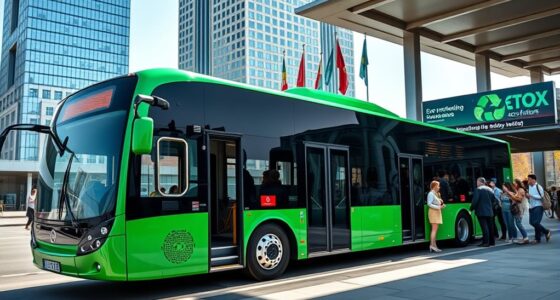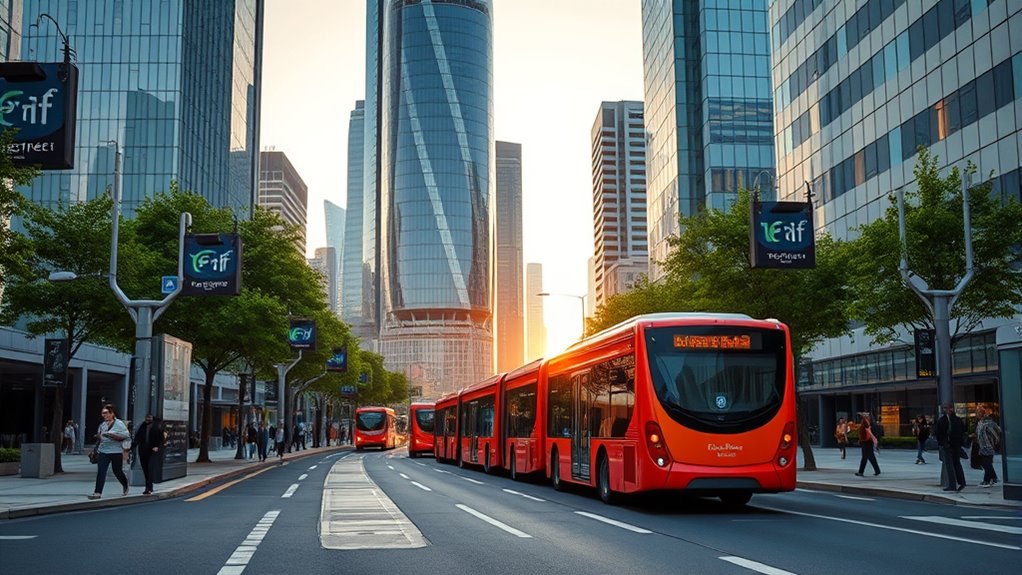

The EU’s 2030 and 2035 zero-emission bus mandates require you to shift your city’s transit fleet toward electric and hydrogen vehicles, boosting infrastructure needs and procurement strategies. You’ll need to develop charging and fueling facilities, upgrade grids, and collaborate with tech and energy providers. This progression aims to improve air quality and public perception. Stay tuned to find out how these changes will shape your city’s urban mobility future.
Key Takeaways
- Cities must plan for a complete transition to emissions-free buses by 2030 and 2035, affecting fleet procurement and infrastructure.
- The mandate accelerates adoption of electric and hydrogen buses, increasing demand and competition among manufacturers.
- Urban areas need to develop supporting infrastructure like charging stations and hydrogen fueling to ensure operational efficiency.
- Collaboration with technology providers and securing funding are essential for successful infrastructure and fleet upgrades.
- The transition improves urban air quality, public perception, and positions cities as leaders in sustainable mobility.
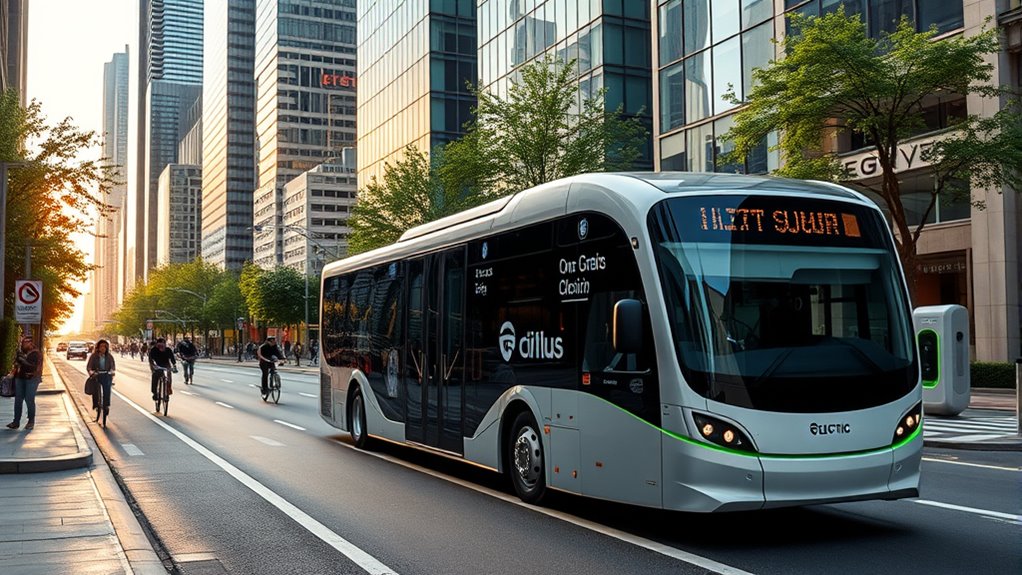
The European Union’s new zero-emission bus mandate marks a significant shift toward sustainable transportation, requiring all new public buses sold within the EU to be emissions-free by 2030. This regulation will accelerate the market adoption of clean bus technologies, compelling manufacturers and transit agencies to prioritize electric and hydrogen-powered vehicles. As a city official or transportation planner, you’ll need to navigate this transition carefully, making certain that the local transit fleet aligns with EU regulations. The surge in demand for zero-emission buses will likely lead to increased competition among manufacturers, driving innovation and potentially lowering costs over time. However, rapid market adoption also means that your city must prepare for a wave of new vehicle options, each with different specifications, ranges, and charging or fueling requirements. Your planning efforts should focus on understanding these vehicles’ capabilities to make informed procurement decisions.
In addition, understanding the principles of heat transfer can be valuable when developing efficient infrastructure, such as charging stations and energy management systems, to support the zero-emission bus fleet.
Equally important is infrastructure development. Transitioning to zero-emission buses isn’t just about buying new vehicles; it’s about creating the right environment for them to operate efficiently. You’ll need to invest in charging stations or hydrogen fueling infrastructure, which can be a complex and costly process. Strategic placement of these facilities is critical to support your bus routes without causing delays or operational issues. You might also have to upgrade existing electrical grids or develop new energy sources to meet increased power demands. The success of the mandate hinges on your ability to integrate infrastructure seamlessly into the urban fabric, minimizing disruptions while maximizing operational efficiency.
As you plan for the 2030 deadline, consider partnerships with technology providers, utility companies, and infrastructure specialists. These collaborations can help streamline the development process and ensure that your city’s infrastructure can withstand future growth in zero-emission bus fleets. Funding mechanisms, grants, and government programs will be essential to support these investments, so staying informed and engaged with EU initiatives can unlock valuable resources. The pace of market adoption and infrastructure development will determine how smoothly your city transitions to a zero-emission bus fleet, impacting everything from air quality to public perception of transit. By proactively addressing these factors, you can position your city as a leader in sustainable urban mobility, meeting EU mandates while enhancing the quality of life for your residents.

The 2027-2032 World Outlook for Electric Bus Charging Stations
As an affiliate, we earn on qualifying purchases.
As an affiliate, we earn on qualifying purchases.
Frequently Asked Questions
How Will the Mandate Impact Bus Manufacturing Costs?
The mandate will likely increase your manufacturing costs due to stricter emissions standards, requiring investments in new technology and equipment. You may face higher supply chain costs because sourcing zero-emission components and batteries can be more expensive and complex. However, over time, mass production and technological advances could help reduce these costs, making zero-emission buses more affordable and sustainable for your operations.
What Support Will Cities Receive for Fleet Transitions?
You’ll receive support through funding opportunities designed to ease the cost of fleet shifts to zero-emission buses. Additionally, technical assistance will help you plan and implement your changeover effectively. These resources aim to make the progression smoother, ensuring you have access to the necessary financial aid and expert guidance. By leveraging these supports, you can meet the mandate’s requirements more efficiently and foster cleaner, more sustainable transportation in your city.
How Does the Mandate Affect Existing Diesel Bus Infrastructure?
The mandate means you’ll need to plan for diesel bus retirement and infrastructure upgrades. Existing diesel bus infrastructure will require significant modifications or replacements to support zero-emission buses. You’ll need to invest in charging stations, depot upgrades, and maintenance facilities to meet new standards. This progression might be challenging but ultimately leads to cleaner air and a more sustainable transit system in your city.
Will There Be Penalties for Non-Compliance?
You’ll face penalties if you don’t meet the compliance timelines set by the EU’s zero-emission bus mandate. About 80% of cities could be penalized for non-compliance, emphasizing the importance of adhering to penalty enforcement. These fines motivate timely adoption of zero-emission buses and ensure cities stay on track with the 2030 and 2035 targets. Staying ahead of deadlines helps avoid costly penalties and supports a greener future.
How Will the Mandate Influence Public Transportation Fares?
The mandate may lead to higher public transportation fares initially, but it aims to improve fare affordability in the long run through reduced operating costs and subsidies. You might see changes in ridership trends as cleaner buses attract more passengers, especially those concerned about air quality. While costs could rise temporarily, the shift to zero-emission buses is expected to make public transit more sustainable and accessible for everyone.

Horizon Fuel Cell Technologies Solar Hydrogen Education Kit
Horizon puts renewable energy technology into the hands of our future scientists
As an affiliate, we earn on qualifying purchases.
As an affiliate, we earn on qualifying purchases.
Conclusion
By 2030, over 75% of new buses in the EU will need to be zero-emission, transforming urban transportation. This shift promises cleaner air and healthier cities, but also challenges you to adapt infrastructure and policies. Embracing these changes now can position your city as a leader in sustainability. The clock is ticking—your proactive efforts could make the difference in meeting these ambitious targets and shaping a greener future for everyone.

Electric Vehicle Charge Point Infrastructure: From planning to operation (Transportation)
As an affiliate, we earn on qualifying purchases.
As an affiliate, we earn on qualifying purchases.

Blue Sea Systems 2104 PowerBar BusBar with Four 3/8, 600A
600A PowerBar with four 3/8" terminal studs
As an affiliate, we earn on qualifying purchases.
As an affiliate, we earn on qualifying purchases.