
When converting your VW Bus into a camper, you need to follow safety regulations for wiring, gas systems, and structural changes to avoid hazards and fines. Proper ventilation, seat belts, and compliant appliances are essential for safety and legal approval. Also, check if your vehicle needs reclassification or new registration to meet local laws. Staying compliant guarantees your camper is both safe and road legal—discover more details to make your project compliant and smooth.
Key Takeaways
- Ensure all electrical wiring and gas systems meet local safety and electrical codes to prevent hazards.
- Obtain necessary inspections and documentation for vehicle reclassification and registration updates.
- Install appliances like propane stoves and heaters following safety standards to avoid fire or gas leaks.
- Maintain proper ventilation to prevent carbon monoxide buildup and ensure occupant safety.
- Consult local vehicle safety authorities or professionals to verify compliance and avoid fines or legal issues.
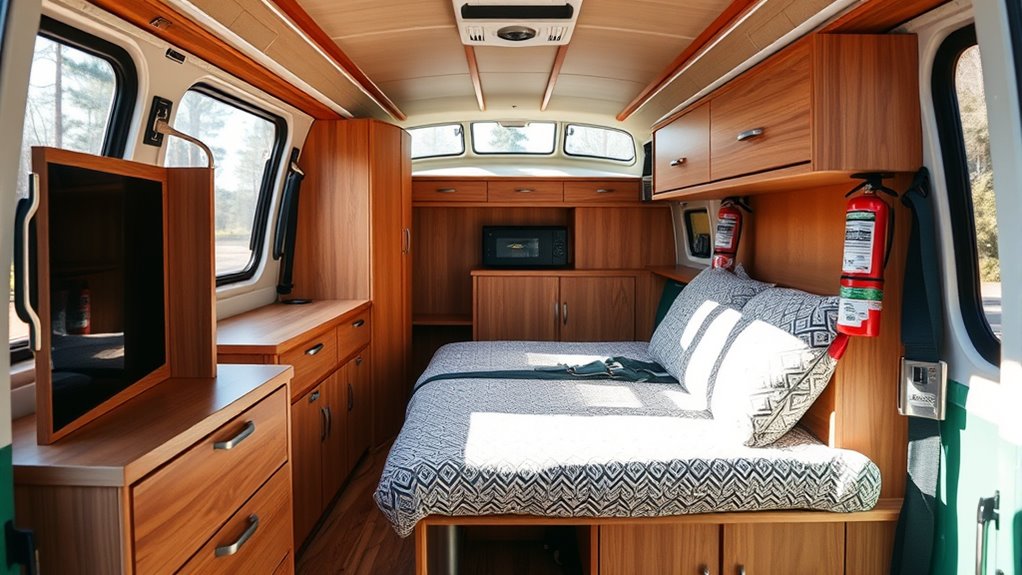
Converting a vehicle into a camper offers exciting possibilities, but understanding the legal requirements is vital before you start. If you’re planning to modify your VW bus into a fully functional camper, you need to be aware of safety regulations and licensing requirements to avoid legal issues down the line. These rules are designed to ensure your safety and that of others on the road, so taking the time to understand them is well worth it.
First, safety regulations are essential when converting your VW bus into a camper. These rules cover everything from electrical wiring and gas systems to structural modifications. For example, if you plan to install a propane stove or heater, you’ll need to ensure that all appliances are installed according to safety standards. Proper ventilation is a must to prevent carbon monoxide buildup, and seat belts or safety restraints must be installed where necessary. Your modifications should meet local fire codes and electrical codes, which vary by state or country. Ignoring these safety regulations could not only put you at risk but also lead to fines or disqualification from insurance coverage if an accident occurs. It’s best to consult your local vehicle safety authority or a professional experienced in camper conversions to verify your plans align with current safety standards. Additionally, understanding the vehicle safety regulations in your area can help ensure your conversion complies with all legal requirements.
Next, licensing requirements come into play once your VW bus is transformed into a camper. In many jurisdictions, the vehicle must be reclassified from a standard passenger vehicle to a recreational vehicle (RV) or camper van. This process often involves inspections and paperwork, such as providing proof that your modifications meet safety standards. Some areas might require you to obtain a special RV license or permit before you can legally drive your converted vehicle. This ensures that your vehicle is registered correctly and that your insurance policy covers your camper conversion. Keep in mind that failing to update your licensing can lead to penalties or difficulties during roadside checks. Additionally, certain modifications might affect your vehicle’s weight or dimensions, which could influence your registration status or road usage rights. It’s wise to check with your local DMV or equivalent authority to understand the specific licensing requirements for camper conversions in your area.
Top picks for "camper conversion laws"
Open Amazon search results for this keyword.
As an affiliate, we earn on qualifying purchases.
Frequently Asked Questions
Are There Specific Safety Standards for Camper Conversions in Different States?
You should know that state regulations and safety standards vary across states. It’s essential to check local laws before modifying your VW bus interior, as some states have specific requirements for electrical systems, ventilation, and seat belts. By understanding these regulations, you guarantee your camper conversion remains legal and safe. Always consult local authorities or professional installers to meet the safety standards in your state, avoiding potential fines or safety hazards.
Do I Need a Special License to Modify My VW Bus Interior?
You might not need a special license to modify your VW bus interior, but it depends on your local regulations. When it comes to interior design and customization permits, some areas require permits for significant modifications, especially if it affects safety or structural integrity. Check with your city or county authorities before starting your project to guarantee you’re compliant. Proper permits help you avoid fines and ensure your customizations are legal and safe.
How Do I Ensure My Camper Conversion Complies With Fire Safety Laws?
Imagine your dream camper catching fire—terrifying, right? To prevent this nightmare, you gotta follow fire safety laws. Make certain you have the right fire extinguisher requirements, like a Class B or ABC extinguisher, and install smoke alarm regulations that meet local codes. Regularly check and maintain these safety devices, so your adventures stay safe and worry-free. Safety isn’t just a rule; it’s your ticket to peace of mind.
Are There Restrictions on Adding Electrical Systems or Solar Panels?
You can add electrical systems or solar panels, but you need to follow electrical regulations in your area. Check if you require solar panel permits before installation to avoid legal issues. Confirm your wiring meets safety standards, and use certified components. By adhering to these rules, you’ll keep your camper safe and compliant, preventing potential hazards or fines. Always consult local authorities or a professional for specific requirements related to electrical and solar modifications.
Can I Make Permanent Modifications Without Losing Vehicle Value or Insurance Coverage?
Thinking about turning your VW bus into a tiny palace? Well, you can make permanent modifications, but beware—if you go overboard with permanent fixtures, you might scare off future buyers or mess with your insurance. Stick to removable fixtures to keep your interior aesthetics flexible and protect your vehicle’s value. Just remember, a little planning saves headaches later, so check local laws and your insurer before turning your bus into a permanent masterpiece.
Conclusion
So, if you ignore these camper conversion laws, you could be risking a legal nightmare that makes your head spin! Imagine your dream VW bus turning into a legal horror story overnight—fines, fines, and more fines, plus the nightmare of dealing with authorities. Don’t let that happen! Stay informed, follow the rules, and keep your adventure smooth sailing. Trust me, a little caution now saves you from a giant headache down the road!