In a low-emission future, driving a vintage VW Bus can be tricky due to policy loopholes that favor electric conversions or exemptions for classic cars. To avoid restrictions and stay compliant, converting your Bus into an electric vehicle is a smart solution, making it eligible for incentives and lowering emissions. Understanding local policies helps you navigate potential loopholes and find better solutions, ensuring your nostalgic ride remains on the road while supporting environmental goals—expand your knowledge to stay ahead.
Key Takeaways
- Converting vintage VW Buses to electric can qualify them for low-emission incentives and bypass restrictions on traditional combustion engines.
- Vintage car exemptions may limit access to incentives but help preserve the iconic cultural value of VW Buses.
- Evolving policies increasingly support electric conversions of classic vehicles to meet future emissions standards.
- Staying informed about regional regulations ensures vintage VW Buses remain compliant and eligible for potential incentives.
- Balancing nostalgia with sustainability involves converting vintage models to electric, aligning with low-emission goals and cultural preservation.
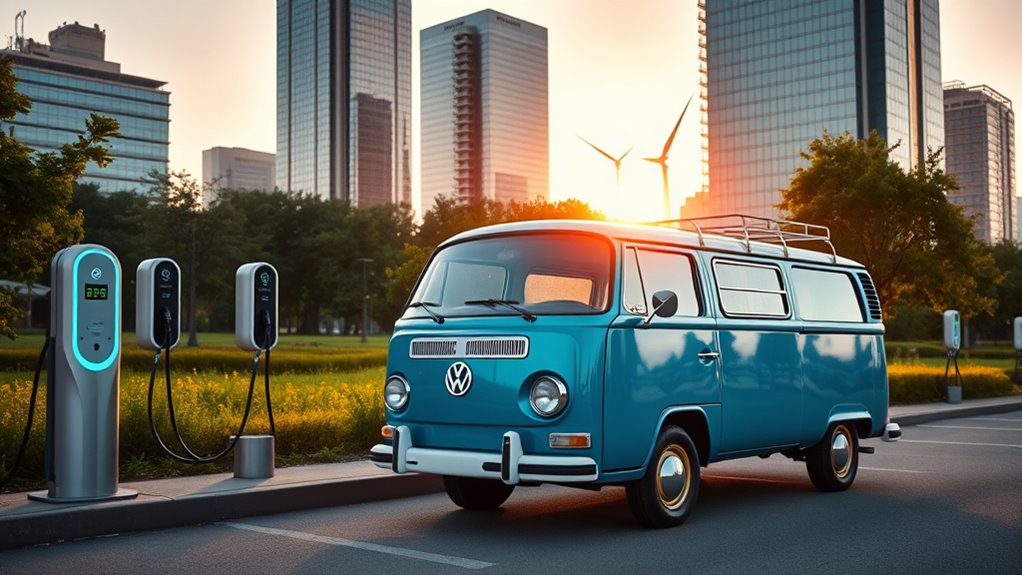
As the world shifts toward low-emission transportation, driving a classic VW Bus might seem challenging, but it’s more feasible than ever. Governments are increasingly offering electric vehicle incentives to encourage eco-friendly driving, which can make converting your vintage VW Bus a realistic goal. These incentives often include rebates, tax credits, and reduced registration fees for electric vehicles, making it financially easier to transition. However, vintage car exemptions in many regions complicate the picture. These exemptions allow classic cars to bypass certain emissions standards, recognizing their historical value and cultural significance. While this preserves the nostalgic appeal of your VW Bus, it can create loopholes that hinder broader environmental goals.
Vintage VW Bus exemptions preserve nostalgia but may limit access to electric incentives and environmental benefits.
You might wonder if your vintage VW Bus qualifies for electric vehicle incentives. Typically, these incentives are geared toward new, fully electric cars, which means converting your classic Bus may not automatically qualify. But some jurisdictions are beginning to recognize conversions of vintage vehicles into electric models as eligible for similar benefits. This shift is essential because it helps bridge the gap between preserving automotive history and meeting low-emission standards. If your region offers vintage car exemptions, you could technically keep your VW Bus on the road without modifications, but this may mean missing out on financial incentives designed to promote cleaner transportation. Conversely, converting your Bus into an electric vehicle could allow you to enjoy incentives while still preserving the vehicle’s iconic appearance.
The key is understanding local policies. Some areas are updating their regulations to allow vintage car exemptions only if the vehicles meet certain standards, like electric conversion. This creates a compelling incentive to retrofit your VW Bus with an electric drivetrain rather than simply maintaining it as a combustion engine vehicle. Not only does this help you avoid potential penalties or restrictions, but it also aligns your vehicle with future-proofed transportation policies. Furthermore, by converting your VW Bus into an electric vehicle, you can potentially qualify for electric vehicle incentives, making the process more financially viable. Additionally, organic farming techniques from agriculture can serve as a metaphor for sustainable vehicle modifications, emphasizing harmony with environmental standards.
While policy loopholes like vintage car exemptions provide some flexibility, they shouldn’t be your only consideration. Staying informed about evolving regulations and incentives is key. Many regions are moving toward more inclusive policies that encourage electric conversions of vintage vehicles, recognizing their cultural value while supporting environmental goals. Ultimately, converting your classic VW Bus into an electric vehicle offers a practical way to enjoy your vintage ride without conflicting with low-emission policies. It’s a solution that balances nostalgia with sustainability, ensuring you can keep cruising in style while contributing to a cleaner future.
Top picks for "driv emission future"
Open Amazon search results for this keyword.
As an affiliate, we earn on qualifying purchases.
Frequently Asked Questions
Can Vintage VW Buses Be Retrofitted to Meet Low-Emission Standards?
You can retrofit vintage VW buses to meet low-emission standards through various vintage modifications. These upgrades might include installing modern catalytic converters, fuel injection systems, or engine management units to improve emissions compliance. While retrofitting can be effective, it often requires expert knowledge and adherence to local regulations. Keep in mind, some vintage modifications may not fully guarantee emission compliance but can considerably reduce your bus’s environmental impact.
How Do Policy Loopholes Affect Classic Vehicle Owners?
Imagine you’re stuck in a time capsule, and policy loopholes like emission loopholes and classic car exemptions let you escape emissions regulations. These loopholes often let owners like you keep vintage vehicles on the road, but they can undermine efforts for cleaner air. While you get to enjoy your classic car, you might also face restrictions or increased scrutiny as policies evolve, balancing nostalgia with environmental responsibility.
Are There Incentives for Converting VW Buses to Electric?
You might find that some regions offer vintage vehicle exemptions, making electric conversions more appealing. Retro conversion incentives can also help offset costs, encouraging you to upgrade your VW Bus to electric. These programs aim to support classic vehicle owners by providing financial benefits or relaxed regulations. Check your local policies, as they vary, but many areas now recognize the importance of preserving vintage vehicles through eco-friendly upgrades.
What Are the Long-Term Sustainability Impacts of Maintaining Vintage VW Buses?
Imagine holding onto a cherished piece of history. Maintaining vintage VW buses helps preserve cultural heritage, but it can also contribute to environmental degradation through higher emissions. Long-term sustainability depends on balancing nostalgia with eco-responsibility. While these iconic vehicles symbolize freedom and tradition, you should consider their environmental footprint. Upgrading to cleaner alternatives supports both cultural preservation and a healthier planet, ensuring your beloved buses don’t compromise future generations’ well-being.
How Do International Policies Differ Regarding Vintage Vehicle Emissions?
You’ll notice that international regulations vary widely regarding vintage exemptions. Some countries offer relaxed rules for classic vehicles, allowing higher emissions despite global efforts to cut pollution. Others enforce stricter standards, limiting vintage vehicles’ use or requiring emissions testing. These differences impact vintage vehicle owners, who might find it easier or harder to maintain their classic cars depending on where they are. Understanding these policies helps you navigate compliance and sustainability considerations effectively.
Conclusion
As you navigate the narrow nuances of new norms, remember that loopholes linger like lurking leeches. By boldly bridging barriers and balancing benefits, you can blaze a better, cleaner path forward. Embrace innovative ideas, stay vigilant, and voice your values to vanquish vulnerabilities. Together, you can steer society toward a sustainable, smoke-free future—shaping solutions that safeguard our skies while steering clear of shortcuts. Let’s lead with purpose and propel progress!