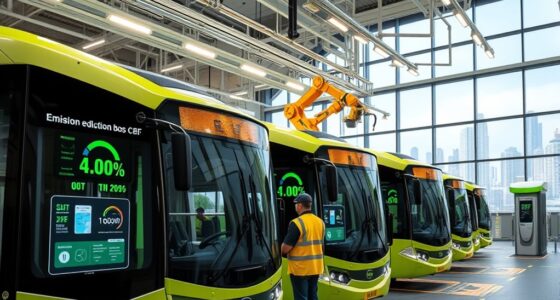

EU’s temporary measures let you install larger batteries in electric buses without exceeding legal weight limits. These allowances provide flexibility to address the added weight of batteries, ensuring you can boost range or capacity without penalties. They are designed to help operators manage the challenges of battery weight while maintaining compliance. To understand how these measures can benefit your fleet and the specific conditions involved, you’ll find it helpful to explore further details.
Key Takeaways
- EU temporary measures provide weight allowance flexibilities for electric buses with larger batteries.
- These measures help operators install bigger batteries without exceeding legal weight limits.
- They aim to address capacity restrictions caused by the heavy battery weight.
- The allowances are temporary, offering relief while long-term solutions are developed.
- Compliance requires understanding specific conditions and limits set by these temporary measures.
Battery buses are becoming increasingly popular as a sustainable transportation option, but their weight allowances pose unique challenges. As you consider adopting battery-powered buses, you’ll quickly realize that battery weight plays a significant role in how much passenger capacity you can effectively carry. Unlike traditional diesel buses, which have a fixed weight distribution, electric buses depend on heavy batteries that add substantial weight to the vehicle. This extra weight directly impacts bus capacity, meaning that even if your bus chassis can hold a certain number of passengers, the added battery weight might force you to reduce seating or standing room to stay within regulatory limits.
Understanding these dynamics is vital because the heavier the battery, the less flexibility you have to maximize passenger capacity without exceeding weight restrictions. For instance, a larger battery provides longer range but also increases the overall weight of the bus. This requires you to carefully balance battery size with bus capacity needs. If you push for a bigger battery to enhance range, you might have to accept a reduced passenger load to stay compliant with weight regulations. Conversely, choosing a smaller battery can boost capacity but may limit the vehicle’s operational range, which could affect route planning and service efficiency.
Heavier batteries reduce passenger capacity unless balanced carefully with vehicle range needs.
The EU’s temporary measures aim to address these issues by providing some relief in weight allowances for battery buses. These measures recognize that the added battery weight can unfairly restrict bus capacity and operational flexibility. Under these rules, manufacturers and operators gain some leeway to accommodate heavier batteries without immediately facing penalties or restrictions. This means you can install larger batteries that enhance your bus’s range without having to drastically cut passenger numbers or overhaul your fleet. These temporary measures are designed to bridge the gap while longer-term solutions are developed, giving you more room to innovate and optimize your electric fleet.
However, it’s important to stay informed about evolving regulations. While the temporary measures offer relief, they come with specific conditions and limits, so you need to pay close attention to the details to guarantee compliance. Balancing battery weight with bus capacity remains a critical planning factor. Recognizing the complex relationship between battery weight and vehicle capacity can help you better evaluate your fleet options and ensure regulatory adherence. By understanding the impact on weight allowances and leveraging the temporary EU measures, you can better plan your fleet’s configuration. This way, you can maximize both range and passenger capacity while adhering to legal standards, making your transition to electric buses smoother and more efficient.
Top picks for "weight allowanc battery"
Open Amazon search results for this keyword.
As an affiliate, we earn on qualifying purchases.
Frequently Asked Questions
How Do Weight Allowances Vary Across Different EU Countries?
You’ll notice that weight allowances for battery buses vary across EU countries due to regional regulations. Some countries permit higher weight limit variations to accommodate larger batteries or additional equipment, while others stick to stricter limits. It’s essential to check each country’s specific regulations, as these regional differences can impact your vehicle’s design, operations, and compliance requirements, especially when planning cross-border routes or fleet expansions.
Are There Specific Criteria for Qualifying Battery Buses for Weight Allowances?
You might think all battery buses qualify for weight allowances, but that’s not the case. To be eligible, your battery bus must meet specific criteria, such as having a certain battery capacity, weight distribution, and compliance with safety standards. The weight allowance criteria focus on ensuring road safety and environmental benefits. Verify your vehicle’s specifications against these criteria to determine eligibility, as not all battery buses automatically qualify.
How Long Will These Temporary Weight Allowances Remain in Effect?
The temporary weight allowances for battery buses will stay in effect until the EU reviews and updates the policy, which is expected to happen by the end of 2024. You should keep an eye on official announcements, as the battery weight and policy duration can change based on technological advancements and regulatory decisions. This means your bus operations might benefit from these allowances for at least the next year or so.
What Impact Do Weight Allowances Have on Bus Safety Standards?
You might wonder how weight allowances affect safety standards. These allowances can impact safety implications by potentially stressing structural integrity if buses carry more weight than designed. However, when properly managed, they shouldn’t compromise safety. It’s essential to monitor structural integrity continuously and ensure buses meet safety regulations to prevent accidents. So, while weight allowances offer flexibility, they must be balanced carefully to maintain high safety standards.
Are There Any Future Plans to Make These Allowances Permanent?
You might wonder if these weight allowances will become permanent. Currently, plans focus on integrating advanced battery technology and aligning with evolving environmental policies. While some discussions suggest making allowances more permanent, it’s not yet confirmed. You should stay updated on EU policy developments, as a decision could influence future regulations, supporting cleaner transportation while balancing safety and efficiency for battery buses.
Conclusion
Think of these temporary weight allowances as a bridge over troubled waters, helping battery buses navigate the current challenges. They’re like a safety net, giving you room to adapt and innovate without falling into setbacks. While these measures won’t last forever, they’re your ticket to smoother journeys now. Embrace them as a stepping stone, paving the way for a greener, more sustainable future where every mile counts and every bus makes a difference.