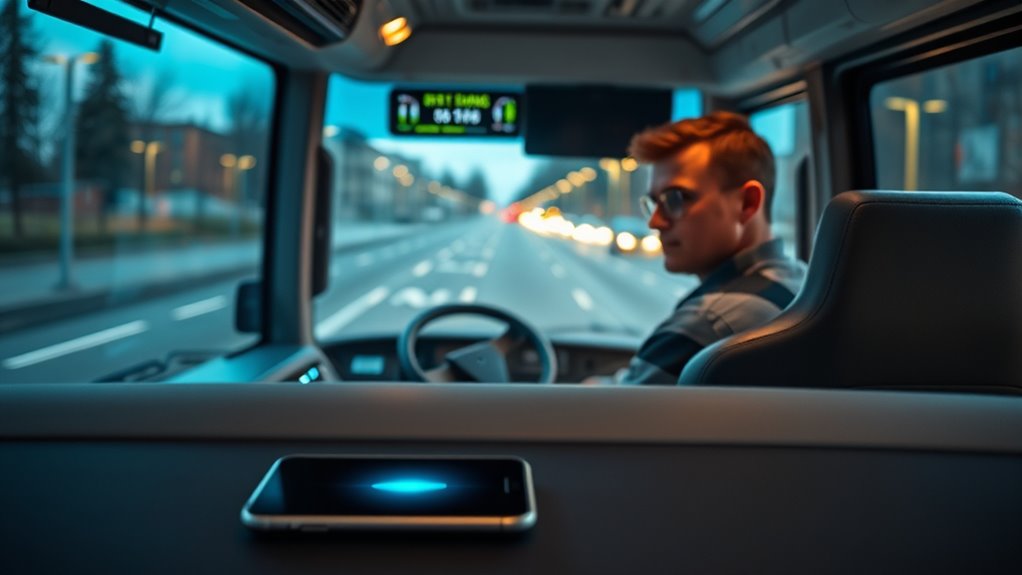

At Link Transit’s wireless charging pilot, you’ll notice how electromagnetic pads embedded in the road allow buses to recharge during routine stops without manual plugging. Drivers report that the system feels seamless, with fewer issues compared to traditional chargers. It enables buses to stay on the road longer, improving efficiency and reducing downtime. If you want to explore how this innovative technology could transform transit operations, keep going for more details.
Key Takeaways
- Drivers report seamless charging experiences with no need to manually connect cables during stops.
- The wireless system reduces mechanical issues, increasing overall bus reliability.
- Drivers notice improved route flexibility and reduced downtime due to rapid on-the-go charging.
- The system’s consistent performance boosts driver confidence in maintaining bus readiness.
- Feedback highlights environmental benefits and operational efficiencies gained from wireless charging technology.

Have you ever wondered how public transit can become more efficient and eco-friendly? The wireless charging pilot at Link Transit offers a glimpse into that future, especially as it relates to electric vehicle infrastructure and charging station efficiency. This innovative project aims to streamline how buses recharge, reducing downtime and making the entire system more sustainable. As a driver, you’re at the forefront of this shift, witnessing firsthand how wireless charging technology can transform daily operations.
Unlike traditional charging stations that require buses to stop for extended periods, wireless charging allows buses to recharge while in service or during brief stops. This technology uses electromagnetic fields to transfer energy from a pad embedded in the roadway to a receiver on the bus. It’s a step forward in electric vehicle infrastructure because it eliminates the need for physical plugs and cables, which can be cumbersome and prone to wear and tear. With wireless chargers integrated into bus routes, you notice buses spending less time at depots and more time on the road, which improves overall efficiency and service frequency.
Wireless charging enables buses to recharge during service, increasing efficiency and reducing depot time.
Charging station efficiency takes on new meaning with this system. Instead of relying on large, stationary chargers that can take hours to top off a bus’s battery, wireless stations can provide quick, on-the-go charging. This means buses can stay on schedule, even on long routes, because they’re not tied down by lengthy charging sessions. You observe that the buses are always ready to go, with minimal delays. The system’s ability to provide rapid, continuous charging during routine stops helps smooth out the transit schedule and reduces the need for large battery capacities, which can be expensive and heavy.
From your perspective as a driver, the transition to wireless charging feels seamless. You don’t need to remember to plug in or unplug anything; the system is integrated into your routes. It also reduces the risk of malfunction, since physical connectors are eliminated. The technology’s reliability enhances your confidence, knowing that your bus is consistently charged without the fuss of manual intervention. Over time, you see that this approach supports a cleaner environment by encouraging the use of electric buses and reducing emissions associated with traditional fueling. Additionally, understanding the importance of reliable power supplies helps you appreciate the role of such innovative systems in maintaining transit operations.
Top picks for "wireles charg pilot"
Open Amazon search results for this keyword.
As an affiliate, we earn on qualifying purchases.
Frequently Asked Questions
How Long Is the Wireless Charging Pilot Expected to Run?
The wireless charging pilot is expected to run for approximately six months, allowing you to assess charging efficiency over time. During this pilot duration, you’ll observe how well the system maintains power levels and supports your routes. This timeframe gives you enough data to identify any issues and determine if the technology can be scaled up, ensuring that the charging efficiency meets operational needs before making long-term commitments.
What Are the Main Safety Concerns Identified by Drivers?
You should know that 60% of drivers expressed concerns about wireless charging safety. The main safety issues include driver distraction, which can lead to accidents, and confusion during emergency procedures. Drivers worry that the charging stations might divert their attention from the road or hinder quick responses in emergencies. Addressing these concerns is vital to guarantee safety and sustain focus while operating the vehicle with wireless charging technology.
How Does Wireless Charging Impact Vehicle Maintenance Schedules?
Wireless charging can reduce your vehicle’s maintenance frequency because it minimizes wear on traditional charging ports. However, you need to guarantee charging station accessibility is reliable, so your vehicle stays charged without delays. By using wireless charging, you might experience fewer maintenance issues related to connectors and plugs, but it’s essential to monitor station availability to keep your schedule on track. Overall, it simplifies some maintenance tasks while emphasizing the importance of accessible charging stations.
Are There Plans to Expand the Pilot Beyond Link Transit?
Yes, there are plans to expand the pilot beyond Link Transit. You should keep an eye on expansion prospects and funding opportunities, as these will likely influence the project’s growth. The organization is exploring additional routes and partnerships, aiming to demonstrate the benefits of wireless charging on a larger scale. Securing more funding will be essential, and your feedback can help showcase the pilot’s success to potential sponsors and stakeholders.
How Do Drivers Feel About the Technology’s Reliability?
You might think wireless charging is a miracle, and honestly, many drivers do see it that way. They find the technology incredibly reliable, boosting driver convenience and making charging more seamless. While occasional hiccups happen, most agree that the system provides consistent charging, reducing downtime and stress. Overall, drivers feel confident in its reliability, appreciating how it simplifies their daily routines and keeps buses ready to roll without worries.
Conclusion
As you observe the Link Transit drivers gliding smoothly into the wireless charging stations, it’s clear this pilot is transforming daily routines. The quiet hum of energy transfer feels almost futuristic, like a gentle current flowing beneath your fingertips. With each charge, buses look ready to roll faster and cleaner through the city streets. This seamless blend of technology and movement paints a promising picture of a smarter, more efficient transit future—one charge at a time.