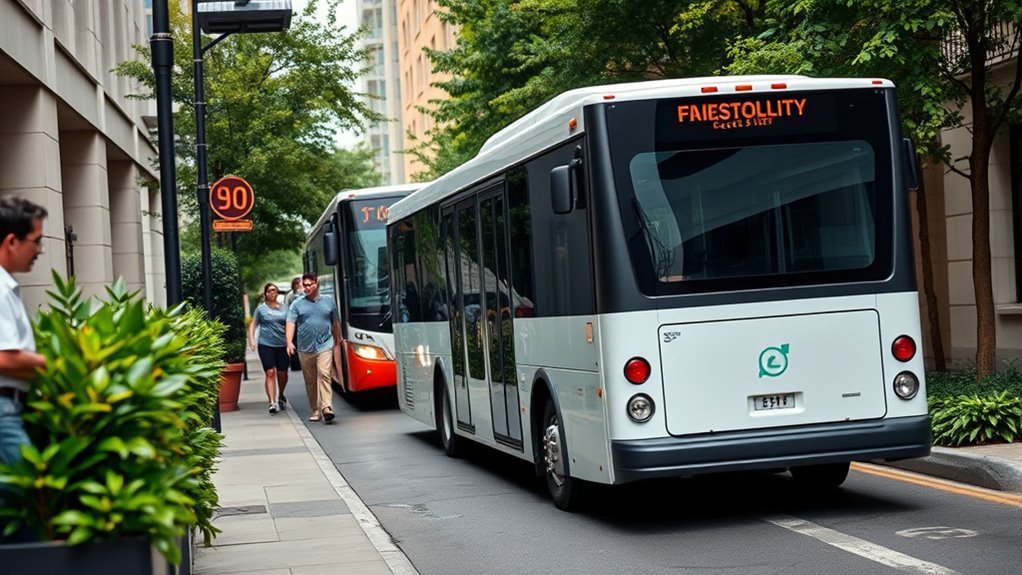

Smaller electric shuttles deliver notable environmental benefits compared to full-sized buses. They consume less energy per trip, helping to cut emissions and reduce your city’s carbon footprint. Their quieter operation minimizes noise pollution, improving urban livability. Plus, their compact size allows for easier and cheaper infrastructure, making sustainable transit more accessible. If you want to explore how these features can make your community greener, there’s more to discover below.
Key Takeaways
- Smaller electric shuttles consume less energy per trip, reducing overall emissions and greenhouse gases.
- Their smaller batteries require fewer raw materials and enable longer operation on a single charge.
- Reduced noise pollution from electric shuttles improves urban air quality and resident well-being.
- Compact size allows easier deployment in congested areas, lowering infrastructure and energy costs.
- Enhanced operational flexibility promotes sustainable transit and decreases reliance on larger, more resource-intensive buses.

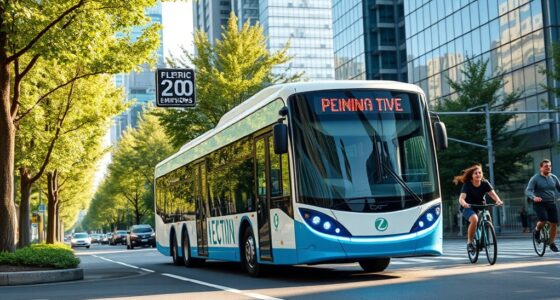
As cities seek sustainable transportation solutions, smaller electric shuttles are emerging as a greener alternative to full-sized buses. These compact vehicles offer a range of environmental benefits, making them an attractive option for urban transit. One key advantage is their battery efficiency. Smaller shuttles use less energy per trip compared to larger buses, which means they require smaller batteries. This not only reduces the raw materials needed for manufacturing but also enhances the overall energy efficiency. With advances in battery technology, many of these shuttles can operate longer on a single charge, decreasing the frequency of recharging and further lowering their carbon footprint. This improved battery efficiency translates into less energy consumption and fewer emissions, aligning with cities’ goals to reduce greenhouse gases.
Noise pollution is another critical aspect where smaller electric shuttles stand out. Full-sized buses tend to produce significant noise levels, especially in densely populated areas, contributing to noise pollution and impacting residents’ quality of life. Electric shuttles are much quieter because they lack traditional internal combustion engines, which are major sources of urban noise. Their reduced noise levels make them more suitable for sensitive environments such as residential neighborhoods, parks, and commercial districts. By minimizing noise pollution, smaller electric shuttles help create quieter, more livable cities, supporting healthier urban environments.
Additionally, their size allows for more flexible routing and operation in tight or congested spaces, which can lead to more efficient transit networks. Because they consume less energy and produce fewer emissions, these shuttles contribute to cleaner air and improved urban health. Their smaller footprint also means they require less infrastructure and space for charging stations, making them easier and more cost-effective to deploy in various areas of a city.
Furthermore, the combination of battery efficiency and reduced noise pollution makes smaller electric shuttles particularly suitable for short-distance routes or last-mile connectivity. These routes often involve frequent stops and start-ups, where energy-efficient vehicles excel. The quieter operation not only benefits residents but also enhances the overall passenger experience, encouraging more people to choose sustainable transit options.
Frequently Asked Questions
How Do Maintenance Costs Compare Between Small Shuttles and Full-Sized Buses?
You’ll find that small shuttles generally have lower maintenance costs compared to full-sized buses, making them more cost-efficient in repair expenses. Their simpler design means fewer parts to wear out and less complex systems, which reduces downtime and repair bills. Plus, their smaller size allows for easier access to maintenance areas. Overall, if you’re seeking cost efficiency, smaller electric shuttles tend to be more budget-friendly for ongoing maintenance.
What Are the Safety Features Unique to Smaller Electric Shuttles?
You might be surprised, but smaller electric shuttles boast cutting-edge safety features you won’t find elsewhere. With advanced autonomous technology, they can detect obstacles and navigate complex environments, reducing accidents. Plus, accessibility features like low floors, ramps, and audio-visual aids guarantee everyone’s safe and comfortable. These innovations not only safeguard passengers but also give you peace of mind, knowing that safety is built into every ride.
How Do Passenger Capacities Impact Environmental Benefits?
Your passenger load directly impacts emission reduction, as higher capacity shuttles transport more people with fewer trips. Smaller electric shuttles, with lower passenger capacity, may require more vehicles to move the same number of passengers, potentially increasing emissions. Conversely, full-sized buses optimize passenger load, reducing overall emissions. Balancing capacity and efficiency helps maximize environmental benefits, making it essential to match shuttle size with demand for ideal emission reduction.
Are Smaller Shuttles Suitable for Long-Distance Travel?
Are smaller shuttles suitable for long-distance travel? Not really, since they face limitations like reduced passenger comfort and range, making long journeys less practical. Their size and design are optimized for short routes, so for extended trips, full-sized buses are better because they can carry more passengers comfortably over longer distances. Smaller shuttles excel in urban settings but aren’t ideal when you need to cover significant distances efficiently.
What Are the Challenges of Integrating Small Shuttles Into Existing Transit Systems?
You’ll face challenges integrating small shuttles into existing transit systems, especially with fleet coordination. Managing schedules and routes requires careful planning to avoid disruptions. Infrastructure requirements, like charging stations and dedicated lanes, can also pose hurdles if not already in place. Additionally, ensuring seamless connectivity with larger buses and maintaining service consistency demands strategic adjustments. But with proper planning, these challenges can be effectively addressed to enhance overall transit efficiency.
Conclusion
Choosing smaller electric shuttles over full-sized buses is like picking a nimble fox over a bulky bear—you get quicker, more efficient service with less environmental impact. They produce fewer emissions, consume less energy, and help reduce noise pollution. By opting for these compact electric vehicles, you’re making a smart move toward cleaner air and a healthier planet. So, consider the smaller shuttle as your eco-friendly choice, transforming your community into a greener, more sustainable place to live.