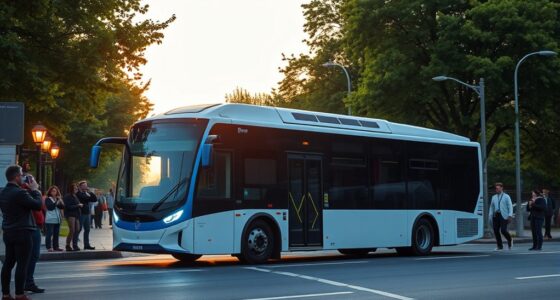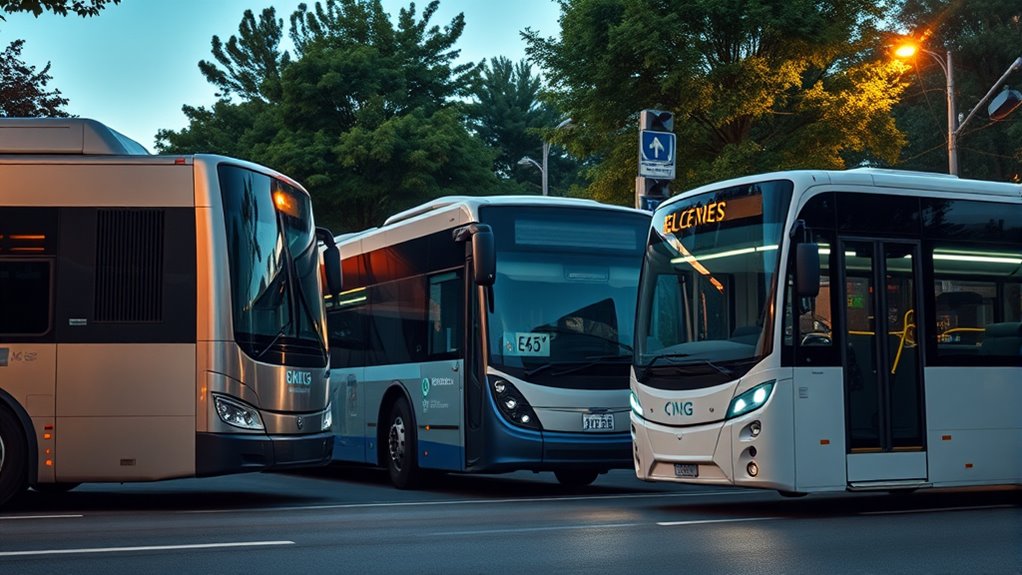

Real measurements show that electric buses are the quietest, almost silent during operation. CNG buses produce considerably less noise than diesel models, which generate the loudest engine roar and mechanical vibrations. If you’re concerned about urban noise pollution or passenger comfort, you’ll find that switching from diesel to CNG and electric buses makes a noticeable difference. To understand how these noise levels compare in actual environments, there’s more to discover below.
Key Takeaways
- Diesel buses produce the highest noise levels due to engine roar and mechanical vibrations during operation.
- CNG buses are significantly quieter than diesel, with smoother combustion reducing engine noise and vibrations.
- Electric buses generate minimal noise, often near-silent, mainly from road and ambient sounds rather than the vehicle itself.
- Real measurements confirm that electric buses have the lowest decibel levels, followed by CNG, then diesel buses.
- Technological advancements have further reduced noise emissions, especially in modern CNG and electric bus models.

When comparing the noise levels of diesel, CNG, and electric buses, it’s clear that the type of engine profoundly impacts the sound they produce. You’ll notice that engine noise varies markedly among these vehicles, directly affecting passenger comfort and overall riding experience. Diesel buses tend to generate the loudest noise, with their engines roaring loudly during acceleration and idling. This noise stems from combustion processes and mechanical vibrations that resonate through the engine compartment, creating a constant, deep rumble that can be quite intrusive. As a passenger, you might find this level of noise overwhelming, especially on long journeys, leading to fatigue and discomfort. The loud engine noise also impacts the perception of ride quality, making the bus feel less refined and more disruptive, particularly in urban environments where multiple vehicles contribute to ambient noise.
In contrast, CNG buses operate more quietly, thanks to their cleaner-burning fuel and simpler engine design. While still producing some engine noise, it’s noticeably less aggressive than a diesel engine. The combustion process in CNG engines is smoother, resulting in reduced vibrations and a quieter operation. Passengers often report feeling more at ease because the engine noise is less intrusive, allowing for a more relaxed atmosphere inside the bus. The reduced engine noise not only boosts passenger comfort but also lessens overall noise pollution in busy city settings, making CNG buses a more considerate choice for urban transit systems. Additionally, advancements in noise reduction technologies are further improving the acoustic environment of modern buses.
Electric buses stand out as the quietest among the three. With no combustion engine, they produce minimal noise during operation. When you’re on an electric bus, you might hardly notice the engine at all, as the primary sounds are limited to ambient noise, road vibrations, and occasional mechanical sounds from accessories. This near-silence significantly enhances passenger comfort, especially for those who are sensitive to noise or are commuting for work or leisure. The quiet operation also means less disturbance in neighborhoods and quieter streets overall, contributing to a more peaceful urban environment. For passengers, this translates into a more pleasant and less stressful ride, making electric buses increasingly popular in cities prioritizing sustainable and comfortable transit.
Top picks for "compar noise level"
Open Amazon search results for this keyword.
As an affiliate, we earn on qualifying purchases.
Frequently Asked Questions
How Do Maintenance Costs Compare Among Diesel, CNG, and Electric Buses?
You’ll find that maintenance expenses differ markedly among diesel, CNG, and electric buses. Diesel buses tend to have higher maintenance costs due to their complex engines. CNG buses often cost less to maintain but require specialized parts. Electric buses offer the best cost efficiency long-term because they have fewer moving parts and lower upkeep needs. Overall, electric buses tend to be the most economical in terms of maintenance expenses.
What Are the Environmental Impacts Beyond Noise Pollution?
You’ll notice that electric buses substantially improve air quality by emitting no tailpipe pollutants, reducing smog and respiratory issues. CNG buses produce fewer emissions than diesel, helping lower your carbon footprint, but still release some greenhouse gases. Diesel buses have the highest environmental impact, contributing more to air pollution and climate change. Switching to electric or CNG buses can make a meaningful difference in your community’s overall environmental health.
How Does Passenger Comfort Vary With Different Bus Types?
You’ll notice passenger comfort varies depending on bus type. Electric buses often provide a smoother, quieter ride, enhancing comfort, while CNG buses usually have better seating ergonomics due to modern designs. Diesel buses might feel noisier and less comfortable, especially during acceleration. Overall, electric and CNG buses tend to offer a more comfortable experience, with improved seating ergonomics and reduced noise levels, making your journey more pleasant.
What Are the Safety Considerations for Each Bus Type?
You need to ensure safety for each bus type by understanding emergency procedures and safety training. Diesel buses pose a fire risk due to fuel, so you should prioritize fire safety and leak detection. CNG buses require handling compressed gas safely, emphasizing proper storage and leak checks. Electric buses involve electrical hazards, so training must include safe battery handling and emergency shutdown protocols. Regular safety drills ensure you’re prepared for any incident.
How Does Fuel Availability Influence Operational Choices?
Fuel flexibility fosters favorable fleet functioning. If fuel infrastructure is plentiful and supply reliability is robust, you can confidently operate diesel, CNG, or electric buses. Limited or inconsistent fuel supplies can cause costly cancellations and constraints. You should consider local fuel availability, storage, and support systems to ensure smooth service. By evaluating infrastructure and supply reliability, you make more mindful, manageable, and meaningful operational choices for your bus fleet.
Conclusion
Imagine standing at a busy crossroads, each bus type like a different storyteller. Diesel buses roar like thunder, loud and commanding. CNG buses hum softly, like a gentle breeze passing through leaves. Electric buses whisper like a quiet stream, almost unnoticed. Your choice shapes the city’s symphony—favoring silence over chaos. Opt for electric, and you choose a peaceful future, where the only sound is the serenity of progress. Silence, after all, speaks volumes.