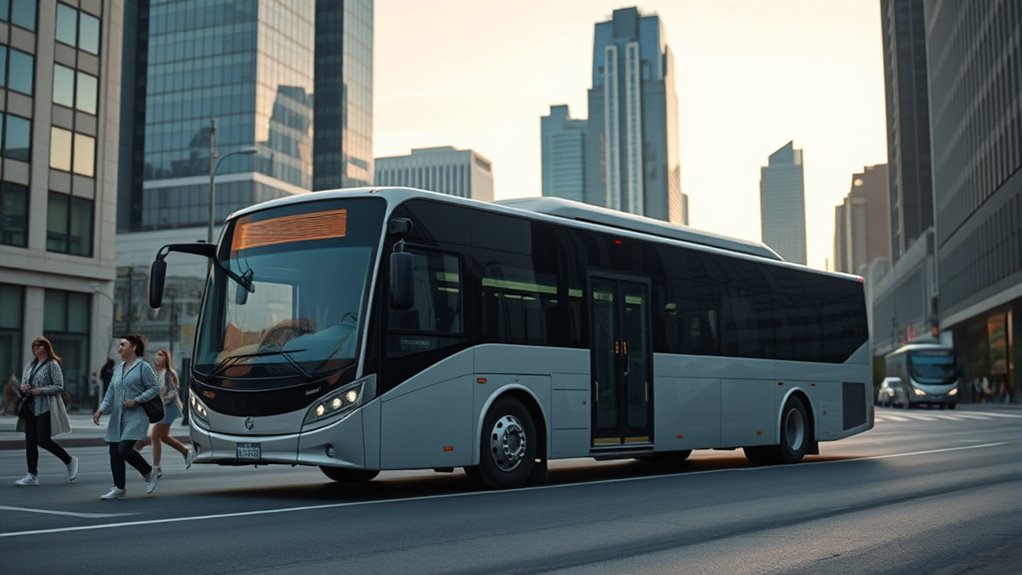

Quiet buses help reduce the noise you experience during your commute, creating a calmer environment that can lower your stress and improve your mental well-being. By operating more silently than traditional buses, they lessen the overall noise pollution in cities, helping you feel less fatigued and more relaxed. This peaceful transit option supports your mental health by minimizing exposure to loud sounds, and if you keep exploring, you’ll discover even more ways urban noise reduction benefits you.
Key Takeaways
- Quiet buses reduce ambient noise levels, decreasing stress and anxiety for urban commuters.
- Lower noise during travel enhances concentration and mental clarity for passengers.
- Reduced engine and chatter noise on quieter buses help mitigate noise-induced cognitive impairment.
- Traveling on quiet buses promotes relaxation, improving overall mood and mental well-being.
- Incorporating quieter transit options supports broader urban noise mitigation efforts, benefiting community mental health.
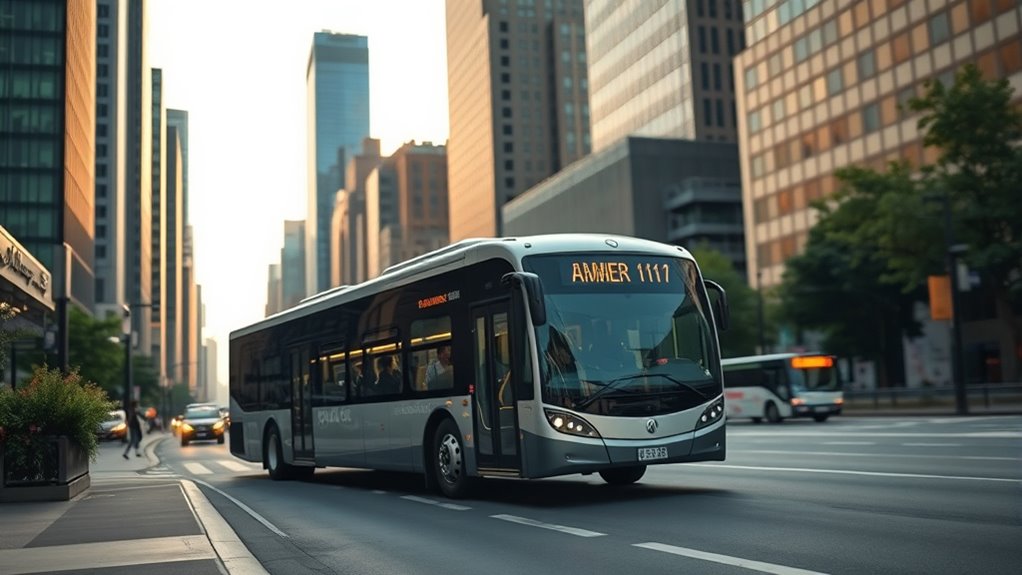
Noise pollution is a growing concern because it can profoundly impact your mental health. When you’re constantly exposed to loud, disruptive sounds in urban environments, it can lead to increased stress, anxiety, and even depression. Recognizing this, many cities are investing in urban noise mitigation strategies, aiming to reduce the impact of excessive noise on residents. These efforts include installing sound barriers, enforcing noise regulations, and promoting quieter transportation options like electric buses. Such measures not only improve air quality but also create a more peaceful environment, allowing you to focus, rest, and enjoy your daily routines without the constant hum of city noise.
Incorporating mental well-being strategies becomes essential when dealing with urban noise. Simple practices like using noise-canceling headphones, listening to calming music, or creating quiet zones at home can help you regain a sense of calm amid the chaos. Additionally, mindfulness exercises such as deep breathing or meditation can help you manage stress caused by unavoidable noise exposure. These strategies empower you to take control of your mental state, even when the environment isn’t ideal. It’s important to acknowledge how noise impacts your cognitive functions—disruptions can impair concentration, memory, and decision-making. By actively managing your exposure and practicing mental well-being techniques, you protect your mental health from the detrimental effects of urban noise pollution.
Quiet buses serve as a practical solution that benefits urban dwellers by reducing noise levels during commutes. Unlike traditional buses, which often generate loud engine sounds and passenger chatter, quiet or electric buses operate more silently. This not only makes your journey more pleasant but also minimizes your exposure to harmful noise levels, which can contribute to stress and fatigue. When you ride on quieter buses, you arrive at your destination feeling less drained and more focused. This improvement in your daily commute promotes better mental health by lowering stress and enhancing your overall mood. Additionally, quieter transit options align with broader urban noise mitigation efforts, helping cities become more livable and less overwhelming.
Ultimately, addressing noise pollution in cities isn’t just about comfort; it’s about safeguarding your mental well-being. By supporting urban noise mitigation initiatives and adopting personal mental well-being strategies, you can better cope with the noise that surrounds you. Quiet buses exemplify how innovative transit solutions can create a calmer, healthier environment for everyone. When noise levels are lowered, your mental clarity improves, and you’re able to enjoy your daily activities with less stress. Taking these steps helps you reclaim peace in a busy city, making your urban experience healthier and more sustainable in the long run. Furthermore, the use of high-quality projectors in home theaters can enhance your relaxation space, providing an immersive escape from urban noise.

Soundcore by Anker Q20i Hybrid Active Noise Cancelling Headphones, Wireless Over-Ear Bluetooth, 40H Long ANC Playtime, Hi-Res Audio, Big Bass, Customize via an App, Transparency Mode (Black)
Hybrid Active Noise Cancelling: 2 internal and 2 external mics work in tandem to detect external noise and…
As an affiliate, we earn on qualifying purchases.
As an affiliate, we earn on qualifying purchases.
Frequently Asked Questions
How Do Quiet Buses Compare Cost-Wise to Traditional Buses?
Quiet buses generally cost more upfront than traditional buses due to advanced noise-reduction technology. However, you might save on operational costs over time because they tend to be more efficient and have lower maintenance expenses. While the initial investment is higher, the long-term savings on upkeep and potentially increased ridership due to a more comfortable ride can make quiet buses a cost-effective choice for urban transit systems.
What Other Mental Health Benefits Do Quiet Buses Offer?
Imagine stepping into a sanctuary amid the city’s chaos—quiet buses do just that. They help reduce stress, acting like a calming oasis on busy routes. By lowering noise levels, they foster cognitive clarity, making it easier for you to focus or relax. This peaceful environment supports mental well-being, helping you arrive at your destination feeling more refreshed and less overwhelmed, turning your commute into a moment of mental rejuvenation.
Are Quiet Buses Available in Rural or Suburban Areas?
Quiet buses are increasingly available in rural transportation and suburban transit systems. You’ll find more of these silent, noise-reducing buses as communities recognize their mental health benefits. In rural areas, they help reduce stress during long trips, while in suburban regions, they provide a peaceful alternative for daily commutes. If you live outside urban centers, check local transit options — quiet buses are becoming more common to improve your travel experience.
How Long Does It Take to See Mental Health Improvements From Quiet Buses?
Think of noise reduction as a soothing balm for your mind; you’ll notice mental health recovery in just a few weeks of riding quiet buses. As the noise fades, your stress levels drop, and your mood improves. Consistent quiet travel helps your brain reset faster, making it easier to handle daily pressures. Typically, within 2-4 weeks, you’ll start feeling calmer, more focused, and better equipped to face urban life’s chaos.
What Policies Support the Adoption of Quiet Bus Technology?
You can support the adoption of quiet bus technology through policies like urban noise regulations that set limits on vehicle noise levels. Additionally, public transportation incentives such as grants or subsidies encourage transit agencies to upgrade to quieter buses. By advocating for these policies, you help reduce noise pollution, improve mental health, and promote healthier urban environments for everyone.

Crelloci City Bus Toy for Kids, Die Cast Alloy Pull Back Vehicles, Metro Articulated Electric Bus with Sounds and Lights, Model Cars Toys Educational Gift for Kids Boys Girls Ages 3+
🚌[Cool City Bus Toy] Pull-back vehicles are scaled down according to the original proportions. There is a neat…
As an affiliate, we earn on qualifying purchases.
As an affiliate, we earn on qualifying purchases.
Conclusion
You might think quieter buses won’t make much difference, but they can actually boost your mental well-being daily. Reducing noise helps lower stress levels and improves focus, making your commute more pleasant. Even if you’re skeptical, imagine arriving home calmer and more relaxed. Embracing quieter transportation options isn’t just about comfort—it’s about taking small steps to protect your mental health. So, next time you see a quiet bus, consider how it could positively change your day.
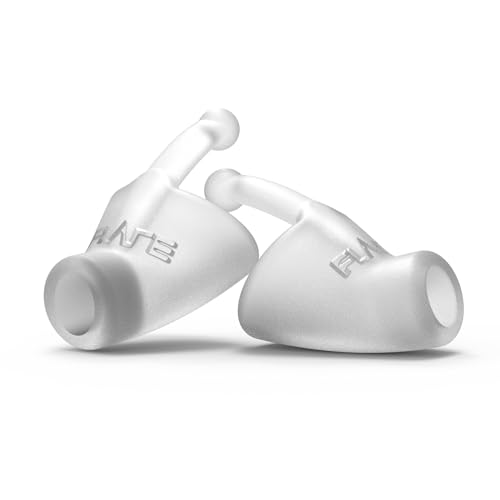
Flare Calmer | Ear Plugs Alternative | Daily Noise Relief | Sound Sensitivity | Stress Relief | No Muffling | Improve Wellbeing | Comfy, Reusable, Soft Silicone Earplugs | Original Translucent
STRESS RELIEF FROM EVERYDAY NOISE | Calmer is for anyone who wants to reduce stress caused by everyday…
As an affiliate, we earn on qualifying purchases.
As an affiliate, we earn on qualifying purchases.

Allura & Arcia 52 Stress Less & Self Care Cards – Mindfulness & Meditation Exercises – Anxiety Relief & Relaxation
52 EASY EXERCISES FOR EVERYONE: This unique Self Care Deck contains 52 extremely effective exercises for mindfulness, meditation,…
As an affiliate, we earn on qualifying purchases.
As an affiliate, we earn on qualifying purchases.