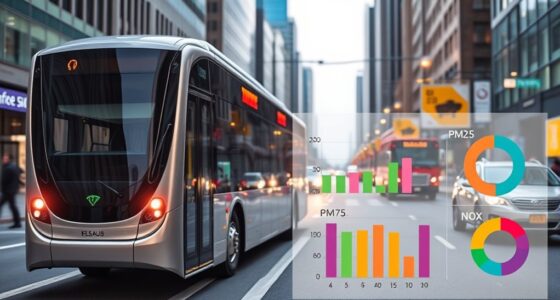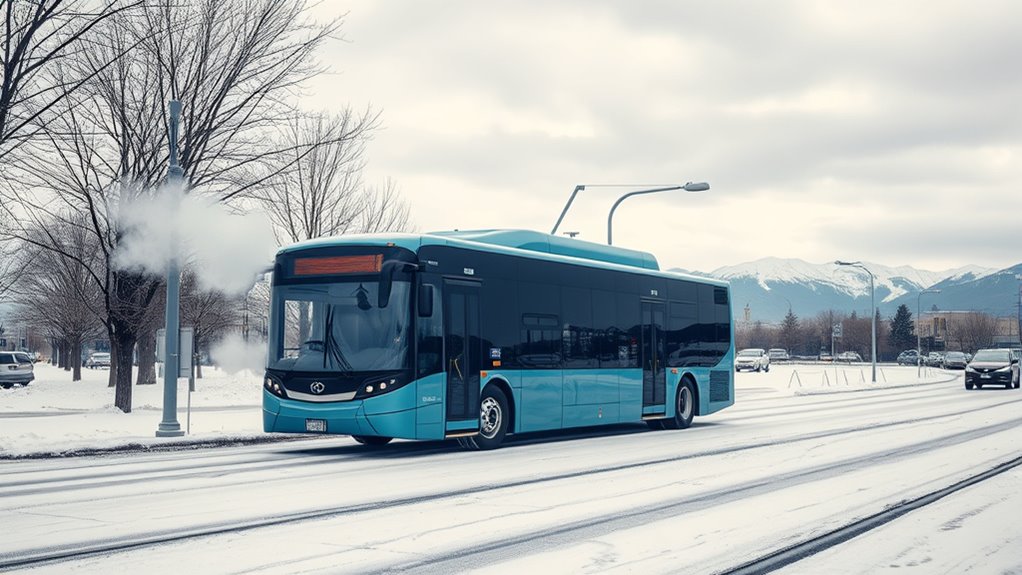

In cold climates, electric buses face reduced range because batteries lose efficiency and need more energy for heating, which can increase emissions if the grid relies on fossil fuels. Using thermal management and pre-conditioning helps maintain battery performance and lower energy use. Since charging with renewable energy cuts emissions further, it’s essential to optimize these strategies. If you want to understand how to balance range and emissions, you’ll find useful insights ahead.

Get business pricing on monitors, keyboards and dev gear
- Business-only prices and quantity discounts
- Tax-exempt purchasing
- Multiple users, one account, clear invoices
Key Takeaways
- Cold temperatures reduce electric bus range by increasing energy use for battery heating, impacting operational capacity.
- Effective thermal management systems help maintain battery efficiency and extend range in cold climates.
- Using renewable energy for charging lowers overall carbon emissions, especially important during winter when heating demands are high.
- Pre-conditioning batteries while plugged in improves efficiency and minimizes range loss caused by cold weather.
- The carbon impact depends on the grid’s energy mix; cleaner grids enhance environmental benefits regardless of cold climate challenges.
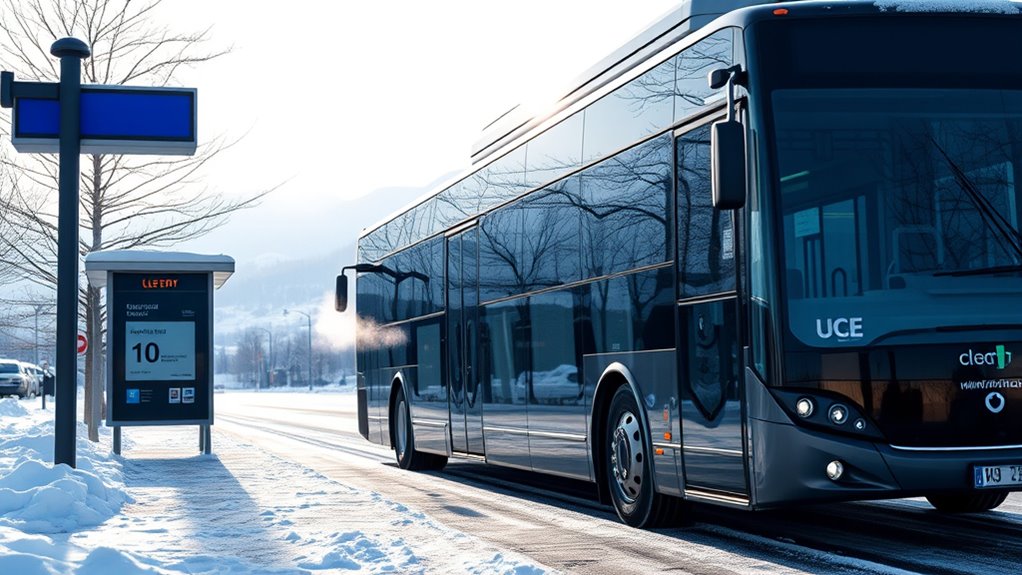
Have you ever wondered how electric buses impact air quality and greenhouse gas emissions? In cold climates, their benefits are even more substantial, but there are challenges to take into account. One key factor is how effectively these buses manage their batteries through thermal management systems. Cold temperatures can cause batteries to lose efficiency, reducing range and increasing energy consumption. Proper battery thermal management keeps batteries within ideal temperature ranges, ensuring consistent performance and extending their lifespan. This not only maintains the bus’s range but also minimizes the need for frequent recharging, which can be energy-intensive and increase emissions if the electricity source isn’t clean. Additionally, efficient thermal management systems help mitigate the effects of cold weather on battery performance, further supporting operational reliability. Furthermore, the integration of renewable energy sources into the grid plays an essential role in lowering the carbon footprint of electric buses. When the electricity used to charge these vehicles comes from wind, solar, or other renewable sources, the overall greenhouse gas emissions decrease considerably. This is especially important in cold climates, where heating demands can lead to higher energy consumption. Electric buses, combined with renewable energy, can offset the emissions that traditional diesel buses produce, even during the harsh winter months. It’s crucial to develop infrastructure that facilitates renewable energy integration, such as solar panels on bus depots or dedicated renewable energy farms nearby. These measures not only reduce emissions but also enhance energy resilience and cost savings over time. Range limitations in cold weather are an ongoing concern, but advancements in battery thermal management are helping to address this. By maintaining ideal battery temperatures, buses can operate efficiently without excessive energy drain for heating batteries, thus preserving their range. Additionally, smarter charging strategies, like pre-conditioning batteries while still plugged in, can improve efficiency and reduce energy waste. It’s also worth noting that the carbon impact of electric buses depends heavily on the energy mix of the grid they draw from; therefore, efforts to increase renewable energy capacity directly contribute to lowering emissions.
electric bus thermal management system
As an affiliate, we earn on qualifying purchases.
As an affiliate, we earn on qualifying purchases.
Frequently Asked Questions
How Do Cold Temperatures Affect Charging Times for Electric Buses?
Cold temperatures slow down charging times for electric buses because they diminish battery efficiency. You can mitigate this by using thermal insulation to keep batteries warm and battery preconditioning to optimize temperature before charging. These measures help maintain battery performance, but in cold weather, expect longer charging times as the system works harder to heat the batteries. Proper preconditioning and insulation ensure quicker, more efficient charging during colder months.
What Maintenance Challenges Do Electric Buses Face in Freezing Climates?
In freezing climates, you’ll face maintenance challenges like guaranteeing proper battery insulation to prevent cold-related performance drops. You also need to maintain tire traction to avoid slipping on icy roads. Regularly inspecting and maintaining the insulation system keeps batteries warm and efficient, while checking tire tread and applying winter-specific tires helps ensure safety and reliability. Addressing these issues proactively minimizes breakdowns and keeps your electric bus running smoothly in cold weather.
Are There Specific Battery Technologies Better Suited for Cold Environments?
You’ll find that lithium-ion batteries with advanced chemistries, such as lithium nickel manganese cobalt oxide (NMC) or lithium iron phosphate (LiFePO4), perform better in cold climates. These batteries benefit from robust thermal management systems that keep temperatures stable, preventing capacity loss and extending range. By choosing batteries with optimized chemistry and effective thermal management, you guarantee your electric bus maintains performance and reliability even in freezing temperatures.
How Does Cold Weather Impact the Lifespan of Electric Bus Batteries?
Cold weather accelerates battery degradation, shortening your electric bus’s battery lifespan. You can help mitigate this by ensuring effective thermal management, which keeps the battery at ideal temperatures. Without proper thermal control, cold temperatures cause faster capacity loss and reduce overall longevity. Regular maintenance and advanced thermal management systems are essential to preserve battery health, ensuring your electric bus performs reliably even in chilly climates.
What Are the Most Effective Strategies to Optimize Range in Winter Conditions?
To enhance your electric bus’s range in winter, you should prioritize thermal insulation and battery heating systems. Insulate batteries to reduce heat loss and maintain ideal temperatures, which helps improve efficiency. Use battery heating to prevent performance drops caused by cold weather. Combining these strategies keeps your batteries warm, ensuring better range, lower energy consumption, and reliable operation during cold months.
battery pre-conditioning for electric buses
As an affiliate, we earn on qualifying purchases.
As an affiliate, we earn on qualifying purchases.
Conclusion
You might think electric buses are always the greener choice, but in cold climates, their range drops and emissions from heating increase their carbon footprint. While they reduce tailpipe pollutants, colder weather can offset some benefits. It’s worth considering that, with advancements in battery tech and heating systems, electric buses could become truly sustainable year-round. So, don’t assume they’re perfect everywhere — check the climate specifics and technology progress to make the best decision.
As an affiliate, we earn on qualifying purchases.
renewable energy charging station
As an affiliate, we earn on qualifying purchases.
As an affiliate, we earn on qualifying purchases.
Fall Picks
fall essentials
As an affiliate, we earn on qualifying purchases.