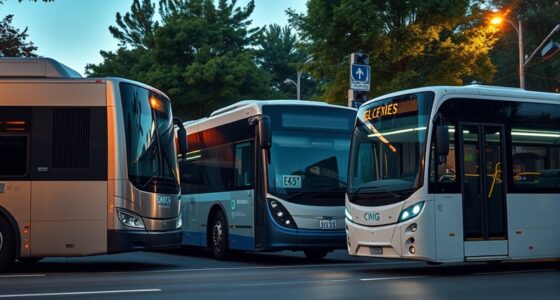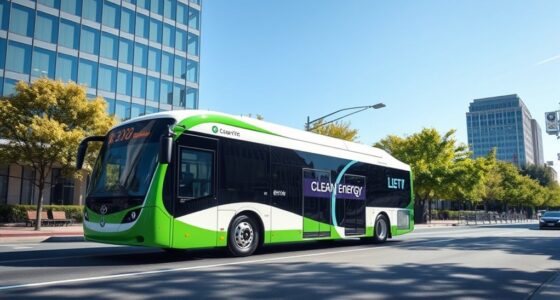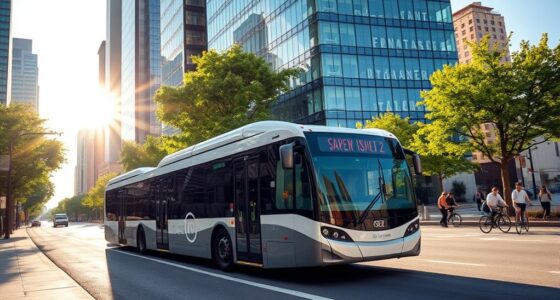
Electric buses play a essential role in cutting PM₂.₅ and NOₓ emissions, which are major contributors to urban air pollution. Thanks to advances in battery technology, they run longer and cleaner, reducing reliance on fossil fuels. Policy incentives further accelerate their adoption, making electric buses more accessible and effective. Continued progress in this area means cleaner air and healthier cities—if you want to see how data shows these benefits, keep exploring.
Key Takeaways
- Electric buses emit significantly lower PM₂.₅ and NOₓ compared to diesel buses, leading to improved air quality.
- Advances in battery technology enable longer, cleaner operations, reducing the need for emissions-intensive refueling.
- Policy incentives like subsidies and low-emission zones accelerate electric bus adoption and emission reductions.
- Data shows a correlation between increased electric bus deployment and measurable declines in urban PM₂.₅ and NOₓ levels.
- Combining technological improvements with supportive policies enhances the overall effectiveness in reducing transportation-related air pollutants.

Electric buses are increasingly vital in the fight against air pollution because they produce considerably lower levels of harmful emissions like PM₂.₅ and NOₓ compared to traditional diesel-powered vehicles. This shift isn’t just about replacing old technology; it’s about leveraging advancements in battery technology and policy incentives to maximize environmental benefits. Your focus should be on understanding how these factors work together to make electric buses a viable and effective solution.
Battery technology plays a fundamental role in the efficiency and range of electric buses. Modern lithium-ion batteries have improved significantly, allowing for longer distances without frequent recharging. As battery density increases, electric buses can operate throughout the day with minimal downtime, reducing the reliance on fossil fuels and cutting emissions further. You’ll find that ongoing research into solid-state batteries promises even greater energy storage capacity and faster charging times, which could make electric buses more practical for large-scale transit systems. These technological improvements directly contribute to lowering PM₂.₅ and NOₓ emissions by enabling buses to run cleaner and more reliably. Additionally, the integration of advanced battery systems enhances overall vehicle performance and sustainability.
Advanced lithium-ion and solid-state batteries enable electric buses to travel farther and faster, reducing emissions and improving reliability.
Policy incentives are equally vital in accelerating the adoption of electric buses. Governments worldwide recognize their potential to improve air quality and are implementing various measures to encourage shift. These include financial subsidies, grants, tax breaks, and low-interest loans that help transit agencies offset the high upfront costs of electric bus fleets. Additionally, stricter emissions standards and low-emission zones in urban areas act as regulatory drivers, making diesel buses less viable. When policymakers prioritize funding and create supportive frameworks, they effectively lower barriers for transit agencies to switch to electric options. Your role in understanding this landscape involves recognizing how these incentives shape market dynamics and influence the pace of adoption.
The synergy between advancing battery technology and proactive policy incentives is key to reducing PM₂.₅ and NOₓ emissions on a broad scale. As batteries become more efficient and affordable, and as policies provide the necessary financial and regulatory support, electric buses become more accessible and attractive to transit authorities. This combined approach accelerates the transition away from polluting diesel buses, directly impacting air quality improvement efforts. You should see these developments as interconnected parts of a larger strategy aimed at creating cleaner, healthier urban environments. By focusing on both technological progress and policy support, you’ll understand how electric buses are becoming central to sustainable transportation solutions that protect public health and combat air pollution effectively.
Top picks for "electric role reduc"
Open Amazon search results for this keyword.
As an affiliate, we earn on qualifying purchases.
Frequently Asked Questions
How Do Electric Buses Compare Cost-Wise to Diesel Buses Over Their Lifespan?
You’ll find that electric buses often have a higher initial investment compared to diesel buses, but they save you money over time through lower maintenance costs. Electric buses require fewer parts and less frequent repairs, which reduces your ongoing expenses. Although upfront costs are higher, the savings in maintenance and fuel make electric buses more cost-effective in the long run, especially as technology improves and prices decrease.
What Are the Main Challenges in Deploying Electric Buses at Scale?
You face challenges like upgrading urban infrastructure to support charging stations and ensuring reliable power supply. Battery technology also needs improvement to increase range and reduce charging times, making electric buses more practical. Additionally, high upfront costs and limited manufacturing capacity can slow deployment. Overcoming these hurdles requires coordinated efforts, investment, and innovation to scale electric bus adoption effectively and maximize their environmental benefits.
How Does Electricity Source Impact the Environmental Benefits of Electric Buses?
Imagine the true potential of your electric buses depends on where you get your power. If you source electricity from renewable energy, the environmental benefits skyrocket, helping cut emissions further. But if your grid isn’t decarbonized, those benefits are limited. The cleaner your energy source, the greater the impact on reducing PM₂.₅ and NOₓ. So, choosing renewable energy directly amplifies your efforts for a healthier, greener future.
Can Electric Buses Operate Effectively in Extreme Weather Conditions?
In extreme weather, electric buses can still operate effectively, but battery performance may decline. Cold temperatures can reduce battery efficiency and range, while hot weather might impact cooling systems. You should guarantee proper thermal management and insulation to maintain ideal performance. With the right technology and maintenance, electric buses are resilient enough to handle extreme weather conditions, keeping your transit reliable year-round.
What Policies Are Most Effective in Promoting Electric Bus Adoption?
You can promote electric bus adoption most effectively through incentive programs that reduce upfront costs and infrastructure investments that guarantee charging stations are accessible. These policies motivate transit agencies to switch to electric and make it easier for them to operate reliably. By combining financial incentives with robust infrastructure, you create an environment where electric buses are a practical, sustainable choice for cleaner air and improved public transit.
Conclusion
As you consider the impact of electric buses, remember they quietly cut harmful PM₂.₅ and NOₓ emissions—yet, the air still bears the scars of previous pollution. While these buses offer hope for cleaner cities, the fight against air pollution isn’t over. Embrace the change, knowing each ride helps clear the air, but also recognize the ongoing effort needed to protect future generations from the lingering effects of pollution.