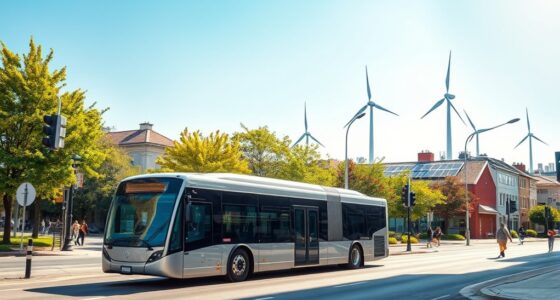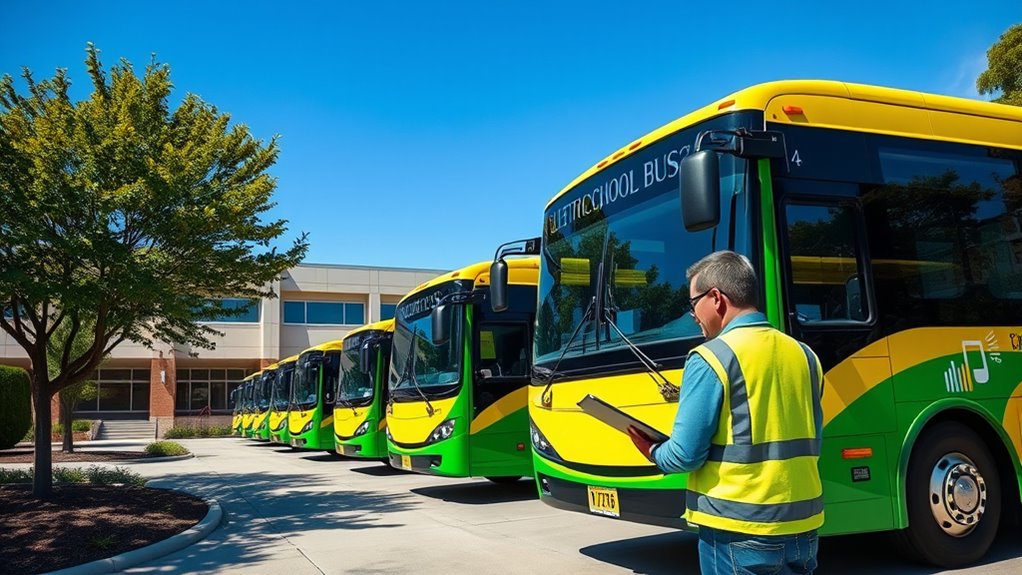

The World Resources Institute’s findings show that switching to electric school buses can lead to significant public health savings by reducing emissions of pollutants like NOx and particulate matter. This helps improve air quality around schools, especially benefiting children and vulnerable populations. Fewer respiratory illnesses, asthma attacks, and healthcare costs are direct results. If you explore further, you’ll discover how these health benefits translate into long-term community advantages and cleaner environments.
Key Takeaways
- WRI research quantifies reductions in respiratory illnesses and healthcare costs due to decreased diesel emissions from electric school buses.
- Electric buses significantly lower pollutant exposure in school zones, improving children’s respiratory health outcomes.
- Studies show communities transitioning to electric buses experience measurable reductions in asthma attacks and related health issues.
- Public health savings include fewer school absences and lower emergency healthcare expenses linked to cleaner air.
- WRI findings demonstrate that adopting electric buses advances health equity by protecting vulnerable populations from harmful pollutants.
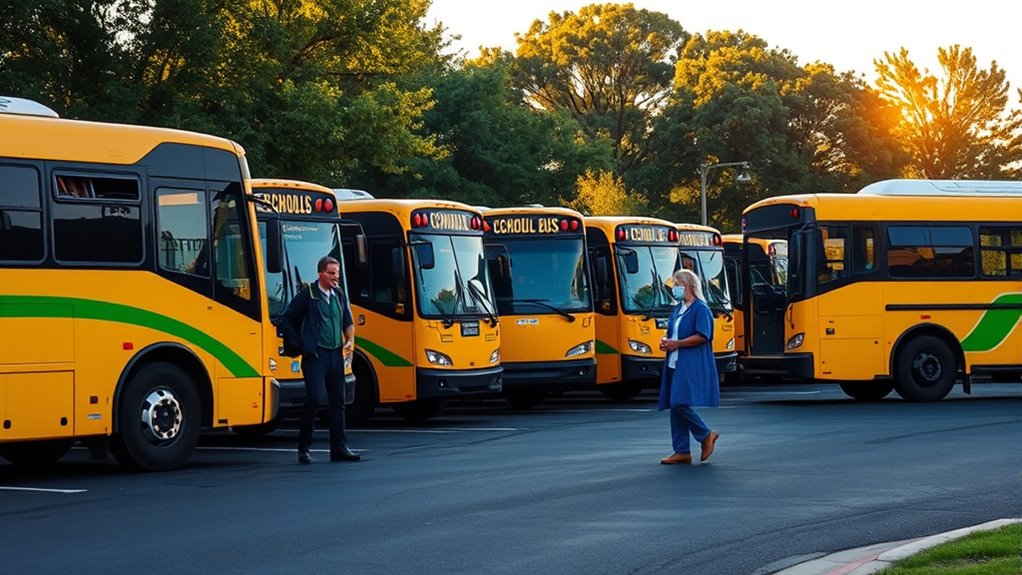
Have you ever considered how replacing diesel school buses with electric ones can benefit public health? It’s more than just a shift in technology; it’s a significant step toward cleaner air and healthier communities. Diesel buses emit a variety of pollutants that contribute to poor air quality, especially around schools where children spend many hours each day. These emissions include nitrogen oxides (NOx) and particulate matter (PM), both of which worsen air pollution levels in local environments. When you replace traditional diesel buses with electric models, you cut down these harmful emissions dramatically. This reduction directly benefits respiratory health by decreasing exposure to pollutants that can cause or exacerbate asthma, bronchitis, and other respiratory conditions in children and adults alike.
Replacing diesel buses with electric models reduces harmful emissions, improving air quality and protecting respiratory health in communities.
Air pollution from diesel buses is a major concern because it’s often concentrated around school zones, where vulnerable populations—especially children—are most affected. Children’s developing lungs are particularly sensitive to pollutants, making them more susceptible to respiratory issues. By switching to electric buses, you reduce the levels of harmful emissions in these areas, creating a safer environment for students and staff. Clean air becomes more accessible, and the risks associated with respiratory illnesses decline. This isn’t just a theoretical benefit; it’s backed by research showing that communities with fewer diesel emissions see measurable improvements in respiratory health outcomes.
Switching to electric school buses also means fewer health-related absences due to respiratory illnesses, which can impact school performance and family life. When children breathe cleaner air, they’re less likely to experience asthma attacks or other breathing problems that require medical attention. This translates into cost savings for families and healthcare systems alike, as fewer emergency room visits and doctor visits are needed. Additionally, healthier children mean fewer missed school days, helping them stay on track academically and socially.
From a broader perspective, reducing air pollution in school zones aligns with public health goals to lower respiratory disease burdens across communities. Electric buses don’t produce tailpipe emissions, so air quality improves not just locally but also overall. It’s a proactive way to protect public health, especially in urban areas where pollution levels tend to be higher. As you consider the transition to electric buses, remember that the health benefits extend beyond just environmental impacts—they directly support healthier lungs, fewer respiratory conditions, and a safer atmosphere for everyone, especially the youngest and most vulnerable. Reducing diesel emissions can significantly improve community health outcomes and help achieve cleaner air standards.
Top picks for "measur public health"
Open Amazon search results for this keyword.
As an affiliate, we earn on qualifying purchases.
Frequently Asked Questions
How Do Electric School Buses Impact Local Air Quality?
Electric school buses improve your local air quality by reducing tailpipe emissions, which cut down on pollutants that cause smog and health problems. You also benefit from less noise pollution, making your neighborhood quieter and safer for children. Plus, proper battery recycling guarantees hazardous materials don’t contaminate the environment, further protecting your community’s health. Overall, electric buses create cleaner, healthier air and a more peaceful neighborhood.
What Are the Long-Term Maintenance Costs for Electric Buses?
Sure, your long-term maintenance costs for electric buses will probably be lower, thanks to fewer moving parts and less oil changes. But don’t forget about battery longevity—eventually, you’ll need to replace those hefty batteries, which can be pricey. While maintenance expenses are generally lower than diesel counterparts, plan for potential future costs of battery replacement, ensuring your budget isn’t caught off guard when the batteries finally give out.
How Can School Districts Fund the Transition to Electric Buses?
You can fund the shift to electric buses by exploring diverse funding strategies like grants, government incentives, and partnerships. Look into grant opportunities from federal, state, or local agencies dedicated to clean transportation. Additionally, consider leveraging public-private partnerships and community fundraising efforts. These strategies help offset initial costs, making the switch more affordable and sustainable for your school district, ensuring a smoother shift to cleaner, healthier transportation options.
Are There Any Safety Concerns With Electric School Buses?
You might wonder if there are safety concerns with electric school buses. Battery safety is a vital factor; manufacturers design batteries with safety features to prevent fires or leaks. Charging infrastructure is also essential; proper installation and maintenance ensure safe, reliable charging. While these buses are generally safe, it’s important to follow safety guidelines and stay informed about advancements to mitigate any risks.
How Do Electric Buses Affect Student Health Beyond Air Quality?
Electric buses positively impact student health beyond air quality by reducing noise pollution from engine noise, creating a quieter environment that lowers stress and improves concentration. Additionally, their quieter operation can help ease traffic congestion around schools, leading to safer, less hectic pick-up and drop-off times. These benefits contribute to better overall well-being, making your school environment healthier and more comfortable for students.
Conclusion
By switching to electric school buses, you’re planting seeds for a healthier community, watching as cleaner air and quieter streets bloom in your neighborhood. These buses don’t just move students—they propel us toward a future where public health flourishes like a well-tended garden. Embracing this change transforms the journey into a powerful act of nurturing, turning the road ahead into a promise of brighter, cleaner days. Your choice sparks a ripple that can reshape our shared landscape.