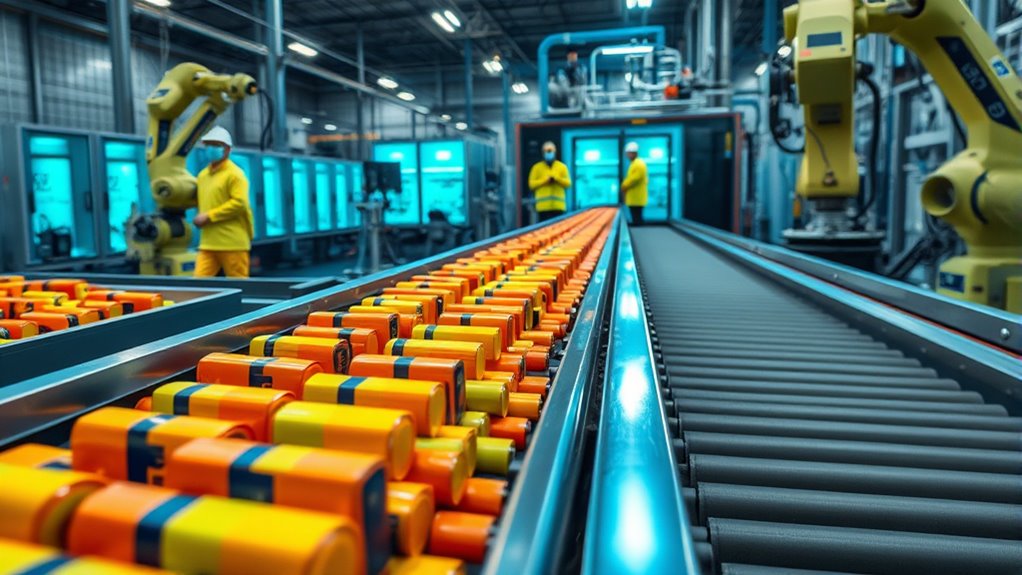

To manage retired batteries safely, follow best practices like storing them in secure containers and transporting them with licensed handlers. Recycling innovations such as automated disassembly, advanced sorting, and closed-loop systems help recover valuable materials efficiently while minimizing environmental impact. Proper disposal prevents leaks of toxic substances and hazardous fires. Staying informed about new technologies and regulations is key to responsible waste management. Keep exploring, and you’ll discover how these practices protect both communities and the planet.
Key Takeaways
- Follow regulations for safe collection, storage, and transportation of retired batteries to prevent leaks and hazards.
- Utilize automated disassembly and advanced sorting technologies for efficient material recovery.
- Implement closed-loop recycling systems to reuse materials, reducing waste and environmental impact.
- Use safer chemical processes to neutralize or stabilize toxic components in hazardous batteries.
- Promote public awareness and responsible participation in recycling programs to enhance resource conservation and safety.
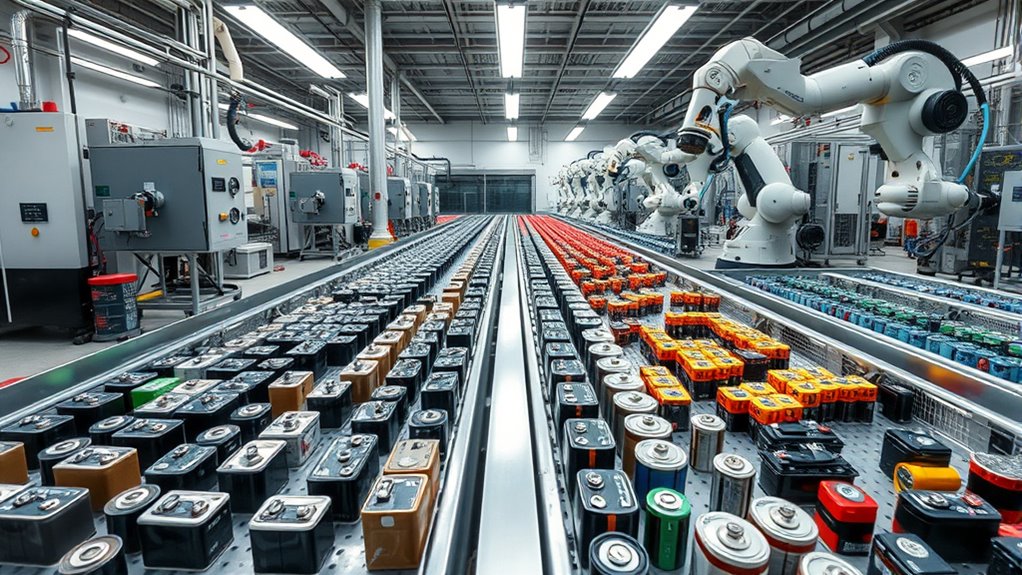
As more batteries reach the end of their life, managing their waste becomes an urgent environmental concern. Batteries contain valuable materials like lithium, cobalt, and nickel, but they also carry hazardous components that can harm ecosystems if not handled properly. That’s where battery recycling plays a crucial role. Proper recycling ensures that these materials are recovered and reused, reducing the need for mining and lowering environmental impact. It also prevents the dangerous chemicals inside batteries from contaminating soil and water sources. When you participate in responsible battery recycling programs, you’re actively helping to manage hazardous waste safely and efficiently, minimizing health risks for communities and wildlife.
Effective hazardous waste management is essential because improperly disposed batteries can leak toxic substances, such as acids and heavy metals, which pose serious health risks. To address this, regulations and standards are in place to guide the safe collection, transportation, and disposal of retired batteries. You should always follow local laws and guidelines, ensuring that batteries are stored in secure containers and transported by licensed handlers. This minimizes the chance of leaks or fires, which can occur if batteries are damaged or improperly stored. Proper hazardous waste management also involves segregating different types of batteries—such as lithium-ion, lead-acid, or nickel-metal hydride—to ensure they are processed correctly. This helps prevent dangerous reactions or contamination during recycling. Additionally, advancements in battery recycling technology are making the process safer and more efficient.
Innovations in battery recycling are making the process safer and more efficient. New technologies, like automated disassembly and advanced sorting systems, allow for faster recovery of valuable materials while reducing human exposure to hazardous substances. Some companies are developing closed-loop recycling systems, where recycled materials are directly used to manufacture new batteries, substantially lowering waste and resource consumption. Additionally, researchers are exploring safer chemical processes that can neutralize or stabilize toxic components, making hazardous waste management less risky and more environmentally friendly. As you engage with these innovations, you’re supporting a more sustainable approach to dealing with retired batteries, ultimately reducing landfill waste and pollution.
Ultimately, the key to sustainable waste and recycling practices lies in your awareness and participation. By choosing responsible recycling options and staying informed about advances in hazardous waste management, you contribute to protecting the environment. Proper handling of retired batteries not only conserves valuable resources but also keeps communities safe from the harmful effects of improper disposal. As technology continues to evolve, your role in supporting best practices will become even more essential, helping to create a cleaner, safer planet for future generations.
Top picks for "waste recycl retir"
Open Amazon search results for this keyword.
As an affiliate, we earn on qualifying purchases.
Frequently Asked Questions
How Are Hazardous Materials in Batteries Safely Contained During Recycling?
You guarantee hazardous materials in batteries are safely contained during recycling through proper battery containment methods. You use specialized containers that prevent leaks and prevent contact with the environment. Hazardous material management involves carefully disassembling batteries, isolating toxic components like acids and heavy metals, and following strict safety protocols. This approach minimizes risks, protects workers, and ensures environmentally responsible recycling, ultimately reducing the chance of hazardous exposure or pollution.
What Are the Environmental Impacts of Improper Battery Disposal?
Improper battery disposal harms the environment by releasing toxic chemicals and heavy metals, which can contaminate soil and water. This impacts ecosystems and public health. Shorter battery lifespans lead to more waste, increasing recycling challenges. When batteries aren’t properly recycled, valuable materials are lost, and pollution persists. You can reduce these impacts by recycling batteries responsibly, supporting innovations that improve recycling processes, and choosing products with longer battery lifespans.
How Do Emerging Technologies Improve Battery Recycling Efficiency?
Emerging technologies boost battery recycling efficiency by streamlining battery collection and incorporating automation technologies. You can now use smart sorting systems that quickly identify and separate battery types, reducing manual labor and errors. Automated processes also speed up the recycling cycle, ensuring more batteries are processed safely and effectively. These innovations help maximize material recovery, lower costs, and minimize environmental impacts, making battery recycling more sustainable and efficient for you and the planet.
What Policies Incentivize Responsible Battery Recycling Practices?
You’re encouraged to participate in battery collection programs that offer convenient drop-off points, making recycling easier. Policies that strengthen recycling regulations guarantee proper handling and disposal, reducing environmental impact. Incentives like tax credits or deposit-return schemes motivate responsible recycling. By supporting these policies, you help promote sustainable practices, ensuring batteries are recycled effectively and safely, ultimately contributing to environmental protection and resource conservation.
How Can Consumers Identify Eco-Friendly Battery Disposal Options?
You can identify eco-friendly battery disposal options by checking the battery labels for eco-friendly symbols or recycling instructions. Look for labels that specify safe disposal methods or recycling programs. Additionally, visit local disposal locations or certified recycling centers listed on community websites. These locations assure your batteries are properly recycled, preventing environmental harm. Always prioritize drop-off points that partner with authorized recyclers to guarantee responsible disposal.
Conclusion
By embracing best practices and innovative solutions, you can turn retired batteries into valuable resources instead of waste. Imagine a world where your old batteries power new devices or help generate clean energy, rather than ending up in landfills, leaking harmful chemicals. With each proper recycling effort, you contribute to a healthier planet. Don’t let fear of complexity hold you back — your small action can spark big change, transforming waste into a sustainable future.