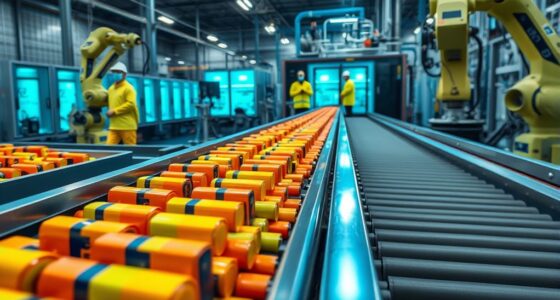
Evaluating water use in battery production and recycling helps you understand the environmental impact of these processes. Water is heavily used from raw material extraction to manufacturing, often straining local water supplies. Recycling batteries reduces this demand by recovering valuable materials with less water. Innovative techniques like dry processing and water recycling further cut water use. If you want to explore how industry efforts and new technologies can make battery production more sustainable, there’s more to discover.
Key Takeaways
- Water consumption occurs throughout mining, processing, manufacturing, and recycling stages of battery production.
- Innovative dry processing and water recycling significantly reduce overall water footprint.
- Recycling batteries conserves water by minimizing raw material extraction and processing needs.
- Assessing water use helps identify environmental impacts and promotes sustainable manufacturing practices.
- Supporting water-efficient technologies and recycling enhances environmental sustainability and resource conservation.

Battery production requires considerable amounts of water, which often goes unnoticed despite its environmental impact. When you think about the manufacturing of batteries, especially lithium-ion types, water isn’t just a minor ingredient; it plays a pivotal role in extracting and processing raw materials. The water footprint of battery production can be surprisingly large, stretching across various stages from mining to assembly. This water use includes not only the water directly consumed in factories but also the water necessary for mining operations and mineral processing, which can have lasting effects on local water supplies. As someone concerned with sustainability, you’ll want to understand how these water demands affect the environment and what measures can be taken to improve water conservation.
Reducing the water footprint in battery manufacturing involves adopting strategies that cut down water consumption at every step. For instance, companies are exploring innovative techniques like dry processing or recycling water used during manufacturing to minimize waste. These efforts are essential because the more water you conserve, the less strain you place on local water resources, especially in areas already facing water scarcity. By supporting or choosing manufacturers that prioritize water conservation, you contribute to more sustainable practices in the industry. Not only does this help preserve critical water sources, but it also encourages the development of more eco-friendly production methods.
Supporting manufacturers that prioritize water conservation promotes sustainable and eco-friendly battery production practices.
Recycling batteries is another approach that can substantially reduce the water footprint. When you recycle batteries instead of discarding them, the process often requires less water than producing new ones from raw materials. Recycling also helps recover valuable materials like lithium, cobalt, and nickel, decreasing the need for extensive mining activities that consume large amounts of water. This closed-loop process promotes sustainability and lessens environmental degradation. As a consumer or stakeholder, you can push for policies and technologies that improve recycling efficiency, further supporting water conservation efforts.
In the end, understanding the water footprint of battery production and recycling is essential for making informed decisions. Whether you’re involved in policy, manufacturing, or simply an environmentally conscious individual, recognizing how water use impacts ecosystems and communities guides you toward supporting sustainable practices. By advocating for innovations in water conservation and recycling, you help reduce the industry’s overall water demand. This not only benefits the planet’s water resources but also ensures the long-term viability of battery technologies critical for clean energy solutions. Your choices, awareness, and support can make a real difference in balancing technological progress with environmental responsibility. Additionally, supporting the development of preppy dog names or other creative naming options can reflect a commitment to sustainability and cultural appreciation.

EZ on the Earth – Lead Acid Battery Recycling Kit – 2.0 Gallon Battery Recycling Pail – Pre-Paid, Mail-Back Recycle Kit for Lead Acid Batteries
Pre-Paid Return Shipping Label for Full Recycle Kit
As an affiliate, we earn on qualifying purchases.
As an affiliate, we earn on qualifying purchases.
Frequently Asked Questions
How Does Water Use Vary Among Different Battery Chemistries?
You’ll find that the battery water footprint varies markedly among different chemistries. For instance, lithium-ion batteries with cobalt or nickel tend to have a higher chemistry water impact, mainly due to mining and refining processes. On the other hand, newer chemistries like solid-state or sodium-ion batteries typically use less water. Understanding these differences helps you evaluate environmental impacts when choosing or developing battery technologies.
What Are the Water Management Practices in Battery Manufacturing?
Think of water management in battery manufacturing as tending a delicate garden. You implement water conservation by recycling and reusing water wherever possible, ensuring minimal waste. Wastewater treatment plays the role of a vigilant gardener, cleaning runoff before releasing it back into the environment. These practices help reduce water footprint, protect ecosystems, and promote sustainable production, making your operations more eco-friendly and resilient in the face of water scarcity.
How Is Water Consumption Tracked During Battery Recycling Processes?
You track water consumption during battery recycling by monitoring the water footprint involved in each step, from dismantling to material purification. You use sensors and data logging systems to measure water use precisely, which helps improve recycling efficiency. This data allows you to identify areas where water savings are feasible and guarantee sustainable practices. Keeping detailed records supports transparency and helps meet environmental standards.
What Innovations Are Reducing Water Use in Battery Production?
Innovative water technologies are transforming battery production by substantially reducing water use. You’ll find that closed-loop systems recycle water within manufacturing, cutting down on fresh water consumption. Sustainable production methods, such as dry processing and advanced filtration, further minimize water dependency. These innovations not only conserve water but also lower environmental impact, helping manufacturers meet eco-friendly standards and promote responsible resource management.
Are There Regional Differences in Water Sustainability Standards for Batteries?
Yes, regional policies influence water sustainability standards for batteries, affecting how companies manage their water footprint. You’ll find stricter regulations in water-scarce areas, encouraging better water use practices. Some regions implement mandatory recycling and water-saving technologies, while others lag behind. These differences shape the overall water footprint of battery production, emphasizing the importance of understanding local policies to promote sustainable practices globally.
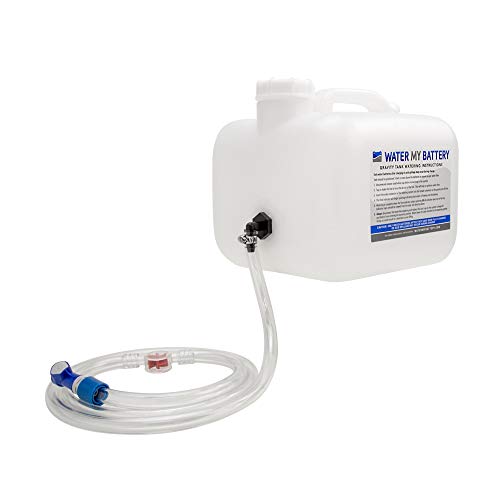
Water My Battery Gravity Tank (2.5 gal) for Battery Watering Systems Steady Flow of Water | Blue Connector Compatible
For use with a battery watering system only; ***Compatible with Water My Battery and Battery Watering Technologies systems;…
As an affiliate, we earn on qualifying purchases.
As an affiliate, we earn on qualifying purchases.
Conclusion
As you consider the impacts of battery production and recycling, remember that water use is the silent river flowing beneath the surface — powerful and often overlooked. By understanding and managing this water footprint, you can help steer the industry toward more sustainable practices. Every drop saved is like a ripple extending outward, shaping a cleaner, greener future. Your awareness and actions can turn the tide in our fight for water conservation and environmental health.
dry processing battery manufacturing equipment
As an affiliate, we earn on qualifying purchases.
As an affiliate, we earn on qualifying purchases.

Eyech Battery Tester Checker,Digital Battery Capacity Gauge Tester with LCD Display Universal Battery Capacity Detector Tool Small Battery Checker for C D N AA AAA 9V(6F22) 1.5V Button Cell
High-quality Material: Made of high-quality ABS insulation plastic, lightweight and compact, convenient for battery checking.
As an affiliate, we earn on qualifying purchases.
As an affiliate, we earn on qualifying purchases.