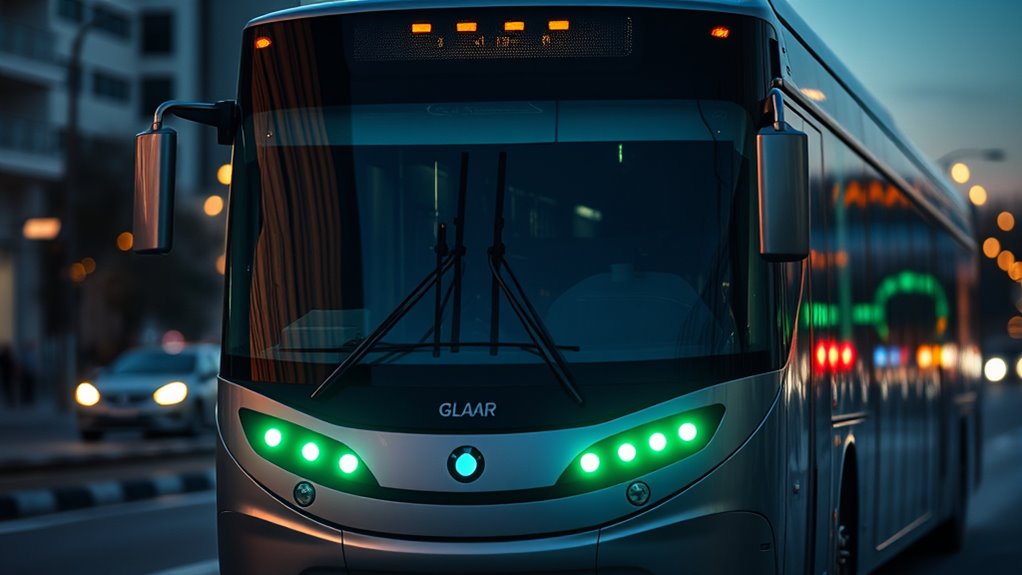

To develop Level-4 autonomous bus sensors, you need to focus on precise calibration and seamless data fusion of LiDAR, radar, and cameras. This layered system provides accurate environment mapping, object detection, and obstacle recognition. Regular calibration guarantees sensors stay reliable amid environmental changes and aging. By integrating these components effectively, you create a robust perception system. Keep exploring, and you’ll discover how these elements work together to enable safe, autonomous operation in complex scenarios.

Get monitors, keyboards and dev gear delivered free — and shop member deals
- Fast, free delivery on millions of items
- Access to Prime Big Deal Days deals on October 6–7
- Prime Video, Amazon Music and more included
Key Takeaways
- Precise calibration of LiDAR, radar, and cameras ensures accurate data fusion for reliable environment perception.
- Regular calibration and environmental adaptation maintain sensor accuracy amid aging and changing conditions.
- Integrating multiple sensors enhances obstacle detection, reducing blind spots and compensating for individual sensor limitations.
- Validation through simulation and real-world testing optimizes sensor placement and calibration strategies.
- Continuous system updates improve robustness, enabling safe, real-time decision-making for Level-4 autonomous buses.
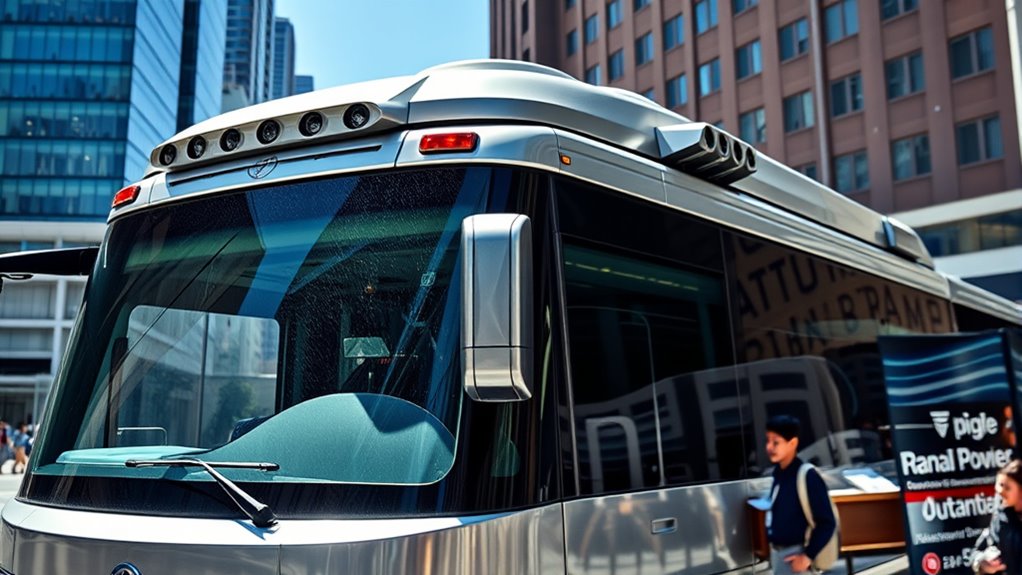
As autonomous bus technology advances, developing reliable sensors for Level-4 operations becomes essential. Your goal is to create a sensor suite capable of perceiving the environment accurately, ensuring safety, and maintaining seamless navigation. Achieving this requires meticulous sensor calibration, which aligns each sensor’s readings with real-world coordinates, minimizing errors that could compromise decision-making. Proper calibration ensures that LiDAR, radar, and cameras work harmoniously, providing consistent data for the autonomous system. Without it, sensor discrepancies can lead to misinterpretations of obstacles or road markings, risking safety and operational reliability.
Reliable sensor calibration is vital for safe, accurate autonomous bus navigation and obstacle detection.
You also need to master data fusion, combining outputs from multiple sensors to generate a thorough and accurate perception of the environment. By integrating data from LiDAR’s high-resolution 3D point clouds, radar’s robustness in adverse weather, and cameras’ detailed imagery, you create a layered understanding that surpasses what each sensor can achieve alone. This process reduces blind spots and compensates for individual sensor limitations, such as LiDAR’s vulnerability to heavy rain or fog, or cameras’ sensitivity to lighting conditions. Effective data fusion involves sophisticated algorithms that weigh sensor inputs based on their reliability at any given moment, ensuring the autonomous system makes well-informed decisions.
Implementing sensor calibration and data fusion isn’t a one-time task; it’s an ongoing process. As sensors age or environmental conditions change, recalibration becomes necessary to maintain accuracy. Regular testing and calibration routines help you identify drifts and adjust sensor parameters accordingly. Advanced algorithms dynamically fuse sensor data in real time, considering factors like sensor confidence levels and environmental context. This continuous refinement ensures your autonomous bus can detect pedestrians, other vehicles, and road signs with precision, even in complex scenarios. Additionally, understanding how to integrate various sensor types effectively enhances the overall perception system’s robustness.
Furthermore, developing these sensors involves rigorous validation and testing. You’ll need to simulate diverse environments and conditions to verify how well your calibration and data fusion systems perform under real-world challenges. These tests help you identify gaps, optimize sensor placement, and refine algorithms. The ultimate goal is to achieve a system that’s resilient, highly precise, and capable of making split-second decisions without human intervention.
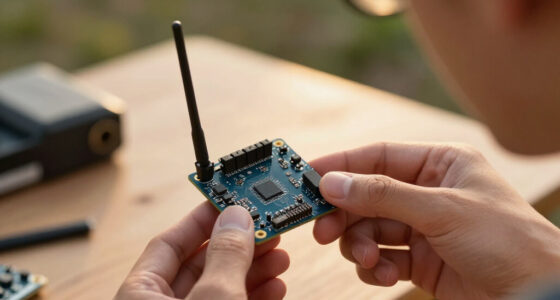
LiDAR sensor for autonomous vehicles
As an affiliate, we earn on qualifying purchases.
As an affiliate, we earn on qualifying purchases.
Frequently Asked Questions
How Do Sensor Failures Impact Autonomous Bus Safety?
Sensor failures can severely impact autonomous bus safety by causing blind spots or incorrect data, risking accidents. That’s why you need sensor redundancy, which guarantees multiple sensors cover the same area, and failure mitigation strategies to quickly identify and address faults. With these measures, you can maintain safe operation even when one sensor malfunctions, keeping passengers and pedestrians safe at all times.
What Are the Costs of Deploying Level-4 Sensors?
You’ll find that deploying Level-4 sensors involves significant costs, but the benefits can outweigh them. A thorough cost analysis helps you comprehend expenses for equipment, installation, and maintenance, fitting within your budget considerations. While initial investments are high, advanced LiDAR, Radar, and cameras enhance safety and reliability. Balancing these costs against potential savings from accident reduction and improved efficiency ensures your autonomous bus system remains financially viable.
How Do Sensors Perform in Extreme Weather Conditions?
In extreme weather conditions, sensors like LiDAR, Radar, and cameras can face challenges, but good sensor calibration enhances weather resilience. You’ll notice that Radar performs well in fog and heavy rain, while LiDAR’s performance may degrade without proper calibration. Cameras struggle with snow or glare, but using robust calibration techniques helps maintain accuracy. Overall, investing in weather-resistant sensors and calibration ensures safer, more reliable autonomous bus operation across diverse environments.
What Are Future Innovations in Autonomous Bus Sensor Technology?
Imagine your bus’s sensors as tiny explorers venturing into new worlds. Future innovations will see sensor miniaturization, making them more efficient and less intrusive. AI sensor integration will enable your bus to think and adapt in real-time, enhancing safety and reliability. These advances will create smarter, more responsive autonomous buses that navigate complex environments flawlessly, transforming public transit into a seamless, futuristic experience you’ll enjoy daily.
How Is Passenger Privacy Protected With Sensor Data Collection?
You guarantee passenger privacy by implementing strict data encryption protocols, safeguarding sensor data from unauthorized access. You also minimize data collection to only what’s necessary, avoiding intrusive details. Regular audits and anonymization techniques further protect passenger identities. By staying compliant with privacy regulations, you create a secure environment where sensor data is used responsibly, maintaining trust and safeguarding passenger privacy at every step.
autonomous vehicle radar sensors
As an affiliate, we earn on qualifying purchases.
As an affiliate, we earn on qualifying purchases.
Conclusion
So, after all this talk about lidar, radar, and cameras, you might think level-4 autonomous buses are just around the corner. Yet, with all the technological marvels, we’re still perfecting sensors that can’t quite see the future—or even the next stop. Ironically, in trying to make buses smarter than ever, we’re still battling the simple challenge of foolproof perception. Maybe someday, these buses will finally get it right—until then, enjoy the ride!
As an affiliate, we earn on qualifying purchases.
sensor data fusion software for autonomous cars
As an affiliate, we earn on qualifying purchases.
As an affiliate, we earn on qualifying purchases.
Halloween Picks
halloween
As an affiliate, we earn on qualifying purchases.