
📊 Full opportunity report: A Practical Look At AI Check-In Calls For Seniors on IdeaNavigator AI — validation score, market gap, and execution plan.

Get business pricing on monitors, keyboards and dev gear
- Business-only prices and quantity discounts
- Tax-exempt purchasing
- Multiple users, one account, clear invoices
TL;DR
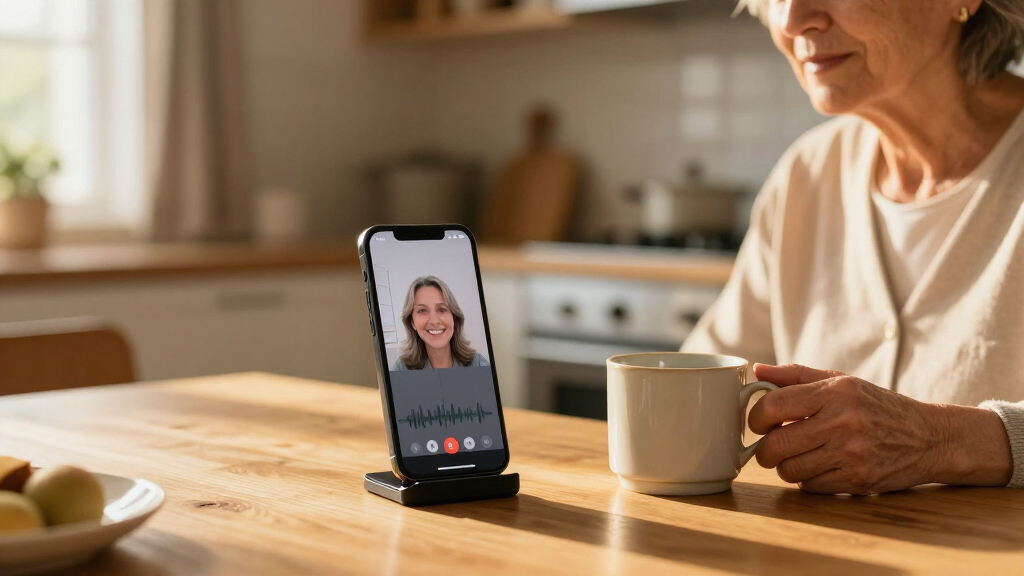
IdeaNavigator AI has outlined a proposal to test scheduled AI phone calls that ask seniors living alone a few wellness questions and alert an adult child to a missed or concerning call. The suggested three-week pilot would involve 15 senior-and-family pairs; no results, safety evidence or confirmed commercial service are provided.
IdeaNavigator AI has proposed testing daily automated check-in calls for seniors who live alone, with a text message to an adult child if a call is missed or raises concern. The suggested trial would involve 15 senior-and-family pairs over three weeks; the proposal reports no trial results or evidence that such calls prevent harm.
The proposed service would place a scheduled phone call each day to an independent senior, using a landline or mobile phone. During a brief conversation, the AI would ask a few wellness questions. It would then send the adult child a simple all-clear message or an alert if the senior did not answer or gave a concerning response. The proposal does not specify the questions or how the system would judge an answer to be concerning.
The intended customer is an adult child living in another city who worries about a parent but cannot call every day. The idea frames the routine call as a way to provide regular contact and flag a missed check-in, rather than as a clinical service. It proposes charging the adult child a monthly subscription per parent, but provides no price, operating cost or evidence of willingness to pay.
To test demand, IdeaNavigator AI recommends enrolling 15 senior-and-adult-child pairs for three weeks. The proposed measures are how often seniors answer and whether families consider the all-clear alerts valuable enough to pay for. That is a suggested validation exercise, not a completed study: no participant results, answer rates or payment findings are reported.
A Routine Call Is Not Emergency Care
The proposal addresses a practical problem for families: an adult child may not be able to check in every day, while a missed call or difficult day can go unnoticed. A regular call could create a repeatable point of contact and give family members a signal to follow up when the expected check-in does not happen.
But an automated call and text alert should not be treated as proof that someone is safe. A person might answer without disclosing a problem, fail to answer for a benign reason, or need help that the call does not detect. The idea does not describe a staffed response team, emergency escalation process or guarantee that alerts will be acted on. Its value would depend on whether calls are answered, alerts are reliable and families understand what the service can and cannot establish.
That distinction matters for prospective customers. A subscription could offer reassurance or prompt a family member to call, but the proposal supplies no evidence that it reduces response times, prevents injuries or replaces in-person support. Those are separate outcomes that would require evidence beyond a short test of call engagement and perceived value.
Popular right now

Bose QuietComfort True Wireless Earbuds with Active Noise Cancellation, Black

Ninja Flip Toaster Oven and Air Fryer, 8-in-1, Stainless Steel, SP151

KitchenAid Artisan 5-Quart Tilt-Head Stand Mixer, Almond Cream
As an affiliate, we earn on qualifying purchases.
The Proposed Three-Week Test
IdeaNavigator AI presents the concept as a narrow first test within aging-in-place wellness: one scheduled call, a small set of questions and a basic notification to a family member. The intended audience is specifically seniors living independently and relatives who live elsewhere, rather than all older adults or people receiving clinical care.
The proposal says that natural-sounding voice AI can make short phone conversations affordable at scale. That is the rationale offered for the idea, not a cost analysis or independently verified finding in the information provided. No service name, provider, technical specification or deployment date is given. The suggested pilot would test whether seniors answer and whether relatives value the alerts; it does not set out a comparison group or a method for measuring health or safety outcomes.
Safety, Privacy and Response Plans
Key details remain unspecified, including how answers would be assessed, what counts as a missed or concerning call, and how the system would handle a technical failure or an ambiguous response. The proposal does not say whether a human would review alerts, how quickly a family member would be notified, or what happens if that person cannot be reached.
It also provides no information about consent, call recording, storage or use of personal information. Those questions matter when a service contacts someone every day and shares information with a relative. There are no pilot findings, pricing details, evidence of accuracy, or reported outcomes on safety, health or isolation. It is not clear whether the suggested test has been recruited or scheduled.
Pilot Results Would Test Demand
The next step in the proposal is a three-week test with 15 pairs, tracking call answer rates and asking families whether the all-clear alerts are worth paying for. No start date or results are given. If carried out, the test could indicate whether participants use the service and whether its basic notifications appeal to families, but it would not by itself establish that the calls improve safety.
Before any wider rollout, details about consent, privacy, alert handling and escalation would need to be made clear to users. Further evaluation would also be needed to understand missed calls and false alarms, and to determine whether the service works for seniors with different hearing, speech or cognitive needs. For now, the development is a proposed product test, not a confirmed launch or a demonstrated safety solution.
Source: IdeaNavigator AI
Key Questions
Is an AI check-in call service already available?
The proposal describes an idea to test. It does not identify a launched product, provider or release date.
How would the proposed calls work?
A system would call a senior once a day, ask a few wellness questions and text an adult child an all-clear or a flag for a missed or concerning call. The proposal does not explain how responses would be assessed.
Has the proposed pilot produced results?
No results are reported. The suggested test would involve 15 senior-and-family pairs over three weeks and track answer rates and families’ willingness to pay for alerts.
Would these calls replace emergency or in-person support?
No such role is established in the proposal. It describes a routine check-in and family notification, but gives no emergency response plan or evidence that the service can detect every urgent need.
How much would the service cost?
The proposal suggests a monthly subscription billed to the adult child per parent, but does not provide a price.
Source: IdeaNavigator AI