High-power charging, including 400 kW and megawatt chargers, remarkably cuts your EV charging times, letting you recharge faster and get back on the road quickly. These chargers use advanced technology to deliver large amounts of energy efficiently, quickly transforming long stops into brief pauses. Though they generate heat that can affect batteries, automakers are developing cooling systems to extend battery life. Keep exploring to discover how these innovations are shaping the future of quick, reliable charging options.
Key Takeaways
- High-power chargers like 400 kW and megawatt chargers enable ultra-fast charging, significantly reducing EV charging times.
- These chargers require advanced infrastructure, including upgraded electrical systems and high-capacity power connections.
- They deliver large energy amounts quickly, which can generate heat, necessitating sophisticated battery cooling and management systems.
- Deployment is focused along major highways and commercial hubs to support long-distance travel and fleet operations.
- Ongoing innovations aim to enhance safety, efficiency, and battery longevity while expanding high-power charging accessibility.
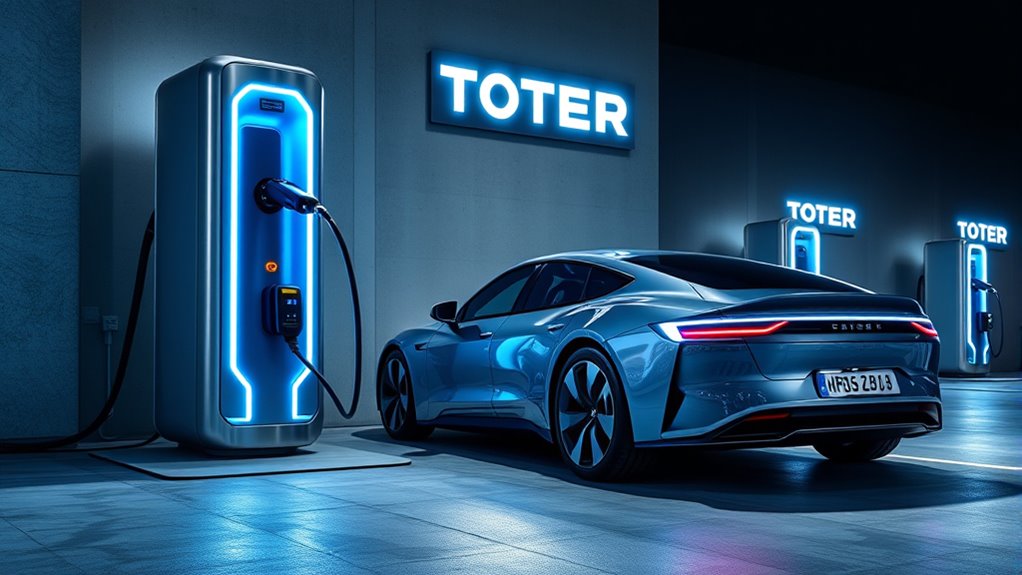
High-power charging is revolutionizing the way you recharge electric vehicles by substantially reducing charging times. With 400 kW and megawatt charger technologies, you can power up your EV much faster than traditional chargers. This leap forward in charging speed means less time plugged in and more time on the road. But as you embrace these rapid charging solutions, it’s vital to contemplate their impact on your vehicle’s battery longevity. High-power chargers deliver large amounts of energy in a short period, which can generate heat and stress the battery cells. If not managed properly, this can accelerate battery degradation over time. That’s why automakers and charging infrastructure providers are working diligently to develop systems that optimize charging patterns, monitor battery health, and prevent overheating. These measures help ensure your EV’s battery remains durable and reliable, even with frequent use of high-powered chargers. Additionally, advancements in battery cooling techniques**** are crucial to managing heat during fast charging and preserving battery life.
As for the charging infrastructure, the deployment of 400 kW and megawatt chargers requires significant investment and planning. You’ll find these advanced chargers primarily at fast-charging stations along major highways, designed to serve long-distance travelers and commercial fleets. They demand robust electrical systems capable of handling immense power loads safely. Installing such infrastructure involves upgrading existing power grids, establishing high-capacity connections, and ensuring safety protocols are in place. For you, this means greater access to ultra-fast charging options, making long trips more feasible and convenient. However, the widespread adoption of high-power chargers also depends on expanding the network to cover more regions, so you won’t be restricted to specific locations. As infrastructure grows, you’ll benefit from more reliable, quick-charging options that keep pace with your busy lifestyle.
While high-power charging offers unmatched speed, it also presents challenges that need addressing. Battery management systems are becoming more sophisticated, balancing rapid charging with preserving battery health. Manufacturers are exploring new materials and cooling techniques to reduce heat buildup during quick charges. Simultaneously, advancements in charging infrastructure are making these fast chargers more accessible and safer. For you, this means a future where recharging your EV is not only quick but also sustainable, ensuring your vehicle remains efficient over many years. As the technology matures, expect ongoing innovations that will improve both battery longevity and the robustness of charging networks. This progress ensures that rapid charging becomes a seamless part of your EV experience, empowering you to travel farther, faster, and with confidence.
Top picks for "high power charg"
Open Amazon search results for this keyword.
As an affiliate, we earn on qualifying purchases.
Frequently Asked Questions
What Are the Safety Concerns With Ultra-High-Power Charging?
When you use ultra-high-power charging, you should be aware of safety concerns like thermal management and electrical safety. These chargers generate a lot of heat, so proper cooling is essential to prevent overheating. Additionally, high voltages pose risks of electric shock or short circuits. Always verify the charger is well-maintained and follow safety protocols to protect yourself and the equipment during rapid charging sessions.
How Does High-Power Charging Impact Battery Longevity?
Battery burnout begins with high-power charging, which can accelerate battery degradation if thermal management isn’t tight. You might notice reduced range and longevity over time, as rapid charging heats up batteries, stressing their cells. To protect your vehicle’s vitality, make certain proper thermal management and avoid frequent ultra-fast charges. Smart charging strategies help extend your battery’s lifespan, saving you money and maintaining peak performance longer.
Are There Compatibility Issues With Different Vehicle Models?
You might face some compatibility issues with different vehicle models, as vehicle compatibility varies depending on the charger standardization adopted by your car. Not all vehicles support the latest high-power charging technologies, so check your vehicle’s specifications before charging at 400 kW or megawatt chargers. Ensuring your car meets the specific standards helps you avoid delays and maximizes charging efficiency, making your experience smoother and more reliable.
What Infrastructure Investments Are Needed for Widespread Deployment?
To support widespread deployment, you’ll need to focus on key infrastructure investments. Expanding charging station deployment guarantees easier access, while grid capacity enhancements help handle increased power demands smoothly. Upgrading power infrastructure and integrating smart grid technologies will make fast charging more reliable and efficient. These investments create a solid foundation, making electric vehicle charging more convenient, seamless, and ready for the future, ultimately encouraging more people to adopt EVs.
How Do Charging Rates Vary in Different Weather Conditions?
Weather conditions impact charging rates by causing thermal effects and power fluctuations. In cold weather, batteries can become less efficient, reducing charging speed. Hot conditions may trigger thermal management systems, slowing the process to prevent damage. You might notice slower charging during extreme temperatures, as thermal effects and power fluctuations challenge the charger’s ability to deliver consistent high rates. Staying within ideal temperature ranges helps maintain faster, more reliable charging sessions.
Conclusion
As you stand before these towering chargers, imagine the surge of electricity flowing like a powerful river, fueling your journey at lightning speed. With 400 kW and megawatt chargers, you’re not just charging—you’re riding the wave of innovation, pushing boundaries, and embracing the future. Feel the pulse of technology beneath your fingertips, ready to propel you forward with relentless energy, turning every stop into a swift, electrifying pause on your road ahead.