
📊 Full opportunity report: How To Check Supplier Pricing Across Restaurant Locations on IdeaNavigator AI — validation score, market gap, and execution plan.

Get business pricing on monitors, keyboards and dev gear
- Business-only prices and quantity discounts
- Tax-exempt purchasing
- Multiple users, one account, clear invoices
TL;DR
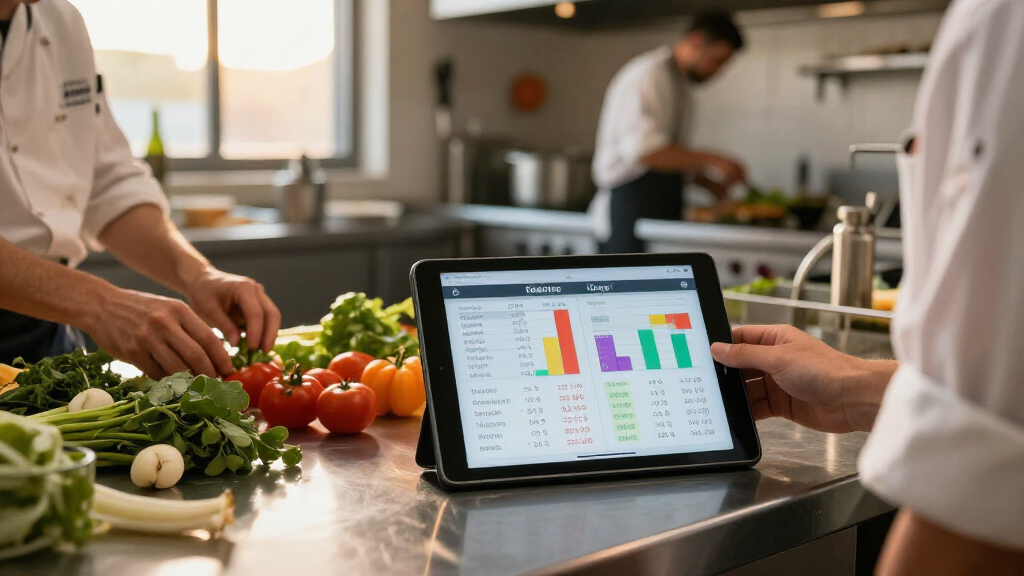
A proposal for independent multi-unit restaurant groups outlines a tool to compare supplier invoices with contracts, orders and deliveries, flagging possible overcharges and billing mismatches. The idea has not been established as a proven product or savings result; a 90-day review across three groups is proposed to test whether recoverable credits justify subscription costs.
IdeaNavigator AI proposes a supplier-invoice auditing workflow for independent restaurant groups with multiple locations, intended to identify billing discrepancies across food and beverage purchases. In its proposal, the company recommends testing the service with a 90-day review of paid invoices at three groups before assessing whether documented credits per location could justify a subscription.
IdeaNavigator AI identifies a restaurant group’s purchasing director or controller as the intended user, particularly at businesses buying from broadline and specialty food and beverage suppliers. The proposal describes potential gaps between contracted or quoted prices and invoice charges, including cases billed in full despite being short-shipped, higher-priced substitutions and price increases that may go unnoticed between orders. It says these discrepancies can affect food costs when deliveries are not checked against orders and invoices are paid without detailed comparison.
The proposed minimum product would collect invoices through electronic data interchange where available, or through text recognition of PDFs and photos. It would compare invoice lines with supplier contracts or quote sheets and the restaurant group’s order guide, then match what was ordered, received, billed and agreed. The proposal lists possible flags such as overcharges, short shipments billed as full cases, higher-priced substitutions and week-over-week price changes. It also suggests drafting supplier credit requests and tracking them until a credit appears on a later invoice.
IdeaNavigator AI suggests charging a monthly fee per location, with an optional share of recovered credits for customers who prefer a results-linked model. Its recommended test is to review 90 days of paid invoices alongside contracts or quote sheets from three restaurant groups, tally discrepancies and documented credits, and proceed only if credits per location clearly exceed the planned subscription fee. The proposal reports no trial, customer results, product launch or recovered-credit total.
Check Supplier Pricing Across Locations
IdeaNavigator AI proposes comparing restaurant invoices with orders, deliveries and agreed prices to flag possible billing mismatches. The workflow and its potential savings have not yet been validated.
What the workflow compares
Purchasing directors or controllers would check each purchase across four records.
Check what the restaurant requested.
Match what arrived against the order.
Review quantities and charges billed.
Compare charges with contracts or quote sheets.
Potential billing flags
Above the agreed rate
A billed price may differ from the contract or quote.
Short-shipped, billed in full
The invoice may charge for more than was delivered.
Higher-priced replacement
A substitute may cost more than the ordered item.
Increase between orders
Week-over-week price changes may go unnoticed.
How the proposed test works
What remains unproven
- Invoice capture through electronic data interchange or text recognition of PDFs and photos
- Comparison with contracts, quote sheets and order guides
- Drafting supplier credit requests and tracking them
- No product launch, active pilot or customer results
- No confirmed credits, savings or discrepancy rates
- No OCR accuracy, integration or review-time results
Food Costs Leave Little Room for Errors
IdeaNavigator AI’s proposal says billing mismatches could accumulate across locations and frequent purchasing. It estimates that restaurant groups may process hundreds of supplier invoices a week. Differences between agreed prices and invoice charges, or between delivered and billed quantities, are among the issues the proposed workflow would seek to identify. The proposal provides no measured savings or evidence of how often such errors occur.
The proposal cites the USDA Economic Research Service’s September 25, 2026 Food Price Outlook, which forecasts 2026 retail beef and veal prices rising 9.4% and wholesale beef prices rising 8.5%, while food-away-from-home prices are forecast to rise 3.5%. These figures are forecasts, not measured outcomes. IdeaNavigator AI cites them as context for restaurant costs; they do not establish how much a particular group could recover through invoice auditing.
The proposed test would compare identified and documented credits with the cost of the service. The assessment would also need to account for whether suppliers issue credits, the staff time needed to verify exceptions, and whether flagged differences reflect billing issues rather than data-matching errors. No results are reported, so the proposal does not establish that the service would deliver a particular return.
Popular right now

Ninja Mega Kitchen System Blender and Food Processor, 1500W, 72-oz Pitcher, 8-Cup Bowl, Black (BL770)

Apple AirPods Pro 3 Wireless Earbuds with Active Noise Cancellation

LG 55-Inch OLED evo G2 Series 4K Smart TV (OLED55G2PUA, 2022)
As an affiliate, we earn on qualifying purchases.
A Proposed Three-Group Pilot
IdeaNavigator AI describes the workflow for a purchasing director or controller at an independent multi-unit restaurant group, rather than as a general procurement platform. The proposed task is to compare four records for each purchase line: the order, the delivery received, the invoice and the agreed contract or quote price.
The proposed 90-day lookback would use already-paid invoices and compare them with available contracts or quote sheets at three groups. This is a validation plan, not a completed study. The proposal does not describe how groups would be selected, disputed delivery quantities verified, or suppliers with incomplete records handled. These factors could affect whether a flagged difference results in an accepted supplier credit.
The suggested pricing models are options, not announced commercial terms. A per-location subscription would provide a recurring fee, while a contingency fee would link payment to credits recovered. IdeaNavigator AI does not specify fee levels, how a recovered credit would be defined, or how credits arriving after the review period would be treated.
Savings and Accuracy Still Unproven
The IdeaNavigator AI material provides no pilot findings or customer testimonials and reports no confirmed product launch, supplier participation or pricing. It does not establish how often the listed discrepancies occur, how much they represent per location, or what share could be resolved through credits. The cited beef-price figures are forecasts and do not quantify the effect of invoice errors on restaurant margins.
Operational questions also remain open. The proposal reports no OCR accuracy, integration requirements, data-security arrangements or estimates of review time. It does not explain how the system would confirm what was received when delivery records are incomplete, or distinguish a valid price change from an unapplied contract rate. The proposed three-group test is intended to assess whether the business case warrants further development; no results or timing have been announced.
The Proposed 90-Day Test
IdeaNavigator AI recommends a 90-day invoice lookback across three restaurant groups. The review would compare paid invoices with contracts or quote sheets, document amounts billed above agreed prices, short-shipped cases billed in full and price increases, then assess credits linked to those discrepancies. The proposal’s decision rule is whether documented credits per location clearly exceed the planned subscription fee.
The proposal gives no test start date, participating groups or reporting schedule. A follow-up assessment would report the value of flagged discrepancies, which were verified, which suppliers issued credits and how long resolution took. No such evidence is currently provided, so the service’s costs, savings and effectiveness remain unconfirmed.
Source: IdeaNavigator AI
Key Questions
Has an invoice-auditing product launched?
No launch is reported. The material outlines a proposed workflow and a test for evaluating it, but does not identify a released product or active pilot.
What supplier billing issues would the workflow flag?
It is designed to flag possible price mismatches, short shipments billed in full, higher-priced substitutions and week-over-week price increases by comparing orders, deliveries, invoices and agreed prices.
How would the proposed service be tested?
The recommended test is a 90-day review of paid invoices and contracts or quote sheets at three restaurant groups, measuring documented discrepancies and credits per location.
Are savings from the service confirmed?
No. No recovered-credit totals or customer results are provided. The proposal says to proceed only if documented credits per location clearly exceed the planned subscription fee.
Source: IdeaNavigator AI