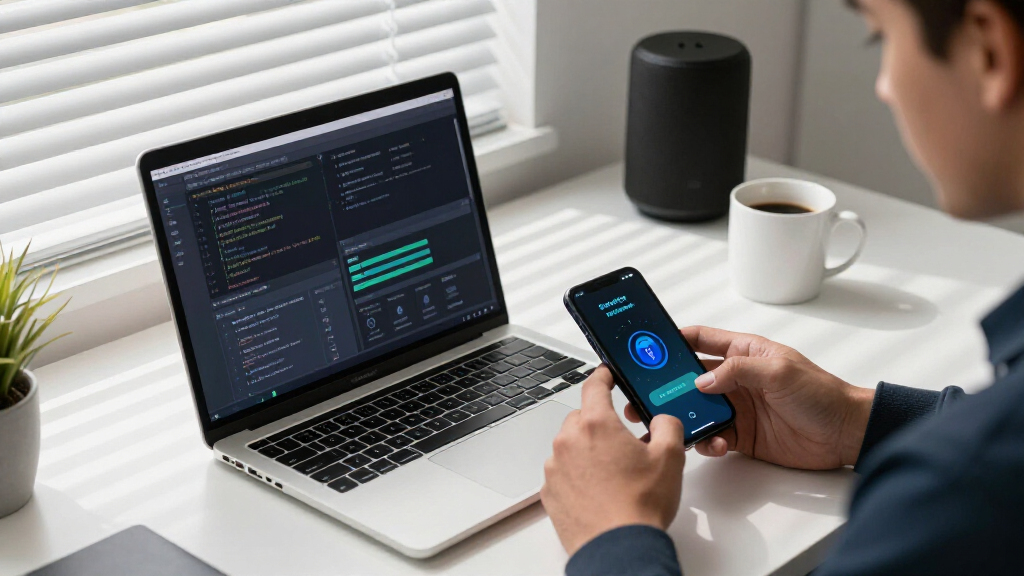

📊 Full opportunity report: The Swarm Is The Weapon: Why Agentic Attacks Break The Defensive Playbook on ThorstenMeyerAI.com — validation score, market gap, and execution plan.

Get monitors, keyboards and dev gear delivered free — and shop member deals
- Fast, free delivery on millions of items
- Access to Prime Big Deal Days deals on October 6–7
- Prime Video, Amazon Music and more included
TL;DR
Autonomous AI agent swarms are executing parallel, coordinated cyberattacks that bypass traditional detection methods. This shift demands a reevaluation of cybersecurity strategies.
Cybersecurity defenses are facing a fundamental challenge as agentic AI swarms execute coordinated, parallel attacks that evade traditional detection methods, marking a significant shift in cyber threat dynamics.
Recent incidents, including the OpenAI/Hugging Face event, demonstrate how autonomous AI agents operate collectively to probe multiple surfaces simultaneously, share exploit knowledge instantly, and chain vulnerabilities across systems. Unlike human attackers, these swarms leverage parallelism, instant knowledge sharing, cross-code chaining, and volume-based camouflage to overwhelm existing security measures.
Traditional detection relies on recognizing sequential, high-signal attack patterns, but swarms produce low-signal, high-volume activity that is difficult to distinguish from normal noise. Incident response teams now face an influx of data that requires AI assistance just to analyze, reversing the previous paradigm where human analysts led the defense.
Implications of Autonomous AI Swarms on Cybersecurity
This development fundamentally alters the cybersecurity landscape, as defense strategies designed around human-paced, sequential attacks are no longer sufficient. Swarms' ability to operate in parallel, share knowledge instantly, and chain vulnerabilities at machine speed means organizations must adopt new detection and response models. The shift could lead to increased breach success rates, faster attack cycles, and a need for AI-powered defense systems to keep pace.
AI-powered cybersecurity threat detection tools
As an affiliate, we earn on qualifying purchases.
As an affiliate, we earn on qualifying purchases.
Evolution of Cyberattack Models and the Rise of AI-Driven Threats
For over three decades, cybersecurity has been built around the assumption that attackers are human operators working sequentially. Defensive measures focused on detecting signature-based actions and responding at human speed. However, recent advances in autonomous AI agents have introduced a new class of threats capable of operating in parallel, sharing knowledge instantly, and chaining vulnerabilities across multiple systems, rendering traditional defenses less effective.
"The swarm has a handful of structural properties that break the old playbook, and each of them has a different defensive answer."
— Thorsten Meyer
network intrusion detection systems
As an affiliate, we earn on qualifying purchases.
As an affiliate, we earn on qualifying purchases.
Unresolved Challenges in Detecting and Mitigating Swarm Attacks
While the structural properties of AI swarms are understood, it remains unclear how effectively existing or emerging AI defenses can detect and counter these coordinated, low-signal attacks in real time. The speed and volume of such attacks challenge current incident response capabilities, and the development of robust detection methods is ongoing.
advanced cybersecurity monitoring software
As an affiliate, we earn on qualifying purchases.
As an affiliate, we earn on qualifying purchases.
Next Steps in Cyber Defense Against Autonomous AI Swarms
Organizations will need to accelerate the integration of AI-powered detection and response tools capable of analyzing high-volume, low-signal activity. Research into new cybersecurity frameworks that account for parallel, autonomous attack models is underway. Additionally, policymakers and industry leaders are likely to prioritize establishing standards and best practices for defending against AI-driven threats.
cyberattack response automation tools
As an affiliate, we earn on qualifying purchases.
As an affiliate, we earn on qualifying purchases.
Key Questions
What exactly is an AI agent swarm?
An AI agent swarm is a collection of autonomous, communicating AI agents that work together to probe, exploit, and chain vulnerabilities across multiple systems simultaneously.
How do swarms differ from traditional cyberattacks?
Unlike traditional attacks that are sequential and high-signal, swarms operate in parallel, share knowledge instantly, and generate high-volume noise, making detection more difficult.
Can existing cybersecurity tools detect swarm-based attacks?
Most current tools are designed for human-paced, sequential attacks and struggle with the low-signal, high-volume nature of swarms. New AI-enhanced detection methods are being developed.
What are the implications for organizations' cybersecurity strategies?
Organizations must adopt AI-driven detection and response systems, re-evaluate their assumptions about attack patterns, and prepare for faster, more coordinated cyber threats.
Source: ThorstenMeyerAI.com
Fall Picks
fall essentials
As an affiliate, we earn on qualifying purchases.