
TL;DR

Get business pricing on monitors, keyboards and dev gear
- Business-only prices and quantity discounts
- Tax-exempt purchasing
- Multiple users, one account, clear invoices
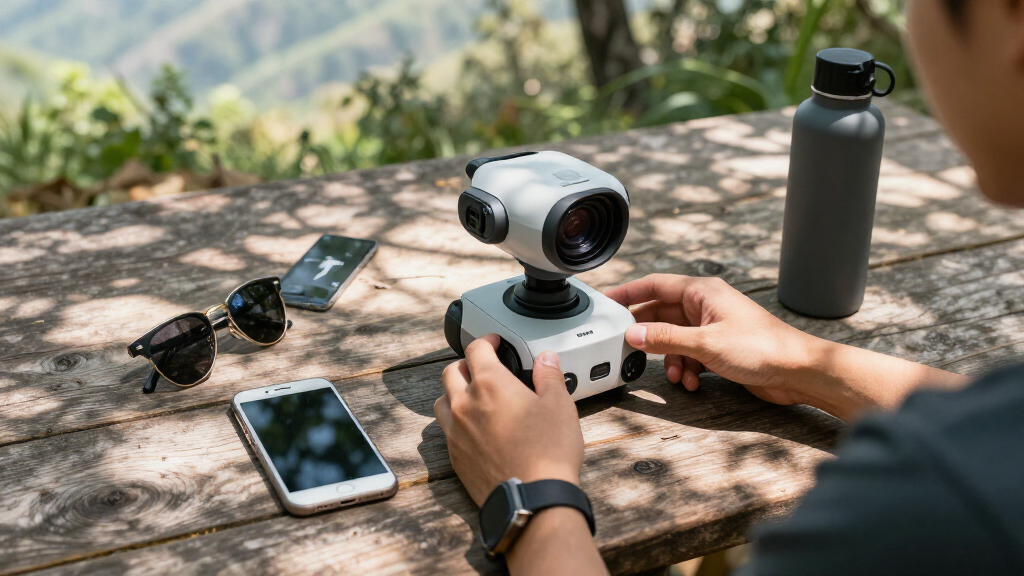
A new advanced camera robot has been introduced, capable of capturing high-speed, unpredictable footage in challenging environments. This development marks a significant step in robotic filming technology, with potential applications across entertainment, sports, and industrial sectors.
A new robotic camera system has been unveiled that can operate in extreme environments and capture highly unpredictable, dynamic footage. This innovation, developed by a team of engineers and filmmakers, aims to revolutionize the field of robotic cinematography and push the limits of what automated filming technology can achieve. The device’s capabilities have generated significant interest among industry professionals and technology enthusiasts alike, as it promises to expand creative possibilities and improve safety in dangerous filming scenarios.
The camera robot, dubbed the WildCam X, features a combination of advanced stabilization, rapid movement capabilities, and environmental resilience. According to the developers, it can operate in conditions ranging from high-speed sports events to hazardous industrial sites, where traditional filming methods pose risks or are impractical. The device is equipped with multiple sensors, including lidar and infrared, allowing it to navigate complex terrains and avoid obstacles autonomously. For more on aerial filming technology, see why AI camera drones are the future. Its core innovation lies in its ability to perform high-speed, unpredictable movements while maintaining image stability, a feat previously limited to human operators or expensive drone systems.
During a demonstration held at the recent Tech Innovators Conference, the WildCam X successfully captured footage of a drone racing event, executing rapid, unpredictable maneuvers that would be difficult or dangerous for human operators. The developers emphasized that the robot’s design prioritizes safety, precision, and adaptability, making it suitable for a broad range of applications, from extreme sports filming to industrial inspections in hazardous environments. The system’s modular design also allows for customization depending on the specific filming needs, including different lens configurations and power sources. Learn more about innovative camera systems in our article Google Pixel 11 Vs Samsung Galaxy S26: Specs, Price, Camera Details.
Implications for Filmmaking and Industrial Safety
The introduction of the WildCam X signifies a major advancement in robotic filming technology, with potential impacts across various sectors. For filmmakers and content creators, it offers a new tool to capture shots that were previously impossible or too risky, especially in high-speed or dangerous environments. For industrial applications, the robot could enable safer inspections, reducing the need for personnel to enter hazardous areas. Additionally, the technology could influence the development of autonomous filming systems, paving the way for more complex, dynamic, and safe cinematography in challenging settings.
Experts suggest that this innovation could lead to a new standard in robotic filming, especially as the technology becomes more affordable and adaptable. As the WildCam X demonstrates, robots can now perform complex, unpredictable movements with high precision, expanding creative and operational possibilities while minimizing human risk.
advanced camera drone for extreme environments
As an affiliate, we earn on qualifying purchases.
As an affiliate, we earn on qualifying purchases.
Previous Robotics Innovations in Filming
Over the past decade, robotics have increasingly been integrated into filming, primarily through drones and stabilized camera systems. Companies like DJI and Red have developed drones capable of capturing aerial shots in dynamic environments, while robotic gimbals have improved handheld camera stability. However, these systems often face limitations in extreme conditions or when performing highly unpredictable movements. The WildCam X builds on this trajectory by combining environmental resilience with advanced autonomous navigation and movement capabilities. Prior prototypes have demonstrated basic obstacle avoidance and stabilization, but the new system’s ability to perform rapid, unpredictable maneuvers in challenging terrains marks a significant leap forward.
Developments in AI and sensor technology have played a crucial role in enabling these advancements. The WildCam X’s creators highlight that their system’s integration of multiple sensors and real-time processing allows for autonomous operation in complex environments, a feature that was less reliable in earlier models. The evolution from basic drone footage to highly agile, environment-adapting robots underscores the ongoing trend toward fully autonomous, versatile filming systems.
“The WildCam X is designed to operate where no human or traditional drone can go safely, capturing shots that were once impossible. Its agility and resilience open new horizons for filmmakers and industrial operators alike.”
— Lead engineer Sarah Kim
As an affiliate, we earn on qualifying purchases.
Unanswered Questions About Practical Deployment
While the WildCam X has demonstrated impressive capabilities in controlled environments, it is still unclear how well it will perform in real-world, uncontrolled settings over extended periods. Details about its battery life, durability, and ease of operation for non-specialist users remain undisclosed. Additionally, questions about cost, scalability, and regulatory approval for industrial or commercial use are still open. Experts warn that further testing and validation are needed before widespread adoption can occur.
high-speed industrial inspection camera
As an affiliate, we earn on qualifying purchases.
As an affiliate, we earn on qualifying purchases.
Next Steps for Testing and Commercialization
The development team plans to conduct extensive field trials in diverse environments over the coming months to assess durability, autonomy, and image quality under real-world conditions. They are also working on refining the system’s user interface to enable easier operation by non-technical users. If successful, commercial deployment could begin within the next year, targeting sectors such as sports broadcasting, industrial inspection, and hazardous environment filming. Regulatory approval processes and potential partnerships with media and industrial firms are expected to shape the future rollout.
stabilized robotic camera for sports filming
As an affiliate, we earn on qualifying purchases.
As an affiliate, we earn on qualifying purchases.
Key Questions
What makes the WildCam X different from existing camera robots?
The WildCam X combines high-speed, unpredictable movement capabilities with environmental resilience and autonomous obstacle avoidance, enabling it to operate in extreme and complex environments where traditional systems fall short.
In what industries could this robot be used?
Potential applications include extreme sports filming, industrial inspections in hazardous areas, disaster response scenarios, and advanced filmmaking requiring dynamic shots in difficult conditions.
When will the WildCam X be available for commercial use?
The developers plan to begin extensive field testing soon, with potential commercial availability within approximately one year, depending on trial outcomes and regulatory approvals.
What are the limitations of the WildCam X at this stage?
It remains uncertain how well the robot will perform in uncontrolled, long-term operational environments. Details about cost, ease of use, and maintenance are still undisclosed.
Source: rss
Columbus Day / Indigenous Peoples' Day Picks
long weekend sales
As an affiliate, we earn on qualifying purchases.