
TL;DR

Get business pricing on monitors, keyboards and dev gear
- Business-only prices and quantity discounts
- Tax-exempt purchasing
- Multiple users, one account, clear invoices
Google.org is providing $2.5 million to support the World Bank Group’s work on an AI-enabled Open Network for Agriculture across countries in Latin America, Southeast Asia and Sub-Saharan Africa. The initiative aims to help 1 million farmers access livelihood-related services by the end of 2027, building on a pilot in India.
Google.org is providing $2.5 million to support the International Finance Corporation and the broader World Bank Group in expanding a digital network for agricultural services, with a goal of helping 1 million farmers by the end of 2027. The planned AI-enabled Open Network for Agriculture is expected to connect public and private providers in countries across Latin America, Southeast Asia and Sub-Saharan Africa.
The network, known as the Open Network for Agriculture (ONA), is designed as shared digital infrastructure: a common system through which different service providers can reach farmers. Google’s report describes the approach as a way to reduce reliance on separate, disconnected apps. The World Bank Group plans to develop the network across several countries, though the report does not name them.
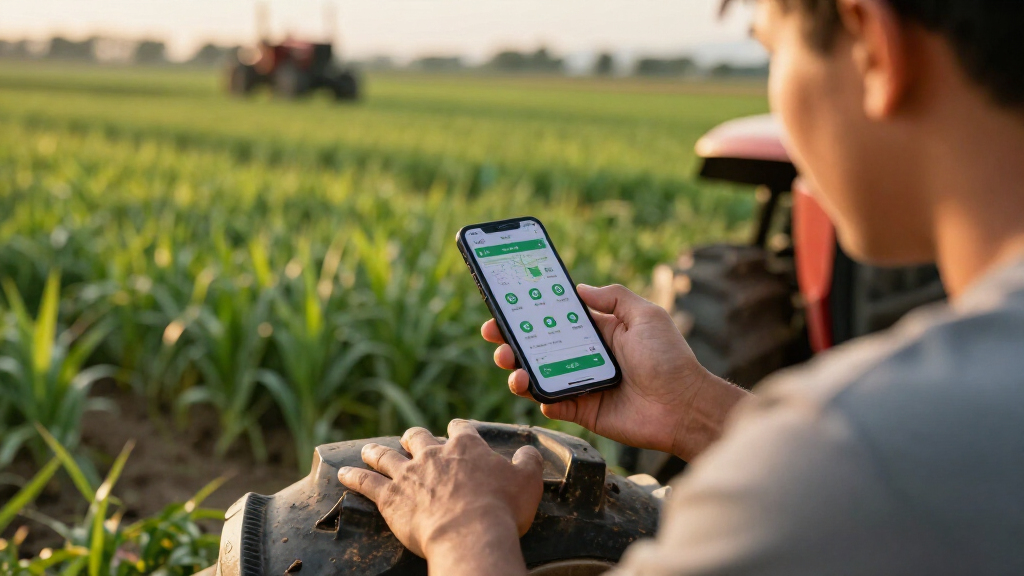
Services available through ONA could include digital farmer identification, credit, direct subsidy payments and produce markets. The report also describes voice-powered advice in local languages on farming, weather, prices and finances. These are the types of services the network is intended to connect; the announcement does not specify which will be available in each participating country or when individual services will launch.
The World Bank Group’s AgriConnect initiative provides the wider framework for the effort. Google.org says its grant supports the IFC and the broader group in expanding digital public infrastructure for agriculture. The stated measure of progress is the number of farmers able to access livelihood-improving services, with the target set for the end of 2027.
Connecting Farmers to Services
Farmers who must use separate systems to find credit, receive public support, sell crops or obtain advice can face practical barriers to accessing those services. A shared network could make it easier for participating providers to reach users through a more connected digital infrastructure. The potential value, however, depends on whether the services are available, useful and accessible in each location.
The announced goal of 1 million farmers by 2027 gives the initiative a measurable reach target. If the network works as intended, it could connect farmers with both public programs and private services, while allowing local providers to participate in the same digital system. The announcement does not provide a breakdown of expected benefits, costs or results, so the scale of any effect on incomes or farm productivity cannot yet be assessed.
Popular right now

Bose QuietComfort True Wireless Earbuds with Active Noise Cancellation, Black

Ninja Flip Toaster Oven and Air Fryer, 8-in-1, Stainless Steel, SP151

KitchenAid Artisan 5-Quart Tilt-Head Stand Mixer, Almond Cream
As an affiliate, we earn on qualifying purchases.
From India Pilot to Wider Network
The World Bank Group says the planned expansion follows a pilot in India. Google’s report characterizes that pilot as successful, but provides no figures on participation, services used or measured outcomes. The new effort would extend the model to several countries across three broad regions: Latin America, Southeast Asia and Sub-Saharan Africa.
Digital public infrastructure refers here to shared digital systems that can support services from multiple providers. Google describes these systems as “public roads” for online services. The announcement frames ONA as a way for government agencies and private organizations to connect services without requiring farmers to navigate a set of isolated platforms. It also builds on an existing Google–World Bank Group alliance focused on digital transformation in emerging markets, according to Google.
““shared digital systems that act as ‘public roads’ for online services.””
Country Plans and Results Ahead
The announcement does not identify the participating countries, describe a rollout schedule or say how many farmers in each region are expected to join. It also does not detail how farmers will enroll, what devices or connectivity they will need, or which organizations will operate the network locally. The precise role of AI in the platform, including how advice will be generated and checked, is not explained.
There are also no published figures on the India pilot’s reach or outcomes, nor an evaluation plan for measuring whether access to services improves livelihoods. The 1 million-farmer figure is a goal, not a reported result. It remains unclear how the initiative will count access and whether the target refers to registered users, active users or farmers who have used a particular service.
Rollout Details and Progress
The next developments will be the World Bank Group’s country-level rollout plans and details about which services will be connected first. Progress can be judged against the stated target of reaching 1 million farmers by the end of 2027, once the group publishes information on participating countries, user access and delivery timelines.
Further reporting will also be needed to establish whether the network’s services are being used and what outcomes they produce. The announcement does not give a date for the first expansion beyond India or set out interim milestones. Until those details are available, the project’s geographic reach and practical effects remain unsettled.
Key Questions
What is the Open Network for Agriculture?
ONA is a planned shared digital network intended to connect farmers with services offered by public and private providers, rather than requiring separate, disconnected apps.
Who is supporting the project?
Google.org is providing $2.5 million to support the International Finance Corporation and the broader World Bank Group under the AgriConnect initiative.
Which countries will take part?
The report names broad regions—Latin America, Southeast Asia and Sub-Saharan Africa—but does not identify the participating countries.
What services could farmers access?
The proposed services include digital farmer IDs, credit, direct subsidy payments, markets for selling produce and voice-powered local-language advice on farming, weather, pricing and finances. Availability by country has not been specified.
When is the target expected to be met?
The World Bank Group’s stated goal is to help 1 million farmers access services by the end of 2027. The announcement does not provide interim milestones or a country-by-country schedule.
Source: rss