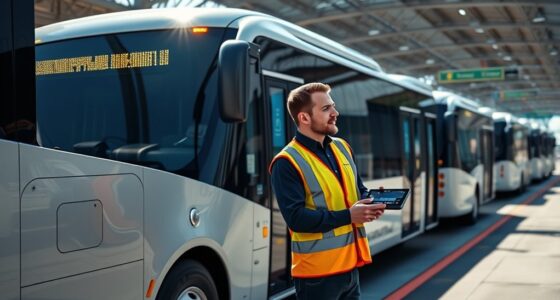

As an electric bus dispatcher, you start your day reviewing overnight updates on charging schedules and station readiness. You monitor vehicle locations and battery levels, adjusting routes and charging plans in real-time to prevent delays. You coordinate with maintenance teams to resolve technical issues swiftly and communicate with drivers and passengers about schedule changes or delays. Staying proactive guarantees fleet efficiency and passenger satisfaction—if you keep going, you’ll discover even more about managing this dynamic, high-tech role.
Key Takeaways
- Monitor real-time vehicle statuses, battery levels, and charging station availability to optimize bus dispatch and charging schedules.
- Coordinate with maintenance teams to address technical issues promptly, minimizing service disruptions.
- Communicate schedule updates and delays to drivers, passengers, and public information channels effectively.
- Adjust routes and charging plans dynamically based on changing operational conditions and vehicle performance.
- Ensure fleet readiness by prioritizing charging for buses with low batteries and managing operational demands efficiently.

Starting your day as an electric bus dispatcher means diving straight into a busy, tech-driven environment where every decision impacts the fleet’s efficiency. As you arrive, your first task is reviewing the overnight updates on charging schedules. You check the status of each bus’s battery levels and verify that the charging stations are prepared to meet the day’s demands. Coordinating charging times is essential—overlapping schedules can cause delays, so you adjust plans based on real-time data. You might reroute a bus to an available charger or delay a charging session if a bus is needed sooner. This constant juggling helps keep the fleet running smoothly and prevents service interruptions. Incorporating reliable portable energy solutions can enhance charging flexibility and ensure uninterrupted service.
Passenger communication is just as important. You stay connected with drivers and customer service teams to relay updates and manage expectations. If a bus requires a detour or faces a delay, you inform the appropriate channels immediately. Clear, timely communication ensures passengers aren’t left in the dark, reducing frustration and building trust. You might also prepare updates for the public, such as notifications about delays or changes in schedule, which you send out via apps or station displays. Your role involves balancing operational needs with passenger needs, making sure everyone stays informed and confident in the system.
Throughout the day, you monitor the status of each vehicle through your dispatch software. You track real-time locations, battery levels, and operational statuses, adjusting plans as conditions change. When a bus completes a trip, you coordinate its return to the depot for charging or maintenance as needed. If a vehicle’s battery drops below a certain threshold, you prioritize its charging, rearranging routes to accommodate this. Your ability to adapt quickly ensures that buses are always ready for their next run, and the fleet maintains peak performance.
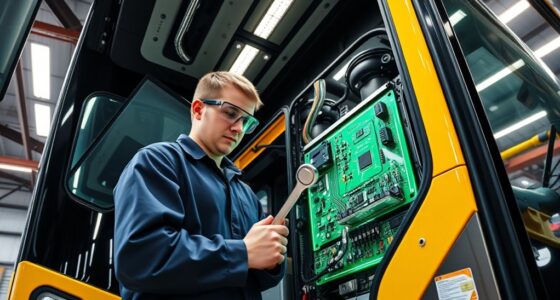
You also collaborate with maintenance teams to address any technical issues that arise. Electric buses are more sensitive to battery health and electrical systems, so you stay alert for alerts or malfunctions. When problems occur, you allocate resources efficiently, scheduling repairs during off-peak hours or rerouting buses to avoid service gaps. Your proactive approach minimizes downtime and keeps the system running seamlessly.
Top picks for "life electric dispatcher"
Open Amazon search results for this keyword.
As an affiliate, we earn on qualifying purchases.
Frequently Asked Questions
What Training Is Required to Become an Electric Bus Dispatcher?
You need training in transportation management and familiarity with charging infrastructure and driver scheduling. Courses in electric vehicle technology help you understand charging needs and battery management. You should also learn about route planning and real-time dispatch software. Hands-on experience with scheduling systems and charging station operations guarantees you can efficiently coordinate drivers and maintain smooth bus operations. This combination prepares you to handle the unique challenges of an electric bus fleet.
How Does Weather Impact Dispatching Decisions?
Weather substantially impacts your dispatching decisions. You rely on real-time weather updates to stay informed about changing conditions like snow, rain, or heat. These updates help you make seasonal route adjustments, ensuring safety and efficiency. When weather worsens, you might reroute buses, adjust schedules, or allocate resources differently. Staying flexible and responsive to weather conditions allows you to maintain reliable service and keep passengers safe during all seasons.
What Software Tools Are Essential for Daily Operations?
Did you know that 85% of dispatchers rely on software for efficiency? You need real-time tracking tools like AVL systems to monitor buses and optimize schedules instantly. Scheduling optimization software helps you adapt to delays, weather, and demand changes quickly. These tools streamline your daily operations, reduce errors, and improve rider satisfaction. Staying updated with the latest dispatch software guarantees you manage your fleet smoothly and respond effectively to any situation.
How Do Dispatchers Coordinate With Maintenance Teams?
You coordinate with maintenance teams by sharing real-time updates on charging schedules and route adjustments. When a bus needs charging or repairs, you notify maintenance promptly, ensuring minimal service disruption. You also collaborate to reschedule routes if maintenance causes delays or requires rerouting. Clear communication keeps operations smooth, helping everyone stay aligned and ensuring electric buses stay charged, functional, and on schedule for ideal passenger service.
What Are Common Challenges Faced During Peak Hours?
During peak hours, you often face unexpected real-time traffic jams and surges in passenger demand. These coincidences make it challenging to stay on schedule, forcing you to quickly reroute buses and adjust departure times. You need to stay alert, constantly monitor traffic updates, and communicate effectively with drivers to guarantee passengers are served efficiently despite these unpredictable obstacles. Your adaptability keeps the system running smoothly amid the chaos.
Conclusion
As you oversee routes, coordinate schedules, and guarantee safety, you become the heartbeat of the electric bus system. You manage challenges, adapt to changes, and keep everything running smoothly. You monitor progress, communicate clearly, and stay committed. You’re the steady hand guiding the fleet, the calm voice in the chaos, and the reliable force behind every successful trip. In your role, you embody dedication, resilience, and purpose — driving the future one electric mile at a time.