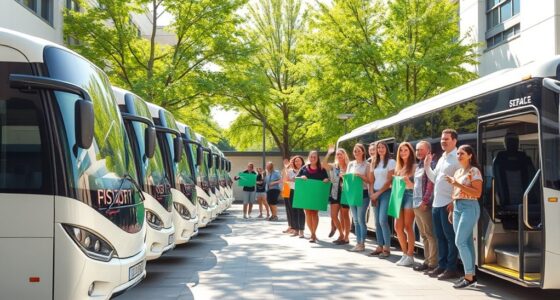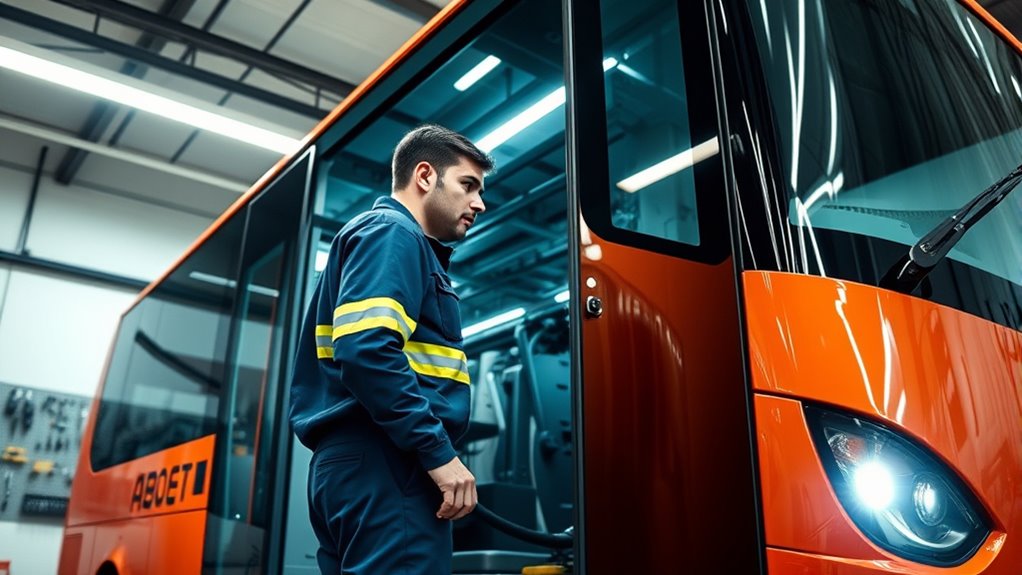

Switching from traditional mechanic work to maintaining electric buses can feel overwhelming at first, but your existing electrical skills give you a solid foundation. To succeed, get specialized training in high-voltage safety, battery systems, and charge protocols through courses and hands-on workshops. Networking with industry professionals and staying current on emerging technologies will also help. Keep progressing step by step—there’s a rewarding future in this growing green industry that you’ll want to explore further.
Key Takeaways
- Leverage existing electrical skills as a foundation for understanding electric bus systems.
- Enroll in specialized EV maintenance courses and participate in hands-on workshops.
- Gain practical experience by working alongside experienced EV technicians to build confidence.
- Stay informed through industry groups, seminars, and updates on safety standards and technologies.
- View the career shift as an opportunity to contribute to sustainable transportation and the green tech industry.

When a mechanic decides to switch careers and learn how to maintain electric buses, it can feel like stepping into uncharted territory. You’re used to diagnosing engine problems, replacing parts, and keeping traditional vehicles running smoothly. Now, you’re faced with a whole new set of skills—EV maintenance—that requires understanding electric systems, batteries, and high-voltage safety protocols. Making this career transition isn’t just about picking up a few new tools; it’s about shifting your mindset and acquiring specialized knowledge to work confidently on electric buses. It’s natural to feel overwhelmed at first, but with the right approach, you’ll soon see that your existing skills provide a solid foundation for mastering EV maintenance. Electric buses rely heavily on electrical systems, so your familiarity with electrical components helps you adapt more quickly. You’ll need to learn about high-voltage safety procedures, battery management, and charging infrastructure. These areas are critical because working with high-voltage systems can be dangerous if you don’t follow proper safety measures. Many of the principles from traditional mechanic work still apply—troubleshooting, diagnostics, and repair techniques—but with a new layer of complexity. To facilitate your career change, consider enrolling in specialized training programs that focus on electric vehicle maintenance. These courses teach you how to handle high-voltage components safely, interpret electrical system diagnostics, and understand battery technology. Hands-on experience is invaluable, so look for opportunities to work alongside experienced EV technicians or participate in workshops to get practical exposure. As you gain more knowledge, you’ll start to see how your old skills translate into the electric vehicle domain, making the learning curve less steep. Building a network of professionals in the EV maintenance field can also accelerate your changeover. Join industry groups, attend seminars, and stay updated on the latest developments in electric bus technology. This ongoing learning process will boost your confidence and keep you informed about new tools, safety standards, and best practices. Remember, this career shift isn’t just about acquiring new skills; it’s about embracing a future where electric buses play a crucial role in sustainable transportation. Your ability to adapt and learn new techniques will open doors to exciting opportunities in the green tech industry. With dedication and the right training, you’ll find that EV maintenance becomes not just manageable, but a rewarding extension of your mechanical expertise. Changing careers may be challenging, but it’s also an investment in a growing field that aligns with the future of mobility. Additionally, understanding home theatre projectors and their features can enhance your ability to visualize and plan for your workspace or personal projects in the future.
Frequently Asked Questions
What Certifications Are Needed to Work on Electric Buses?
To work on electric buses, you’ll need certifications focused on battery safety and charging infrastructure. You should pursue training in high-voltage systems, proper handling of batteries, and safe charging practices. Many programs offer specialized courses or certifications from manufacturers or industry associations. Gaining these credentials guarantees you understand the risks and safety protocols, enabling you to maintain and repair electric buses confidently and safely.
How Long Does It Take to Retrain as an Electric Bus Technician?
They say “time and tide wait for no one,” and the same applies here. It typically takes about 3 to 6 months to retrain as an electric bus technician, focusing on battery management and charging infrastructure. During this period, you’ll learn essential skills like diagnostics and safety procedures, giving you the confidence to maintain electric buses efficiently. Your commitment will pay off as you master this exciting, evolving field.
What Are the Common Challenges Faced When Switching Careers?
During your career shift, you’ll likely face challenges like adapting your existing skills to new technology and overcoming uncertainty. Skill adaptation takes time, and you might struggle with learning electric systems or new tools. You’ll also need to stay motivated through the learning curve and manage any doubts about your ability to succeed. Embracing continuous learning and staying flexible helps you navigate these common challenges effectively.
Is Prior Experience in Electric Vehicles Necessary?
You don’t necessarily need prior experience in electric vehicles, but having battery knowledge and understanding safety protocols helps a lot. If you’re new, don’t worry—training programs focus on these areas, so you’ll learn how to handle high-voltage systems safely. Your mechanical skills provide a strong foundation, and with proper training, you can quickly adapt to maintaining electric buses effectively and confidently.
What Tools Are Essential for Maintaining Electric Buses?
You’ll need essential tools like a high-voltage multimeter for battery diagnostics and specialized charging station connectors. A reliable insulation tester helps guarantee safety when working with electrical systems. Keep a set of insulated gloves and mats handy for protection. These tools enable you to diagnose battery issues, monitor charging stations, and safely maintain electric buses, making your work efficient and safe.
Conclusion
As you step into this new chapter, remember that like a seasoned mechanic tuning a complex engine, you’ve learned to adapt and master fresh skills. The electric bus symbolizes a brighter, cleaner future — a journey fueled by your courage to change. Embrace this transformation with confidence, knowing you’re steering toward innovation. Your journey isn’t just about maintenance; it’s about driving positive change, illuminating the path for others to follow.