

The best software testing resource for students in 2026 is Elevating Software Testing with Artificial Intelligence, because it teaches testing fundamentals while preparing you for the AI-driven tools you’ll actually encounter in modern QA roles. If you’re on a tighter budget or earlier in your journey, Foundations of Software Testing ISTQB Certification, 4th Edition remains the most credential-oriented option, while Effective Software Testing: A Developer’s Guide suits students who want testing skills tightly integrated with coding. The main tradeoff across this category is between practical, tool-specific training (like the Selenium books) and conceptual, career-long foundations (like the ISTQB text). Depth, hands-on exercises, and relevance to entry-level hiring also vary widely. Read on for the full breakdown.

Get business pricing on monitors, keyboards and dev gear
- Business-only prices and quantity discounts
- Tax-exempt purchasing
- Multiple users, one account, clear invoices
Key Takeaways
- AI-flavored titles dominated the top of my ranking because entry-level QA job postings increasingly mention AI-assisted testing, making those skills a differentiator for student resumes.
- The two Full Stack Testing editions are nearly identical; students should buy only the newer ‘Age of AI’ edition unless the older one is heavily discounted.
- Certification-aligned resources (the ISTQB text) deliver the best resume value per dollar, even though they’re weaker for hands-on practice than the Selenium-focused books.
- Selenium-with-Python books assume real programming ability; students without coding background will struggle without supplementary material.
- Context-driven and lessons-learned titles (Lessons Learned in Software Testing) reward readers with some experience but can feel abstract to complete beginners.
| Elevating Software Testing with Artificial Intelligence |  | Best for AI-Curious Testers | Focus: AI-driven software testing and automation | Audience: Developers and QA professionals with some testing background | Level: Intermediate | VIEW LATEST PRICE | See Our Full Breakdown |
| Foundations of Software Testing ISTQB Certification, 4th Edition |  | Best for Certification Prep | Edition: 4th Edition | Alignment: ISTQB Foundation Level certification | Audience: Beginners through experienced testers | VIEW LATEST PRICE | See Our Full Breakdown |
| All You Need to Know About Software Testing: From Beginner to Job-Ready QA Engineer |  | Best Overall | Coverage: Manual testing, automation, APIs, Selenium, Playwright, CI/CD, AI-assisted QA | Audience: Beginners and aspiring QA engineers | Goal orientation: Job readiness | VIEW LATEST PRICE | See Our Full Breakdown |
| Full Stack Testing: A Practical Guide for Delivering High Quality Software in the Age of AI |  | Best Advanced Pick | Focus: Full-stack testing with AI-era quality assurance | Audience: Developers and experienced testers | Level: Intermediate to advanced | VIEW LATEST PRICE | See Our Full Breakdown |
| Full Stack Testing: A Practical Guide for Delivering High Quality Software |  | Best for Developer-Testers | Focus: Full-stack application testing methodologies and best practices | Audience: Developers and testers | Level: Unspecified, roughly intermediate | VIEW LATEST PRICE | See Our Full Breakdown |
| Effective Software Testing: A Developer’s Guide |  | Best for Developer-Minded Students | Format: Print / digital book | Primary Audience: Developers and software engineering students | Focus Area: Testing strategies and best practices for developers | VIEW LATEST PRICE | See Our Full Breakdown |
| Learning Selenium Testing Tools with Python |  | Best for Hands-On Automation Practice | Format: Print / digital book | Primary Tool: Selenium WebDriver | Programming Language: Python | VIEW LATEST PRICE | See Our Full Breakdown |
| Introduction to Software Testing: A Practical Guide to Testing, Design, Automation, and Execution |  | Best All-Round Foundation | Format: Print / digital book | Focus Area: Testing principles, design, automation, execution | Primary Audience: Students, new testers, and developers | VIEW LATEST PRICE | See Our Full Breakdown |
| Software Test Design: Write Comprehensive Test Plans to Uncover Critical Bugs in Web, Desktop, and Mobile Apps | 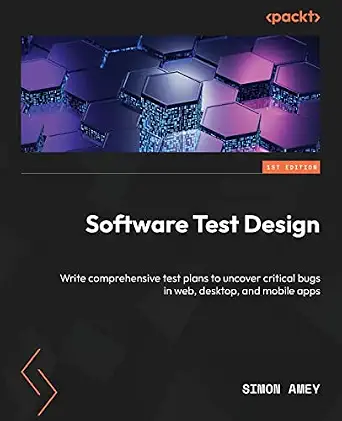 | Best for Test Planning Skills | Format: Print / digital book | Focus Area: Test design and test plan writing | Platforms Covered: Web, desktop, and mobile applications | VIEW LATEST PRICE | See Our Full Breakdown |
| Lessons Learned in Software Testing: A Context-Driven Approach |  | Best for Testing Judgment and Mentality | Format: Print / digital book | Approach: Context-driven testing philosophy | Focus Area: Practical lessons and tester judgment | VIEW LATEST PRICE | See Our Full Breakdown |
| Software Testing with Selenium Automated Testing Tool: Selenium Book for Beginners |  | Best Tool-Specific Starter for Automation | Format: Paperback / digital book | Primary Tool Covered: Selenium | Skill Level: Beginner | VIEW LATEST PRICE | See Our Full Breakdown |
| software testing tools for student | Format |
|---|---|
| Elevating Software Testing wit | Digital |
| Foundations of Software Testin | Print textbook |
| All You Need to Know About Sof | Digital |
| Full Stack Testing: A Practica | Digital |
| Full Stack Testing: A Practica | |
| Effective Software Testing: A | Print / digital book |
| Learning Selenium Testing Tool | Print / digital book |
| Introduction to Software Testi | Print / digital book |
| Software Test Design: Write Co | Print / digital book |
| Lessons Learned in Software Te | Print / digital book |
| Software Testing with Selenium | Paperback / digital book |
More Details on Our Top Picks
Elevating Software Testing with Artificial Intelligence
Most student-focused testing books treat AI as a footnote, but this one puts AI-driven testing front and center. That focus is its greatest strength and its biggest limitation. Compared with All You Need to Know About Software Testing, which dedicates only a chapter to AI-assisted QA, this title goes deeper on automation techniques and machine-enhanced test design — useful for students who want to specialize early in an area where the industry is heading. The tradeoff is breadth: you won’t find foundational material here, so it works best as a second or third book rather than a starting point. The lack of detailed specifications and reviews means buyers are taking something of a chance, but for students already comfortable with testing basics, this pick makes sense as a forward-looking supplement.
Pros:- Focused entirely on AI-driven testing techniques
- Explores automation strategies relevant to emerging industry practices
- Compact entry point into a fast-growing specialization
- Gives students a differentiator for internships and entry-level roles
Cons:- No user reviews available to gauge quality
- Lacks detailed specifications about depth, length, or tooling covered
- Narrow scope — not a standalone testing education
Best for: Students who already know testing fundamentals and want to specialize in AI-augmented automation before entering the job market
Not ideal for: Complete beginners — it assumes prior knowledge and skips the fundamentals that books like Foundations of Software Testing cover
- Focus:AI-driven software testing and automation
- Audience:Developers and QA professionals with some testing background
- Level:Intermediate
- Format:Digital
- Primary topics:AI testing techniques, test automation
- Prerequisites:Familiarity with software testing fundamentals
Our verdict“A forward-looking supplement for students who already have the basics down and want to bet on AI-driven testing skills.”
Foundations of Software Testing ISTQB Certification, 4th Edition
If your goal is a credential that hiring managers actually recognize, this is the clear choice in the roundup. Unlike All You Need to Know About Software Testing, which teaches toward job readiness broadly, this book is built around the ISTQB Foundation Level syllabus, so every chapter maps directly to exam objectives. For students, that alignment matters: certification study doubles as structured learning, and the 4th edition reflects the current standard. The tradeoff is that certification coverage isn’t the same as practical tooling — you won’t get hands-on Selenium or Playwright experience here, so pair it with a tool-specific book like Learning Selenium Testing Tools with Python if you want portfolio-ready skills. Its dry, syllabus-driven structure also reads more like a course text than an engaging primer, which suits disciplined learners better than casual readers.
Pros:- Directly aligned with the ISTQB Foundation Level certification syllabus
- Comprehensive coverage of core testing principles and vocabulary
- Works for both beginners and experienced testers refreshing fundamentals
- Established textbook with a recognized pedigree across editions
Cons:- Textbook tone that can feel dry for self-directed learners
- Little hands-on practice with modern testing tools
- Certification focus means some content prioritizes exams over real-world workflows
Best for: Students preparing for the ISTQB Foundation Level exam who want their study material aligned to the official syllabus
Not ideal for: Learners seeking hands-on automation practice — the tool coverage here is minimal compared with Selenium or Playwright-focused titles
- Edition:4th Edition
- Alignment:ISTQB Foundation Level certification
- Audience:Beginners through experienced testers
- Coverage:Testing principles, techniques, and terminology
- Format:Print textbook
- Style:Structured, syllabus-driven course text
Our verdict“The smartest pick if passing the ISTQB exam is your immediate goal, though you’ll want a tool-focused companion for practical skills.”
All You Need to Know About Software Testing: From Beginner to Job-Ready QA Engineer
This earns the top spot because it matches what most students actually need: a single path from zero knowledge to employable skills. Where Foundations of Software Testing ISTQB Certification sticks to certification theory, this guide spans manual testing, APIs, Selenium, Playwright, CI/CD, and even AI-assisted QA — essentially the full toolkit a junior QA engineer is expected to touch in interviews and first jobs. Compared with Full Stack Testing, it starts at a gentler level while still reaching modern automation topics, which makes it the better on-ramp. The breadth is the tradeoff: covering this much ground means no single topic gets the depth of a dedicated title, so students who fall in love with test automation will outgrow it. Still, as a one-book foundation for a QA career pivot, nothing else in this lineup covers the same ground.
Pros:- Spans the full skill range from manual testing to CI/CD pipelines
- Includes modern tools: Selenium, Playwright, and AI-assisted QA
- Explicitly framed around becoming job-ready, not just passing exams
- Beginner-friendly without stopping at basics
Cons:- Breadth comes at the cost of depth on any single tool
- Sparse detail on editions and technical specifics before buying
- Ambitious scope may overwhelm absolute beginners who rush through it
Best for: Students and career changers who want one comprehensive book covering everything from manual testing basics to modern automation tools
Not ideal for: Learners who already have QA experience — the early chapters will feel redundant and the depth may disappoint
- Coverage:Manual testing, automation, APIs, Selenium, Playwright, CI/CD, AI-assisted QA
- Audience:Beginners and aspiring QA engineers
- Goal orientation:Job readiness
- Format:Digital
- Level:Beginner to intermediate
- Tool focus:Multiple tools covered at introductory depth
Our verdict“The best single purchase for a student going from zero to job-ready QA engineer without buying four separate books.”
Full Stack Testing: A Practical Guide for Delivering High Quality Software in the Age of AI
Think of this as the next step after the beginner guides. Where All You Need to Know About Software Testing gets you job-ready, this title picks up from there, addressing how testing changes when AI enters the development stack — an angle shared with Elevating Software Testing with Artificial Intelligence, but with broader coverage of end-to-end quality practices rather than AI alone. This option stands out for students on software engineering degrees who need to reason about testing across an entire system, not just isolated layers. The tradeoff is accessibility: compared with the gentler entries in this roundup, the material skews technical, and the shortage of worked examples and case studies means you’ll be translating abstract strategies into practice on your own. For a final-year student or someone with developer experience, that challenge is a feature; for a fresh beginner, it’s a wall.
Pros:- Covers testing across the full software stack, not just one layer
- Directly addresses quality assurance in AI-driven development
- Practical strategies rather than pure theory
- Prepares readers for modern, integrated DevOps-style environments
Cons:- Noticeably more technical than beginner-oriented alternatives
- Few detailed examples or case studies to anchor the concepts
- Overlaps thematically with dedicated AI-testing titles without their depth
Best for: Advanced students and junior developers with some coding background who want a system-wide view of testing in AI-era projects
Not ideal for: Beginners — the technical depth and lack of step-by-step examples make it a frustrating first testing book
- Focus:Full-stack testing with AI-era quality assurance
- Audience:Developers and experienced testers
- Level:Intermediate to advanced
- Format:Digital
- Style:Strategy-driven practical guide
- Prerequisites:Solid development or testing background
Our verdict“A strong second-stage book for technically confident students ready to think about testing at the system level.”
Full Stack Testing: A Practical Guide for Delivering High Quality Software
Despite sharing a title with the AI-era edition, this is a different book aimed at a different reader: the developer who owns quality across their own stack. Compared with its AI-focused counterpart, it skips the machine-learning angle and concentrates on proven methodologies, tools, and best practices for testing applications end to end — which some students will actually prefer, since the fundamentals of full-stack testing haven’t been replaced by AI. Set against Effective Software Testing: A Developer’s Guide, the scope here is broader, covering the whole application rather than unit-level discipline alone. That breadth is also the drawback: clarity about the intended experience level is thin, so it sits awkwardly between beginner and intermediate, and students pairing it with a course may find some chapters assume knowledge they don’t yet have. For a student developer building personal projects who wants testing woven into everything they ship, it fills that gap well.
Pros:- Broad, practical coverage of testing across entire applications
- Methodology-focused content that won’t age as fast as tool-specific tutorials
- Well suited to developers who test their own code
- Real-world orientation rather than exam-driven theory
Cons:- Confusingly similar title to the AI-era edition invites mistaken purchases
- Unclear guidance on the intended experience level
- Less hands-on tooling detail than Selenium-specific alternatives
Best for: Student developers building full-stack personal projects who want to integrate testing across their entire application
Not ideal for: Readers deciding between editions — unclear audience-level labeling makes it easy to buy the wrong version of this similarly titled book
- Focus:Full-stack application testing methodologies and best practices
- Audience:Developers and testers
- Level:Unspecified, roughly intermediate
- Format:Print
- Style:Practical, real-world guidance
- AI coverage:Not covered — focuses on established techniques
Our verdict“A solid pick for developer-minded students who want timeless full-stack testing practices — just double-check you’re buying the right edition.”
Effective Software Testing: A Developer’s Guide
Effective Software Testing stands out because it treats testing as part of the developer’s job rather than a separate QA discipline. For students studying software engineering rather than pure QA tracks, that framing matters: you learn strategies you can apply in your own coursework and side projects immediately. Compared with Introduction to Software Testing, which takes a broader survey approach across the whole testing discipline, this book stays anchored to a developer’s workflow, which makes it easier to act on but narrower in scope. The tradeoff is real, though — if your goal is a dedicated tester role or ISTQB certification, Foundations of Software Testing will map more directly to that path. This pick makes the most sense for students who want better testing habits baked into how they write code, not a separate skillset.
Pros:- Frames testing from a developer’s perspective, which is rare among testing books
- Focuses on actionable strategies rather than abstract theory
- Directly improves quality of coursework and personal projects
- Practical enough to apply without a corporate testing environment
Cons:- Developer-centric scope skips QA-process topics like test management and reporting
- Sparse edition and publication details make it hard to confirm you’re getting the latest version
Best for: Computer science students and aspiring developers who want testing skills integrated into how they build software
Not ideal for: Students pursuing dedicated QA analyst roles who need certification-aligned or tester-first material
- Format:Print / digital book
- Primary Audience:Developers and software engineering students
- Focus Area:Testing strategies and best practices for developers
- Coverage:Testing techniques, quality and reliability improvement
- Experience Level:Intermediate
- Companion Code:Concept-driven with practical exercises
Our verdict“Choose this if you’re a coding student who wants testing woven into development rather than treated as an afterthought.”
Learning Selenium Testing Tools with Python
Of the automation-focused options in this roundup, this is the one that gets you writing runnable test scripts fastest. Pairing Selenium with Python is a smart combination for students: Python is the language most CS programs teach first, and Selenium skills translate directly to internships and entry-level QA automation work. Compared with Software Testing with Selenium Automated Testing Tool, which targets complete newcomers to Selenium itself, this book assumes you already know some Python and pushes into scripting, setup, and automation best practices at a working level. That depth is the appeal — and the drawback. There’s little hand-holding if your environment breaks, and the troubleshooting coverage is thin, so expect to lean on Stack Overflow. For students who learn by doing rather than reading theory, this option stands out over more conceptual picks like Lessons Learned in Software Testing.
Pros:- Teaches a directly employable skill stack: Selenium plus Python
- Step-by-step tutorials that produce working test scripts
- Covers setup through best practices, not just syntax
- Strongest hands-on automation focus in this roundup
Cons:- Weak troubleshooting guidance when browser or driver setups fail
- Too advanced for students without prior programming experience
Best for: Students with basic Python skills who want to build a portfolio of automated web testing projects
Not ideal for: Absolute beginners with no programming background, who will hit a wall early
- Format:Print / digital book
- Primary Tool:Selenium WebDriver
- Programming Language:Python
- Focus Area:Automated web application testing
- Experience Level:Intermediate — basic Python assumed
- Hands-On Content:Examples and guided tutorials throughout
Our verdict“If you already code in Python and want practical automation experience for your resume, this is the most efficient path.”
Introduction to Software Testing: A Practical Guide to Testing, Design, Automation, and Execution
This is the most balanced single-volume introduction in the lineup, and that’s exactly why it earns the all-rounder slot. It walks the full arc — design, automation, and execution — so a student finishing it understands how the pieces connect rather than mastering one slice. Compared with Effective Software Testing, which deliberately narrows to a developer’s viewpoint, this book serves both future testers and future developers, which matters if you’re still deciding which direction your career takes. The flexibility comes at a cost: breadth means some sections read like overviews, and worked examples are thinner in places than a student working alone would want. If you already know you want browser automation specifically, Learning Selenium Testing Tools with Python goes deeper on that one tool. But as a first testing book — the one you buy before you know what you don’t know — this pick makes the most sense.
Pros:- Covers strategy, design, automation, and execution in one coherent arc
- Accessible to beginners while still useful to experienced testers
- Doesn’t assume a developer or tester identity — fits both paths
- Practical framing rather than purely academic
Cons:- Some sections lack detailed examples, forcing supplemental reading
- Breadth over depth — advanced topics get compressed
Best for: Students early in their studies who want one book covering the full testing landscape before specializing
Not ideal for: Readers who need dense worked examples for self-study without an instructor
- Format:Print / digital book
- Focus Area:Testing principles, design, automation, execution
- Primary Audience:Students, new testers, and developers
- Experience Level:Beginner to intermediate
- Approach:Practical guide with strategic and technical coverage
- Scope:End-to-end testing fundamentals
Our verdict“The safest first testing book for undecided students who want the whole picture before committing to a specialty.”
Software Test Design: Write Comprehensive Test Plans to Uncover Critical Bugs in Web, Desktop, and Mobile Apps
Most books in this roundup teach you how to test; this one teaches you how to decide what to test — a skill that separates thoughtful testers from button-clickers. Its focus on writing comprehensive test plans across web, desktop, and mobile platforms makes it unusually valuable for capstone projects, group assignments, and internship interviews, where you’ll be asked to justify a testing strategy, not just execute one. Compared with Introduction to Software Testing, which sketches planning within a broader survey, this book dedicates itself to the discipline of test design, giving it more practical depth in that single area. The flip side: it won’t teach you automation tooling, so pair it with Learning Selenium Testing Tools with Python if scripting is also on your list. Sparse edition details also mean you should verify the printing before purchasing.
Pros:- Dedicated focus on test plan writing — rare among student-level books
- Spans web, desktop, and mobile platforms
- Teaches prioritization: finding critical bugs, not exhaustive testing
- Directly applicable to coursework deliverables and interviews
Cons:- No coverage of automation tools or scripting
- Limited edition and content details make pre-purchase evaluation difficult
Best for: Students preparing for QA internships or capstone projects where structured test plans are expected deliverables
Not ideal for: Students who want to learn automation tooling rather than planning and documentation
- Format:Print / digital book
- Focus Area:Test design and test plan writing
- Platforms Covered:Web, desktop, and mobile applications
- Primary Audience:Aspiring QA engineers and students
- Experience Level:Beginner to intermediate
- Core Outcome:Uncovering critical bugs through planned testing
Our verdict“Pick this when you need to produce professional-grade test plans for school or your first QA role, not to learn tools.”
Lessons Learned in Software Testing: A Context-Driven Approach
This is the veteran of the lineup, and it reads like one. Instead of teaching techniques, it teaches judgment — when a practice fits your context and when it doesn’t. For a student who has already worked through a practical guide like Introduction to Software Testing and wants to think like a senior tester, this book is the natural next step. Compared with everything else here, including Effective Software Testing, it’s the only one that challenges the idea of best practices altogether, which is exactly what makes it valuable — and frustrating. There are few concrete technical examples to copy, and readers expecting scripts or checklists will find it too theoretical. Read it too early and the lessons won’t land; read it after some hands-on experience, including projects built from Learning Selenium Testing Tools with Python, and it changes how you approach every test you write afterward.
Pros:- Teaches context-driven thinking that outlasts any specific tool
- Distills decades of practitioner wisdom into digestible lessons
- Valuable across career stages — it grows with you
- Challenges rote best-practice thinking, building real analytical skill
Cons:- Lacks detailed technical examples to anchor the ideas
- Too abstract for readers who haven’t tested anything real yet
Best for: Students with some hands-on testing experience who want to develop professional judgment rather than more techniques
Not ideal for: Complete beginners seeking step-by-step instruction or code examples
- Format:Print / digital book
- Approach:Context-driven testing philosophy
- Focus Area:Practical lessons and tester judgment
- Primary Audience:Testers at all levels, best after initial experience
- Experience Level:Intermediate to advanced mindset content
- Structure:Lesson-based chapters of practitioner insights
Our verdict“A second or third testing book, not a first — buy it once you’ve tested enough to recognize the situations it describes.”
Software Testing with Selenium Automated Testing Tool: Selenium Book for Beginners
Most books in this roundup, like Introduction to Software Testing, spread their attention across testing theory, design, and execution. This one takes the opposite approach: it goes narrow and deep on a single tool, Selenium, which happens to be the automation framework students are most likely to encounter in internships and entry-level QA roles. That focus is the whole value proposition.
What this pick does well is shorten the distance between reading about testing and actually writing automated tests. The practical examples mean a student can build working scripts early, which builds momentum in a way broader theory guides cannot. Compared with Learning Selenium Testing Tools with Python, this book assumes less prior programming knowledge, making it the more accessible entry point.
The tradeoff is real, though. There’s no coverage of manual testing fundamentals, test strategy, or certification material — students prepping for ISTQB-style exams should look at Foundations of Software Testing instead. The absence of a troubleshooting section also means that when scripts fail in confusing ways, readers are left to search for answers elsewhere. Treat this as a first step into automation, not a complete testing education.
Pros:- Beginner-friendly onboarding to the most in-demand automation tool
- Practical examples let readers write working test scripts quickly
- Single-tool focus creates a clear, achievable learning path
- Lower programming barrier than Python-focused Selenium alternatives
Cons:- No coverage of manual testing, test strategy, or broader QA theory
- Missing a troubleshooting section, leaving readers stuck when automation breaks
- Not useful for certification prep since it skips standardized testing syllabi
Best for: Students who already understand basic testing concepts and want hands-on Selenium automation skills for internships or first QA jobs
Not ideal for: Students preparing for ISTQB certification or those who need broad testing theory — this book covers one tool only, with no exam-aligned material
- Format:Paperback / digital book
- Primary Tool Covered:Selenium
- Skill Level:Beginner
- Focus:Automated testing fundamentals and practical implementation
- Includes Examples:Yes, practical Selenium exercises
- Advanced Topics:Not covered
- Troubleshooting Section:No
- Best Paired With:A general testing theory book such as Introduction to Software Testing
Our verdict“Pick this if you want to move from testing theory to writing real Selenium scripts fast; skip it if you need exam prep or a complete software testing foundation.”

How We Picked
My ranking logic starts with one question: does this resource help a student become employable? That meant weighting resources by how well they align with what entry-level QA and developer roles actually ask for — test design, automation basics, and increasingly AI-assisted workflows. I also judged hands-on practicality, since students learn testing by writing test cases and breaking things, not by reading theory alone. Resources with exercises, runnable code examples, or worked scenarios ranked higher than purely conceptual texts when all else was equal.
From there, I factored in accessibility for beginners, price-to-value ratio on a student budget, and longevity — whether the material stays useful after graduation or expires with a specific tool version. This is why fundamentals-first resources cluster near the top while narrowly tool-specific books sit lower: they’re valuable, but their usefulness depends on the reader already knowing what to do with them.
| software testing tools for student | Format |
|---|---|
| Elevating Software Testing wit | Digital |
| Foundations of Software Testin | Print textbook |
| All You Need to Know About Sof | Digital |
| Full Stack Testing: A Practica | Digital |
| Full Stack Testing: A Practica | |
| Effective Software Testing: A | Print / digital book |
| Learning Selenium Testing Tool | Print / digital book |
| Introduction to Software Testi | Print / digital book |
| Software Test Design: Write Co | Print / digital book |
| Lessons Learned in Software Te | Print / digital book |
| Software Testing with Selenium | Paperback / digital book |
Factors to Consider When Choosing Software Testing Tools For Students
Choosing among software testing resources as a student involves more than picking the highest-rated title. Below are the factors that actually change outcomes, and the mistakes students commonly make when building their learning stack.Match the Resource to Your Career Target
QA analyst, test automation engineer, and developer-who-tests are three different jobs with different reading lists. A student aiming at manual QA and business analysis roles gets more from test design and ISTQB-style material, while someone targeting automation needs Python or Selenium foundations first. Developer-track students should prioritize titles like Effective Software Testing that treat testing as part of writing code. The common mistake is buying books aimed at a role you don’t actually want — many students pick automation books because they sound impressive, then abandon them when the programming prerequisites bite. Work backward from real job postings in your target market before spending anything.
Certification Value Versus Skill Value
ISTQB certification is a genuine door-opener in markets like Europe and India, where some entry-level postings explicitly request it — but the certification itself teaches you vocabulary more than craft. Students should decide whether their local job market rewards credentials or portfolios. If it’s portfolios, the money is better spent on resources that produce auditable projects: a GitHub repo of automated tests beats a certificate on a PDF in many startup hiring processes. A hybrid approach works too: use the ISTQB text for foundations, then apply them in a tool-focused book. What you shouldn’t do is assume certification substitutes for practical ability in technical interviews.
Prerequisites: The Hidden Cost
The most frequent disappointment in this category isn’t bad content — it’s buying material above your current level. Selenium books generally assume working knowledge of Python or Java, and full-stack testing guides assume you’ve already shipped something. Before purchasing, read the introduction and a middle chapter; if the sample code is opaque, the rest of the book will be too. Students without programming background should budget for a beginner coding course alongside any automation title, or start with concept-first resources instead. Filling prerequisite gaps costs time, not just money, so factor that into your semester planning.
Freshness and Tool Versions
Testing tools and practices churn quickly, and a book on an outdated Selenium version or pre-AI workflows can teach habits that are already fading from job descriptions. Check the publication date and whether the author released an updated edition — the difference between the two Full Stack Testing editions in this roundup is exactly this kind of revision. That said, don’t dismiss older conceptual works: books on test design principles and context-driven thinking age far better than tool tutorials. The rule of thumb is that anything tool-specific should be recent, while anything principle-specific can be older. Students buying used copies should verify which edition they’re getting before ordering.
Budget Strategy for Students
Full-price software testing books add up fast, and most students don’t need more than two: one foundations resource and one hands-on automation resource. Libraries, used-book marketplaces, and publisher ebook deals can cut costs by half or more, and many publishers offer student discounts worth checking. Resist the bundle instinct — buying five books you’ll half-read is worse than buying two you’ll finish and practice from. Also weigh free alternatives honestly: quality blogs and documentation can cover tool syntax, but they rarely provide the structured progression a good book offers. Spend your limited budget on structure, and use free material for reference.
Frequently Asked Questions
Should I start with an ISTQB certification book or a hands-on automation book?
If you’re within a year of applying for jobs in a market where ISTQB appears in postings, start there — the certification vocabulary also makes interviews easier to pass. If your market leans toward portfolios and technical screens, start with automation, because a demonstrable project is more persuasive than a certificate you haven’t earned yet. Many students do best with a sequence rather than a choice: foundations first, automation second, since automation without test design skills produces brittle, low-value tests. The one mistake to avoid is starting automation before you can code, which usually ends in frustration and an abandoned book.
Do I need to know Python before buying a Selenium testing book?
For the Selenium-with-Python titles in this roundup, yes — nearly all assume you can read loops, functions, and basic object-oriented code. Without that foundation, you’ll copy examples without understanding them, which doesn’t survive a technical interview. If your Python is weak, spend a few weeks on a free introductory course first, or choose a concept-first testing book and return to automation later. Students who already know Java can often adapt, since Selenium’s API is similar across languages and the testing concepts transfer completely. The prerequisite gap is the single most common reason these books get abandoned midway.
Is it worth learning AI-assisted testing as a student, or is it too early?
The evidence from current job postings suggests it’s worth it now, not later — AI-assisted test generation and maintenance are increasingly listed as nice-to-have skills even for junior roles. Books covering AI in testing, like the top pick in this roundup, teach you to use these tools critically rather than blindly, which is exactly the skill employers want. The risk isn’t learning AI too early; it’s learning only AI tools without the underlying test design judgment to evaluate their output. Pair an AI-focused resource with solid fundamentals and you’ll be ahead of most graduating cohorts. Treat AI familiarity as a differentiator, not a replacement for core skills.
Can one book really take me from beginner to job-ready?
Honestly, no single book does that, despite what some subtitles promise — and the ones claiming it tend to compress too much material too thinly. Job-readiness comes from a combination: conceptual foundations, one automation tool practiced to genuine competence, and a portfolio project you can talk about in interviews. A better framing is to pick one book for breadth and one for depth, then build something real with them. What the best ‘beginner to job-ready’ style books do provide is a roadmap of what to learn next, which is valuable when you don’t know the field’s shape yet. Expect any single title to be one leg of the journey rather than the whole route.
Paper book or ebook for technical testing material?
For tutorials with long code listings, ebooks usually win because you can copy code directly, search terms instantly, and get updated editions that fix errata. Paper works better for the conceptual titles — test design heuristics and lessons-learned material benefit from margin notes and non-linear reading. If you’ll be typing along at a keyboard, which is how automation material actually sticks, the ebook’s copy-paste workflow saves real time. Price is also a factor: technical ebook editions are often 30–50% cheaper, and older editions get steep discounts when new ones ship. Many students end up with one of each — a paper foundations book and an ebook for hands-on work.
Conclusion
For the best overall choice, Elevating Software Testing with Artificial Intelligence earns the top spot because it balances modern relevance with solid fundamentals. For best value, Foundations of Software Testing ISTQB Certification, 4th Edition delivers the most career leverage per dollar, especially in certification-conscious job markets. Students wanting the most advanced treatment should reach for Full Stack Testing: A Practical Guide for Delivering High Quality Software in the Age of AI, the deepest and most current technical resource here. For absolute beginners, Introduction to Software Testing: A Practical Guide assumes the least and builds gradually. Finally, for specific needs: pick Learning Selenium Testing Tools with Python for automation practice, Software Test Design for test-case craft, and Lessons Learned in Software Testing once you have some real experience to reflect on. Whichever you choose, one foundations resource plus one hands-on resource will carry you further than any stack of half-finished books.
Halloween Picks
halloween
As an affiliate, we earn on qualifying purchases.