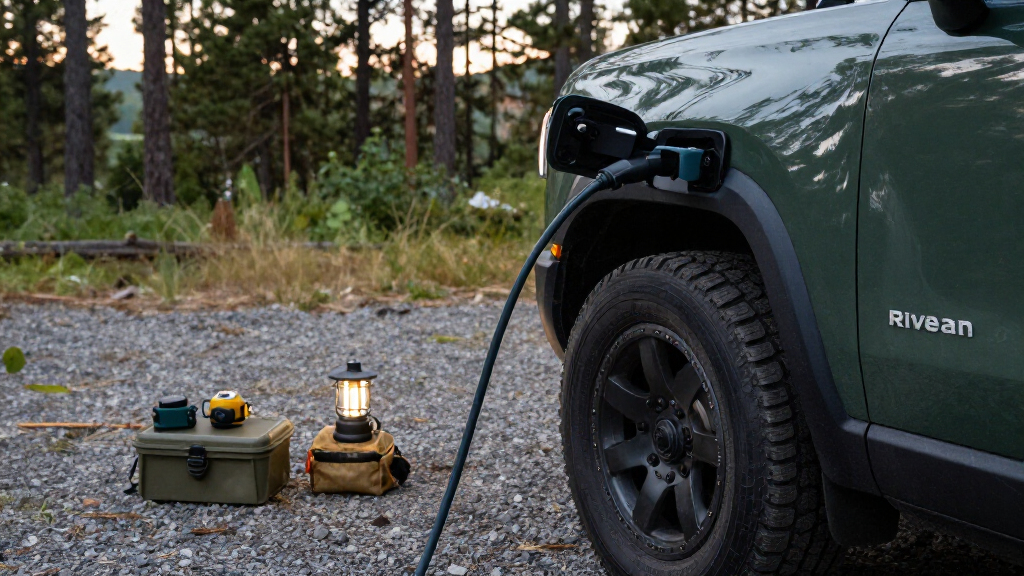
The best Rivian chargers and accessories depend on whether you need faster public charging, a dependable home setup, or a more useful cabin. I rank the Rivian Wall Charger with NACS Connector as the best overall for owners who want a dedicated home charger, while the Amphenol NACS-to-CCS1 adapter stands out for buyers who prioritize certification and build credentials for compatible Superchargers. The EVDANCE portable Level 1/Level 2 charger is a flexible alternative for drivers who need charging options away from a fixed installation. The main tradeoffs are charging location, connector compatibility, cable reach, and whether an accessory adds enough everyday convenience to justify another item to store. Read on for the full comparison and guidance on matching each pick to your Rivian and charging routine.

Get business pricing on monitors, keyboards and dev gear
- Business-only prices and quantity discounts
- Tax-exempt purchasing
- Multiple users, one account, clear invoices
Key Takeaways
- Home charging and public fast charging call for different gear: the Rivian Wall Charger is the dedicated home option, while NACS-to-CCS1 adapters address compatible Tesla Supercharger access.
- Adapter credentials are not interchangeable: the Amphenol listing calls out UL 2252 certification; buyers should verify the exact adapter’s approval, vehicle compatibility, and charging-network requirements rather than choosing by amperage claims alone.
- Portable charging trades convenience for setup limits: the EVDANCE unit offers Level 1 and Level 2 flexibility, but actual charging speed depends on the power source and circuit available.
- Extension cables solve placement problems, not power problems: the 32A WenStorm and 50A J1772 cable differ in current rating, but neither should be treated as a way to raise the capacity of the charger or outlet.
- Cabin accessories meet different needs: TWRAPS phone mounts support positioning, while the dual MagSafe-compatible charger focuses on powering two phones; buyers should check fit and device compatibility before choosing.
| RAMATA NACS to CCS Adapter for Tesla Supercharger |  | Best for Road-Trip Fast Charging | Connector: NACS to CCS | Maximum amperage: 500 A | Maximum voltage: 1000 V | VIEW LATEST PRICE | See Our Full Breakdown |
| WenStorm J1772 EV Extension Cable, 32A, 21 ft |  | Best for Extra J1772 Reach | Connector: SAE J1772 male-to-female | Maximum amperage: 32 A | Voltage: 240 V | VIEW LATEST PRICE | See Our Full Breakdown |
| TWRAPS Dashboard Phone Mount for Rivian R1S and R1T (2021–2027) |  | Best Rivian-Specific Phone Mount | Compatible vehicles: Rivian R1S and R1T | Mounting location: Dashboard AC vent | Attachment: MagSafe-compatible magnetic mount | VIEW LATEST PRICE | See Our Full Breakdown |
| EVDANCE Portable Level 1 and Level 2 EV Charger, 16A, 25 ft Cable |  | Best Portable J1772 Charger | Connector: J1772 | Charging levels: Level 1 and Level 2 | Maximum amperage: 16 A | VIEW LATEST PRICE | See Our Full Breakdown |
| Rivian Wall Charger with NACS Connector |  | Best Home Charger for Newer Rivians | Connector: NACS | Input/output voltage: 240 V AC | Ports: 1 | VIEW LATEST PRICE | See Our Full Breakdown |
| Aipechy NACS to CCS1 Tesla Supercharger Adapter, 500 A, 1000 V |  | Best Compact Supercharger Adapter | Adapter interface: NACS to CCS1 | Compatible charger type: V3/V4 DC Tesla Superchargers | Maximum amperage: 500 A | VIEW LATEST PRICE | See Our Full Breakdown |
| J1772 EV Extension Cable 50A 21FT, Level 2 |  | Best for Extending J1772 AC Charging Reach | Connector: SAE J1772, male-to-female | Cable length: 21 feet | Maximum amperage: 50 A | VIEW LATEST PRICE | See Our Full Breakdown |
| Amphenol NACS to CCS1 DC Adapter for Tesla Supercharger, UL 2252 Certified |  | Best Certified Supercharger Adapter | Adapter interface: NACS to CCS1 | Charger compatibility: Tesla V3/V4 Superchargers and NACS DC fast chargers | Maximum voltage: 1000 V DC | VIEW LATEST PRICE | See Our Full Breakdown |
| TWRAPS Magnetic Dashboard Phone Mount for Rivian R1S and R1T |  | Best Tool-Free Rivian Phone Mount | Compatible vehicles: Rivian R1S and R1T, 2021–2027 | Phone compatibility: MagSafe-compatible iPhones | Mount type: Dashboard insert | VIEW LATEST PRICE | See Our Full Breakdown |
| TWRAPS Dual MagSafe-Compatible Phone Charger for Rivian R1T/R1S, 25W per Side |  | Best for Charging Two Phones | Compatible vehicles: Rivian R1T, 2021–2026; R1S, 2022–2026 | Charging positions: Two phones | Maximum stated output: Up to 25 W per side | VIEW LATEST PRICE | See Our Full Breakdown |
| NACS to CCS1 Adapter for Tesla Supercharger – DC Fast Charging 500 A |  | Best for Road-Trip Portability | Connector type: NACS to CCS1 | Compatible vehicles: CCS1 EVs, including listed Rivian R1T/R1S models | Compatible chargers: Tesla V3 and V4 Superchargers | VIEW LATEST PRICE | See Our Full Breakdown |
| NACS to CCS1 Tesla Supercharger Adapter for Compatible EVs |  | Best for Clearly Specified Protection | Connector type: NACS to CCS1 | Compatible chargers: Tesla V3 Superchargers only | Maximum current: 500 A | VIEW LATEST PRICE | See Our Full Breakdown |
More Details on Our Top Picks
RAMATA NACS to CCS Adapter for Tesla Supercharger
The RAMATA NACS-to-CCS adapter is the pick for Rivian owners whose priority is accessing compatible Tesla Supercharger sites, rather than adding home charging equipment. Its stated 500 A and 1000 V capacity supports high-power DC charging, while the temperature kill switch and weather-resistant, flame-retardant housing address practical concerns when carrying an adapter on the road. Compared with the Rivian Wall Charger with NACS Connector, this is a travel accessory, not a home AC charger—and it only helps where a compatible Supercharger is available and the vehicle and station support the connection. Its broad listed vehicle compatibility is useful for households with more than one EV, but the adapter may feel bulky to pack. I’d skip it if you need a charging unit or a guaranteed fit for an unsupported model.
Pros:- Supports up to 500 A and 1000 V for high-power DC charging where the vehicle and station allow it.
- Broad listed compatibility across multiple EV brands.
- Temperature kill switch adds a safety measure during charging.
- Waterproof, flame-retardant housing and included travel bag suit road use.
Cons:- Requires access to compatible Tesla Supercharger stations and does not function as a standalone charger.
- Vehicle and station compatibility must be checked; broad brand listings do not confirm every model.
- The adapter’s size and weight may take up meaningful space in a travel kit.
Best for: Rivian drivers with a CCS-equipped vehicle who want a travel adapter for compatible Tesla Supercharger locations and can verify vehicle and station support.
Not ideal for: Owners seeking a home charger, drivers without access to compatible Supercharger sites, or anyone whose vehicle model is not confirmed as supported.
- Connector:NACS to CCS
- Maximum amperage:500 A
- Maximum voltage:1000 V
- Listed maximum power:500 kW
- Charging type:DC fast charging
- Compatible devices:Listed for Rivian and multiple other EV brands; verify exact vehicle support
- Safety features:Temperature kill switch; waterproof, flame-retardant housing
- Included:Travel bag
Our verdict“Choose the RAMATA if you need a portable DC adapter for supported Supercharger stops, not a home charging solution like the Rivian Wall Charger.”
WenStorm J1772 EV Extension Cable, 32A, 21 ft
The WenStorm 21-foot J1772 extension is a niche convenience accessory: it adds reach when a compatible Level 2 cable falls short, but it does not charge a Rivian by itself. Its 32 A, 240 V limit makes it a fit for compatible AC setups, not for DC fast charging or Supercharger access. Compared with the EVDANCE Portable Level 1 and Level 2 EV Charger, WenStorm supplies extra cable length but no charging unit; the EVDANCE includes a charger and a 25-foot lead. The IP66 rating and carrying case make WenStorm easier to store and use outdoors, though buyers should verify that their EVSE and vehicle permit an extension cable. It is a poor choice for NACS-only equipment or anyone expecting faster charging from added cable.
Pros:- Adds 21 feet between a compatible J1772 EVSE handle and vehicle inlet.
- IP66 weather resistance supports indoor and outdoor use.
- TPE cable and silver-plated copper conductors are specified for the cable construction.
- Includes a carrying case for storage and transport.
Cons:- Limited to compatible J1772 AC charging setups rated up to 32 A at 240 V.
- Does not support NACS, DC fast charging, or Superchargers.
- It is an extension cable, not a charger, and compatibility with the existing EVSE must be confirmed.
Best for: Rivian owners using compatible J1772 Level 2 equipment who need additional vehicle-side reach at home or at a destination charger.
Not ideal for: Drivers with NACS-only equipment, anyone seeking a complete charger, or buyers who need DC fast charging or Supercharger compatibility.
- Connector:SAE J1772 male-to-female
- Maximum amperage:32 A
- Voltage:240 V
- Maximum power:7.68 kW
- Length:21 ft
- Weight:4 lb
- Material:TPE with silver-plated copper
- Weather resistance:IP66
- Included:Carrying case
Our verdict“Pick WenStorm only when a compatible J1772 setup needs more reach; choose the EVDANCE instead if you need the charging unit itself.”
TWRAPS Dashboard Phone Mount for Rivian R1S and R1T (2021–2027)
For drivers who want a phone positioned within reach without adhesive on the dash, the TWRAPS Rivian dashboard mount offers a vehicle-specific approach. It attaches to an existing AC vent without tools, and its adjustable ball mount lets the driver or passenger side serve as the mounting point. The MagSafe-compatible magnetic attachment also suits Android phones, according to the product details, though the precise phone or case fit should be checked before buying. Compared with the TWRAPS Dual MagSafe-Compatible Phone Charger in this roundup, this is a simpler mount rather than a charging accessory; that keeps the job focused on placement, not power. Its Rivian R1S/R1T fit is a strength for owners of those models, but a limitation for other vehicles. The plastic build is not water resistant, so it is not meant for wet exposure.
Pros:- Attaches to an existing AC vent without tools or adhesive.
- Can be positioned on the driver or passenger side.
- Adjustable ball mount helps tailor phone placement.
- Designed to keep the road view unobstructed.
Cons:- Designed specifically for Rivian R1S and R1T vehicles.
- Not water resistant.
- Magnetic attachment compatibility may depend on the phone or case setup.
Best for: Rivian R1S and R1T drivers who want a tool-free, vent-mounted phone holder and do not need built-in phone charging.
Not ideal for: Owners of other vehicles, buyers who want a phone charger included, or anyone needing a water-resistant mount.
- Compatible vehicles:Rivian R1S and R1T
- Mounting location:Dashboard AC vent
- Attachment:MagSafe-compatible magnetic mount
- Adjustability:Adjustable
- Material:Plastic
- Water resistance:Not water resistant
- Weight:8 oz
- Warranty:1 year
Our verdict“Choose this TWRAPS mount for a straightforward, Rivian-specific phone holder; look to the dual phone charger if charging is part of the goal.”
EVDANCE Portable Level 1 and Level 2 EV Charger, 16A, 25 ft Cable
The EVDANCE portable charger is the flexible pick for Rivian owners whose vehicle accepts J1772 charging and who want one unit for both 120 V and 240 V outlets. It supplies up to 16 A on 240 V or 12 A on 120 V, with a 25-foot cable that can help when the outlet is not close to the parking spot. The LED display provides charging status and error information, while the included adapter and carry bag support occasional travel use. Compared with the WenStorm J1772 extension cable, EVDANCE is a complete charging unit, not just extra reach; WenStorm may suit a setup that already has an EVSE but needs more cable. This charger is limited to J1772 AC charging, and outlet and vehicle compatibility need checking. Tesla vehicles require a separate adapter.
Pros:- Supports Level 1 and Level 2 charging from compatible 120 V and 240 V outlets.
- 25-foot cable offers flexible placement between outlet and vehicle.
- LED display shows charging status and errors.
- Includes a carry bag and 6-20 to 5-15 adapter.
Cons:- Maximum output is 16 A, with up to 3.84 kW listed power.
- Some outlet types and vehicle models are not supported without additional compatibility checks or adapters.
- Tesla vehicles require a separately purchased J1772 adapter.
Best for: Rivian owners with J1772-compatible vehicles who need a portable AC charger for suitable 120 V and 240 V outlets.
Not ideal for: Drivers seeking DC fast charging, NACS-native charging, higher-power Level 2 output, or compatibility with outlets not supported by the included plugs.
- Connector:J1772
- Charging levels:Level 1 and Level 2
- Maximum amperage:16 A
- Voltage:120 V / 240 V
- Listed maximum power:3.84 kW
- Cable length:25 ft
- Plugs:NEMA 6-20; includes 6-20 to 5-15 adapter
- Housing protection:IP66
- Display:LED status and error display
Our verdict“Choose EVDANCE for portable J1772 charging across compatible outlets; pick WenStorm only if you already have a charger and need extra cable reach.”
Rivian Wall Charger with NACS Connector
The Rivian Wall Charger with NACS Connector is the most direct home-charging match here for owners of the specified newer Rivian models. It connects over Wi-Fi for software updates and is listed to deliver up to 25 miles of range per hour for R1S and R1T, or up to 38 miles per hour for R2 under optimal conditions; actual results vary with the vehicle and charging conditions. Unlike the EVDANCE portable charger, this is a wall-mounted, single-connector home unit rather than a charger designed to move between outlets. That makes it a cleaner fit for a dedicated home setup, but its model-year limits matter: the listing specifies 2026-and-newer R1S and R1T and 2027-and-newer R2. Buyers with earlier Rivians should not assume compatibility. The 240 V requirement also makes this a fixed-installation choice, not a travel solution.
Pros:- NACS connector is designed for the specified newer Rivian models.
- Wi-Fi connectivity supports software updates.
- Listed range replenishment is up to 25 miles per hour for R1S and R1T, and up to 38 for R2 under optimal conditions.
- ENERGY STAR certification and a four-year warranty are specified.
Cons:- Compatibility is limited to listed 2026-and-newer Rivian models, with R2 listed from 2027.
- Requires a 240 V home setup and is not a portable charging option.
- Actual charging speed varies with vehicle, power source, temperature, weather, and other conditions.
Best for: Owners of compatible 2026-and-newer Rivian R1S or R1T models, or 2027-and-newer R2 vehicles, planning a dedicated 240 V home charging setup.
Not ideal for: Owners of earlier Rivian model years, drivers needing a portable charger, or households that need a multi-vehicle connector arrangement.
- Connector:NACS
- Input/output voltage:240 V AC
- Ports:1
- Compatible vehicles:R1S 2026+; R1T 2026+; R2 2027+
- Connectivity:Wi-Fi for software updates
- Dimensions:7.8 × 5.5 × 16.3 in (D × W × H)
- Certification:ENERGY STAR
- Warranty:4 years
Our verdict“Choose this as a dedicated home charger only if your Rivian falls within the listed model-year compatibility range.”
Aipechy NACS to CCS1 Tesla Supercharger Adapter, 500 A, 1000 V
The Aipechy NACS-to-CCS1 adapter is a straightforward way for an authorized Rivian driver to add compatible Tesla Superchargers to their DC fast-charging options. Its stated ratings of 500 A, 1000 V, and up to 250 kW suit fast-charging stops, while its compact format is easier to stow than a dedicated charging accessory. Compared with the Amphenol NACS to CCS1 DC Adapter, Aipechy makes a simpler case: it offers a clear 500 A rating, while Amphenol adds UL 2252 certification, an interlock, and thermal protection. The tradeoff is less documented protection detail in the supplied product information. This adapter also depends on vehicle compatibility and automaker-enabled network access; it will not extend AC home charging or work with Level 1 or Level 2 chargers.
Pros:- Supports DC fast charging up to a stated 500 A and 1000 V
- Portable design is suited to vehicle storage
- Provides access to compatible Tesla Superchargers for authorized CCS vehicles
Cons:- Requires confirmation of both vehicle compatibility and network authorization
- Does not work with Level 1 or Level 2 AC chargers
- Product details provide fewer specific safety and certification features than the Amphenol adapter
Best for: Rivian owners with confirmed Tesla Supercharger access who want a compact DC adapter to keep in the vehicle.
Not ideal for: Drivers who lack automaker-enabled Supercharger access, need an AC charging extension, or want the certification and protection details listed for the Amphenol adapter.
- Adapter interface:NACS to CCS1
- Compatible charger type:V3/V4 DC Tesla Superchargers
- Maximum amperage:500 A
- Maximum input voltage:1000 V
- Stated maximum charging power:Up to 250 kW
- Vehicle compatibility:Authorized CCS vehicles, including select Rivian, Ford, and GM models
- Charging type:DC fast charging only
- Portability:Compact; packaged for storage
Our verdict“Choose Aipechy if you want a compact, plainly rated Supercharger adapter and have confirmed your Rivian is authorized to use the network.”
J1772 EV Extension Cable 50A 21FT, Level 2
For a Rivian owner whose charging setup uses a J1772 connector, this 21-foot extension cable addresses a different problem from the NACS adapters in this roundup: it adds reach to compatible AC charging rather than opening access to DC fast chargers. The stated 50 A, 240 V capacity and ETL listing make it a better fit for higher-current Level 2 use than the separate WenStorm 32 A, 21-foot cable, though actual charging remains limited by the EVSE and vehicle. Its IP66 water-resistance claim and indoor/outdoor designation suit a garage or exposed parking arrangement. The main caveat is compatibility: this is for J1772 chargers and vehicles, not a direct extension for Rivian’s native NACS DC fast-charging connection. Confirm the connector setup and the charger maker’s guidance before adding any extension.
Pros:- Adds 21 feet of reach for compatible J1772 charging setups
- Rated for 50 A and 240 V, above the 32 A rating of the other WenStorm extension in this roundup
- ETL Listed and described as IP66 waterproof for indoor or outdoor use
- Includes a carrying case
Cons:- J1772-only connection does not provide direct NACS DC fast-charging access
- A 50 A cable rating does not raise the output limit of the charger or vehicle
- Compatibility and permitted use should be confirmed with the charging-equipment manufacturer
Best for: Rivian owners using a compatible J1772 Level 1 or Level 2 charging setup who need additional cable reach in a garage or outdoor parking area.
Not ideal for: Drivers seeking a Tesla Supercharger adapter, an extension for NACS DC equipment, or a cable for a charging setup whose manufacturer does not permit extensions.
- Connector:SAE J1772, male-to-female
- Cable length:21 feet
- Maximum amperage:50 A
- Voltage:240 V
- Stated wattage:12 kW
- Charging compatibility:J1772 Level 1 and Level 2 chargers and vehicles
- Water resistance:IP66; described as waterproof
- Listing and compliance claims:ETL Listed; UL Certified; SAE J1772 compliant
- Included accessory:Carrying case
Our verdict“Pick this cable when a compatible J1772 AC charger is just out of reach; choose a NACS-to-CCS1 adapter instead for authorized Tesla DC fast charging.”
Amphenol NACS to CCS1 DC Adapter for Tesla Supercharger, UL 2252 Certified
The Amphenol NACS-to-CCS1 adapter is the more safety-documented choice among the Supercharger adapters here. Its UL 2252 certification, SAE J3400-1 compliance, automatic interlock, and thermal switches give buyers more specific safeguards to evaluate than the Aipechy adapter’s listed ratings alone. It is also rated for higher short-duration current—up to 600 A for 10 minutes on liquid-cooled Superchargers, according to the product details—though the 380 A continuous rating is the more useful figure for judging sustained operation. Real charging speed depends on the vehicle and station, not just the adapter. The tradeoff is that Rivian access still requires automaker authorization, and this accessory works only with DC fast chargers. It is not a home AC adapter, nor is it intended for Tesla or CHAdeMO vehicles.
Pros:- CSA-certified to UL 2252 and compliant with SAE J3400-1
- Interlock holds connections while power flows, with thermal switches for temperature protection
- IP67 enclosure and stated outdoor temperature range support varied weather use
- Provides stated current ratings up to 600 A for limited periods on liquid-cooled Superchargers
Cons:- Requires automaker-enabled access and compatible vehicle configuration
- DC fast charging only; it cannot adapt an AC home charger
- Peak current claims are time-limited and actual charging speed depends on the vehicle and station
Best for: Rivian road-trippers with automaker-enabled Supercharger access who prioritize stated safety certification, temperature protection, and a locking connection.
Not ideal for: Drivers without authorized CCS vehicle access to Tesla Superchargers, or anyone looking for an AC home-charging adapter or a Tesla/CHAdeMO vehicle accessory.
- Adapter interface:NACS to CCS1
- Charger compatibility:Tesla V3/V4 Superchargers and NACS DC fast chargers
- Maximum voltage:1000 V DC
- Safety standards:CSA-certified to UL 2252; SAE J3400-1 compliant
- Environmental protection:IP67; Type 3R when connected
- Operating temperature:-40°F to 104°F
- Protection features:Automatic interlock and thermal switches
Our verdict“Choose Amphenol over Aipechy if documented certification and built-in interlock and thermal protection matter more to you than a simpler adapter specification.”
TWRAPS Magnetic Dashboard Phone Mount for Rivian R1S and R1T
This TWRAPS dashboard mount is the most vehicle-specific accessory in this group: it is made for the R1S and R1T dashboard rather than being a general charging adapter or cable. Its base inserts behind the screen without adhesive, screws, or tools, keeping installation reversible; the adjustable ball mount lets a driver position a compatible iPhone without placing the phone across the road view. Compared with the TWRAPS dual MagSafe-compatible charging pad, this mount is simpler and preserves the under-armrest USB-C ports, but it does not charge the phone. MagSafe compatibility also narrows phone choice, and fit is limited to the listed Rivian models and years. Buyers should check their dashboard year and preferred phone position before choosing it over a broader, charging-focused accessory.
Pros:- Installs without tools, adhesive, or screws
- Adjustable 17 mm ball mount allows phone positioning
- Designed to keep the driver’s road view unobstructed
- Made for Rivian R1S and R1T dashboards from 2021–2027
Cons:- Fit is limited to the specified R1S and R1T dashboards
- MagSafe phone mounting is intended for compatible iPhones
- Holds a phone but does not provide charging
Best for: R1S and R1T owners from the listed model years who want a reversible, adjustable dashboard mount for a MagSafe-compatible iPhone.
Not ideal for: Drivers with other vehicles, non-MagSafe phones, or anyone who wants integrated wireless charging rather than a mount.
- Compatible vehicles:Rivian R1S and R1T, 2021–2027
- Phone compatibility:MagSafe-compatible iPhones
- Mount type:Dashboard insert
- Adjustment:Rotatable 17 mm ball mount
- Installation:Tool-free; no adhesive or screws
- Material:Carbon fiber-infused ABS plastic
- Dimensions:5 × 3 × 2 inches
- Weight:14.4 ounces
- Warranty:1 year
Our verdict“Choose this mount for a clean, reversible phone position in a compatible Rivian; choose the TWRAPS dual pad if charging two phones matters more.”
TWRAPS Dual MagSafe-Compatible Phone Charger for Rivian R1T/R1S, 25W per Side
For Rivian households that regularly carry two phones, this dual charging pad offers something the TWRAPS dashboard mount does not: two side-by-side wireless charging positions, each rated up to 25 W. Its no-tool, no-adhesive installation keeps the center-console setup vehicle-specific, while N52 magnets help hold compatible phones in position. The tradeoff is resource use: the pad occupies both under-armrest USB-C ports, so it leaves no port there for another accessory. Its stated fit covers R1T models from 2021–2026 and R1S models from 2022–2026, not 2027 vehicles. Charging depends on phone, case, and vehicle power; the product details also flag possible two-phone interruptions on some Gen 2 vehicles and unreliable AirPods charging. Compared with the single-phone mount, this is more useful for shared trips but less flexible.
Pros:- Charges two compatible phones side by side
- Rated for up to 25 W per charging side
- N52 magnets support phone alignment
- Installs without tools or adhesives
Cons:- Uses both under-armrest USB-C ports
- Not listed as compatible with 2027 R1T or R1S models
- Some Gen 2 vehicles may have interruptions when two phones are connected, and AirPods are not reliable on V4
Best for: R1T and R1S owners within the listed model years who often need to charge two compatible phones in the center console.
Not ideal for: 2027 R1T or R1S owners, drivers who need the under-armrest USB-C ports for other devices, or buyers seeking reliable AirPods charging.
- Compatible vehicles:Rivian R1T, 2021–2026; R1S, 2022–2026
- Charging positions:Two phones
- Maximum stated output:Up to 25 W per side
- Power connection:Two USB-C ports, one per charging side
- Compatible devices:MagSafe-compatible iPhones and wireless-charging Android phones with MagSafe-compatible cases
- Wireless charging magnets:N52
- Input voltages:5 V, 9 V, 12 V, 15 V
- Installation:No tools or adhesives required
- Warranty:One-year replacement warranty
Our verdict“Choose the dual pad over the TWRAPS mount if two compatible phones need charging and you can spare both under-armrest USB-C ports.”
NACS to CCS1 Adapter for Tesla Supercharger – DC Fast Charging 500 A
For Rivian drivers who want a compact adapter for eligible Tesla fast-charging stops, this model emphasizes carryability and rugged protection. Its dual temperature sensors stop charging at 194°F, while the waterproof, flame-retardant construction is suited to travel use. The listed 1000 V/500 A rating describes the adapter’s capacity, not a guarantee of that charging speed; the vehicle, station, and charging conditions determine actual power. Compared with the NACS to CCS1 Tesla Supercharger Adapter for Compatible EVs, this listing highlights lightweight portability and protection, while the other provides more specific details such as IP55 housing and silver-plated copper. The main limitation is station coverage: it is specified for Tesla V3 and V4 Superchargers, not V1/V2 stations, home charging, or other charger types. Check your Rivian’s compatibility before relying on it for a trip.
Pros:- Rated for up to 1000 V and 500 A, with a stated maximum of 250 kW.
- Dual temperature sensors stop charging at 194°F.
- Waterproof, flame-retardant industrial-grade construction.
- Compact, lightweight design is convenient to carry on road trips.
Cons:- The description names Tesla V3 and V4 Superchargers, while excluding V1/V2 and AC charging; station compatibility is narrow.
- The stated maximum power is not a promise of the speed a particular Rivian will receive.
- Vehicle DC fast-charging compatibility must be verified before purchase.
Best for: Rivian R1T and R1S owners who want a portable adapter for compatible Tesla Supercharger stops and prioritize a travel-friendly design.
Not ideal for: Drivers who need an adapter for Tesla V1 or V2 stations, home charging, plug-in hybrids, or a vehicle whose DC fast-charging compatibility has not been confirmed.
- Connector type:NACS to CCS1
- Compatible vehicles:CCS1 EVs, including listed Rivian R1T/R1S models
- Compatible chargers:Tesla V3 and V4 Superchargers
- Maximum current:500 A
- Maximum voltage:1000 V
- Stated maximum power:250 kW
- Temperature control:Dual sensors; charging stops at 194°F
- Color:Black
Our verdict“Choose this adapter if portability and temperature monitoring matter most for your compatible Rivian’s Tesla Supercharger trips, but verify station and vehicle support first.”
NACS to CCS1 Tesla Supercharger Adapter for Compatible EVs
This adapter stands out for buyers who want defined protection details alongside a high current rating. Its IP55-rated housing, silver-plated copper conductor, and 194°F temperature cutoff give shoppers more concrete construction information than the NACS to CCS1 Adapter for Tesla Supercharger – DC Fast Charging 500 A, whose listing instead stresses a lightweight, rugged travel design. The advertised 500 A and 1000 V ratings are substantial, but the listed 500 kW maximum should not be read as the charging speed a Rivian will achieve; vehicle and charger limits govern actual output. Compatibility is the bigger decision point: this product is specified for Tesla V3 Superchargers only, and explicitly excludes V1, V2, V4, home, destination, wall, and mobile chargers. Its tight connection can also take more effort to attach and remove.
Pros:- Specifies an IP55-rated case and silver-plated copper conductor.
- Rated for up to 500 A and 1000 V DC.
- Temperature cutoff stops charging at 194°F (90°C).
- Lists supported vehicle makes and charger exclusions clearly.
Cons:- Compatible with Tesla V3 Superchargers only; V1, V2, V4, and other charger types are excluded.
- Vehicle compatibility is limited and must be checked for the specific model.
- Tight connection can require extra effort to plug in and unplug.
Best for: Rivian owners who have confirmed their vehicle and Tesla V3 station compatibility and prefer an adapter with stated ingress protection and conductor materials.
Not ideal for: Drivers who need compatibility with Tesla V4, V1, or V2 stations, home or destination charging, or an easier-to-handle plug connection.
- Connector type:NACS to CCS1
- Compatible chargers:Tesla V3 Superchargers only
- Maximum current:500 A
- Maximum voltage:1000 V DC
- Maximum power:500 kW
- Temperature cutoff:194°F (90°C)
- Water resistance:IP55
- Conductor material:Silver-plated copper
- Housing material:Glass-fiber-containing PC, UL94 V-0 compliant
Our verdict“Pick this model if your Rivian is confirmed compatible with Tesla V3 and you value explicit housing and conductor specifications over broad station flexibility.”
How We Picked
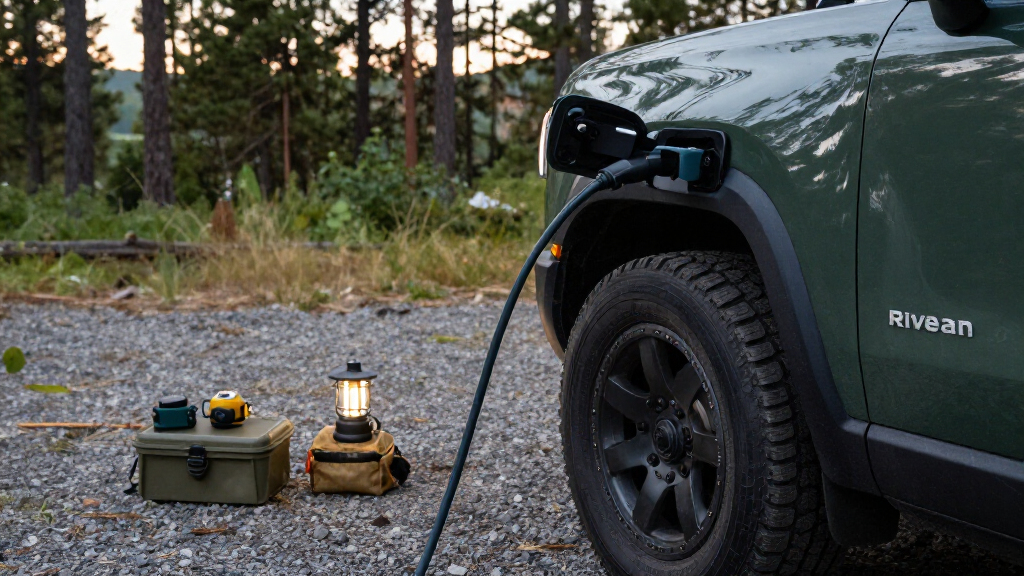
I ranked these 12 options by how directly they address common Rivian ownership needs: home charging, access to public DC fast charging, portable charging, cable reach, and useful cabin upgrades. For chargers and adapters, I prioritized connector compatibility, stated electrical limits, safety or certification information, and how clearly a product’s role is defined. For accessories, I looked at fit for R1T and R1S, the practical problem solved, and whether the added convenience appears worth the extra hardware.
The order reflects use-case breadth and the quality of decision-making information available in each listing, not a claim that every item works with every Rivian or charging station. The Rivian Wall Charger leads as the most direct dedicated home solution; the Amphenol adapter ranks highly for its stated certification, while the portable EVDANCE charger offers more situational flexibility. Similar-looking adapters and cables are separated by disclosed specifications and credentials, and the phone accessories rank below charging equipment because they serve narrower needs. I would verify model-year fit, connector type, circuit capacity, and network eligibility before purchase.
Factors to Consider When Choosing Best Rivian Chargers And Accessories
Before choosing from the best Rivian chargers and accessories, start with the job you need the product to do. A home charger, a public fast-charging adapter, and a J1772 extension cable are not substitutes for one another. The sections below focus on the compatibility and ownership decisions that product listings alone may not settle.
Match the connector to the charging situation
Rivian charging needs can involve different connector standards depending on the vehicle, charging station, and market. A NACS-to-CCS1 DC adapter is intended for compatible DC fast-charging situations, while a J1772 cable or extension belongs to AC charging setups. Do not assume that an adapter advertised for a range of EVs is approved for every Rivian configuration or every network. Check the owner’s manual, current charging-network guidance, and the adapter maker’s compatibility list. A connector that physically fits is not, by itself, proof that the station will authorize charging or that the setup is suitable.
Treat amperage as a limit, not a promise
A charger or cable’s stated amperage does not guarantee that your Rivian will charge at that rate. The vehicle’s onboard charging limits, supply voltage, circuit rating, and station output all shape actual performance. A higher-rated extension cable can provide more capacity headroom than a lower-rated one, but it cannot upgrade a wall outlet or charging unit. Have a qualified electrician assess a home circuit before installing higher-current equipment. For portable chargers, check the plug and required circuit as carefully as the advertised charging level.
Measure the route before buying extra cable
Cable reach matters most when the parking space, outlet, and vehicle charge port do not line up neatly. Measure the real path around walls, posts, and other cars rather than relying only on a straight-line distance. Extra length can reduce daily repositioning, but it also adds bulk and can create a trip or storage problem. An extension should be used only where its manufacturer permits that arrangement and its ratings match the charger and supply. If the cable must cross a driveway or sit outdoors, check the product’s environmental guidance and plan safe storage.
Choose fixed or portable charging around your routine
A dedicated wall charger makes sense when the vehicle regularly returns to the same parking spot and the electrical work is suitable. A portable Level 1/Level 2 unit is more adaptable for travel or changing parking arrangements, but its performance depends on finding the right power source. Avoid buying portable gear as a substitute for checking whether lodging, a workplace, or a destination actually has a usable outlet. If home charging is occasional, a fixed installation may add less value than public charging access or a well-chosen portable option. Think about where charging happens most often, not just which unit has the broadest feature list.
Verify adapter approval and charging-network access
Public DC charging adapters deserve closer scrutiny than ordinary cabin accessories because both the vehicle and the network must support the setup. Compare certification claims, manufacturer documentation, and any network-specific adapter rules before purchase. The Amphenol option in this roundup explicitly names UL 2252 certification, but buyers should confirm that the exact model and their intended use are covered by current documentation. Do not treat a 500A or 1000V headline as a substitute for approval or vehicle compatibility. Keep the adapter’s instructions available and inspect it for damage before charging.
Prioritize cabin accessories by daily use and fit
Phone mounts and charging accessories can improve convenience, but their value depends on how you use navigation and how many devices need power. A mount primarily solves placement and viewing-angle needs; a dual MagSafe-compatible charger is aimed at powering two compatible phones. Confirm that your phone or case supports the relevant magnetic charging standard and that the accessory fits your R1T or R1S model year. Consider whether the mount blocks controls, vents, visibility, or passenger space. A simpler mount may suit one driver better than a more elaborate charging setup, even if the latter offers more features.
Frequently Asked Questions
Can I use any NACS-to-CCS1 adapter with my Rivian at a Tesla Supercharger?
No. Compatibility depends on the Rivian model and software, the specific adapter, and whether the charging site supports your vehicle. Check Rivian’s current guidance and the charging network’s approved-adapter rules before buying or plugging in. A connector that fits does not confirm that a station will start charging. Favor clear manufacturer documentation and stated safety credentials over a high amperage figure alone.
Should I buy a wall charger or a portable Level 2 charger for home?
Choose a wall charger if you expect to charge in one regular parking spot and want a dedicated setup. A portable unit makes more sense if you need to carry it between locations or use different compatible outlets. Neither choice removes the need to check circuit capacity and installation requirements. Compare the total cable reach and storage arrangement as well as the charger itself. If you rarely charge away from home, portability may matter less than a tidy, suitable fixed installation.
Will a J1772 extension cable make my Rivian charge faster?
No: an extension cable adds reach, not charging power. The usable rate remains limited by the charger, electrical circuit, vehicle, and cable rating. A 50A cable may offer more current capacity than a 32A cable, but only when the rest of the setup supports that level. Confirm that the charger maker allows an extension and follow the cable’s instructions. If your goal is faster charging, review the supply and vehicle limits rather than adding length.
What should I check before buying a phone mount for an R1T or R1S?
Confirm the mount’s stated fit for your vehicle and model year, then check how it attaches to the dashboard. Think through the driver’s sightline, access to controls, and whether a passenger’s space is affected. For a magnetic mount, verify that your phone or case has a compatible magnetic arrangement or that the needed attachment is included. If you also want phone charging, a mount and a charging accessory may be separate purchases. Choose based on daily placement and power needs rather than assuming one accessory handles both.
Is the certified adapter automatically the right choice for every Rivian owner?
No. Certification information can help buyers compare safety documentation, but it does not establish compatibility with every vehicle, station, or network. The Amphenol adapter is the roundup’s clearest pick for shoppers who prioritize a stated UL 2252 certification; another adapter could fit a different need if its documentation supports that use. Confirm the exact model number and current network rules before purchase. If you mainly need home charging, an adapter may not address your primary need at all.
Conclusion
For most owners seeking a dedicated home setup, I recommend the Rivian Wall Charger with NACS Connector as the best overall pick. The Amphenol NACS-to-CCS1 adapter is my choice for buyers who put documented certification at the top of their public fast-charging checklist, while the EVDANCE portable charger is the best fit for beginners who want one portable unit for compatible Level 1 and Level 2 outlets. For value, I would start with the accessory that solves a specific routine problem—such as the TWRAPS phone mount for navigation placement—rather than buying extra charging hardware without a clear use. The best premium choice depends on the job: choose the Rivian wall unit for a dedicated home installation, or the dual MagSafe-compatible TWRAPS charger when powering two compatible phones matters. Drivers who need more reach should compare the 32A and 50A J1772 extensions against their circuit and charger limits; drivers seeking Supercharger access should verify adapter approval and vehicle compatibility first.
Black Friday Picks

Vitamix Nano Personal Blender with SmoothiePilot, Black
As an affiliate, we earn on qualifying purchases.