
The best solar panel trackers in 2026 span a wide range, from full dual-axis tracking systems like the GridX-Maverick 2 kW to budget-friendly controller kits and DIY starter platforms. My top pick, the GridX-Maverick 2 kW Dual-Axis Tracker, stands out for its load capacity and weather-aware tracking for 60–72 cell panels, making it the most complete solution for serious home arrays. For smaller setups, the Dual-Axis Tracking System with App Control for 300–500W panels offers smart features at a mid-range price, while the LAFVIN Arduino Starter Kit is the clear choice for hobbyists and students. The main tradeoff you’ll face is between turnkey complete systems and controller-only kits that require you to supply your own motors and frame — the former cost more but work out of the box, while the latter demand wiring skills and mechanical assembly. Load capacity, wind resistance, and whether tracking is sensor-driven or time-based are what separate the top performers from the rest. Keep reading for the full breakdown of all twelve options.

Get business pricing on monitors, keyboards and dev gear
- Business-only prices and quantity discounts
- Tax-exempt purchasing
- Multiple users, one account, clear invoices
Key Takeaways
- The lineup splits into three tiers: complete dual-axis systems (GridX-Maverick, the 300–500W app-controlled system), controller kits that pair with your own motors and frame, and small DIY platforms rated for 8–20W panels only.
- Load capacity is the single biggest filter — most controller kits in this roundup drive motors rather than support panels, so buyers wanting a full tracker must match panel weight to platform rating before anything else.
- Wind sensors were the clearest quality differentiator among mid-range controllers: the BINGOX kit and the Dual Axis kit with sunlight and wind sensors add storm-protection stowing that cheaper controllers like the LAFVIN starter kit lack entirely.
- App control appears on two mid-range options and mostly adds convenience rather than accuracy — sensor-driven tracking performed comparably in daylight responsiveness, so paying extra for app control only makes sense if you want remote monitoring.
- Single-axis options (the Sun Tracking Controller with automatic/manual switch) trade roughly 20–30% of potential gain for simpler mechanics, fewer failure points, and lower cost — often the smarter buy for large single-panel or string setups.


| solar panel tracker | Brand | Model | Weight |
|---|---|---|---|
| Dual Axis Solar Tracker Contro | WQV | 7107STC-SS/WS | — |
| Solar Panel Dual Axis Tracking | — | — | 55.1 lb |
| Dual-Axis Solar Tracker Contro | Jkjhbhged | — | 837 g |
| GridX-Maverick 2 kW Dual-Axis | GridXsolar | MAVUS0619 | 150 lb |
| BINGOX Dual-Axis Solar Tracker | BINGOX | — | 2.2 lb |
| Dual-Axis Solar Panel Tracking | — | — | — |
| Single Axis Sun Tracking Contr | — | ST23092101 | — |
| LAFVIN Solar Tracking Starter | LAFVIN | LA038 | 0.72 kg |
| LeTkingok DIY DC Dual Axis Pan | — | T-5V-12V-24V | 2.75 pounds |
| Aitoserlea 12V 200W Solar Dual | Aitoserlea | — | — |
| LeTkingok Dual-Axis Solar Trac | LeTkingok | TK26-0701 | — |
| DC 12V Small Dual-Axis Automat | — | — | — |
More Details on Our Top Picks
Dual Axis Solar Tracker Controller Kit with Sunlight and Wind Sensors
This WQV kit stands out as the most complete controller package in the roundup, bundling a sunlight sensor, wind sensor, limit sensors, and a remote so a DIYer can wire up a full dual-axis system without hunting for components separately. Compared with the bare-bones Jkjhbhged controller, which ships alone with no sensors at all, the completeness here saves real assembly time. The wind protection leveling and automatic night return translate directly into longer actuator and panel life, since the array parks itself instead of thrashing in storms. Tradeoffs exist: the documentation is thin, southern hemisphere users must reverse settings manually, and there’s no printed manual at all.
Pros:- Complete kit includes sunlight, wind, and limit sensors plus a remote control
- Automatic wind protection and night return extend hardware life
- LCD screen and remote make parameter tuning straightforward
- Works in both northern and southern hemispheres
- Handles motor currents up to 15A for sizable actuators
Cons:- No physical user manual included; instructions must be requested from the seller
- Southern hemisphere setup requires manually reversing the documented procedures
- Remote batteries not included
Best for: DIY builders assembling a dual-axis tracker from actuators and a frame who want every sensor in one box
Not ideal for: Anyone wanting plug-and-play simplicity — you supply your own motors, frame, and panels, and the missing manual means setup takes patience
- Brand:WQV
- Model:7107STC-SS/WS
- Input Voltage:DC 10-28V
- Single Motor Current:<15A
- Display:LCD
- Included Components:Controller, sunlight sensor, wind sensor, limit sensors, remote control
- Remote Power:2 x AAA batteries (not included)
Our verdict“If you’re building a dual-axis tracker yourself and want one box with every sensor covered, this is the most complete starting point.”
Solar Panel Dual Axis Tracking System with App Control, for 300-500W Solar Panels
Most entries here are controllers or mounts you have to combine yourself — this GHRERTX unit is the full tracking system, frame and brains together, aimed squarely at 300-500W rigid panels. Where the GridX-Maverick gives you a mount and makes automation an optional extra, this one ships with intelligent tracking built in: 10-direction light sensing and app control mean no wiring a controller into actuators or sourcing sensors. The claimed up to 30% efficiency gain over fixed mounting is the payoff. The foldable two-part design eases transport, but at 55 pounds this is still a two-person installation, and it won’t accept foldable solar panels — a real limitation for portable-power users.
Pros:- Complete system with tracking intelligence included, no separate controller purchase needed
- App control replaces fiddly onboard menus
- Foldable two-part design simplifies shipping and positioning
- 345° rotation range for genuine all-day sun following
Cons:- 55.1 lb weight makes installation awkward even with the foldable design
- Not compatible with foldable solar panels
Best for: Homeowners with a 300-500W rigid panel who want a turnkey dual-axis tracker instead of piecing together controller, mount, and motors
Not ideal for: Users of foldable or portable solar blankets — compatibility is limited to rigid panels up to 1.1m wide and 25kg
- Compatible Panel Power:300-500W
- Max Supported Panel Width:1.1m
- Max Supported Panel Weight:25kg
- Rotation Range:345°
- Tracking Type:Dual-axis (pitch & pan)
- Control:App control
- Weight:55.1 lb
Our verdict“The pick for buyers who want tracking without a DIY build — just bolt on a rigid panel and go.”
Dual-Axis Solar Tracker Controller, White
This is the stripped-down option: one controller, no sensors, no remote, no accessories. Compared with the WQV kit or the BINGOX bundle, both of which include sunlight and wind sensors, you’re buying just the brain and sourcing everything else yourself — which is exactly the point for tinkerers replacing a failed unit or pairing it with parts already on the bench. The low weight (837g) and simple plastic housing keep it simple to mount. The tradeoffs are real, though: the ambiguous LCD-or-LED display spec means you can’t be certain what interface you’ll get, and the sparse documentation leaves questions about sensor compatibility unanswered. Buy it for the price, not for the polish.
Pros:- Lowest-complexity entry point for dual-axis tracking control
- Lightweight plastic housing at 837g mounts easily
- Supports automatic dual-axis sun tracking
Cons:- No sensors or remote included — everything else must be sourced separately
- Display type ambiguously listed as LCD or LED
- Sparse specifications leave sensor compatibility unclear
Best for: Hobbyists replacing a dead controller or building a tracker from spare sensors and motors already on hand
Not ideal for: First-time builders — with no included sensors, remote, or clear documentation, a complete starter kit like the BINGOX is the better route
- Brand:Jkjhbhged
- Part Number:500289870
- Color:White
- Material:Plastic
- Display Type:LCD or LED
- Weight:837 g
- Package Contents:1 solar tracker controller
Our verdict“A cheap replacement brain for builders who already own the supporting hardware — everyone else should buy a fuller kit.”
GridX-Maverick 2 kW Dual-Axis Solar Tracker for 60–72 Cell Panels
The GridX-Maverick operates on a different scale from everything else here. Where the GHRERTX system carries a single 300-500W panel, this American-made steel-and-aluminum mount holds four 335W panels, upgradeable to eight, and claims up to 40% more generation than fixed racking. The 90 mph wind rating and 10-year all-parts warranty are what separate it from hobby-grade gear — this is infrastructure, not a weekend gadget. The catch is that automation is an optional extra; the base package is a manual tracking mount, so budget accordingly if you want self-following motion. It also requires a set post, so it’s a permanent install with concrete work, not something you reposition around the yard.
Pros:- Holds four 335W panels, upgradeable to eight for future expansion
- Rated for wind loads up to 90 mph
- 10-year all-parts warranty from a US manufacturer
- Modular steel and aluminum construction supports dispersed arrays
Cons:- Automated tracking system is optional, not included
- Requires a set post installation with concrete footing
- At 150 pounds, installation is a multi-person job
Best for: Homeowners building a permanent 1-2kW ground-mounted array who want expansion headroom and a decade of warranty coverage
Not ideal for: Casual or portable setups — it weighs 150 pounds, needs a concreted post, and manual operation is the default
- Brand:GridXsolar
- Model:MAVUS0619
- Maximum Power:2 kW
- Panel Capacity:4 panels (335W each), upgradeable to 8
- Material:Steel and aluminum
- Weight:150 lb
- Warranty:10 years, all parts
Our verdict“The heavy-duty choice for a permanent high-wattage array — provided you pay up for the automation add-on.”
BINGOX Dual-Axis Solar Tracker Controller Kit with LCD, Wind Sensor, and Remote
The BINGOX kit splits the difference between the WQV bundle and the bare Jkjhbhged controller: full sensors, remote, and — the differentiator — an actual printed instruction manual, which the WQV kit notably lacks. Its wind sensor can adjust or lock the tracker in high winds, and the waterproof shell plus 177.8°F operating temperature rating make it the more weather-hardened choice for exposed outdoor mounting. The LCD menu and dual-hemisphere support mean both US and international buyers can set it up without workarounds. The tradeoff is voltage flexibility: at a fixed 24 volts, it’s less adaptable than the WQV’s 10-28V input range, so confirm your actuator system matches before ordering.
Pros:- Wind sensor automatically adjusts or locks tracker position in high winds
- Waterproof shell with high 177.8°F operating temperature rating
- Includes printed instruction manual, sensors, controller, and remote
- Supports both Northern and Southern Hemisphere configurations
Cons:- Fixed 24V voltage rating limits compatibility with 12V systems
- Kit includes controller and sensors only — motors, frame, and panels are separate purchases
Best for: Installers mounting a controller in exposed outdoor locations who want documented setup and wind-lock protection out of the box
Not ideal for: Builders running 12V actuator systems — the fixed 24V rating limits compatibility compared with wider-range controllers
- Brand:BINGOX
- Part Number:RIV287
- Voltage:24 volts
- Display:LCD
- Operating Temperature:Up to 177.8 °F
- Material:Waterproof shell
- Dimensions:9 × 8.2 × 5.3 in
- Weight:2.2 lb
Our verdict“The best-documented, most weather-ready controller kit here — ideal for exposed installs, provided your system runs on 24 volts.”
Dual-Axis Solar Panel Tracking System with App-Controlled Tracker
Unlike the bare controllers from Aitoserlea or top-tool, this option arrives as a full mechanical platform, not just the electronics. That distinction matters: buyers who lack the fabrication skills to build their own frame get a foldable, separable structure that supports rigid panels up to 1.1 m wide and 25 kg, which is enough for most 300–500 W residential panels. The dual-axis pitch-and-pan movement with 10-direction light sensing covers a wider sun path than any single-axis alternative in this roundup. The tradeoff is real, though — the “up to 30%” efficiency gain is a manufacturer claim, not independently verified, and panel size limits rule out oversized or flexible folding panels entirely.
Pros:- Complete platform — no separate frame fabrication or sourcing needed
- Dual-axis tracking captures morning and afternoon sun far better than single-axis control
- Foldable, separable design makes relocation and transport practical
- App control adds convenience the manual-switch controllers lack
Cons:- Panel compatibility capped at 1.1 m width and 25 kg weight
- The 30% efficiency gain is an unverified manufacturer claim
Best for: Homeowners with a rigid 300–500 W panel who want a turnkey dual-axis mount without building their own frame
Not ideal for: Off-grid users with panels wider than 1.1 m or heavier than 25 kg, since the platform physically cannot carry them
- Tracking:Dual-axis (pitch and pan)
- Control:App control
- Panel Compatibility:Rigid, non-foldable panels up to 1.1 m wide
- Maximum Panel Weight:25 kg
- Suggested Panel Power:300–500 W third-party panels
- Light Sensing:10 directions
- Portability:Movable, foldable, separable into upper and lower parts
- Claimed Efficiency Increase:Up to 30% (manufacturer claim)
Our verdict“Buy this if you want a ready-to-run dual-axis platform for a mid-size rigid panel and would rather not assemble one from parts.”
Single Axis Sun Tracking Controller Solar Tracker with Automatic/Manual Switch
Where the LAFVIN starter kit and LeTkingok robot demand coding and assembly, this controller ships factory pre-calibrated for genuine plug-and-play operation — a rarity in this category. Its patented pyramid four-quadrant sensor with onboard MCU analysis and an 80-second tracking cycle keeps panels repositioning without constant micro-adjustments, while night parking and anti-jitter functions prevent the motor wear that plagues cheaper kits. The IP65 enclosure and 20-year sensor rating give it better weather resistance than most DIY alternatives. The main drawbacks are confidence-related: the poorly translated instructions may frustrate first-time installers, and real-world reliability is largely unverified compared with more established names like Aitoserlea.
Pros:- Factory pre-calibration eliminates complex parameter setup
- IP65 waterproof enclosure with aviation plug and 20-year sensor rating
- Both automatic and manual tracking modes for flexibility
- Low power draw with anti-vibration design protects the mechanism
Cons:- Poorly translated instructions can complicate installation
- Very limited real-world usage history makes long-term reliability unproven
Best for: DIY installers who want a weatherproof, pre-calibrated single-axis controller that works out of the box with no parameter tuning
Not ideal for: Buyers who want strong documentation and a proven track record — the translated manual and thin field history make setup risky for beginners
- Model:ST23092101
- Manufacturer:top-tool
- Power Supply:12–24V
- Tracking Frequency:1 minute 20 seconds
- Installation Holes:Approx. 135mm x 52mm
- Light Sensor Cable:2 meters
- Enclosure:IP65 waterproof box with aviation plug
- Dimensions:4.5 x 3.5 x 2 inches, 1 lb
Our verdict“A sensible choice for hands-on installers who value plug-and-play calibration over brand-name documentation.”
LAFVIN Solar Tracking Starter Kit for Arduino IDE
Everything else in this roundup is built to move real panels; the LAFVIN kit is built to teach. It models the light-to-electrical energy conversion behind products like the Dual-Axis App-Controlled Tracker, but at a desktop scale with a step-by-step tutorial and graphical programming code for the Arduino IDE. That structured learning path is what separates it from the LeTkingok pan-tilt robot, which ships hardware but assumes you already know how to drive it. Students get a guided entry into sensors, servo logic, and renewable energy principles in one package. The tradeoff is obvious: there is no path to powering anything practical — no panel mounting, no meaningful wattage — and the 18-and-up age recommendation narrows its classroom audience unless an adult supervises.
Pros:- Step-by-step tutorial and graphical code lower the learning curve dramatically
- Built around the widely supported Arduino IDE ecosystem
- Teaches both electronics and renewable energy principles together
- All-in-one kit — no separate component sourcing needed
Cons:- Purely educational — zero practical power-generation capability
- 18+ age recommendation excludes younger students without adult supervision
Best for: Adult students, hobbyists, and STEM educators teaching solar principles and Arduino programming through guided projects
Not ideal for: Anyone wanting actual energy output — this kit demonstrates tracking concepts but cannot mount or move a real solar panel
- Brand:LAFVIN
- Model:LA038
- Compatibility:Arduino IDE
- Material:Plastic
- Dimensions:11 x 7 x 2 inches
- Weight:0.72 kg
- Included Components:CD with tutorial code
- Recommended Age:18 years and up
Our verdict“Buy it as a learning tool, not a tracker — it is the cheapest way to understand how every other product here works.”
LeTkingok DIY DC Dual Axis Pan Tilt Solar Tracking Robot with High Torque Worm Gear Motors
Sitting between the toy-scale LAFVIN kit and the controller-only Aitoserlea unit, this pan-tilt platform targets makers who need serious mechanical muscle. The all-metal aluminum alloy brackets and 35KG worm gear motors with self-locking capability mean the platform holds position under load without drifting — the exact weakness that undoes lighter plastic builds. Built-in horizontal and vertical limit switches solve the wire-winding problem that plagues continuous-rotation rigs, protecting both cabling and motors over time. Voltage flexibility across 5V, 12V, and 24V also gives it broader integration options than Aitoserlea’s 12V-only unit. The catch: this is hardware without a brain — assembly, wiring, and programming all fall on you, so it suits experienced builders only.
Pros:- All-metal aluminum construction far more stable than plastic alternatives
- 35KG self-locking worm gear motors hold precise position under load
- Limit switches on both axes prevent wire winding and mechanical damage
- Wide 5V/12V/24V voltage support fits many system designs
Cons:- Requires significant technical expertise for assembly and programming
- No controller or sensor included — a separate tracking brain must be sourced
Best for: Experienced makers and integrators who need a rugged, high-torque mechanical platform and can supply their own control logic
Not ideal for: Beginners or anyone wanting a working tracker out of the box — assembly and programming demand real technical skill
- Manufacturer:LeTkingok
- Model:T-5V-12V-24V
- Material:Metal (aluminum alloy)
- Motor Torque:35KG
- Voltage Support:5V, 12V, 24V
- Axes:Dual-axis pan and tilt
- Safety Features:Horizontal and vertical limit switches
- Weight:2.75 pounds
Our verdict“The right pick for builders who already have the electronics handled and need a durable chassis that will not flex or drift.”
Aitoserlea 12V 200W Solar Dual-Axis Automatic Tracking Controller with DC Motor
For buyers who want dual-axis tracking on a budget, this controller undercuts the full Dual-Axis App-Controlled Platform by skipping the frame and app — you bring the panel mount, it brings the brains. The feature set is respectable for the money: night homing returns the panel to its morning start position, anti-jitter logic stops constant motor churn, and the rain-proof, dustproof housing with aviation plugs matches the build quality of the pricier top-tool unit. With 200 W of motor capacity and 10 A output on a 12 V system, it comfortably drives typical DIY linear actuators. The limitations are structural: it is locked to 12 V systems only, unlike top-tool’s 12–24 V range, and the translated documentation leaves installers to work things out on their own.
Pros:- Dual-axis tracking with night homing and manual mode for the price of a basic controller
- 200W / 10A motor capacity handles common linear actuators
- Waterproof, dustproof housing with aviation plug terminals
- No complex configuration required for basic operation
Cons:- 12V-only — incompatible with 24V systems
- Limited, roughly translated documentation
Best for: DIY solar builders assembling their own dual-axis rig who need a capable controller without paying for a complete platform
Not ideal for: Anyone running a 24V system or expecting detailed English documentation to guide installation
- Brand:Aitoserlea
- Part Number:SC23-0411-0001
- Input Voltage:12V
- Max Motor Capacity:200W
- Max Output Current:10A
- Tracking Frequency:20 seconds per minute
- Mounting Holes:Left/Right 58mm, Up/Down 32mm
- Configuration:Biaxial + 2M line
Our verdict“A cost-effective control hub for self-built dual-axis rigs, provided your system runs on 12V and you can tolerate thin documentation.”
LeTkingok Dual-Axis Solar Tracking Controller (TK26-0701)
Most trackers in this roundup are all-in-one kits, but this option flips the equation: you bring the mechanical platform, and it brings the brains. That makes it the right pick for the hands-on builder who already has — or wants to fabricate — a dual-axis frame driven by two brushed DC motors. Compared with the BINGOX kit, which bundles its own sensors and display, the LeTkingok controller trades convenience for control: adjustable parameters let you fine-tune tracking behavior to your exact geometry, and the hemisphere switch means it works globally (with a direction reversal for the southern hemisphere, which is a setup step you can’t skip). The leveling and centering functions are the standout safety feature — the platform returns to a neutral parked position in high wind or at night, reducing storm stress on the frame. The catch is strict compatibility: motors without limit switches are a non-starter.
Pros:- Real-time dual-axis sun tracking with adjustable parameters for custom platforms
- Automatic leveling and centering protects the frame in wind and at night
- Works in both northern and southern hemispheres
- LCD display plus button and infrared remote control for convenient operation
Cons:- Only compatible with platforms using two brushed DC motors with limit functionality
- Southern hemisphere setup requires manually reversing east-west and north-south directions
- No bundled sensors, frame, or motors — total cost and effort depend on your existing hardware
Best for: DIY builders with an existing dual-axis platform using two brushed DC motors and limit switches, who want tunable real-time tracking
Not ideal for: Buyers expecting a complete kit — this is a controller only, with no frame, motors, or sensors included
- Brand:LeTkingok
- Model:TK26-0701
- Output Voltage:24 V DC
- Motor Requirements:Two brushed DC motors
- Limit Functionality:Required
- Controls:Buttons and infrared wireless remote
- Hemisphere Compatibility:Northern and southern
Our verdict“Buy this only if you have a compatible DIY dual-axis platform and want a highly tunable controller rather than a plug-and-play kit.”
DC 12V Small Dual-Axis Automatic Solar Tracking Platform (8KG Load, 20W)
Where the LeTkingok controller demands you supply the mechanics, this ready-to-run platform arrives with motors, drive, and an adjustable limit switch already integrated — the only thing missing is the panel itself. That positions it as the easiest entry point in the roundup for small-scale experiments, with an 8KG load capacity that suits compact 10–50W panels rather than the 300–500W arrays the app-controlled tracking systems handle. The 350° horizontal range genuinely covers a full day of sun, and the sub-0.5W standby draw means the tracker won’t eat the very energy it helps harvest — a real concern with small panels. Tradeoffs are honest ones: the 1°/s pitch speed is leisurely (fine for tracking, sluggish for manual repositioning), and you’ll need to source your own panel and mounting bracket before day one.
Pros:- Fully integrated dual-axis mechanics with built-in adjustable limit switch for safety
- Very low standby power consumption under 0.5W preserves harvested energy
- Wide 350° horizontal rotation range covers full-day sun paths
- Compact footprint and simple 12V DC power make it easy to deploy
Cons:- Solar panel and mounting bracket are not included
- Slow 1°/s pitch rotation speed limits fast repositioning
- 8KG load ceiling rules out mid-size and large panels
Best for: Hobbyists and students running small panels (under 8KG) who want a plug-in dual-axis platform without building any mechanics
Not ideal for: Anyone with larger panels over 8KG or expecting a complete system — the panel and mounting bracket are sold separately
- Manufacturer:Jieotwice
- Power Supply:DC 12V
- Power:20W
- Maximum Load:8KG
- Horizontal Rotation:350° at 9°/s
- Vertical Tilt:±35° at 1°/s
- Standby Power:< 0.5W
- Turntable Base Diameter:200mm
Our verdict“This pick makes the most sense for small-panel hobbyists who want turnkey dual-axis tracking out of the box, not for anyone with heavy panels or a need for included hardware.”
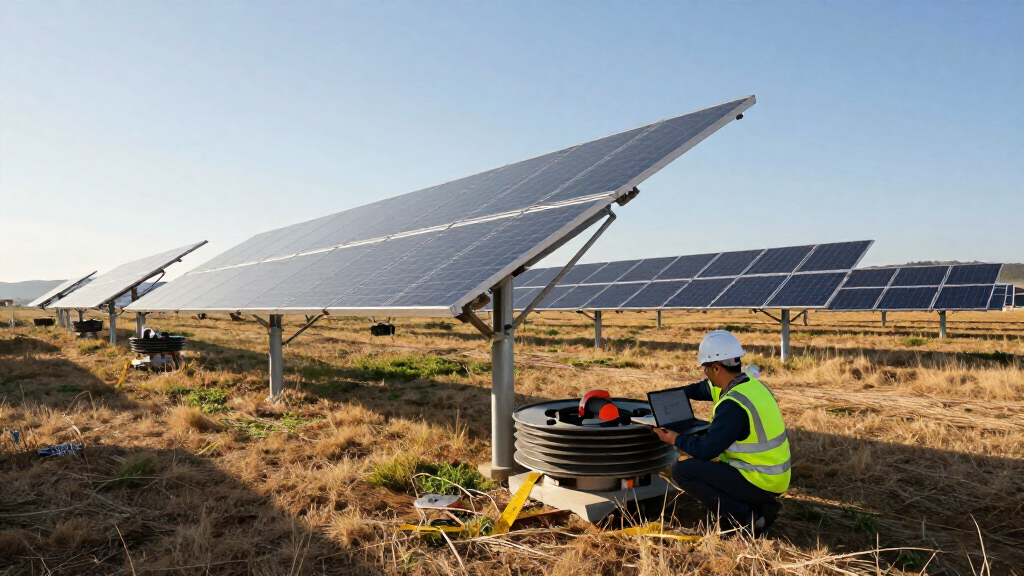
How We Picked
I evaluated each tracker against four buyer-relevant criteria. Load capacity and compatibility came first: a controller that can’t move your panel or a platform that can’t carry its weight is useless regardless of features, so I matched each product to realistic panel sizes. Tracking intelligence came second — sensor-driven dual-axis systems rank above light-sensor-only units, and models with wind stow protection scored higher because unprotected actuators are the most common failure point in storms. Third, I weighed ease of deployment: complete systems with motors and frames bundled rank above bare controllers that assume you already own actuators and a mechanical mount. Finally, I considered versatility and expandability, which is where the Arduino-compatible and DIY platforms earned their places despite modest specs.
The ranking order reflects readiness, not just capability. The GridX-Maverick leads because it combines capacity, weather awareness, and compatibility with standard 60–72 cell panels in one package. App-controlled dual-axis systems follow because they remove assembly guesswork for mid-size arrays. Controller kits fill the middle of the list for buyers upgrading existing mounts, and hobbyist kits sit at the end — they’re excellent learning tools, but they aren’t built to meaningfully increase a home array’s output.
Factors to Consider When Choosing Best Solar Panel Trackers
Before choosing a tracker, it helps to understand what actually drives value in this category — and where buyers most often go wrong. These are the factors that shaped my ranking and the ones I’d weigh against your specific setup.Match the Tracker to Your Panel, Not the Other Way Around
The most common and expensive mistake in this category is buying a controller or platform before confirming it can handle your panel’s weight, dimensions, and wind sail area. A 300W panel weighs four to five times more than the small platforms in this roundup are rated for, and a controller sized for lightweight worm-gear motors will burn out driving heavy linear actuators. Check the load rating in kilograms or pounds, then add a safety margin — panels catch wind like a sail, and dynamic load during gusts far exceeds static weight. Also verify the tracker’s voltage compatibility with your actuators and control board, since mismatched 12V/24V components are the leading cause of dead-on-arrival DIY builds. If your panel is oversized for every complete system here, a pole-mount solution or a professional installer may be the honest answer.
Dual-Axis vs. Single-Axis: Know the Real Gain
Dual-axis trackers follow the sun both east-to-west and seasonally, and in theory capture 30–45% more energy than a fixed mount, compared with roughly 20–30% for single-axis. But theory meets reality in your climate and latitude: at lower latitudes with long summer days, the seasonal tilt benefit of dual-axis shrinks considerably. Dual-axis systems also have twice the moving parts, which means more maintenance, more failure points, and typically shorter lifespans on budget models. Single-axis trackers like the Sun Tracking Controller in this lineup suit homeowners who want a meaningful boost with simpler mechanics. My advice: if you’re tracking fewer than four panels, dual-axis makes sense; for larger arrays, the cost per watt of several single-axis trackers usually beats one dual-axis unit.
Wind Protection Is Not Optional
Every year, thousands of tracker installations fail not from sun-tracking errors but from wind damage to unprotected actuators and frames. Quality controllers include an anemometer or wind sensor that commands the array into a flat stow position when gusts exceed a threshold — the BINGOX kit and the sunlight/wind sensor kit in this roundup both include this. Budget controllers without it leave your panel at whatever angle it happened to be tracking when the storm arrived, which is often the worst possible orientation for wind loading. If you live anywhere with regular storms, treat a wind sensor as a requirement, not a bonus feature. Also check whether the stow behavior is automatic or manually triggered — a manual switch is useless if you’re not home when the weather turns.
Sensor-Driven vs. Time-Based Tracking
Trackers find the sun in one of two ways: light sensors that physically detect the brightest direction, or astronomical algorithms that calculate the sun’s position from date, time, and location. Sensor-driven systems self-correct for haze and partial clouds but can hunt or misalign when light is diffuse — a common complaint with cheap photocell arrays. Algorithmic trackers are rock-steady and never hunt, but they drift if the clock loses sync or the mount isn’t level. Hybrid approaches, common on the app-controlled models here, use sensors for fine adjustment and algorithms as a fallback, and they tend to be the most reliable in variable weather. Whichever you choose, confirm the controller has a return-to-east routine at dusk so the array starts each morning in the right position.
The Controller-Kit Trap: What’s Actually in the Box
Many products labeled “solar tracker” ship as controller boards only — no motors, no frame, no actuators. These kits assume you already have or will source the mechanical hardware, which can double or triple the true cost of your project and demands real wiring and fabrication skill. Before buying, read the included components carefully: a kit with an LCD, remote, and wind sensor but no motors is an upgrade for an existing tracker, not a starter solution. First-time buyers should generally choose a complete system with matched motors and mounting hardware, because mismatched actuator torque and travel distance are extremely common DIY failure modes. The hobbyist kits at the end of this roundup are honest about their scope — they’re for learning and small experiments, not for moving household panels.
When a Tracker Doesn’t Pay: The Economics Question
A tracker only makes financial sense when the extra energy harvested exceeds the tracker’s cost plus maintenance over its lifespan. With panel prices having fallen dramatically, the math has shifted: adding a second fixed panel is often cheaper per watt than adding a tracker to the first one — if you have the space. Trackers earn their cost when roof or ground space is limited, when you need peak output in early morning and late afternoon (off-grid households with battery charging windows, for example), or in off-grid setups where every harvested watt matters. Grid-tied homes with ample south-facing space usually get better returns from simply buying more panels. Be honest about your goal before spending: trackers are a space-efficiency tool more than a savings tool in 2026.
Frequently Asked Questions
How much more energy does a solar panel tracker actually produce?
A well-built dual-axis tracker typically boosts output by 30–45% over a fixed mount, while single-axis systems deliver roughly 20–30%. The gain comes from keeping the panel perpendicular to the sun all day, capturing strong light in early morning and late afternoon when fixed panels produce weakly. Your real-world number depends on latitude, weather patterns, and how much diffuse cloud cover you get — hazy regions see smaller gains because sensor-driven trackers perform worst in flat light. Off-grid users often benefit most, since the extra morning and evening harvest aligns better with battery charging needs. If your current fixed array already covers your usage, the percentage gain matters less than whether the extra energy has somewhere to go.
Can I use a small DIY tracking platform with a full-size home panel?
Almost never, and this is the most common disappointment with budget platforms. Small trackers like the 8KG-load and 20W-rated models in this roundup are built for small experimental panels, not household arrays — a typical 300W panel weighs 18–20 kg and acts as a massive wind sail, which will strip the gears or burn out the motors quickly. Even if the platform survives calm weather, one moderate gust can destroy it, along with your panel. For full-size panels you need either a complete system rated for the panel’s weight with a safety margin, or a controller kit paired with properly sized linear actuators and a welded or heavy bolted frame. The small platforms are excellent for learning, science projects, and charging stations for small devices, which is exactly what they’re designed for.
Are app-controlled trackers worth the extra cost over basic sensor controllers?
App control is a convenience feature, not a performance feature — sensor-driven tracking accuracy is comparable between app and non-app models, since both rely on the same light-sensing hardware to find the sun. What the app genuinely adds is remote monitoring, manual override from your phone, and sometimes scheduling, which is valuable if your tracker is installed somewhere hard to reach or you want to check its status while away. It also usually means firmware updates and configuration through a friendlier interface than DIP switches and buttons. If your tracker sits in your yard and you don’t mind walking to it, a well-built basic controller with a wind sensor delivers the same energy gains for less. Pay for the app when accessibility or monitoring matters, not because you expect better tracking.
Do solar trackers need maintenance, and what fails first?
Yes — and maintenance demand is the hidden cost most buyers underestimate. The moving parts that fail first are actuators and motors, followed by wind-damaged frames and corroded sensor connections. Expect to lubricate pivot points a couple of times a year, inspect wiring for UV damage, and replace actuators every few years on budget models. Wind stow protection dramatically extends lifespan, which is why I weighted it heavily in the rankings — a tracker that flattens itself in storms avoids the single most destructive failure mode. Quality dual-axis systems built with weatherproofed components can last a decade or more, while hobbyist-grade units may need parts within two to three years of daily use. Budget for maintenance the way you would for any mechanical system exposed to weather year-round.
Should I buy one dual-axis tracker or several single-axis trackers for the same budget?
For most budgets and multi-panel setups, several single-axis trackers win on cost per watt and reliability. Dual-axis systems carry a price premium for the seasonal tilt capability, which mainly pays off at higher latitudes or in space-constrained installations. Each dual-axis unit also concentrates risk — if it fails, your entire array stops tracking, whereas distributed single-axis units degrade gracefully one at a time. Single-axis mechanics are simpler, with fewer motors and fewer points of failure, so maintenance costs stay lower across the array. Choose a single dual-axis system when your panel count is small (one to four panels), your space is tight, or you specifically need the elevated winter output that seasonal tilt provides.
Conclusion
After comparing all twelve options, the right choice comes down to what you’re actually tracking. For the best overall pick, the GridX-Maverick 2 kW Dual-Axis Tracker leads on load capacity, wind awareness, and compatibility with standard 60–72 cell panels — it’s the most complete package for a serious home array. For best value, the Dual-Axis Tracking System with App Control for 300–500W panels delivers smart tracking and monitoring without the premium price, and the Single-Axis Sun Tracking Controller with automatic/manual switch is the smart budget route for buyers who accept a smaller gain for simpler mechanics. For beginners and learners, the LAFVIN Solar Tracking Starter Kit for Arduino is the honest entry point — cheap enough to make mistakes on and genuinely educational, while the BINGOX controller kit with LCD, wind sensor, and remote is the better first step for someone upgrading an existing mount. For specific needs: the LeTkingok DIY pan-tilt platform with worm gear motors suits small remote projects and camera-style installations, and the DC 12V small tracking platform fits science projects and compact charging setups. Whatever you choose, match the tracker to your panel’s weight first, confirm wind protection second, and only then compare the convenience features — that order will save you the most money and regret.
Fall Picks
fall essentials
As an affiliate, we earn on qualifying purchases.