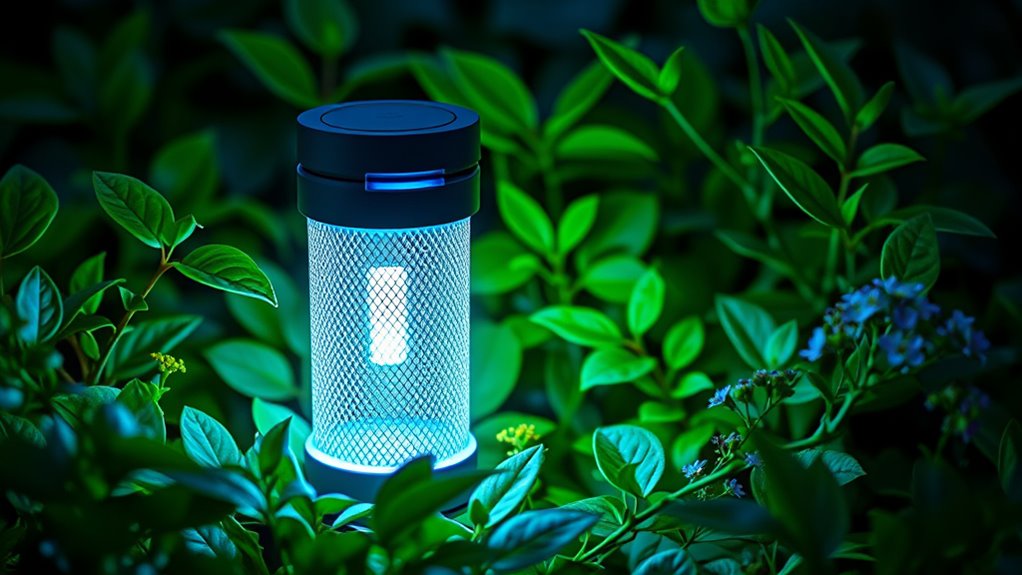

A rechargeable bug zapper lantern combines insect control with portable light, but battery life, charging options, and weather protection vary. I’d choose the Sayneep Solar Bug Zapper as the best overall for its 4-in-1 design, 6000mAh battery, and dusk-to-dawn operation; the PhatroyYee Solar and USB-C model stands out for flexible charging, while the Kittmip 2-pack suits buyers who need two camp lights. Solar convenience can mean slower or less predictable charging, while USB charging adds a step but offers more control. Read on for the full breakdown and help matching a lantern to your patio, campsite, or backup-lighting needs.

Get business pricing on monitors, keyboards and dev gear
- Business-only prices and quantity discounts
- Tax-exempt purchasing
- Multiple users, one account, clear invoices
Key Takeaways
- Sayneep takes the broadest-use lead in this lineup because its 4-in-1 format and 6000mAh battery pair several functions with a stated dusk-to-dawn mode; buyers should still check how the listed modes affect runtime.
- Solar charging is not one consistent advantage: Sayneep, BANPESTT, CXBER, and the dual-panel PhatroyYee favor solar use, while CXBER’s USB backup and the other PhatroyYee model’s USB-C charging give buyers another way to restore power.
- Voltage figures do not tell the whole performance story. The 4200V cordless model and several 4500V models advertise different voltage ratings, but coverage, placement, and upkeep also shape practical results.
- Lighting needs separate scrutiny from bug-zapping claims. Stansport, Otlotrte, Brookstone, JUSENWDSL, and Kittmip explicitly pair the zapper with a lantern or camping light, making their dual-purpose design a clearer fit for camp lighting.
- Multipacks and specialist designs solve different problems: Kittmip’s 2-pack can serve two areas, while the IPX5 PhatroyYee model is the clearer choice for buyers prioritizing stated water resistance.
| Cordless 4200V Rechargeable Bug Zapper for Indoor and Outdoor Use |  | Best Overall | Grid voltage: 4200 V | UV wavelength: 395 nm | Battery capacity: 4800 mAh | VIEW ON AMAZON | See Our Full Breakdown |
| Stansport Insect Zapper and Lantern Combo |  | Best Lantern-First Pick | Light output: 180 lumens | Brightness settings: 3 | Electric grid: 500 V | VIEW ON AMAZON | See Our Full Breakdown |
| Sayneep Solar Bug Zapper Outdoor, 4-in-1 Rechargeable Mosquito Zapper |  | Best for Solar Flexibility | Model: M7 | Battery capacity: 6000 mAh | Runtime: Up to 12 hours | VIEW ON AMAZON | See Our Full Breakdown |
| Otlotrte Cordless Bug Zapper with Rechargeable Battery and Camping Light |  | Best for Waterproof Camping Use | Battery capacity: 4800 mAh | Grid voltage: 4200 V | Coverage area: Up to 2,100 sq. ft. | VIEW ON AMAZON | See Our Full Breakdown |
| BANPESTT Solar-Powered Bug Zapper Lantern |  | Best Compact Solar Lantern | Model: SB-6057M | Power source: Solar or USB-C rechargeable | Grid voltage: 500 V | VIEW ON AMAZON | See Our Full Breakdown |
| CXBER Solar Bug Zapper with USB Backup Charging |  | Best for Flexible Solar Placement | Brand: CXBER | Model: SE563 | Charging: Solar and USB backup | VIEW ON AMAZON | See Our Full Breakdown |
| PhatroyYee Solar Bug Zapper Outdoor with Dual Solar Panels, 4500V Mosquito Zapper |  | Best for Weather-Exposed Outdoor Setups | Brand: PhatroyYee | Model number: A-B570 | Grid voltage: 4500V | VIEW ON AMAZON | See Our Full Breakdown |
| PhatroyYee Solar and USB-C Bug Zapper, 4500V, IPX5 Waterproof |  | Best for Automatic Dusk-to-Dawn Operation | Brand: PhatroyYee | Grid voltage: 4500V | Light wavelength: 365–395 nm | VIEW ON AMAZON | See Our Full Breakdown |
| Brookstone Cordless Rechargeable Lantern Bug Zapper |  | Best for a Soft Night-Light Function | Brand: Brookstone | Model: Fly Trap | Power source: AC listed; product description also says cordless rechargeable | VIEW ON AMAZON | See Our Full Breakdown |
| JUSENWDSL Rechargeable 2-in-1 Bug Zapper and Lamp |  | Best for Multi-Mode Portable Lighting | Brand: JUSENWDSL | Model: DYW-006 | Battery capacity: 2500mAh | VIEW ON AMAZON | See Our Full Breakdown |
| Solar Bug Zapper, 4500V, Waterproof, Indoor and Outdoor |  | Best for Flexible Solar Placement | Grid voltage: 4500V | Charging: Solar or USB | Solar panel: 10W | VIEW ON AMAZON | See Our Full Breakdown |
| Kittmip 3-in-1 USB-Rechargeable Bug Zapper Camp Lantern, 2-Pack |  | Best Two-Pack for Camping | Quantity: 2 lamps | Modes: Spotlight, floodlight, and UV mosquito zapper | Power source: USB rechargeable | VIEW ON AMAZON | See Our Full Breakdown |
| rechargeable bug zapper lantern | Grid voltage | Runtime | Battery capacity |
|---|---|---|---|
| Cordless 4200V Rechargeable Bu | 4200 V | 12–14 hours blue light; 11–13 hours white light; 6–8 hours dual light; 12–14 hours auto mode | 4800 mAh |
| Stansport Insect Zapper and La | — | — | — |
| Sayneep Solar Bug Zapper Outdo | 4200 V | Up to 12 hours | 6000 mAh |
| Otlotrte Cordless Bug Zapper w | 4200 V | Approximately 6–14 hours, depending on mode | 4800 mAh |
| BANPESTT Solar-Powered Bug Zap | 500 V | — | — |
| CXBER Solar Bug Zapper with US | — | — | — |
| PhatroyYee Solar Bug Zapper Ou | 4500V | Up to 12 hours | 4000mAh |
| PhatroyYee Solar and USB-C Bug | 4500V | Up to 12 hours per full charge | — |
| Brookstone Cordless Rechargeab | 800V | — | — |
| JUSENWDSL Rechargeable 2-in-1 | 1400V | Up to 16 hours | 2500mAh |
| Solar Bug Zapper | 4500V | Up to 13 hours | 4000mAh |
| Kittmip 3-in-1 USB-Rechargeabl | — | — | — |
More Details on Our Top Picks
Cordless 4200V Rechargeable Bug Zapper for Indoor and Outdoor Use
For buyers who want the zapper function to take priority over lantern brightness, this is my strongest all-round pick. Its 4200V, 360-degree grid and dual 395 nm UV LEDs are paired with a 4800 mAh battery, while USB-C charging makes topping it up convenient. The dusk-to-dawn sensor can handle nightly switching without manual operation, a useful difference from the Stansport Insect Zapper and Lantern Combo, which puts more emphasis on its 180-lumen lantern. Here, multiple light modes add flexibility, but runtime changes with the setting: dual-light mode lasts only 6–8 hours, compared with 12–14 hours in blue-light or auto mode. It is best used after dark in low-light conditions, so I would not choose it as a bright daytime camping lantern. The washable tray and included brush make cleanup more straightforward.
Pros:- 360-degree 4200V grid with dual 395 nm UV LEDs
- Dusk-to-dawn sensor automates nighttime operation
- USB-C charging and 4800 mAh battery
- Collection tray can be rinsed or brushed clean
Cons:- Dual-light mode runtime is limited to 6–8 hours
- Best suited to low-light conditions after sundown
Best for: Campers and patio users who want a rechargeable, sensor-operated zapper with USB-C charging and easy-to-clean insect collection.
Not ideal for: Buyers who need bright all-purpose lantern lighting or a full night of operation in dual-light mode.
- Grid voltage:4200 V
- UV wavelength:395 nm
- Battery capacity:4800 mAh
- Charging time:2–3 hours
- Runtime:12–14 hours blue light; 11–13 hours white light; 6–8 hours dual light; 12–14 hours auto mode
- Charging port:USB-C
- Sensor:Dusk-to-dawn
- Design:Cordless, portable, 360-degree mesh grid
Our verdict“Choose this for a capable, sensor-operated zapper first and a lantern second, especially if easy cleanup matters.”
Stansport Insect Zapper and Lantern Combo
I would pick the Stansport when usable campsite lighting matters as much as insect control. Its 180-lumen lantern has three brightness settings, and the retractable hook gives it a practical way to hang in a tent or under a shelter. That makes it a more conventional lantern than the Cordless 4200V Rechargeable Bug Zapper, whose stronger grid and sensor-driven modes put zapper performance first. Stansport’s 500V grid is a notably lower-voltage design, so buyers focused on the grid specifications may prefer the 4200V alternative. The zapper can run up to 24 hours, but lantern use ranges from 4 to 18 hours depending on brightness; choosing brighter light means giving up runtime. At just 8 ounces and 3.5 inches across, it is easy to pack, though charging depends on access to a USB connection.
Pros:- 180-lumen lantern with three brightness settings
- Zapper runtime of up to 24 hours
- Retractable hook supports hanging use
- Compact 8-ounce design measures 3.5 × 3.5 × 5 inches
Cons:- 500V grid is lower voltage than the 4200V grids in several alternatives
- Lantern runtime can fall to 4 hours at higher brightness
- Charging requires a USB connection and included micro-USB cord
Best for: Campers who want a compact hanging lantern with selectable brightness and a zapper function for overnight use.
Not ideal for: Buyers prioritizing a high-voltage grid, USB-C charging, or long-lasting bright lantern output.
- Light output:180 lumens
- Brightness settings:3
- Electric grid:500 V
- Zapper runtime:Up to 24 hours
- Lantern runtime:4–18 hours
- Charging:USB rechargeable; 24-inch USB-to-micro-USB cord included
- Dimensions:3.5 × 3.5 × 5 inches
- Weight:8 ounces
- Warranty:1 year
Our verdict“Choose the Stansport if a lightweight, hanging lantern is your main need and the zapper is a useful extra.”
Sayneep Solar Bug Zapper Outdoor, 4-in-1 Rechargeable Mosquito Zapper
The Sayneep is the clearest choice here for outdoor users who want to reduce reliance on a wall charger. Its solar and USB charging give it two ways to recharge, while the 6000 mAh battery is rated for up to 12 hours of operation. The listed IP66 weather resistance and dusk-to-dawn mode also suit a fixed patio or garden position better than the Stansport, whose compact lantern format is easier to carry but lacks listed weather-resistance details. Sayneep claims coverage up to 2,400 square feet, though that figure is a stated product claim rather than a guarantee for every yard. Solar charging can be slow in poor light, so USB remains useful when conditions are cloudy or the unit needs a quicker recharge. Its plastic body is practical, but less premium in feel than buyers seeking a more substantial housing may prefer.
Pros:- Solar and USB charging options
- 6000 mAh battery rated for up to 12 hours
- IP66 weather resistance and automatic dusk-to-dawn mode
- 4200V grid with 365–395 nm attraction range
Cons:- Solar charging may be slow in low-light conditions
- Plastic construction may feel less substantial
- Coverage figure of up to 2,400 sq. ft. is a manufacturer claim
Best for: Patio, garden, and RV owners who can place a zapper outdoors and value solar charging alongside USB backup.
Not ideal for: Campers needing a clearly specified lantern brightness, or buyers who depend on fast solar charging in shaded or cloudy locations.
- Model:M7
- Battery capacity:6000 mAh
- Runtime:Up to 12 hours
- Coverage area:Up to 2,400 sq. ft.
- Grid voltage:4200 V
- Attraction wavelength:365–395 nm
- Charging methods:Solar and USB
- Weather resistance:IP66
- Warranty:3 years
Our verdict“Choose Sayneep for a weather-resistant outdoor zapper with solar and USB charging, rather than for specified lantern performance.”
Otlotrte Cordless Bug Zapper with Rechargeable Battery and Camping Light
Otlotrte suits campers who want one cordless unit for insect control and a camp light, with a useful fallback of plug-in operation when the battery runs low. Its IP67 rating is a stronger stated water-resistance level than the Sayneep’s IP66, making Otlotrte the more compelling option for buyers expecting wet outdoor conditions. Both offer automatic dusk-to-dawn operation, but Otlotrte’s modes include blue, white, combined, and camping-light settings, so the 6–14-hour runtime depends heavily on how it is used. That variability makes it less predictable than the Stansport’s stated zapper runtime of up to 24 hours, though Stansport has a lower-voltage grid and a more explicitly quantified lantern output. Otlotrte’s claimed coverage reaches 2,100 square feet; I would treat that as a stated rating, not a promise for every campsite.
Pros:- IP67-rated waterproof design
- Cordless use with plug-in operation available
- Blue, white, combined, automatic, and camping-light modes
- 360-degree mesh and 4200V grid
Cons:- Runtime ranges from approximately 6 to 14 hours depending on mode
- No lantern lumen output is specified
- Claimed coverage of up to 2,100 sq. ft. may not reflect every setting
Best for: Campers who need a rechargeable zapper and lantern with a high stated water-resistance rating and the option to run plugged in.
Not ideal for: Buyers who need a dependable all-night runtime in every light mode or a specified lumen output for the lantern.
- Battery capacity:4800 mAh
- Grid voltage:4200 V
- Coverage area:Up to 2,100 sq. ft.
- Attraction wavelength:365–395 nm
- Runtime:Approximately 6–14 hours, depending on mode
- Operation:Rechargeable battery or plug-in
- Modes:Blue light, white light, combined lights, automatic mode, camping lantern
Our verdict“Pick Otlotrte for wet-weather camping flexibility and plug-in backup, provided its variable runtime fits your plans.”
BANPESTT Solar-Powered Bug Zapper Lantern
BANPESTT is the compact, simple lantern option for buyers who value flexible charging and a small footprint over detailed runtime information. At 3.14 × 3.14 × 5 inches and 9.6 ounces, it is easy to pack, while solar or USB-C charging offers more flexibility than the Stansport’s USB-only charging setup. Its lantern has three brightness modes, and the IPX6 rating supports outdoor use in wet conditions. The tradeoff is that the product data gives no battery capacity, runtime, or charging time, so I cannot compare its overnight endurance with Stansport’s stated up-to-24-hour zapper operation or the Sayneep’s up-to-12-hour battery runtime. Its 500V grid also differs from the higher-voltage 4200V grids in the Cordless 4200V model and Otlotrte. I would choose it for portability, not for a clearly documented long-running zapper.
Pros:- Solar or USB-C charging
- Three lantern brightness modes
- IPX6-rated design for outdoor use
- Compact 9.6-ounce body
Cons:- Battery capacity, runtime, and charging time are not provided
- 500V grid is lower voltage than the 4200V grids in several alternatives
- ABS construction may not suit buyers seeking a more substantial housing
Best for: Packers and patio users seeking a small solar-or-USB-C lantern-zapper with three brightness levels and outdoor water resistance.
Not ideal for: Buyers who need a specified battery runtime, charging time, or higher-voltage grid for comparing zapper performance.
- Model:SB-6057M
- Power source:Solar or USB-C rechargeable
- Grid voltage:500 V
- Brightness modes:High, medium, low
- Material:ABS
- Dimensions:3.14 × 3.14 × 5 inches
- Weight:9.6 ounces
- Target species:Mosquitoes
Our verdict“Choose BANPESTT for compact size and dual charging, but skip it if dependable, documented runtime is a priority.”
CXBER Solar Bug Zapper with USB Backup Charging
The CXBER is a straightforward choice for buyers who want a cordless lantern-style zapper they can move between a patio, campsite, or indoor spot. Solar charging reduces reliance on an outlet, while USB backup charging gives you another option when sunlight is limited. Its hanging-or-tabletop setup is less specialized than the PhatroyYee A-B570, which adds a ground stake and detailed weather protection, but it keeps placement simple. The tradeoff is that the CXBER is described as mainly for outdoor use and works best in dimmer spaces, so it may be less useful in a bright, busy area. Its reusable design avoids refill pads and sprays, though the listed details do not specify battery capacity, runtime, or a waterproof rating.
Pros:- Solar charging with USB backup offers more power options than a single-source design.
- Cordless, portable body can be hung or placed on a tabletop.
- Suitable for outdoor use and supported for indoor placement.
- Reusable design does not rely on sticky refill pads or spray refills.
Cons:- Designed mainly for outdoor use and works best in dimmer spaces.
- Battery capacity and runtime are not provided in the listed specs.
- No waterproof rating is specified.
Best for: Campers and patio owners who want a simple, portable solar zapper with USB backup and flexible hanging or tabletop placement.
Not ideal for: Buyers who need a specified long runtime, a stated waterproof rating, or strong attraction performance in brightly lit spaces.
- Brand:CXBER
- Model:SE563
- Charging:Solar and USB backup
- Power:Rechargeable, cordless
- Placement:Hanging or tabletop
- Use:Primarily outdoor; indoor use also supported
- Warranty:2 years
- Unit count:1
Our verdict“Choose the CXBER if you want a basic solar-and-USB zapper for flexible placement, but skip it if you need documented runtime or weather protection.”
PhatroyYee Solar Bug Zapper Outdoor with Dual Solar Panels, 4500V Mosquito Zapper
This PhatroyYee model earns its place for buyers who want an outdoor unit with multiple mounting choices and a clearly stated weather-resistance rating. Its stake, hook, and tabletop stand let you position it around a garden or campsite, while the dual adjustable solar panels and extension cord offer more freedom to chase sunlight than the CXBER. The 4500V grid, 4000mAh battery, and stated runtime of up to 12 hours make its power setup more fully documented than the CXBER’s. Solar charging takes 8–10 hours, though USB charging is listed at four hours. The IPX5 rating suits outdoor exposure, but the product notes that the protective housing may be less effective against very small insects if the grid spacing is too wide.
Pros:- IPX5 water resistance is specified for outdoor use.
- Dual adjustable solar panels and an extension cord help with panel placement.
- Stake, hook, and tabletop stand support several installation styles.
- 4000mAh battery and up-to-12-hour runtime are stated.
Cons:- Solar charging takes 8–10 hours, notably longer than the listed four-hour USB charge.
- Protective housing may reduce effectiveness against very small insects.
- The stated coverage is broad, but real-world performance will depend on placement and conditions.
Best for: Gardeners and campers who need a weather-resistant zapper with stake, hanging, and tabletop placement options.
Not ideal for: People targeting very small insects or anyone who needs quick charging without access to USB power.
- Brand:PhatroyYee
- Model number:A-B570
- Grid voltage:4500V
- Battery capacity:4000mAh
- Charging time:Solar: 8–10 hours; USB: 4 hours
- Runtime:Up to 12 hours
- Coverage area:Up to 1/2 acre
- Water resistance:IPX5
- Mounting options:Ground stake, hanging hook, tabletop stand
Our verdict“Pick this PhatroyYee if outdoor mounting flexibility and a stated IPX5 rating matter more than fast solar charging or small-insect performance.”
PhatroyYee Solar and USB-C Bug Zapper, 4500V, IPX5 Waterproof
Compared with the other PhatroyYee in this group, this model emphasizes hands-off dusk-to-dawn operation rather than dual adjustable panels and a listed battery capacity. It pairs a 4500V grid with 365–395 nm light and claims coverage up to 1/2 acre, giving buyers clear headline figures for outdoor use. The included 10-foot solar-panel extension cord can help place the panel in sunlight while keeping the zapper closer to a seating area. USB charging takes about four hours, while solar charging takes roughly ten; the stated runtime is up to 12 hours per full charge. Like the CXBER, it supports solar and USB power, but its IPX5 rating and automatic operation make it the more specified option for outdoor routines. Its runtime still depends on starting with a full charge.
Pros:- Automatic dusk-to-dawn operation reduces the need for manual switching.
- Solar and USB charging provide two ways to recharge.
- IPX5 rating and included hanging and ground-staking accessories suit outdoor placement.
- 10-foot extension cord lets the solar panel sit apart from the zapper.
Cons:- Solar charging takes approximately 10 hours, depending on light conditions.
- Up-to-12-hour runtime requires a full charge.
- Battery capacity is not specified in the supplied product details.
Best for: Patio owners who want a weather-resistant solar zapper that can switch on automatically at dusk and be mounted or staked outdoors.
Not ideal for: Buyers who need a detailed battery-capacity figure, faster solar replenishment, or runtime beyond the stated maximum.
- Brand:PhatroyYee
- Grid voltage:4500V
- Light wavelength:365–395 nm
- Coverage area:Up to 1/2 acre
- Power sources:Solar and USB
- Runtime:Up to 12 hours per full charge
- Charging time:Solar: approximately 10 hours; USB: approximately 4 hours
- Water resistance:IPX5
- Solar-panel extension cord:10 ft (3 m)
Our verdict“Choose this model for automatic outdoor operation and flexible solar-panel placement, but not if you need a stated battery capacity or a shorter solar charge cycle.”
Brookstone Cordless Rechargeable Lantern Bug Zapper
The Brookstone stands apart from the solar-focused PhatroyYee models by combining a lantern-shaped body with four UV LEDs that also provide a soft night light. That dual-purpose approach suits someone who wants a little ambient light alongside insect control, rather than a unit focused on large-area outdoor coverage. Its cordless rechargeable design and hanging-or-tabletop placement support use in more than one setting, and the chemical-free design avoids sprays. The tradeoff is a listed 800V grid, well below the 4500V grids in both PhatroyYee options, and the supplied details do not state runtime, charging method, or weather resistance. The listed dimensions are only 1 × 1 × 1 inch, an unusually small figure that buyers should verify before relying on it as a full-size lantern.
Pros:- Four UV LEDs also provide a soft night-light function.
- Cordless rechargeable design avoids constant outlet placement.
- Can be hung or used on a tabletop.
- Chemical-free and non-toxic operation.
Cons:- The 800V grid is lower than the 4500V grids listed for the PhatroyYee models.
- Runtime, charging details, and weather resistance are not specified.
- Listed dimensions of 1 × 1 × 1 inch are unusually small and may not reflect a practical lantern size.
Best for: Buyers seeking a compact-looking, lantern-style zapper that also supplies a soft night light for a small indoor or sheltered area.
Not ideal for: People who need documented outdoor weather protection, broad coverage, or a clearly specified runtime and charging setup.
- Brand:Brookstone
- Model:Fly Trap
- Power source:AC listed; product description also says cordless rechargeable
- Grid voltage:800V
- UV LEDs:4
- Placement:Hanging or tabletop
- Dimensions:1 × 1 × 1 in
- Number of pieces:1
Our verdict“Consider the Brookstone for a night-light-and-zapper combination in a sheltered setting, but choose a PhatroyYee model for clearer outdoor specs and stronger listed grid voltage.”
JUSENWDSL Rechargeable 2-in-1 Bug Zapper and Lamp
The JUSENWDSL is the strongest fit here for buyers who want a rechargeable lamp as well as a zapper, not just a UV attractor with a faint glow. Its three lighting modes, automatic day-and-night sensing, and stated runtime of up to 16 hours make it more lighting-focused than the Brookstone, whose four UV LEDs provide only a soft night light. A 365–395 nm UV range attracts insects to the 1400V grid, while USB Type-C charging is listed at two to three hours. The compact ABS body is portable, but it does not match the 4500V grids and IPX5 ratings of the PhatroyYee outdoor models. Product content also conflicts over whether the charging port is micro USB or Type-C, and no specific waterproof rating is provided, so I would favor sheltered use.
Pros:- Combines insect zapping with three lamp modes.
- 2500mAh rechargeable battery and up-to-16-hour stated runtime.
- Automatic day-and-night sensing can reduce manual switching.
- Compact 0.45kg design supports portable use.
Cons:- Product information conflicts between micro USB and Type-C charging-port descriptions.
- No specific waterproof rating is provided, unlike the IPX5 PhatroyYee models.
- Its 1400V grid is lower than the 4500V grids listed for the PhatroyYee zappers.
Best for: Campers and household users who want a portable rechargeable lamp with several light settings and automatic sensing alongside bug-zapping functionality.
Not ideal for: Buyers prioritizing a stated waterproof rating, a higher-voltage grid, or certainty about the charging-port type.
- Brand:JUSENWDSL
- Model:DYW-006
- Battery capacity:2500mAh
- Charging port:USB Type-C listed; product content also mentions micro USB
- Charging time:2–3 hours
- Runtime:Up to 16 hours
- UV wavelength:365–395 nm
- Grid voltage:1400V
- Lighting modes and dimensions:3 modes; 3.66 × 3.67 × 3.66 in
Our verdict“Choose the JUSENWDSL when versatile portable lighting matters as much as bug control, but pick an IPX5 PhatroyYee for more clearly specified outdoor weather protection.”
Solar Bug Zapper, 4500V, Waterproof, Indoor and Outdoor
This model suits buyers who want a zapper that can be placed around a yard without relying on a nearby outlet. Its solar and USB charging give it more charging flexibility than the USB-only Kittmip 3-in-1 Camp Lantern, while the ground stakes, hanging chain, and tabletop setup let you position it around different outdoor spaces. Auto mode is useful for a day-charge, night-operation routine, and the stated up-to-13-hour runtime is longer than the Kittmip’s 6–8 hours per charge. The tradeoff is that this is more focused on insect control than versatile campsite lighting. Its manufacturer also recommends regular grid cleaning, and performance is described as better in dark conditions. I’d choose it for a semi-permanent garden or patio spot, not as my main lantern for brightly lit gatherings.
Pros:- Solar and USB charging provide two ways to replenish the battery
- Auto mode supports daytime charging and nighttime operation
- Stake, hanging, and tabletop placement suit different locations
- Stated runtime of up to 13 hours exceeds the Kittmip two-pack’s 6–8 hours per lamp
Cons:- The electric grid needs regular cleaning
- The manufacturer says performance is better at night and in dark environments
- Its insect-control focus offers less lighting versatility than the Kittmip’s spotlight and floodlight modes
Best for: Garden and patio owners who want solar charging, flexible mounting, and a zapper that can stay in one outdoor location
Not ideal for: Campers who need a compact lantern with several useful lighting modes or expect strong zapper performance in bright, busy areas
- Grid voltage:4500V
- Charging:Solar or USB
- Solar panel:10W
- Battery capacity:4000mAh
- Runtime:Up to 13 hours
- USB charging time:About 4 hours
- Water resistance:IPX5
- Coverage area:1 acre
- Placement:Ground stakes, hanging chain, or tabletop
Our verdict“Choose this for a yard or patio where solar charging and flexible placement matter more than multi-mode lantern lighting.”
Kittmip 3-in-1 USB-Rechargeable Bug Zapper Camp Lantern, 2-Pack
The Kittmip set is the more campsite-friendly choice when you want lighting and a zapper in a small package, and getting two lamps makes it easier to cover separate areas or share one with a companion. Each unit switches among spotlight, floodlight, and UV zapper modes, giving it more lighting flexibility than the Solar Bug Zapper’s yard-oriented setup. That compact, multi-use design comes with a shorter 6–8-hour battery life and USB charging only, so it lacks the other model’s solar option and longer stated runtime. The zapper also needs a dark, undisturbed spot to work best, and smaller insects may not contact both grid wires. I’d treat it as a portable camp light with added mosquito-zapping functionality, rather than relying on it as the primary solution for a large outdoor area.
Pros:- Two lamps can serve separate spots or be shared
- Spotlight and floodlight modes add practical lighting beyond the UV zapper
- Compact dimensions make each lamp easy to pack
- IPX5 water resistance suits damp outdoor conditions
Cons:- Battery life is 6–8 hours per lamp, shorter than the Solar Bug Zapper’s stated runtime
- USB charging is the only listed charging method
- Smaller insects may not make contact with both grid wires, and the zapper works best in a dark, undisturbed area
Best for: Campers and outdoor travelers who want two compact, USB-rechargeable lights with zapper functionality for sheltered or dark spots
Not ideal for: Buyers seeking solar charging, longer runtime, or dependable insect control in bright, active outdoor spaces
- Quantity:2 lamps
- Modes:Spotlight, floodlight, and UV mosquito zapper
- Power source:USB rechargeable
- Battery life:6–8 hours
- Water resistance:IPX5
- Material:ABS
- Dimensions per lamp:4.2 in high × 3.3 in wide
- Target species:Mosquitoes
Our verdict“Pick this two-pack if portable multi-mode lighting matters more than solar charging or extended runtime.”

How We Picked
I compared these 12 options as portable, rechargeable lantern-zapper combinations, rather than treating voltage or solar panels as proof of overall superiority. The main criteria were charging flexibility, stated battery capacity or power options, usefulness as a light, portability, and any stated weather-resistance features. I also looked at how clearly each product description explains its combination of functions, since buyers need to know whether they are getting a lantern, a zapper, or both in a useful form.
The ranking favors models with a stronger match between their stated features and a recognizable buyer need. That puts Sayneep first for its mix of capacity, functions, and automatic operation, while USB-C charging and IPX5 protection give one PhatroyYee model a distinct weather-and-power role. Solar-only options remain useful where access to daytime sun matters more than predictable charging; simpler cordless lanterns and the Kittmip two-pack rank for their specific lighting or multi-location use rather than broad feature coverage. Product details supplied here do not establish comparable runtime, coverage area, or charging speed, so I do not treat those as proven advantages.
Factors to Consider When Choosing Rechargeable Bug Zapper Lantern
Choosing well means matching the lantern to where it will sit and how you can recharge it. I’d weigh power access, lighting role, weather exposure, and cleaning routine before comparing voltage numbers, then check the maker’s full specifications for runtime and coverage.
Choose a charging method that fits your routine
Solar, USB, and hybrid charging suit different habits. Solar is appealing for a garden or campsite where the unit can sit in direct sun, but shade, cloudy weather, and short winter days can limit charging. USB or USB-C gives you a more controllable option when a power source is nearby, though you must remember to charge the lantern before heading out. A hybrid model can reduce dependence on either method alone, but only if its backup input is clearly specified. Check whether the listing explains how long charging takes and whether the light can operate while charging; do not assume either behavior.
Treat battery capacity and runtime as separate questions
A large battery figure does not tell you how many hours you will get without knowing how much power the zapper and light consume. A product may run longer with its lantern off, or offer separate modes that change the balance between illumination and insect control. Before buying, look for runtime figures for each mode, not just a headline battery capacity. If those figures are missing, choose a model whose charging method fits frequent top-ups rather than relying on a single charge for a long trip. For overnight camping, a separate backup light can be more dependable than assuming one device will cover every need.
Check what the lantern actually lights
Lantern-style packaging does not guarantee useful area lighting. Consider whether you need a light for a picnic table, a tent, a path, or occasional emergency use; each setting calls for different brightness and placement. Look for stated brightness, light modes, and hanging or standing options, then compare those details with the product’s bug-zapping function. A bright lamp can draw attention away from the intended zapper area, while a dim accent light may not replace a dedicated camp lantern. When specifications are unclear, treat the light as a convenience rather than your sole source of nighttime illumination.
Match weather claims to the place you will use it
Water resistance is not the same as being safe to leave outdoors in every condition. An IP rating, such as IPX5, describes a defined level of water protection, but it does not automatically mean the product is suitable for submersion, storms, or permanent outdoor exposure. Solar models may be intended for outdoor placement, yet their charging panels and ports still need sensible care. Check whether the manufacturer specifies rain exposure, storage, and operating temperature. If you plan to use a lantern near a pool, on an uncovered patio, or in wet camping conditions, prioritize explicit protection details over vague claims such as waterproof.
Plan for cleaning and safe placement
Routine maintenance affects convenience as much as charging does. Zappers collect insect debris, so check whether the design allows easy access to the grid or tray and whether a cleaning brush is included. Follow the manufacturer’s instructions and disconnect power before cleaning; avoid touching the high-voltage grid. Place the device where it can attract insects away from seating and food, and keep it out of reach of children and pets. A less powerful-looking model that is easy to clean and position may be a better fit for regular use than a feature-heavy unit that is awkward to maintain.
Buy for the number of zones, not just the number of devices
A two-pack helps only when you can usefully place both units. Separate lanterns may make sense for a campsite with multiple tents or a yard with distinct seating areas, but duplicating devices does not guarantee broader coverage unless their placement and specifications support it. For a single table or small balcony, one rechargeable lantern may be simpler to charge, store, and clean. Check whether each unit has its own charging accessories and whether the two devices can be operated independently. Avoid treating a multipack as a substitute for stated coverage information.
Frequently Asked Questions
Should I choose a solar bug zapper lantern or one with USB-C charging?
Choose based on when and where you can recharge it. Solar makes more sense when the lantern can receive steady direct sunlight between uses and you prefer fewer charging cables. USB-C suits buyers who want to top up from a wall adapter or compatible power bank, especially before a trip or during a spell of poor weather. A model with both solar and a wired backup can offer more flexibility, but confirm that the listing supports both methods and check charging-time details. Neither charging type alone tells you how long the zapper and light will run.
Can a rechargeable bug zapper lantern replace my regular camping lantern?
Only if its lighting specifications meet your needs. Some products explicitly pair a zapper with a camping light or lantern, but that label does not confirm brightness, beam spread, or runtime with the light switched on. Check those figures and see whether light and zapper modes can run together. If you need dependable light for cooking, reading, or navigating a campsite, carry a separate lantern unless the product provides suitable details. The combined unit can still be useful as an extra light near a seating area.
Does a higher voltage rating mean a bug zapper lantern will work better?
Not by itself. This roundup includes products listing 4200V and 4500V ratings, but those figures do not establish how much area a unit covers or how well it works in a particular setting. Placement, the lantern’s design, insect activity, and maintenance all affect what buyers experience. Compare the manufacturer’s coverage and operating guidance when available rather than selecting by voltage alone. If comparable performance details are missing, treat voltage as one specification among several, not a ranking shortcut.
Is an IPX5 bug zapper lantern safe to leave out in the rain?
Do not read IPX5 as permission for permanent outdoor exposure. It indicates a stated level of water resistance under defined conditions, not protection from every storm, standing water, or submersion. Check the manufacturer’s instructions for rain use, charging-port care, and storage after wet weather. Even a weather-resistant model may need to be brought indoors when not in use. If the product only says waterproof without a clear rating or use instructions, ask the seller or manufacturer for specifics before leaving it outside.
What should I check if a listing does not state runtime or coverage?
Do not infer either figure from battery capacity or voltage. Look for separate operating times for light-only, zapper-only, and combined modes, along with a stated coverage area. If those details are unavailable, treat the product as a supplemental device for a nearby patio or campsite rather than a guaranteed solution for a large yard. You can also check whether the manufacturer provides a manual with fuller specifications before buying. A clear charging method and easy-clean design can help with usability, but they cannot replace missing runtime or coverage information.
Conclusion
For most buyers, I’d start with the Sayneep Solar Bug Zapper: its 4-in-1 format, 6000mAh battery, and dusk-to-dawn operation give it the broadest stated mix of functions. For best value in practical use, compare the CXBER solar model if USB backup charging matters more to you than a long feature list; check its full specifications before deciding. For a premium-leaning feature set, choose the PhatroyYee Solar and USB-C model when wired charging and stated IPX5 protection fit your outdoor routine. For beginners, the Stansport Insect Zapper and Lantern Combo is the straightforward lantern-and-zapper pairing to investigate, while buyers who need two lights for separate camp areas should consider the Kittmip 2-pack. If your priority is dual-panel solar charging, compare the PhatroyYee 4500V model with the solar options; if predictable charging matters more, favor USB or a documented backup input. Before ordering, verify runtime, coverage, and cleaning instructions for the specific model you choose.
Halloween Picks
halloween
As an affiliate, we earn on qualifying purchases.