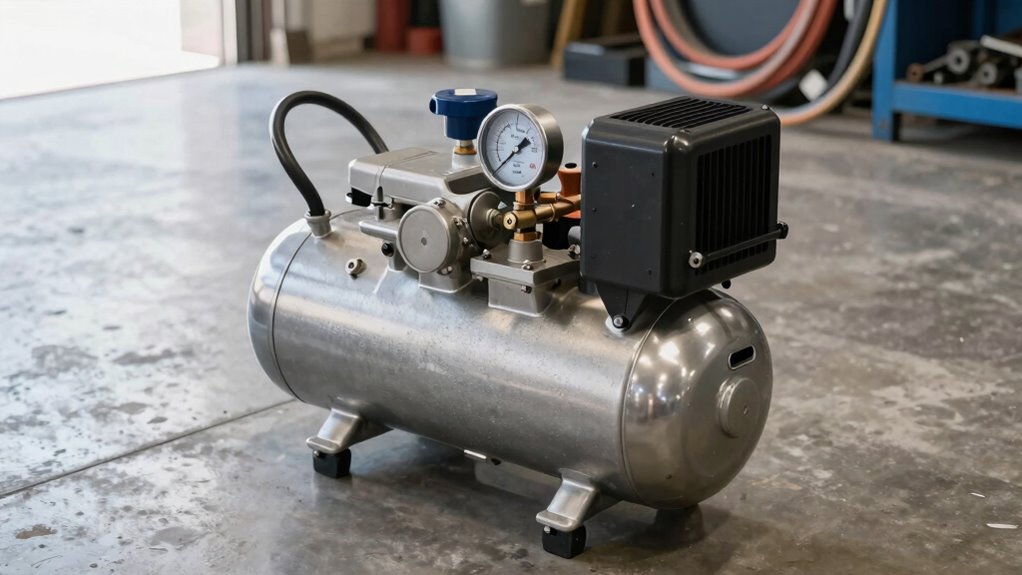

When selecting a shop compressor, focusing on CFM at 90 PSI is more important than horsepower because it directly determines how well your tools operate. A high CFM guarantees consistent airflow, preventing sluggish performance and reducing wear on equipment. Relying solely on horsepower can be misleading since it doesn’t reveal airflow capacity. To get the best results and avoid common mistakes, understanding how CFM impacts your tools is key—and there’s more to learn below.
Key Takeaways
- CFM at 90 PSI determines actual air flow capacity, directly affecting tool performance and efficiency.
- Horsepower alone doesn’t reflect the compressor’s ability to supply sufficient airflow at operating pressure.
- Matching compressor CFM with tool requirements prevents sluggish operation and equipment wear.
- Proper CFM ratings ensure consistent airflow, reducing pressure fluctuations and prolonging tool lifespan.
- Selecting a compressor based on CFM at 90 PSI optimizes shop productivity and energy efficiency.

Klutch 29-Gallon Air Compressor, 2.5 HP, 120V, 175 PSI, 5.1 CFM at 90 PSI
POWERFUL COMPRESSOR: Unleash the potential of your tools with this portable air compressor, the Klutch 29-Gallon Air Compressor's…
As an affiliate, we earn on qualifying purchases.
As an affiliate, we earn on qualifying purchases.
Why Horsepower Isn’t the Key to Shop Compressor Performance
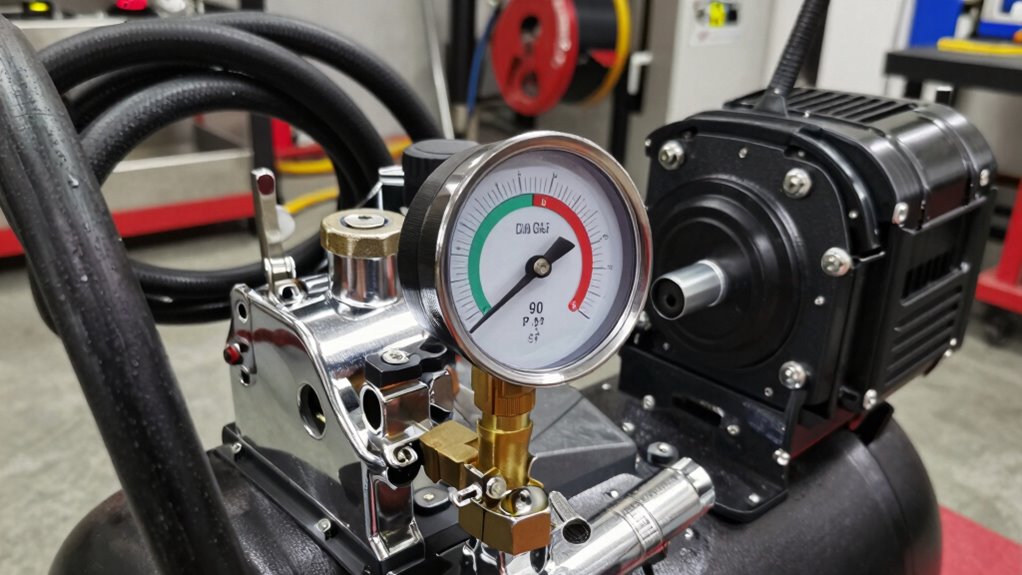
Although horsepower is often seen as the primary measure of a shop compressor’s power, it doesn’t necessarily determine how well the compressor performs. Many horsepower myths suggest that higher HP means better performance, but that’s not always true. A larger compressor size, in terms of tank volume and CFM, actually impacts how efficiently your tools operate. Focusing solely on horsepower can lead you to choose a bigger, more expensive unit that doesn’t meet your needs. Instead, pay attention to other specs like airflow at a given pressure. A compressor might have high horsepower but deliver insufficient airflow, causing your tools to lag. Remember, real performance depends on how well the compressor supplies air, not just how much power it claims to have. CFM at 90 PSI is a more reliable indicator of a compressor’s ability to handle your tools effectively. Additionally, understanding airflow specifications helps ensure you select a compressor that maintains consistent performance under load. Recognizing the importance of air delivery metrics can prevent underperformance and improve your shop’s efficiency, especially since air pressure stability also plays a crucial role in tool performance.
Klutch 29-Gallon Air Compressor, 2.5 HP, 120V, 175 PSI, 5.1 CFM at 90 PSI
POWERFUL COMPRESSOR: Unleash the potential of your tools with this portable air compressor, the Klutch 29-Gallon Air Compressor's…
As an affiliate, we earn on qualifying purchases.
As an affiliate, we earn on qualifying purchases.
Why CFM at 90 PSI Matters for Your Air Tools
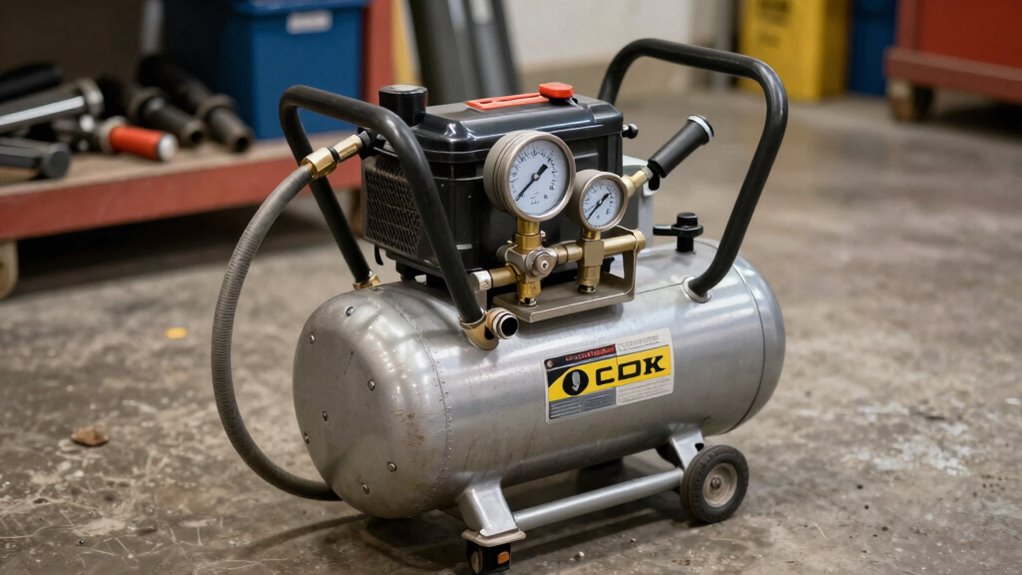
Understanding CFM at 90 PSI is essential because it directly affects your air flow and tool performance. When your compressor matches your tools’ requirements, you’ll experience smoother operation and fewer interruptions. Ensuring compatibility here keeps your projects consistent and efficient. Additionally, selecting a compressor with appropriate airflow specifications ensures optimal performance for various applications. Recognizing CFM ratings helps you choose equipment that can handle the workload without overworking the compressor or causing delays. Properly matching pressure ratings prevents equipment damage and prolongs the lifespan of your tools. Paying attention to decoding slang can also help you better understand technical specs and avoid confusion. Being aware of air delivery capacity can further optimize your tool choices and overall workflow.
Importance of Air Flow
When choosing an air compressor, paying attention to CFM at 90 PSI is essential because it directly impacts how well your air tools perform. Air flow determines the air volume delivered to your tools, which affects their efficiency and speed. If the compressor doesn’t supply enough CFM, your tools may lag or operate sluggishly, reducing productivity. Proper pressure regulation ensures consistent airflow, preventing pressure drops that can hinder performance. Knowing the CFM at 90 PSI helps you select a compressor that provides a steady, sufficient supply of air, so your tools can work at their best without interruptions. Additionally, understanding airflow capabilities helps prevent equipment damage and ensures optimal operation. Accurate airflow measurement is crucial for matching your compressor to your tools’ needs and avoiding costly malfunctions. Being aware of these specifications can also extend the lifespan of your tools by ensuring they receive the correct airflow levels. Recognizing the importance of airflow requirements can also help you choose a compressor that matches your specific application, leading to more efficient work. In short, understanding airflow capabilities ensures you get the right compressor for smooth, reliable operation. Moreover, selecting a compressor with appropriate airflow ratings can contribute to energy efficiency and reduce operational costs.
Compatibility With Tools
Ensuring your air compressor can meet the CFM demands of your tools at 90 PSI is key to maintaining compatibility and ideal performance. Proper air tool matching depends on matching your compressor’s CFM at 90 PSI with your tools’ requirements. If the compressor’s CFM is too low, tools won’t operate efficiently, leading to sluggish performance or inconsistent results. Conversely, a compressor with ample CFM ensures smooth tool operation, reduces downtime, and extends tool lifespan. When selecting a compressor, verify its CFM rating at 90 PSI aligns with the highest CFM needed by your tools. This focus on air tool compatibility** guarantees your air tools run at full capacity without sacrificing power or efficiency, making your workspace more productive and reliable. Additionally, understanding the performance requirements of your tools helps prevent overloading your compressor and ensures long-term durability. Recognizing the importance of matching CFM ratings helps avoid underperformance and maximizes your investment in quality equipment. A properly rated compressor also helps prevent pressure fluctuations**, ensuring consistent operation across your entire tool lineup.
Performance Consistency
To maintain consistent performance with your air tools, it’s essential that your compressor delivers the right amount of airflow at 90 PSI. Fluctuations in air pressure can cause tools to operate unevenly, reducing efficiency and increasing frustration. A compressor with stable CFM output ensures your motor runs efficiently, avoiding strain that leads to wear or failure. Proper copper cookware can also help in maintaining consistent temperature and performance in your kitchen, just as a reliable compressor ensures steady airflow. Consider these factors:
- Steady Air Pressure: Consistent pressure prevents tool performance dips and maintains power.
- Reliable CFM at 90 PSI: Guarantees your tools get the airflow they need for continuous operation.
- Motor Efficiency: A compressor with better motor efficiency sustains airflow without overworking, reducing energy waste.

ECOMAX Air Compressor 6 Gallon 150 PSI Pancake Portable Oil-free Tank with 10 PCS Accessories Kit
[Inclusions]: This ECOMAX air compressor come with 1*1/4 in x 25 ft pvc air hose, 1* thread seal…
As an affiliate, we earn on qualifying purchases.
As an affiliate, we earn on qualifying purchases.
How to Read and Interpret CFM Ratings for Your Shop Compressor
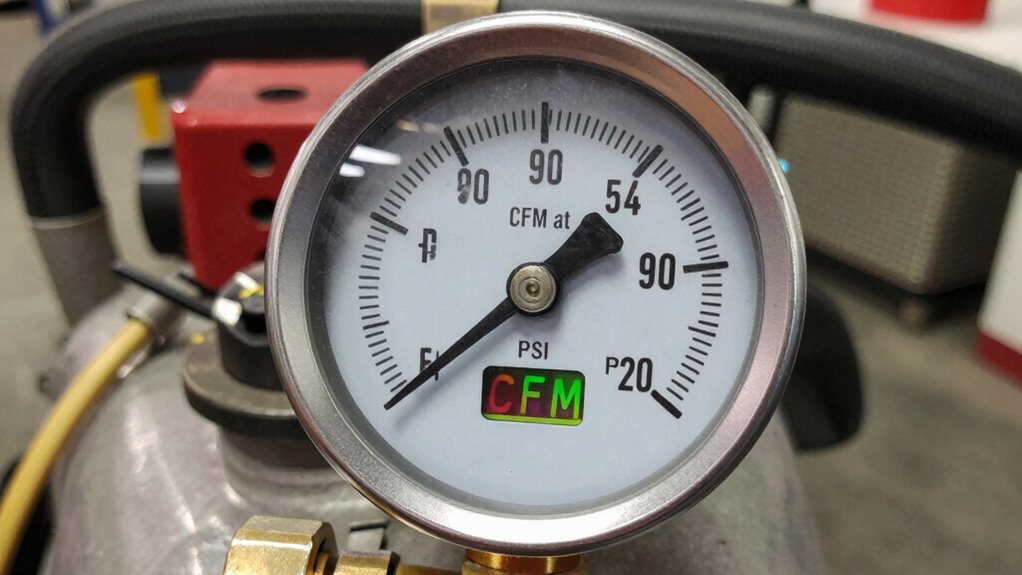
Understanding CFM ratings is essential for choosing the right shop compressor because it directly affects how well the tool performs. CFM measures how much air the compressor can deliver at a specified pressure, usually 90 PSI. When reading ratings, check both the compressor’s CFM and the CFM requirements of your tools. If your tools need 4 CFM, verify the compressor provides at least that continuously. Don’t forget to take into account the air tank size, which influences how often the compressor cycles and noise level—larger tanks typically run quieter and reduce stress on the motor. A higher CFM rating ensures steady power and reduced downtime, especially for demanding tasks. Proper interpretation helps you avoid underpowered compressors that struggle to keep up, ensuring smooth operation in your shop.

VEVOR 80 Gallon Air Compressor, 145PSI Oil Free Stationary Compressor Tank, 6.5HP 15.5SCFM@90 PSI, Quiet Compressor for Industrial Manufacturing, Workshops (220V/60Hz Single-Phase Power)
Inflate Faster, Work Smarter: VEVOR 6.5 HP powerful oil-free motor and efficient compression system drive the air compressor…
As an affiliate, we earn on qualifying purchases.
As an affiliate, we earn on qualifying purchases.
Common Mistakes When Relying on Horsepower Alone
Many people assume that higher horsepower means better performance, but that’s not always true. Power alone doesn’t guarantee your compressor will meet your shop’s needs. Don’t overlook CFM—air volume is just as vital as horsepower for getting the job done efficiently. For secure workspace management, incorporating smart lock technology can enhance safety without sacrificing accessibility.
Power Doesn’t Equal Performance
Relying solely on horsepower when choosing a compressor can be misleading, as it doesn’t always reflect the unit’s true performance. Horsepower myths often lead you to believe that a higher HP means better airflow, but that’s not always the case. Remember, airflow importance plays a critical role in how well a compressor performs for your tasks. Additionally, understanding power consumption insights can help you select more energy-efficient models that suit your needs. In fact, requirements traceability ensures you’re comparing specifications accurately and making informed decisions. Here are key points to consider: 1. Horsepower doesn’t directly correlate with CFM output. 2. A powerful motor can still deliver limited airflow if not paired with proper design. 3. Focusing on airflow specifications like CFM at 90 PSI gives a clearer performance picture. Don’t be fooled by horsepower myths—airflow at the working pressure matters more for your shop’s efficiency.
Overlooking CFM Importance
Focusing solely on horsepower can lead you to overlook how well a compressor actually performs in your shop. Horsepower doesn’t tell you about the air pressure or the CFM needed for your tools. A powerful motor might seem impressive, but if the compressor size isn’t matched to your demands, your tools won’t get enough air flow. Relying only on HP can cause you to choose a compressor that struggles under load, especially at the 90 PSI pressure level your tools require. To avoid this mistake, pay attention to the CFM rating at your target air pressure. This ensures your compressor delivers consistent airflow, reducing downtime and improving efficiency. Remember, more horsepower doesn’t always mean better performance if the compressor can’t supply adequate CFM. Additionally, understanding the CFM at 90 PSI specification helps you select a compressor that truly meets your operational needs. Always consider airflow requirements when choosing equipment to ensure optimal performance and avoid costly mismatches.
Choosing the Right CFM for Your Tools and Workload
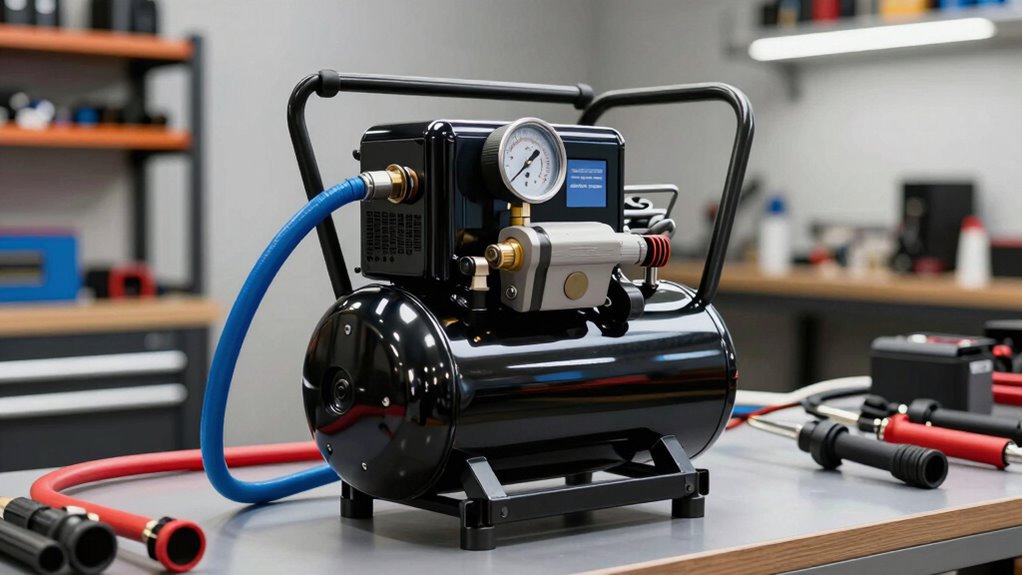
How do you choose the right CFM for your tools and workload? First, consider the air pressure requirements of your tools; matching the compressor’s CFM at 90 PSI guarantees ideal performance. Second, assess your workload volume—if you run multiple tools simultaneously, you’ll need a higher CFM to maintain system efficiency. Third, think about future needs; opting for a slightly higher CFM capacity can prevent pressure drops and improve air pressure consistency. To make the best choice, focus on the compressor’s CFM rating at the standard operating pressure, as this directly impacts air supply and system efficiency. Remember, selecting the right CFM ensures your tools operate smoothly without overloading your compressor or sacrificing performance.
How CFM Affects Tool Performance and Longevity
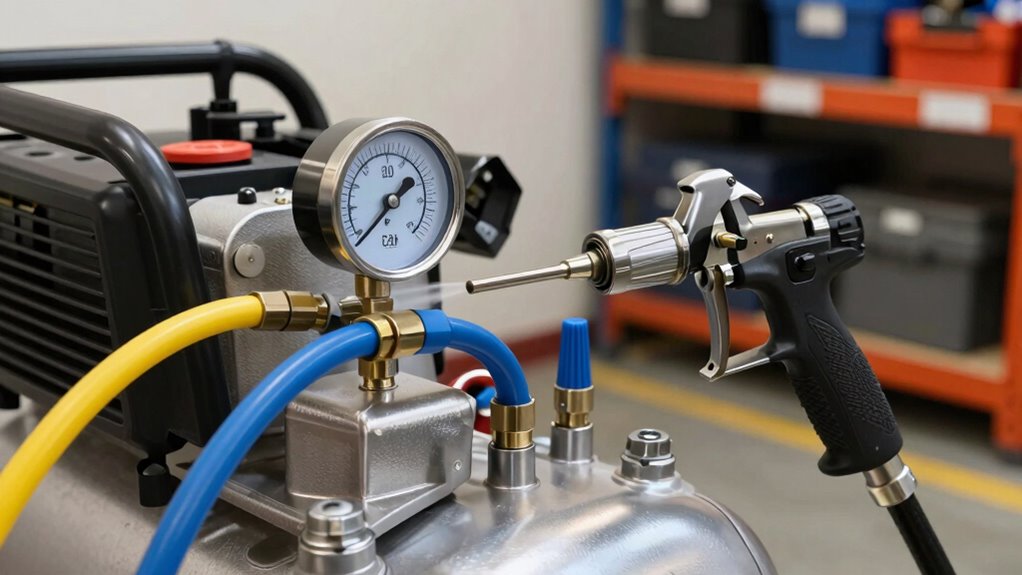
Proper CFM levels are essential for guaranteeing your tools perform ideally and last longer. When your compressor supplies consistent airflow, tools operate smoothly, reducing wear and tear. Adequate CFM prevents pressure fluctuations, which can harm internal components. Good air quality also matters—moisture and contaminants can damage tools over time, so a compressor with proper filtration helps maintain longevity. Additionally, matching CFM to your tools minimizes noise levels, making your workspace more comfortable and decreasing fatigue. When airflow is insufficient, tools struggle, leading to slower work and potential breakdowns. Conversely, too much airflow can cause unnecessary noise and energy waste. Focusing on the right CFM ensures peak performance, extends tool life, and keeps your shop running efficiently.
Practical Tips to Match Compressor Capacity With Your Shop Needs
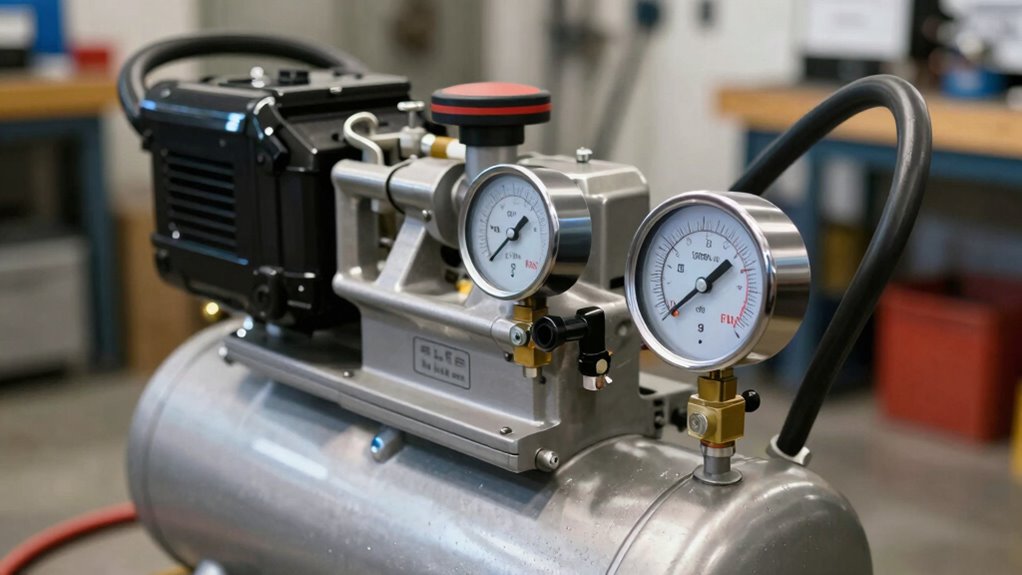
Choosing the right compressor capacity starts with understanding your specific shop needs. To guarantee optimal performance and efficiency, consider these tips:
- Assess your tool demands—match CFM at 90 PSI to your most-used tools to prevent under- or over-sizing.
- Prioritize energy efficiency by selecting a compressor with appropriate capacity, avoiding excess power consumption.
- Incorporate regular air compressor maintenance to keep performance consistent and extend lifespan, ensuring your compressor meets your shop’s demands over time.
Matching compressor capacity to your needs helps prevent unnecessary energy costs and reduces wear on equipment. By focusing on airflow requirements and maintaining your compressor, you’ll keep operations smooth and efficient without overspending or risking tool performance issues.
What Size Compressor Do You Really Need?
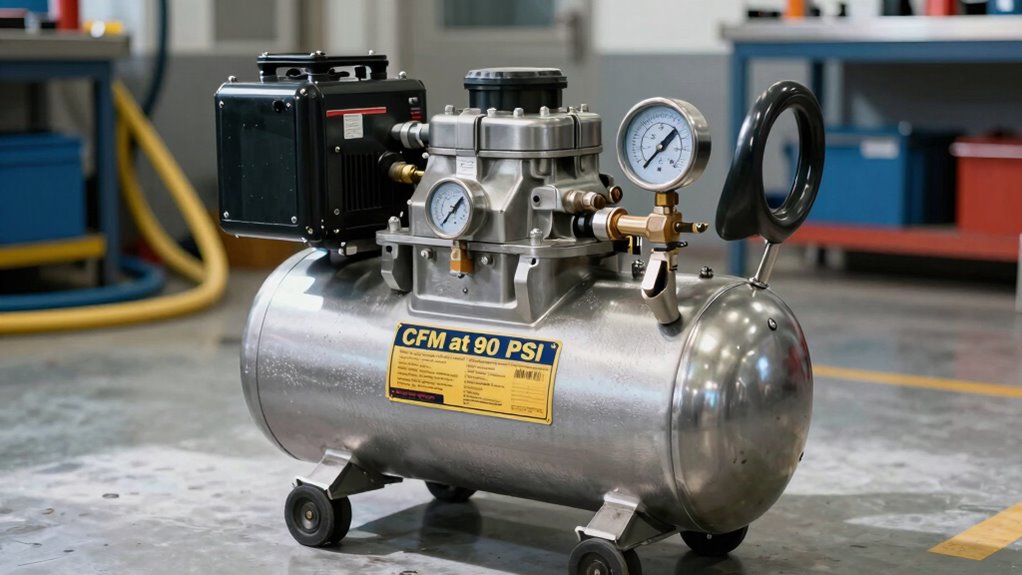
Determining the right size compressor for your shop involves evaluating your specific air tool requirements and workload. First, consider the air pressure your tools need; most tools operate at around 90 PSI, so choose a compressor that maintains this pressure consistently. Next, assess the CFM (cubic feet per minute) needed at that pressure to ensure smooth operation. Don’t forget about noise levels—larger compressors tend to be louder, which could impact your workspace comfort. If you only run a few small tools, a compact unit with lower CFM and quieter operation might suffice. However, for multiple tools or heavier use, opt for a larger, more powerful compressor to handle your demands without constantly running or losing pressure. Knowing your needs helps you pick the right size for efficiency and comfort.
Frequently Asked Questions
How Does Compressor Duty Cycle Impact Performance?
Your compressor‘s duty cycle directly affects its performance by limiting continuous operation, so you should consider it carefully. A higher duty cycle improves lubrication efficiency and reduces overheating, ensuring smoother operation and less noise. When the duty cycle is too low, you risk frequent shutdowns, which can harm the compressor and decrease efficiency. Choose a model with an appropriate duty cycle to maintain ideal performance, quieter operation, and longer lifespan.
What Is the Ideal CFM at 90 PSI for My Tools?
Think of your compressor as a steady river flowing to power your tools. For most handheld tools, aim for a CFM of around 4-5 at 90 PSI. Larger air tanks help maintain consistent pressure, reducing noise levels and preventing fluctuations. If you use high-demand tools, go for higher CFM ratings, ensuring smooth operation without bogging down. This balance keeps your workspace efficient and quieter.
How Do Ambient Temperature and Altitude Affect CFM Ratings?
Ambient temperature and altitude notably impact your compressor’s CFM ratings. As temperature rises, air density drops, reducing CFM performance; cooler air improves it. Higher altitudes mean thinner air, also lowering CFM output. You should consider temperature effects and altitude considerations when choosing a compressor, ensuring it can deliver consistent power for your tools even in varied conditions. Adjustments or specialized equipment might be necessary for peak performance in extreme environments.
Can a Compressor With High Horsepower Still Underperform?
Yes, a high horsepower compressor can underperform if it isn’t properly maintained, especially with issues like inadequate oil lubrication, which can cause overheating and reduce efficiency. Additionally, loud noise levels may indicate mechanical problems that impact airflow, lowering actual CFM output. So, even with high horsepower, neglecting maintenance or ignoring noise can prevent your compressor from delivering its advertised performance.
What Maintenance Practices Optimize Compressor Lifespan and Output?
To optimize your compressor’s lifespan and output, focus on proper lubrication techniques and regular filter maintenance. Keep moving parts well-lubricated to prevent wear and overheating, and check filters frequently to guarantee clean airflow. Replacing or cleaning filters regularly prevents clogging and maintains efficiency, while lubrication reduces friction and extends component life. Consistently following these practices helps your compressor run smoothly and lasts longer.
Conclusion
Remember, focusing on CFM at 90 PSI is key—it’s what truly impacts your tools’ performance. Did you know that a compressor with the right CFM can improve tool efficiency by up to 30%? Don’t just chase horsepower; make sure your compressor meets your workload needs. By understanding and matching CFM ratings, you’ll get better tool longevity and fewer frustrations. Make smart choices, and your shop will run smoother and more efficiently.