
TL;DR
Mistral, a European AI startup valued at over €11.7 billion, faces strategic challenges amid its rapid growth, model performance gaps, and conflicting market positioning. Its approach raises questions about sovereignty, competitiveness, and future viability.
Mistral, the European AI startup valued at over €11.7 billion, is confronting a complex strategic landscape as it seeks rapid growth while grappling with model performance gaps, financial opacity, and its reliance on non-European infrastructure. This situation raises questions about its claims of sovereignty and its ability to compete globally.
Founded with a focus on European data sovereignty, Mistral has achieved remarkable growth, with annual recurring revenue soaring from around $20 million at the start of 2025 to over $400 million by January 2026. The company has secured over 100 major enterprise clients, including Airbus, BMW, and the French armed forces, and raised between $3 billion and $5.5 billion in private funding. Despite this, Mistral reports no publicly disclosed losses, and its profitability remains unconfirmed, raising concerns about its financial sustainability.
While the company emphasizes European data protection as a core value, nearly 40% of its revenue originates from the U.S. and other non-European markets, according to Forbes. Its operations depend heavily on American cloud providers like Azure, AWS, and Google Cloud, and it trains models on US-based infrastructure, buying silicon from Nvidia. This reliance complicates its sovereignty claims and exposes it to geopolitical and supply chain risks.
Model performance remains a critical weakness. Mistral’s flagship models lag behind competitors on key benchmarks, with third-party evaluations indicating slower processing speeds and lower reasoning capabilities. Its open-weight models are also outperformed by newer open models from Chinese and American labs, challenging its differentiation based on openness and European origin. Consumer products like Vibe are also trailing in market recognition and developer adoption, with some reports indicating sluggishness and limited ecosystem support.
Implications of Mistral’s European Strategy and Market Position
The case of Mistral highlights the difficulties faced by European AI firms in balancing sovereignty with global competitiveness. Its reliance on US infrastructure and the performance gaps in its models threaten its claims of European independence and could impact investor confidence. The company’s rapid growth and high valuation are notable, but its financial opacity and strategic vulnerabilities pose risks to sustainability and future valuation. These issues underscore broader challenges for European AI ambitions amid fierce global competition and evolving geopolitical tensions.
European AI model training hardware
As an affiliate, we earn on qualifying purchases.
As an affiliate, we earn on qualifying purchases.
European AI Ambitions and Global Competition Dynamics
Mistral emerged as a prominent European challenger with a focus on data sovereignty and open models, aiming to differentiate itself from US and Chinese counterparts. Its rapid valuation increase and client roster reflect strong market interest, yet its strategy relies heavily on external infrastructure and open models that are increasingly contested. The broader AI landscape is dominated by US giants like OpenAI and Anthropic, with European firms struggling to match their model performance and ecosystem maturity. The geopolitical backdrop, including US-China tech tensions, influences European firms’ strategic choices, often forcing compromises between sovereignty and competitiveness.
Earlier in 2026, Mistral announced aggressive growth targets, aiming for over $1 billion in annual revenue by year-end, amid a backdrop of significant private funding and a high capital-to-revenue ratio. Despite these ambitions, its model performance and ecosystem support lag behind leading US and Chinese labs, raising questions about whether its European-centric approach can sustain long-term success.
“Roughly 40% of Mistral’s revenue comes from the U.S. and other non-European clients, despite claims of European sovereignty.”
— Thorsten Meyer, Forbes

Agentic AI for DevOps Engineers: Building autonomous CI/CD, infrastructure, and operations workflows
As an affiliate, we earn on qualifying purchases.
As an affiliate, we earn on qualifying purchases.
Unclear Aspects of Mistral’s Long-Term Viability
It remains unclear whether Mistral‘s strategy of emphasizing European sovereignty can withstand the performance and ecosystem gaps it faces. Its financial health, given the lack of disclosed profits or losses, is also uncertain. The impact of geopolitical tensions and US-Chinese competition on its supply chains and infrastructure reliance adds further unpredictability. Additionally, the company’s ability to meet its ambitious revenue targets remains uncertain, especially if model performance does not improve and ecosystem support remains limited.
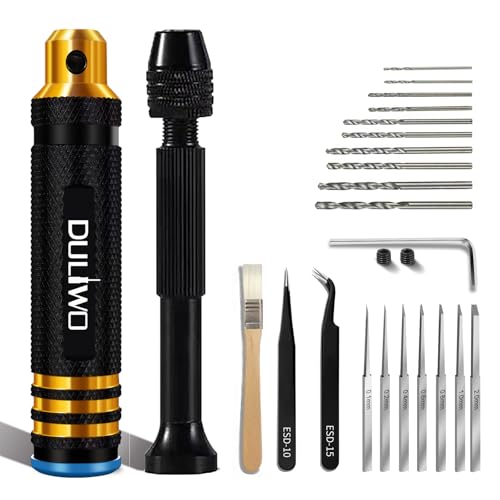
DULIWO Model Scriber Tool Kit, 7-Blade Chisel Set for Gunpla
- Complete Model Kit Tools: Includes scribe, drill, tweezers, brush
- High-Quality Blades: Tungsten steel, wear-resistant, sharp
- Ergonomic Handle: Lightweight, non-slip aluminium alloy
As an affiliate, we earn on qualifying purchases.
As an affiliate, we earn on qualifying purchases.
Upcoming Milestones and Strategic Challenges for Mistral
In the coming months, Mistral will likely focus on improving model performance and expanding its ecosystem to attract more developers and enterprise clients. Its reported goal of exceeding $1 billion in annual revenue by the end of 2026 will be a key benchmark to watch, alongside any disclosures about profitability or losses. The company may also face increased scrutiny over its reliance on US infrastructure and its ability to maintain its European identity amid growing geopolitical pressures. Further investments in hardware, including exploring own chip design, are expected but may not yield immediate results.

Yahboom ESP32-S3 WROOM-1-N16R8 Development Board Xiaozhi AI Voice Control
- Powerful Dual-Core Processor: ESP32-S3-WROOM-1-N16R8 with 240 MHz speed
- Ample Memory Capacity: 16 MB Flash and 8 MB PSRAM
- Ready-to-Use Hardware: Pre-soldered headers for easy setup
As an affiliate, we earn on qualifying purchases.
As an affiliate, we earn on qualifying purchases.
Key Questions
Can Mistral truly compete with US and Chinese AI giants?
While Mistral has shown rapid growth and secured major clients, its model performance and ecosystem support lag behind US and Chinese competitors, making full competition challenging at this stage.
Does Mistral’s reliance on US infrastructure undermine its sovereignty claims?
Yes, a significant portion of its training, infrastructure, and silicon supply depends on US-based companies, complicating its narrative of European independence.
Will Mistral’s financial opacity affect its future prospects?
Potential investors and partners may view the lack of disclosed profits or losses as a governance risk, especially if growth slows or losses remain substantial.
Is Mistral’s chip ambition realistic at this scale?
Currently, designing its own AI chips at this scale is ambitious and likely a multi-year project, not an immediate strategic focus given its financial and technical challenges.
What are the main challenges Mistral faces moving forward?
Key challenges include improving model performance, expanding ecosystem adoption, maintaining financial sustainability, and navigating geopolitical and supply chain risks.
Source: ThorstenMeyerAI.com