
📊 Full opportunity report: How Patients Can Log Symptoms And Lab Work During TRT on IdeaNavigator AI — validation score, market gap, and execution plan.

Get business pricing on monitors, keyboards and dev gear
- Business-only prices and quantity discounts
- Tax-exempt purchasing
- Multiple users, one account, clear invoices
TL;DR
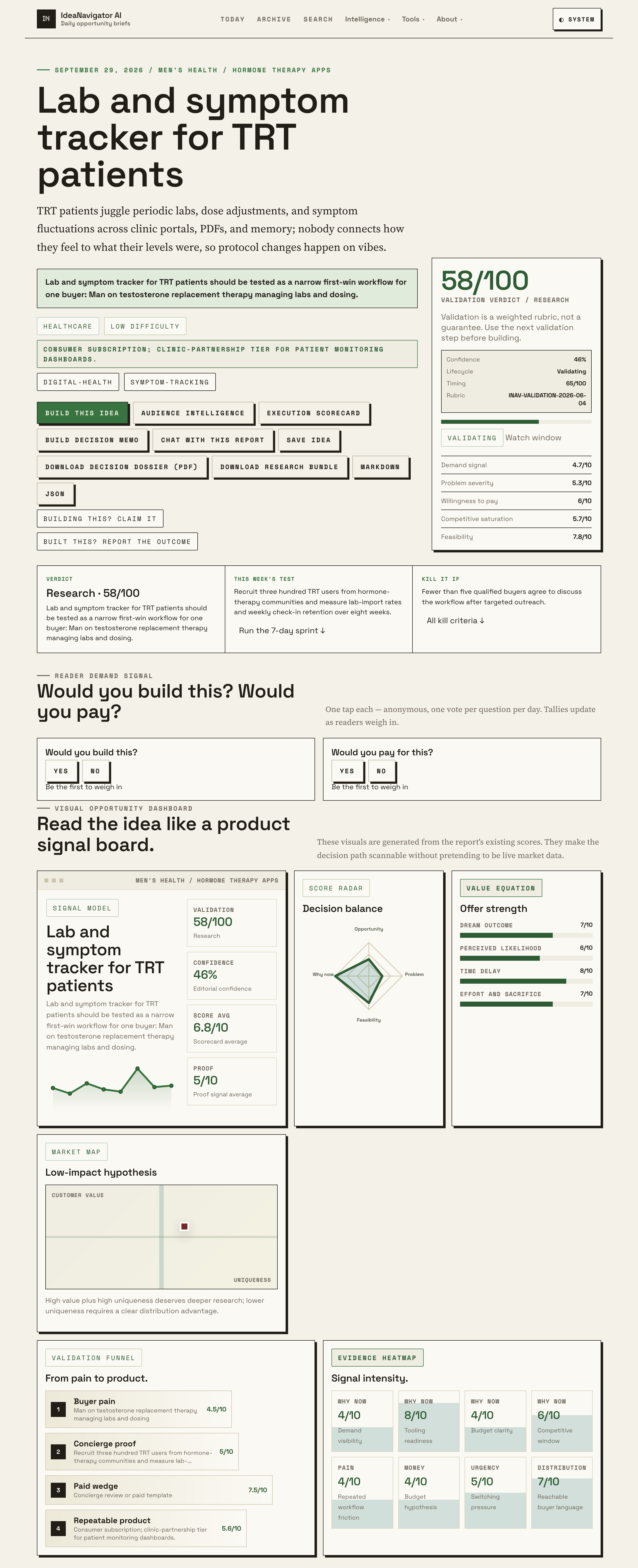
IdeaNavigator AI has outlined a proposed symptom and lab tracker for men receiving testosterone replacement therapy (TRT). The concept would combine imported lab results, dose changes and daily symptom check-ins, but it is a product proposal, not a launched or clinically validated service.
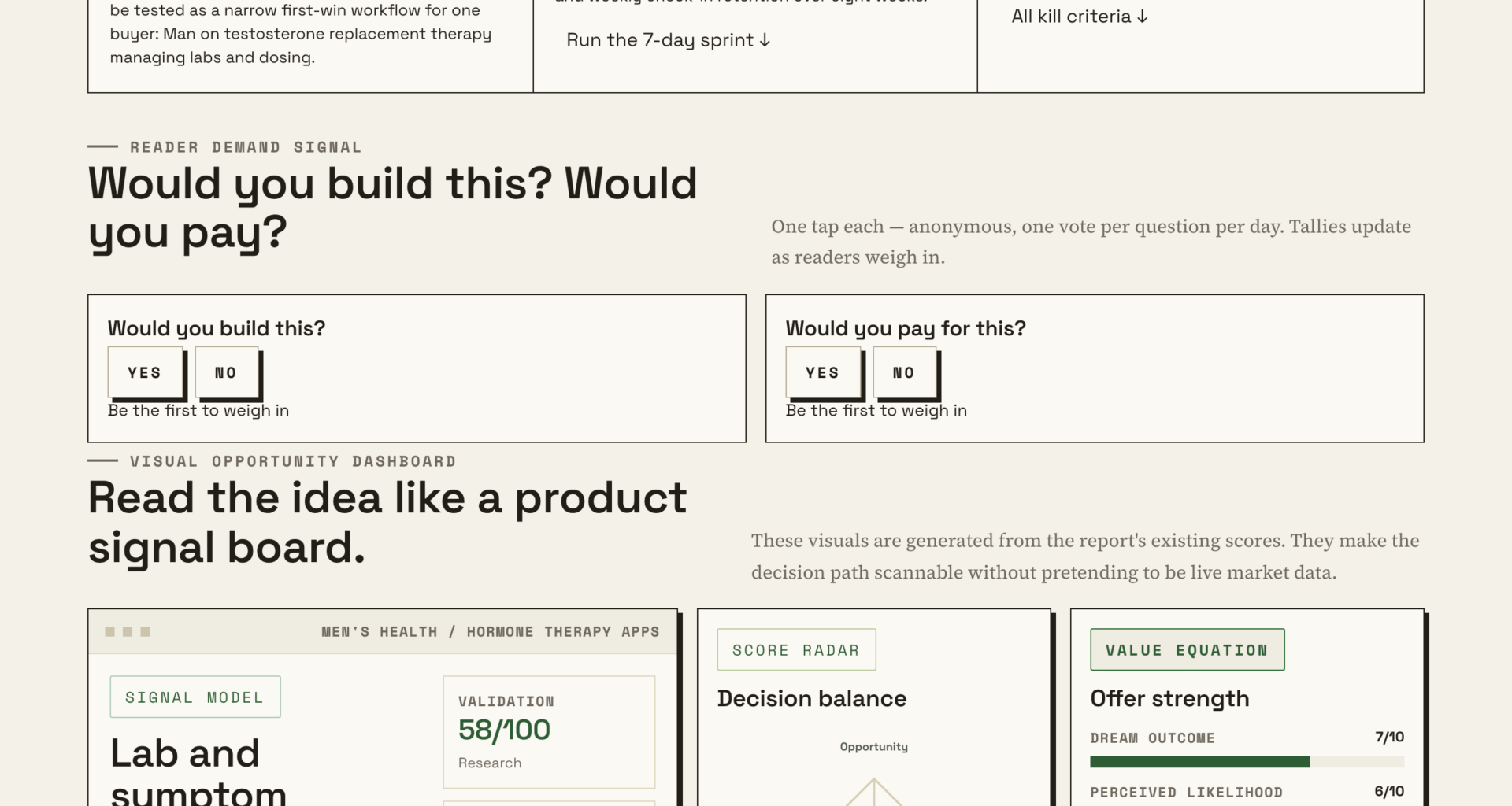
IdeaNavigator AI’s product proposal describes a symptom and lab tracking app for men receiving testosterone replacement therapy (TRT), designed to connect lab results and dose changes with patients’ daily reports of how they feel. The proposal calls for testing the concept with 300 users over eight weeks; it does not report that the app has been built, that the study has started, or that the tool has clinical validation.
According to the IdeaNavigator AI proposal, the minimum viable product would let users import lab PDFs, chart hormone panel results over time and record daily symptoms alongside dose changes. The proposal says it would prepare trend summaries for clinic visits and flag results that drift outside target ranges. It does not specify which lab tests or target ranges the app would use, or how those ranges would be set for individual patients.
IdeaNavigator AI identifies the intended user as a man on TRT who is managing labs and dosing. The proposal describes a care-management problem in which lab results, treatment changes and symptoms may be spread across clinic portals, PDFs and personal recollection. Its suggested revenue streams are a consumer subscription and a clinic-partnership tier with patient-monitoring dashboards.
To assess whether patients would use the product, the proposal suggests recruiting 300 TRT users from hormone-therapy communities and tracking lab-import rates and weekly check-in retention for eight weeks. These are proposed measures and recruitment plans; the source reports no participant results, retention figures or evidence of clinical benefit.
Connecting Symptoms to TRT Records
The workflow described in the IdeaNavigator AI proposal would place symptom reports, lab results and dose changes on one timeline. That could give patients a more organized record to discuss with their clinicians and help them notice information that is missing or difficult to retrieve before a visit. These are potential uses of the proposed workflow, not demonstrated outcomes.
A chart can show that events occurred around the same time without showing that one caused another. Lab values and symptoms can vary for many reasons, and a flagged result is not by itself a diagnosis or a treatment recommendation. The proposal does not say that the app would direct dose changes; clinical decisions would need to remain with the treating clinician.
For clinics, the proposal suggests a dashboard for reviewing patient-entered information between appointments. It does not address whether practices would adopt such a system or how it would fit clinic workflows, protect privacy, ensure imported-data accuracy or guide clinicians’ responses to alerts.
Top picks for "patient symptom work"
As an affiliate, we earn on qualifying purchases.
A Fragmented TRT Record
IdeaNavigator AI frames the product opportunity around patients keeping treatment information in multiple formats and services, including clinic portals and PDF lab reports. The proposed workflow would bring those records together with routine symptom check-ins so patients can prepare a summary for appointments.
The proposal says increased TRT prescribing and telehealth clinics have created a larger self-managing patient population, but provides no figures or references to quantify that claim. The scale and timing of the claimed growth therefore cannot be assessed from the information provided. The proposal focuses on men already managing TRT labs and dosing rather than a general hormone-health platform.
Clinical and Product Questions
IdeaNavigator AI’s proposal does not report the app’s development status, and there is no evidence in the proposal that its suggested eight-week validation has begun. It provides no study protocol, recruitment results or findings about whether users would import lab reports consistently or keep up weekly check-ins.
The proposal also leaves open how the app would handle differing lab formats, missing or corrected results, and target ranges that may depend on a patient’s circumstances. It gives no details on data security, consent, clinic integrations, regulatory status or how alerts would be reviewed. Until those questions are answered, the suggested features should be understood as a product concept rather than a tested care tool.
Testing the Proposed Workflow
The next step described in the IdeaNavigator AI proposal is an eight-week test with 300 TRT users. The proposed measures are lab-import rates and weekly check-in retention. Reporting those results would help establish whether participants use the core features over time, though those measures alone would not show that the app improves health or treatment decisions.
Further development would require details on how lab data and target ranges are handled, what information clinics can see, and how patient records are protected. The proposal announces no launch date, participating clinic or study timeline beyond the proposed eight weeks.
Key Questions
Has the TRT tracking app launched?
No launch is reported. IdeaNavigator AI describes a proposed app and an MVP feature set, without saying that a product is available to patients.
What would the proposed app track?
According to IdeaNavigator AI’s proposal, it would combine lab results, dose changes and daily symptom check-ins, then chart trends and prepare summaries for clinic visits.
Is the app clinically validated?
No clinical validation or health outcome results are reported in the proposal. Its suggested eight-week test would measure lab-import rates and weekly check-in retention, not establish clinical benefit.
What is the proposed user study?
IdeaNavigator AI’s proposal suggests recruiting 300 TRT users from hormone-therapy communities and observing use of the tracker over eight weeks. It provides no start date or study results.
Source: IdeaNavigator AI
Fall Picks
fall essentials
As an affiliate, we earn on qualifying purchases.