📊 Full opportunity report: Review Each Boxing Round With Punch And Score Data on IdeaNavigator AI — validation score, market gap, and execution plan.

Get business pricing on monitors, keyboards and dev gear
- Business-only prices and quantity discounts
- Tax-exempt purchasing
- Multiple users, one account, clear invoices
TL;DR
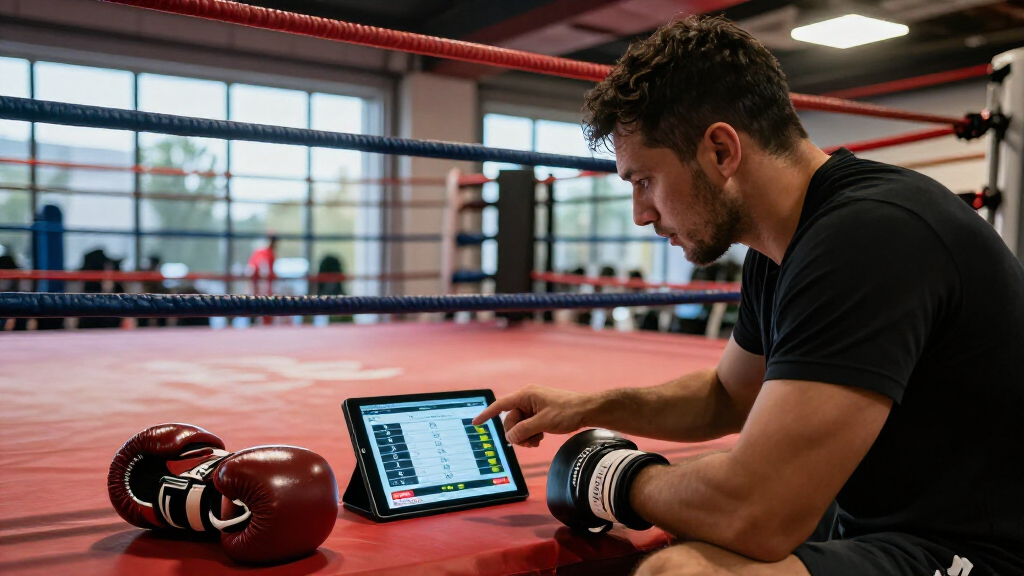
IdeaNavigator AI has outlined a product concept for an at-home boxing app that would use a phone camera to count punches, estimate speed and monitor guard position during rounds. The proposal describes an unvalidated MVP and subscription model, not a launched product or demonstrated tracking technology; no test results or retention figures are reported.
IdeaNavigator AI’s proposal describes a phone-camera app that would score boxing rounds for people training at home without a coach or gym, using estimated punch counts, punch types, speed and guard position to provide feedback. The proposal outlines a possible product and validation plan, not an announced launch: it provides no test results, product release date or evidence that the tracking works reliably in home settings.
In the concept described by IdeaNavigator AI, the suggested minimum product would ask users to prop up a phone and follow scored shadowboxing rounds. The app would count punches by type, estimate speed, flag drops in guard position and offer coached combinations with feedback during a session. It would also record progress benchmarks across sessions, giving users a way to compare their training over time.
IdeaNavigator AI frames the target audience as home boxers training without a coach or gym. The proposal’s premise is that solo shadowboxing can lack a feedback loop: users may not know how many punches they throw, whether their technique changes or whether they are progressing. It suggests this absence of feedback can weaken motivation and allow technique to drift, but provides no survey or user research quantifying those problems.
The business model under consideration in the proposal is a consumer subscription, with a free tier for scored rounds and paid access to coached combinations. IdeaNavigator AI identifies a soft launch as the proposed first test, measuring week-four retention against fitness-app benchmarks and whether users convert to the coached-combo tier. The proposal includes no benchmark figures, subscription price, conversion target or test findings.
A Feedback Loop for Solo Boxers
If the concept proves usable, it could give people training without a coach a more structured way to review rounds and track practice. Punch counts and round-by-round records may help users see activity and consistency, while prompts about guard position or punch type could direct attention to aspects of form. The proposal’s value depends on whether those measures are accurate enough to be useful rather than distracting.
The idea also puts camera-based tracking at the center of a fitness product, rather than requiring a wearable or dedicated sensor. That could lower the equipment barrier for home training. But boxing involves fast movement, changes in angle and occasional obstruction of the hands; the concept description does not establish how a phone camera would handle those conditions, or whether speed and technique feedback would be dependable across different rooms and devices.
For potential customers, the practical question is not simply whether an app can count movements. It is whether its feedback is clear, consistent and helpful enough to support regular training without a human coach. Retention and paid conversion could show whether users value the experience, but those commercial measures alone would not prove that the app improves boxing technique or prevents injury.
As an affiliate, we earn on qualifying purchases.
Why Home Training Needs Feedback
IdeaNavigator AI frames the concept around a gap in at-home shadowboxing: users can complete rounds alone, but may have limited ways to measure what happened during them. Unlike a coached session, solo practice does not automatically provide corrections or an external record of punches and guard position. The proposal aims to make those elements visible through a phone screen.
Its timing rationale is that phone-camera pose tracking can now detect punch types, speed and guard position in real time, potentially enabling scored sessions without extra hardware. This is a claim in the product proposal; no technical demonstration, independent evaluation or device-compatibility information is supplied. The suggested comparison to scored, guided fitness sessions describes the intended experience, not a confirmed capability.
The proposal narrows its initial audience to boxers training at home without coaching or gym access, rather than positioning the product for all combat-sports participants. It suggests a small soft launch to test whether scored rounds encourage continued use and whether coached combinations persuade some users to pay. The proposal does not identify a launch market, user sample or testing schedule.
home boxing training app with score tracking
As an affiliate, we earn on qualifying purchases.
As an affiliate, we earn on qualifying purchases.
Tracking Accuracy and Demand
IdeaNavigator AI reports no product launch or test outcome. Its proposal does not make clear whether an app implementing the concept exists, which phone models it could support, or how well it would recognize different punches and guard positions in varied lighting, camera placement and training spaces. No accuracy rates, latency measurements or comparisons with a coach’s assessment are provided.
Demand is also untested in the information available. The proposal includes no user interviews, retention results, subscription prices or conversion figures to establish whether solo boxers would use the app regularly or pay for coached combinations. Its suggested week-four retention measure has no stated benchmark value or comparison method, so any eventual result would need to be interpreted with the test design and user sample in view.
The concept also does not explain what its feedback would and would not assess. A punch count is not the same as a full evaluation of technique, and camera-based observations may miss details that a coach can see or correct. The proposal does not say whether the app would present measurements as estimates, provide safety guidance, or make any claims about improving performance.
shadowboxing training app with feedback
As an affiliate, we earn on qualifying purchases.
As an affiliate, we earn on qualifying purchases.
A Soft Launch Would Test Retention
IdeaNavigator AI’s proposal identifies a soft launch of scored rounds as the next step, followed by measurement of week-four retention against fitness-app benchmarks. It also suggests testing conversion to the coached-combination tier. No dates, recruitment plans or release details are specified, so there is no confirmed timeline for that work.
For the idea to move beyond a product hypothesis, future reporting would need to establish whether the app is built and available, how its camera tracking performs, and what users do after trying it. Results on accuracy, continued use and paid conversion would clarify whether the proposed feedback loop is viable. Until those details are published, the app should be understood as a suggested opportunity and MVP plan, not a proven training product.
Source: IdeaNavigator AI proposal
As an affiliate, we earn on qualifying purchases.
Key Questions
Has the boxing app launched?
The information describes a product proposal and suggested soft launch. It gives no release date and does not confirm that an app is available.
What would the app measure?
The proposed app would use a phone camera to track punch counts by type, estimated speed and guard position during rounds, then record benchmarks across sessions. No accuracy results are provided.
Would users need special equipment?
The MVP concept is designed around a phone propped up to record a session, without wearables or dedicated hardware. Supported devices and camera requirements have not been specified.
How would the proposed app make money?
The proposed model is a subscription with a free scored-round tier and a paid coached-combination tier. Pricing and user conversion figures are not available.
What evidence would show whether the idea works?
The proposed validation plan would measure week-four retention against fitness-app benchmarks and test conversion to the coached-combo tier. Technical tracking accuracy and evidence of improved technique would also need to be established; no results have been reported.
Source: IdeaNavigator AI
Halloween Picks
halloween
As an affiliate, we earn on qualifying purchases.